

 SA
SA
 KW
KW
 IE
IE AU
AU UAE
UAE UK
UK USA
USA
 CA
CA DE
DE
 QA
QA ZA
ZA
 BH
BH NL
NL
 MU
MU FR
FR


















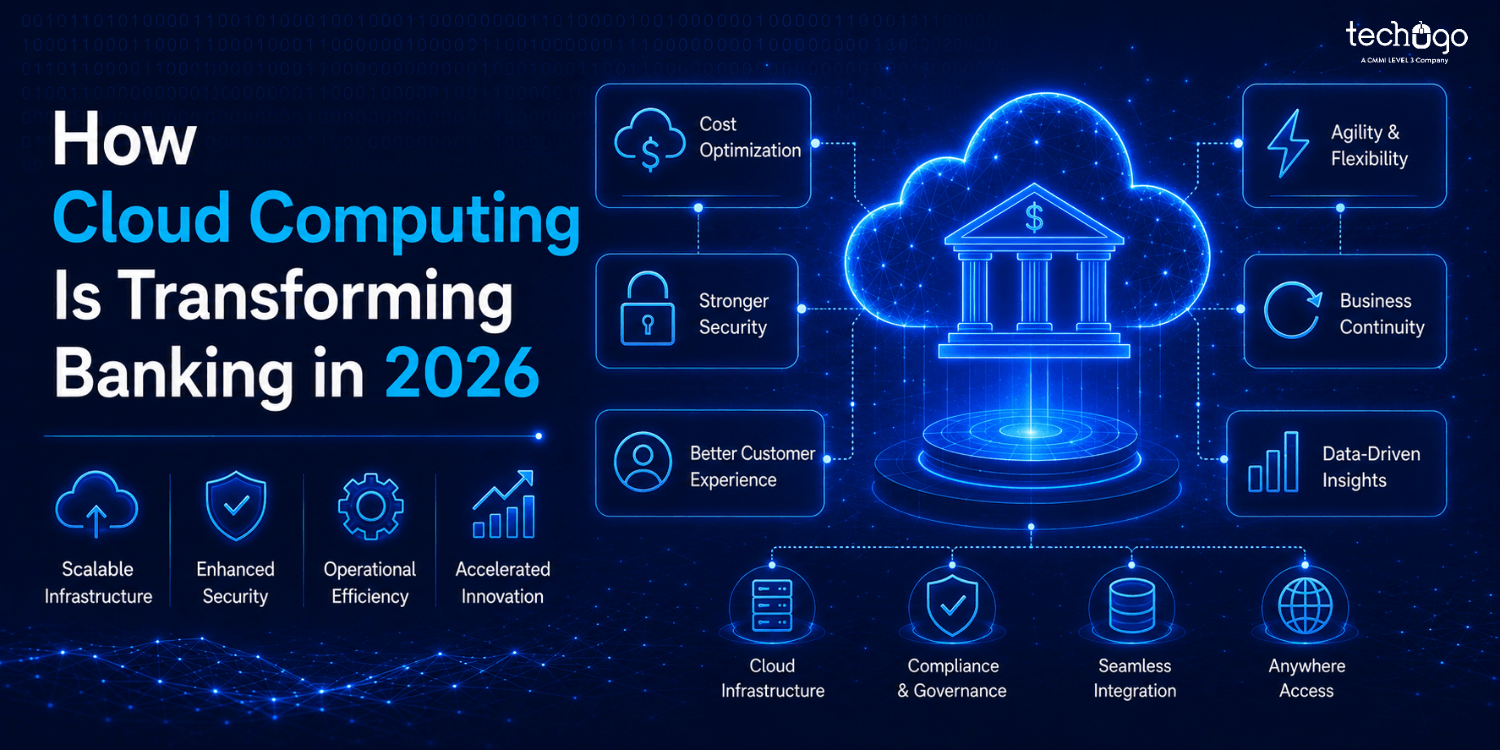


Banking didn’t change overnight. It had to.
A few years ago, most banks were still running on legacy systems. They were slow, expensive, and difficult to scale also. Then came the surge in digital users. Today customers expect instant payments, updates in real-time, and 24/7 access. No delays and no friction.
And it is impossible to ignore that 91% of banks and insurance companies globally have started using cloud in some form, as per Capgemini Research Institute’s World Cloud Report. And cloud spending in the banking sector continues to grow rapidly every year.
Why?
Because traditional infrastructure simply cannot keep up with the speed modern banking demands.
Imagine when you transfer money through a mobile app and it reflects instantly, that experience is often powered by cloud technology in banking. The cloud allows banks to process huge amounts of data in real time without system slowdowns or downtime.
Cloud computing in banking is not just a tech upgrade but it is becoming the backbone of how banks operate, serve customers, and compete with top fintech players.
Through this blog, we’ll know how cloud computing is transforming banking, what benefits it brings and what challenges banks still need to overcome in 2026.
What Is Cloud Computing in Banking?
So cloud computing in banking is basically using remote servers and internet-based systems to store and manage data, instead of keeping everything on old, in-house computers. And this matters because banks, you know, deal with huge amounts of information every single day.
Therefore, instead of doing everything on your own servers, banks use the cloud so that data, apps, and operations can be accessed from anywhere. Which means things are faster, more flexible, and scalable of course, but it also comes with new challenges.
Banks usually pick the type of cloud depending on their needs:
- Public Cloud: Shared, hosted by a third party and it’s cost-effective.
- Private Cloud: It is dedicated just for one bank so there is more control and more security.
- Hybrid Cloud: This is a mix of both so that banks can balance cost, speed, and safety.
Because of cloud technology in banking, systems that used to take hours, or even days, to update are now running in real time. So:
- Mobile banking apps work instantly
- Online transactions happen without delays
- Core banking systems can scale easily
- Operational costs are reduced
In the end, cloud computing in banking isn’t just about tech, it’s the foundation of modern digital banking. And you can see it in action everywhere, from instant payments to faster loan approvals.
Why Banks Are Moving to the Cloud?
Banks are adopting cloud computing because there is solid pressure and payoff behind it, and in fact, around 91% of banks and insurers have already started their cloud journey, compared with just about 37% a few years ago. And most financial leaders today agree that a cloud‑enabled platform is essential for flexibility and meeting ever‑rising customer expectations. So what’s driving this push?
- First, customers expect banking that is fast, digital, and available anytime. Legacy systems simply can’t keep up with real‑time transactions or new services without huge investment and frequent downtime but when banks use cloud computing, they gain agility so they can launch new products faster and integrate with digital channels, and also respond to market shifts.
- Second, there’s intense competition among fintechs, and those built in the cloud have flexibility and lower costs from day one. Legacy banks (with their bulky, outdated infrastructure) have realized they’re at a disadvantage unless they evolve. Moving to cloud technology in banking helps level the playing field.
- Finally, the cloud supports both innovation and cost management at the same time. Banks can scale up resources during peak demand and scale down when things are quiet. They don’t have to invest in expensive hardware that sits idle. All this makes cloud adoption a strategic move, especially in a digital age where every second (and every transaction) counts.
What’s the Role of Cloud in Digital Banking
The role of cloud in digital banking is, well, bigger than just storing data or running apps. It’s about creating systems that are fast, flexible, and customer-friendly and that’s exactly what modern banks need because customers today expect speed and reliability.
With cloud technology, banks can:
- Offer real-time services: Services such as transactions, payments, and account updates happen instantly so customers don’t have to wait and it keeps customers happy.
- Scale without limits: Like shops, banks can have spikes in traffic like during payday or holiday shopping, and with cloud technology, banks can easily handle traffic without crashing systems which was impossible with old servers.
- Enable mobile-first experiences: All works smoothly, be it your mobile banking app, your digital wallet, or online banking portal because everything runs on the cloud.
- Integrate advanced tools: Artificial intelligence, machine learning, and analytics can run easily on cloud platforms and these technologies help banks detect fraud, predict customer needs, and even offer personalized recommendations.
- Reduce costs while innovating: Banks pay only for what they use rather than buying costly hardware. This frees up their resources for new services.
And because of all this, cloud computing in banking isn’t just a back-end tool. It shapes the entire customer experience and also helps banks respond quickly to market changes or regulatory requirements.
In short, the cloud acts as the backbone of digital banking, and it allows speed, innovation, and customer satisfaction all at once but it also comes with responsibilities and challenges that banks have been learning to manage.
Key Benefits of Cloud Computing in Banking
Cloud computing in banking isn’t just a tech upgrade, and it’s really more like a game-changer, because it allows banks to operate faster, smarter, and more efficiently. The benefits are visible in almost every part of modern banking, and you can see them if you look closely at how top banks are using cloud today.
1. Faster and Real-Time Services
With cloud technology in banking, banks can process transactions instantly so you don’t have to wait for hours or days, and it keeps customers happy. For example, HSBC uses cloud platforms to enable real-time cross-border payments which means money can move internationally in seconds instead of days and this was impossible with older legacy systems.
2. Cost Efficiency and Resource Optimization
Cloud allows banks to reduce infrastructure costs because they pay only for what they actually use. And because they don’t have to maintain huge on-premise servers, they can invest resources in innovation. For instance, ING Bank moved part of its core banking system to the cloud, and they were able to cut maintenance costs while freeing up money for new digital services which was a smart move.
3. Scalability and Flexibility
Banks face unpredictable spikes in demand, like during payday, festivals, or product launches. With cloud computing, systems can scale up or down as needed so you never have to worry about crashes. JPMorgan Chase uses cloud infrastructure to handle large volumes of transactions during peak hours, and it works smoothly every time which was very hard to do before.
4. Enhanced Security and Compliance
Many people worry about cloud security in banking but modern cloud platforms are highly secure. They offer encryption, multi-layered access controls, and continuous monitoring, because banks have to comply with strict regulations. For example, Bank of America uses hybrid cloud solutions to manage sensitive customer data while staying compliant and it keeps trust intact.
5. Innovation and Faster Product Launches
Cloud computing enables banks to experiment and launch new services faster, because you don’t need massive infrastructure for testing. Citibank used cloud-based platforms to launch AI chatbots for customer support, and they were deployed quickly across multiple countries, improving engagement, and reducing response time which would have taken months otherwise.
6. Data-Driven Decision Making
Banks can analyze customer behavior, spending patterns, and risk factors in real time, because everything runs on the cloud, and it allows smarter decision-making. For example, Capital One leverages cloud analytics to tailor credit card offers to individual users, increasing adoption and engagement, and it also helps in spotting opportunities that were missed before.
Cloud computing in banking is therefore not just a trend and it’s not only about speed or cost. It is about security, scalability, and customer experience, all at once but it also comes with responsibilities that banks have been learning to manage. And if you look closely, it really is the backbone of modern digital banking today.
Top Use Cases of Cloud in Banking Industry
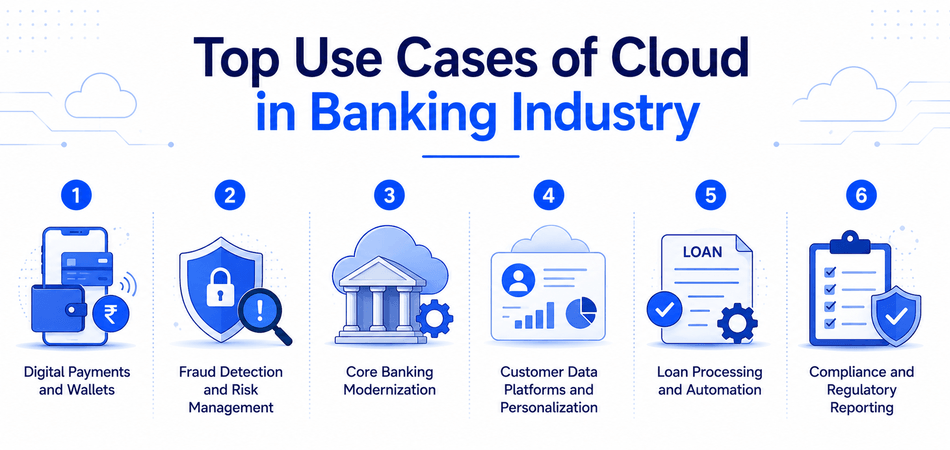
Cloud computing in banking isn’t about cost savings and it’s also not about faster transactions but about completely transforming how banks operate, handle customers, and innovate simultaneously. There are multiple use cases of cloud in banking industry and they all touch almost every aspect of banking operations, from daily customer services to back-end systems.
1. Digital Payments and Wallets
Cloud allows banks to process payments instantly and it makes mobile wallets and online transactions seamless and one of the best examples is PayPal and Square. They use cloud infrastructure to process millions of payments every day. As a result, transactions happen so fast and are secure which was much harder before cloud adoption.
2. Fraud Detection and Risk Management
Banks can interpret and analyze huge volumes of transactions in real time because cloud platforms offer the computing power needed for AI and machine learning tools. Like HSBC that uses cloud-powered analytics to detect unusual transactions instantly so that potential fraud is flagged immediately and helps protect customers and reduce losses.
3. Core Banking Modernization
Cloud helps banks update legacy systems without shutting down operations. ING Bank migrated core banking functions to the cloud, and as a result, they could roll out new services faster, reduce maintenance costs, and improve reliability which would have been very slow and expensive otherwise.
4. Customer Data Platforms and Personalization
Banks can store and process customer data in the cloud which allows them to offer personalized services and recommendations, for example Capital One that uses cloud-based analytics to understand spending patterns and provide tailored offers so that customers feel their banking experience is smarter and more relevant.
5. Loan Processing and Automation
Cloud platforms let banks automate loan approval processes so that paperwork and processing time are reduced. For instance – JPMorgan Chase uses cloud systems to speed up mortgage and personal loan approvals and customers can get decisions faster.
6. Compliance and Regulatory Reporting
Cloud helps banks manage compliance requirements because data can be stored securely, audited easily, and analyzed quickly. Bank of America, for example, uses hybrid cloud solutions to make sure that they meet regulatory standards without slowing down operations which was a major pain point before.
Cloud computing in banking, therefore, is not just a support tool but the engine behind efficiency and customer experience, and banks that fully adopt the cloud can innovate quickly, can manage risks better, and can also deliver services that customers expect today.
Let’s come to the most curious question…
Cloud Security in Banking Sector – Is It Safe?
Many people ask “Cloud security in banking sector – is it really safe?” It’s a valid question to be asked because banks deal with highly sensitive financial data, personal information, and transactions every single day. But the truth is that cloud technology in banking has come a long way and it is now highly secure if implemented correctly.
Banks use multiple layers of security to protect customer data that includes encryption, multi-factor authentication, continuous monitoring, and compliance with strict regulations as well. These measures are actively keeping millions of customers safe around the world.
For example, Bank of America uses hybrid cloud solutions to manage sensitive customer information while staying compliant with financial regulations. The cloud allows them to store data securely, audit it efficiently, and detect potential threats quickly. And because of this, the bank can innovate and provide digital services without compromising security.
Another example is Capital One which experienced a security incident in the past, but after moving critical operations to a cloud platform with enhanced security protocols, they significantly improved threat detection and response times. So while no system is 100% risk-free, cloud platforms today are far more strong and monitored than many traditional on-premise systems were.
And because cloud technology allows continuous updates and real-time monitoring, banks can respond to cyber threats much faster and it also helps in meeting compliance standards like GDPR, PCI DSS, and local financial regulations. This means you, as a customer, can trust that your money and data are protected, while the bank can continue innovating with new digital solutions.
In short, cloud computing in banking is safe when implemented with the right security measures.
Challenges in Adopting Cloud Technology in Banking
While cloud computing in banking brings huge benefits, banks do face some challenges, and these are worth knowing because they affect strategy, security, and cost.
- Data Security and Privacy Concerns: Even though cloud platforms are secure, banks are handling extremely sensitive information, so they must ensure encryption, compliance, and proper monitoring at all times.
- Regulatory Compliance: Banks operate under strict regulations, and cloud adoption requires careful planning so that all local and international rules are met, or else penalties can occur.
- Integration with Legacy Systems: Many banks still have older infrastructure, and connecting these systems to cloud platforms can be tricky and time-consuming.
- Cost and Resource Management: Moving to the cloud is not free, and banks have to manage costs, licenses, and ongoing resource allocation carefully, because overspending is a real risk.
- Staff Training and Skills: Adopting cloud requires staff to understand new technologies, so banks must train teams effectively, or else systems may not be used to their full potential.
Despite these challenges, banks are increasingly adopting cloud technology because the benefits outweigh the difficulties.
How to Get Started with Cloud in Banking
So you’ve already seen the benefits, the use cases, and the challenges as well, but you might be wondering that how do banks actually get started with cloud computing? So it is not something that you can just switch on overnight because it requires planning, strategy, and careful execution, so you’ll definitely need an experienced tech partner.
Here’s how banks mostly begin their cloud journey:
-
Assess Current Systems and Needs
Banks first understand what parts of their infrastructure are ready for cloud and which ones need upgrades. And then they evaluate their legacy systems because not everything can move to the cloud at once.
-
Choose the Right Cloud Model
Public, private, or hybrid. Banks need to decide any model as each cloud model has its own benefits as well as risks. Banks have to choose what works for their operations, their security needs, and their cost structure so that it aligns with long-term goals.
-
Start Small with Pilot Projects
Most banks begin with small, non-critical systems such as internal apps, reporting, or analytics, so that they can test cloud integration. This helps them reduce risk and allows teams to learn and adapt before scaling up.
-
Ensure Security and Compliance from the Start
Security protocols, encryption, and regulatory compliance – they all should be planned and implemented from day one because once customer data is in the cloud, it must be protected.
-
Train Teams and Build Cloud Expertise
Banks need staff who understand cloud technology; that’s why training and hiring the right talent is crucial; after all, people will be using it effectively.
-
Scale Gradually and Measure Results
Once pilot projects are successful, banks can scale cloud adoption to more critical systems such as – mobile apps, payments, and core banking functions, while monitoring performance, cost, and security.
Since cloud adoption is a journey, banks usually work with experts like any experienced fintech app development company so that implementation is smooth. This collaboration also helps avoid pitfalls and maximize the benefits of cloud technology in banking.
Let’s Adopt Cloud Technology with Techugo
In 2026, the adoption of cloud computing in banking is essential for modern financial services. Banks that adopt it are the ones staying ahead but moving to the cloud can feel overwhelming. There are multiple things that make it complex, like legacy systems, security concerns, and compliance requirements. So, it is a smart move to partner with the right experts.
At Techugo, we help banks and financial institutions adopt cloud technology in banking with confidence and we make the journey smooth and strategic. We begin by understanding your current infrastructure, business goals, and the unique needs of your banking operations. This ensures that your cloud technology in banking adoption is tailored to you, and not just a generic setup. From mobile banking apps to digital platforms, we design solutions that are scalable, flexible, and aligned with customer expectations. With a focus on cloud security in banking sector, we implement encryption, monitoring, and compliance measures from day one, so that your data and your customers’ trust are always protected.
Techugo also ensures that the migration process is seamless with no interruption, whether it’s upgrading your core banking systems, integrating new fintech tools, or launching innovative services. Our approach allows banks to innovate faster, experiment with AI-driven tools, and provide real-time services. By partnering with a leading banking mobile app development company like Techugo, banks gain more than technology; they gain a trusted partner who understands how cloud computing in banking can transform business and customer experiences.
So, without any delay, contact us today for a one-on-one consultation with our experts.
Frequently Asked Questions
Q. What is cloud computing in banking and how does it work?
Cloud computing in banking is the use of cloud-based platforms, storage, and applications to manage banking operations, customer services, and data. It allows banks to run digital systems without relying entirely on on-premise servers, which were often slow and costly. With cloud technology in banking, banks can host mobile apps, core banking software, and analytics tools on secure cloud servers. This setup works because the cloud provides computing power, storage, and network access on demand, so banks can scale services, deploy updates faster, and provide real-time banking experiences for customers.
Q. What are the key benefits of using cloud technologies in the banking sector?
The benefits of cloud computing in banking are numerous and impactful. Banks can offer real-time transactions and mobile banking services, scale systems during peak demand, and reduce infrastructure costs because they only pay for what they use. Cloud also allows banks to integrate advanced tools like AI and analytics to detect fraud, personalize customer experiences, and improve decision-making. Moreover, cloud adoption enables faster product launches, better resource allocation, and flexible digital solutions, which is why more banks are embracing cloud technology in banking today.
Q. Is cloud computing secure for banking and financial data?
Yes, cloud computing is secure for banking, but only if implemented correctly. Modern cloud platforms used in banking provide multi-layered security, encryption, continuous monitoring, and regulatory compliance, which protect sensitive customer data. Banks also follow strict standards for cloud security in banking sector, such as GDPR and PCI DSS. For example, Bank of America and Capital One leverage hybrid cloud solutions to store data securely and monitor transactions in real time. While no system is 100% risk-free, cloud technology today is far more robust and safer than many traditional on-premise systems were.
Q. Can cloud computing improve mobile banking and fintech applications?
Absolutely. Cloud computing for banking allows banks to run mobile banking apps and fintech solutions efficiently, ensuring fast performance, real-time updates, and seamless user experiences. With cloud, banks can also integrate AI, analytics, and personalized features into apps, which helps customers manage accounts, make payments, and access financial services easily. By working with a banking mobile app development company or fintech app development company, banks can leverage cloud platforms to deliver innovative, secure, and scalable mobile solutions that meet customer expectations.

Get in touch
We'd love to hear from you.