

 SA
SA  KW
KW  IE
IE AU
AU UAE
UAE UK
UK USA
USA  CA
CA DE
DE  QA
QA ZA
ZA  BH
BH NL
NL  MU
MU FR
FR [ LET’S TALK AI ]
X
Discover AI-
Powered Solutions
Get ready to explore cutting-edge AI technologies that can transform your workflow!



Get ready to explore cutting-edge AI technologies that can transform your workflow!






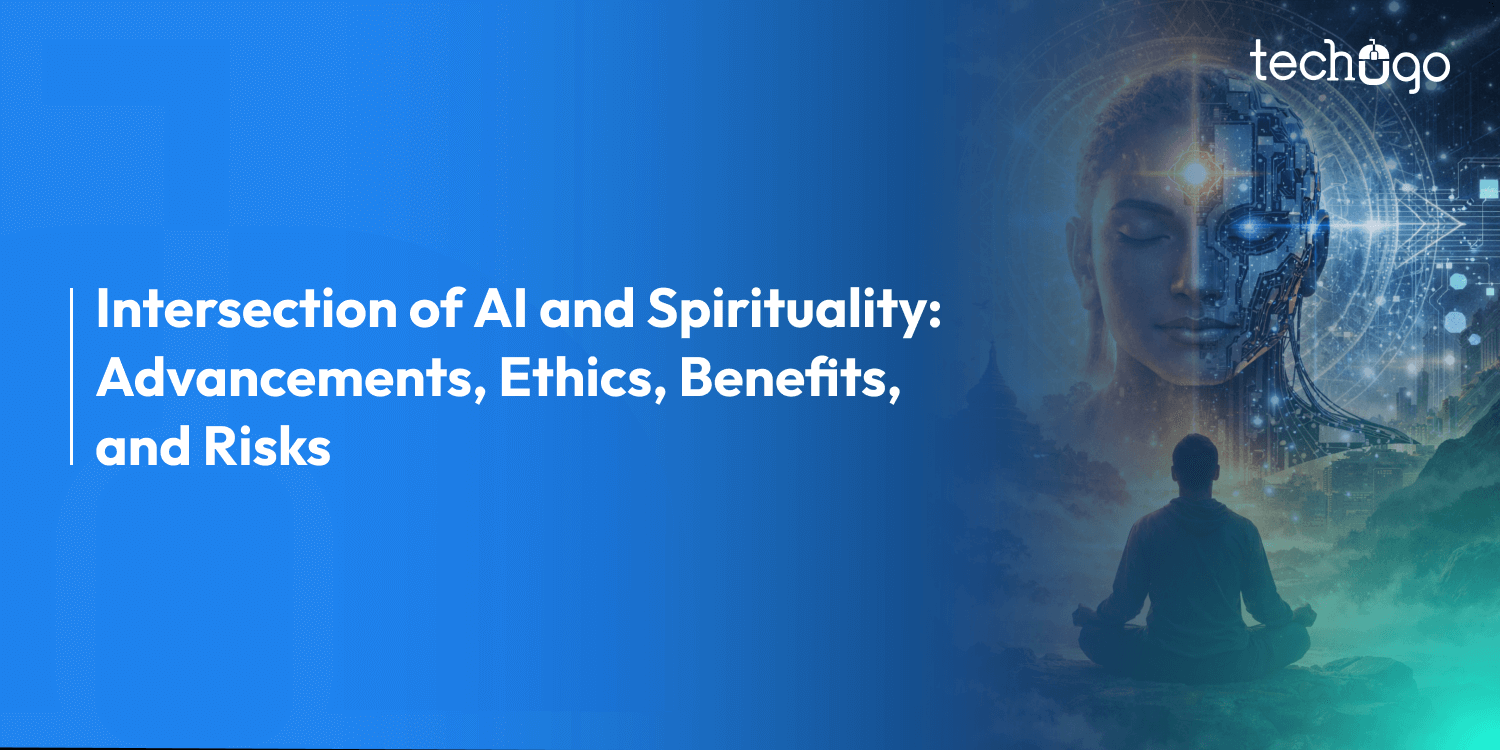
Let’s be honest, this isn’t something most people expected – AI (Artificial Intelligence) entering into spirituality, the deeply personal world of us, human beings.
We’ve seen AI handle logistics, automate work, predict buying habits, and much more. But when it starts showing up in spaces like meditation, prayer, and worship, that’s a whole different level.
So, this blog is for those who are curious, maybe even a little unsure, about: what happens when ‘Spiritual AI’ becomes a real thing, or how AI can facilitate spirituality.
This blog will cover the role of AI in spiritual practices, its advancements, ethics, benefits, risks, and AI apps in spirituality. We’ll also discuss the future of AI in spirituality as well as the challenges and potential risks.
So, let’s start…
Also Read: Top 5 Religious Tech Trends Transforming Faith in 2026
When we talk about AI and spirituality today, it’s not really a BRAND-NEW thing. Technology has always shaped how people explore their faith.
Long ago, carving symbols in stone helped turn oral stories into spiritual records. The printing press made it easier for everyone, not just priests or scholars, to read sacred texts.
“That’s the heart of the intersection of AI and spirituality: Humanity keeps using tools to connect with something bigger, something beyond.”
Spirituality is about the unseen. Technology deals with what we can see and use. But these two worlds have always worked together. New tools help share spiritual knowledge, bring people together, and break barriers.
From writing on stone, to printing books, to today’s AI-guided meditation apps, each step has made spirituality more personal and accessible. That’s why the future of AI and spirituality is being talked about so much right now. It’s just the next phase in how people practice and share their faith.
Also Read: Prayer Time, Qibla, and Zakat: How Islamic Apps are Revolutionizing Religious Practices
The pandemic only made this shift happen faster. Physical places closed, but spirituality didn’t pause. It moved online, powered by religious technology and generative AI app development companies like Techugo.
AI and spirituality are becoming more connected than ever. Across the world, people are using spiritual AI tools to explore their faith, seek guidance, and reflect. From spiritual AI chat platforms to AI-guided meditation apps, these tools offer personalized spiritual experiences.
This mix of spirituality and AI is making faith more accessible, especially for people who prefer private or digital spaces. But there’s a balance to keep. While generative AI and spirituality work well together, there are real questions about AI ethics and authenticity.
Here are some major AI tools and tech that are transforming spiritual practices in 2026 and beyond. Let’s learn more about them:
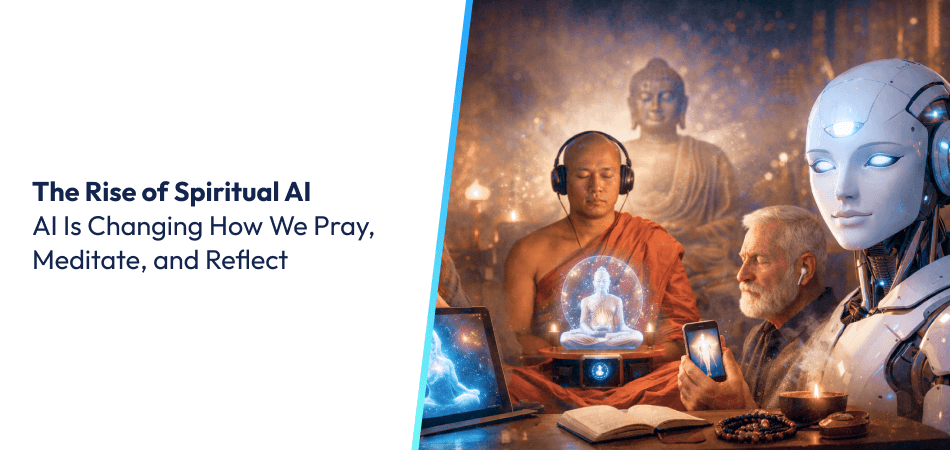
One major trend is spiritual AI chat systems offering counseling. Projects like the AI Jesus avatar in Switzerland show how far AI and the future of spiritual evolution have come.
These bots are trained on sacred texts. You can ask them questions, seek comfort, or have personal spiritual discussions, anytime, anywhere. For people who feel shy or hesitant about visiting a spiritual leader in person, AI in worship provides a safe, private alternative.
Spiritual AI chat can help:
Still, AI and human consciousness aren’t the same. AI can respond based on patterns, but it doesn’t have true spiritual intuition. That’s why AI ethics matter; depending too much on digital faith tools might change how communities connect in real life.
Also Read: How Spiritual AI Chatbots for Faith Communities Are Engaging Users Online
AI-guided meditation apps are now everywhere. Apps like Calm and Headspace use Spiritual AI to create personalized experiences. These platforms study your habits, preferences, and even data from wearables. Then, they suggest meditation styles, affirmations, or breathing exercises that match your mood or goals.
For example:
Generative AI and spirituality here help people connect with inner peace, anytime. But here’s the thing, some wonder if turning spirituality into an algorithm makes it too mechanical. That’s part of the ongoing debate about AI ethics and the future of AI and spirituality.
Another big shift is using AI in worship studies. With tools powered by NLP (natural language processing), people can now study sacred texts in-depth.
For scholars and believers alike, Spiritual AI offers customized Bible study plans or explanations of complex ideas. Even moral questions, like social justice or environmental care, are now explored with AI support.
Techugo, a trusted generative AI app development company in India, US, and UAE, builds these tools to help both individuals and religious institutions.
But again, AI isn’t perfect.
Algorithms can show bias that favors some interpretations over others. That’s why spiritual leaders and technologists both need to work together, so that AI supports, not replaces, human wisdom. No matter if it’s spiritual AI chat, prayer automation, or religious technology, there’s no denying the growing intersection of AI and spirituality.
If you’re considering building such tools, hiring artificial intelligence engineers or partnering with Techugo, a reliable AI app development company in USA and UAE, is definitely a smart step.
SaaS software development plays a key role too. It helps make sure that these spiritual experiences are available to people all around the world.
This was about how AI is transforming spiritual practice these days, but what about the future of AI and spirituality?…
The future of AI and spirituality is both exciting and challenging. As AI grows smarter, its role in spiritual life will expand too.
We’ll see:
So there is no doubt that the intersection of AI and spirituality is moving fast. But AI should support spiritual growth, not replace it.
Spirituality is about human connection, divine mystery, and community. Even with digital faith tools, we must keep that human side alive. That’s where AI ethics comes and helps us balance technology with authentic belief.
People worldwide are sharing stories about their experiences with Spiritual AI tools. Some feel comfortable talking to a spiritual AI chat companion, while others find deep introspection through AI-guided meditation. Some even report feeling a sense of divine connection through these digital platforms.
In a study, it was found that
Surveys, case studies, and testimonials show that spirituality and AI are creating new kinds of experiences. Still, questions remain:
The future of AI and spiritual evolution depends on how we handle these questions honestly and mindfully.
When talking about AI and spirituality, religious leaders and believers have mixed opinions.
Some see Spiritual AI as helpful. Others see it as risky.
Many faiths already use tools like scriptures, rituals, and apps. Now, AI-driven spiritual assistants can:
This reflects how the intersection of AI and spirituality can support daily spiritual practices.
Some religious thinkers worry that over-reliance on AI could harm real faith. True spirituality, they say, comes from human connection and divine mystery, things that AI can’t truly replicate. The fear is:
That’s why AI ethics must be considered when developing religious technology.
A more open-minded view suggests AI might actually be part of God’s plan. Like past innovations, Spiritual AI could help deliver divine wisdom in new ways. This raises questions:
The future of AI and spirituality depends on finding balance, using technology as a tool, not as a replacement. Let’s learn about ethical concerns related to spiritual AI.
AI app development company in USA teams, theologians, and believers all need to ask: Is Spiritual AI helping people or harming spiritual traditions?
Relying too much on AI-driven spiritual chats can make faith feel less real. People might skip human communities, which have always been key to spiritual growth. This risk is part of why AI ethics must guide how spiritual AI chat platforms are designed.
Unlike human leaders, AI can’t fully understand complex moral questions. Spiritual AI bases its advice on algorithms, not deep understanding. That could lead to wrong guidance, especially during tough life moments.
Spiritual AI platforms collect sensitive data:
Keeping this information secure is critical because nobody wants their private spiritual journey leaked or sold.
Here’s the biggest concern that if SaaS software development companies turn spiritual experiences into paid products, faith could lose its true meaning. Faith isn’t just another subscription service. The intersection of AI and spirituality must respect that.
AI is only as fair as its training data. If it’s biased, some beliefs might get left out or misrepresented. That’s why, when religious technology is created, it should be handled by ethical developers and spiritual leaders together, and that’s where Techugo stands out with highly skilled and ethical developers. Hire artificial intelligence engineers from Techugo who understand both tech and faith values can help maintain inclusivity.
So far, there have been many advancements in AI that are deepening spiritual practices. Let’s explore them:
The future of AI and spirituality looks more immersive than ever. With better natural language processing, emotional intelligence, and machine learning, spiritual AI is set to feel even more human-like.
Here’s how the future of AI and spiritual evolution could unfold:
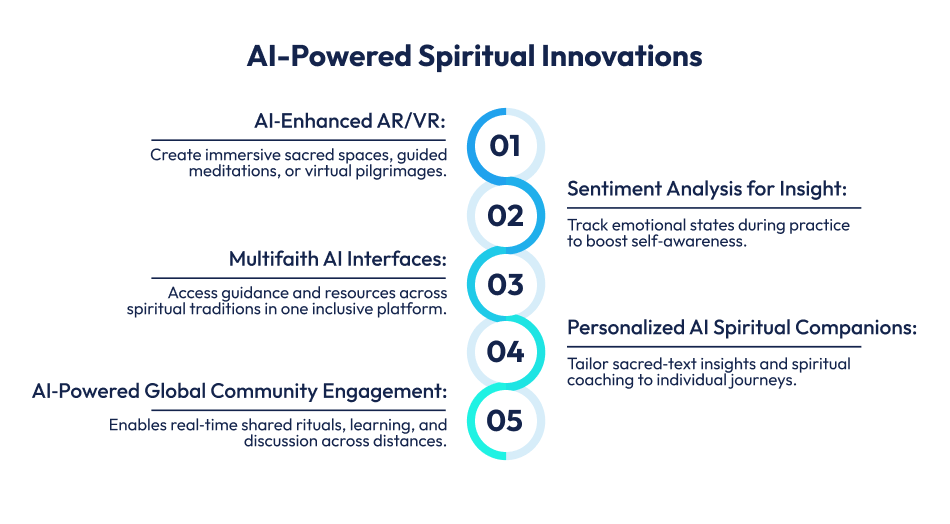
Combining AR, VR, and AI could create powerful digital faith experiences. You could take a virtual pilgrimage or attend an AI-guided meditation session in a virtual temple. Religious technology is moving toward more interactive, community-driven spaces, guided by AI insights and personalization.
With advanced sentiment analysis, AI could detect emotions in your prayers or journal entries. It could suggest scripture passages, prayers, or meditations based on how you’re feeling. That’s the kind of spiritual companionship AI is getting better at offering.
Future spiritual AI chat systems might support multiple faith traditions in one place. This could help people compare beliefs and promote unity. Such tools could encourage interfaith dialogue using AI-generated insights from various doctrines.
Hyper-personalized AI spiritual companions could track your prayer habits, scripture reading, and personal struggles. They might suggest new spiritual practices or send reminders tailored just for you. This is where AI and human consciousness start blending in new ways, supporting personal growth.
AI-driven platforms might host live spiritual chats or group meditations. AI moderators would help keep things respectful and inclusive. This intersection of AI and spirituality could build digital faith communities across countries and cultures.
The future of AI in worship isn’t just about chatbots or meditation apps. AI might soon help with prayers, religious rituals, and deep theological discussions.
Spiritual AI chat platforms could create custom prayers for you. Voice-activated AI might guide your daily devotionals, remind you of prayer times, and offer prayers for healing, gratitude, or guidance.
AI could walk users through complex religious rituals, step by step. From fasting to holiday preparations, AI could help maintain traditions accurately. Many religious organizations are already exploring this with help from an AI app development company in USA or a generative AI app development company.
Have you ever thought of AI participating in theological debates? By studying religious texts and interpretations, AI could offer well-reasoned responses or challenge your thoughts using Socratic dialogue. That’s where AI and the future of spiritual evolution get especially interesting.
AI might help clergy prepare sermons or structure worship services. This could be helpful for smaller communities with limited access to trained leaders.
AI could design personal growth plans based on your faith, interests, and goals. It would suggest daily practices, readings, or community events, adapting as you grow.
No doubt that these advancements offer new opportunities, but real concerns still remain:
These are questions religious communities, technology experts, and believers must answer together. If you’re looking to create your own spiritual AI app, hire artificial intelligence engineers at Techugo, who understand both technology and spiritual values. It’s not just about building apps. It is about respecting faith while adopting innovation.
As the intersection of AI and spirituality grows, it brings both good and bad. Faith communities must weigh both sides carefully to use Spiritual AI wisely.
That’s why working with an AI app development company or hiring artificial intelligence engineers with a strong focus on privacy is so important.
Not really. AI doesn’t have spiritual senses like humans do. It can analyze religious texts, offer AI-guided meditation, or run a spiritual AI chat. But it doesn’t feel faith, divine presence, or emotions in the true sense. Everything AI does is based on algorithms, not actual spiritual experience.
Honestly, no. AI can definitely guide you, suggest prayers, help with meditation, that kind of thing. But there’s a limit. AI doesn’t have human consciousness or real spiritual understanding. Faith isn’t just about information; it’s about human connection, divine experience, things AI just can’t fully replicate. So, it’s more of a tool than a replacement.
One big thing is accessibility. People who don’t have spiritual leaders nearby, or those who prefer privacy, can still get guidance through these tools. Plus, AI offers personalized experiences, like reminding you about prayer times or suggesting scripture based on what you’re feeling. It even helps different faith groups understand each other better. A lot of this is powered by generative AI app development companies.
Definitely. If someone depends too much on spiritual AI, they might lose touch with the real community or even start viewing faith as just another app. There’s also the risk of getting inaccurate advice. AI isn’t flawless. And don’t forget privacy; some of these platforms collect personal spiritual data. That’s why AI ethics matters a lot when bringing AI into spiritual spaces.
The actual cost depends on features like spiritual AI chat, prayer automation, multilingual support, and data privacy tools. It also depends on whether you work with a generative AI app development company or hire artificial intelligence engineers for custom SaaS software development. But here is an estimated app development cost based on app complexity:
| App Complexity | Cost Estimate | Key Features |
| Basic MVP | $15,000 – $30,000 | Simple chat, meditation, prayer reminders |
| Mid-Range | $30,000 – $60,000 | NLP, sentiment analysis, user personalization |
| Full-Feature App | $60,000 – $150,000+ | AR/VR, community, privacy, multifaith support |
The intersection of AI and spirituality is growing, offering tools like spiritual AI chat, AI-guided meditation, and religious technology.
But no matter how advanced AI becomes, true spirituality, rooted in human consciousness, mystery, and divine connection, cannot be replaced.
AI and the future of spiritual evolution depend on balance. Used wisely, Spiritual AI can support faith, not define it.
At its core, real spiritual growth will always come from the human heart, not algorithms.
Can you imagine attending a prayer session in the metaverse? Or getting Zakat reminders straight from an AI-powered assistant? In 2026, faith and tech..


Have you ever lost a potential enterprise deal because your SaaS platform didn’t meet their security requirements? If yes, you are on the right pa..


Write Us
sales@techugo.comOr fill this form