

 SA
SA
 KW
KW
 IE
IE AU
AU UAE
UAE UK
UK USA
USA
 CA
CA DE
DE
 QA
QA ZA
ZA
 BH
BH NL
NL
 MU
MU FR
FR
















📌 Key Takeaways
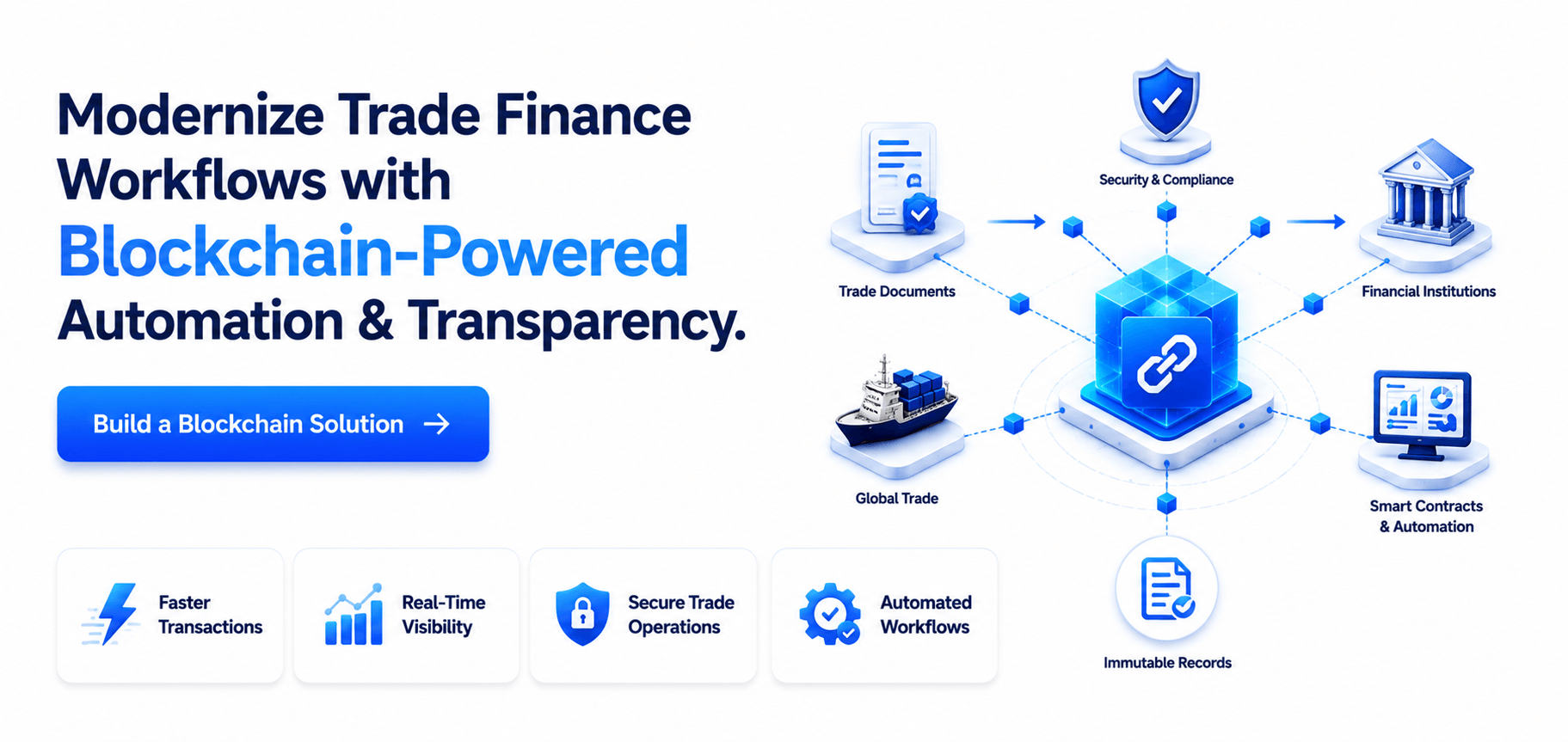
- Blockchain improves trade finance with faster transactions, real-time transparency, and secure shared records.
- Smart contracts automate payments and approvals, and reduce delays and manual verification.
- Blockchain helps reduce fraud, improve risk assessment, and strengthen trust in trade finance and credit insurance.
- Cross-border payments become faster, more transparent, and less dependent on intermediaries with blockchain solutions.
Global trade moves over $30 trillion worth of goods every year… yet a surprising part of it still runs on slow, manual, and paper-heavy processes.
While logistics, tracking, and communication have evolved rapidly, the financial layer behind global trade has not kept up at the same pace. Transactions still depend on multiple intermediaries, repeated verification, and disconnected systems that create delays and inefficiencies. It explains why blockchain in trade finance is gaining attention. As a trend? No. As a practical solution to long-standing challenges.
By introducing a shared, secure, and real-time ledger, blockchain reduces the need for constant reconciliation between parties. Instead of relying on fragmented records, everyone involved in a transaction operates from the same verified data which can also be strengthened further with the use of artificial intelligence for improved analysis and validation.
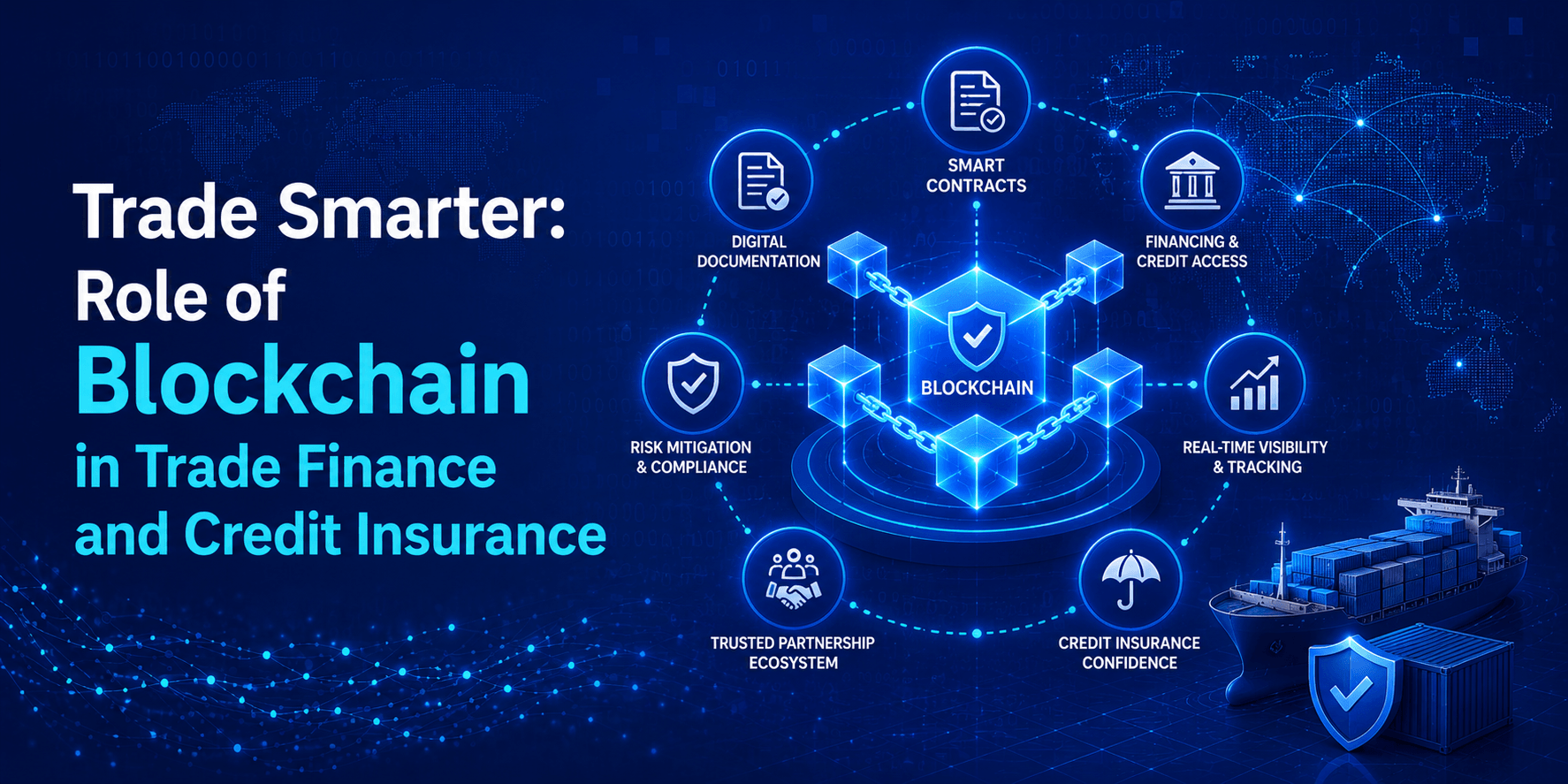
More importantly, the role of blockchain in trade finance and credit insurance goes beyond improving speed. It strengthens how risk is assessed, how payments are secured, and how trust is established between global partners who may never directly interact.
And that’s why teams at a trading software development company like Techugo are helping make trade finance smarter, simpler, and way more reliable.
Understanding the role of blockchain in trade finance and credit insurance
Global trade isn’t broken, but the way we process it might be.
To understand the role of blockchain in trade finance and credit insurance, you need to first look at how these systems operate today.
Trade finance exists to reduce risk between buyers and sellers who may be thousands of miles apart and operating under completely different regulations. Credit insurance adds another layer of protection, ensuring that exporters still get paid even if buyers default.
Also Read – Distributed Ledger vs Blockchain: Key Differences
Sounds solid in theory, but execution is where things fall apart.
The current system depends heavily on:
- Banks verifying transactions
- Insurers assessing risks manually
- Multiple parties maintain separate records
This creates delays, inconsistencies, and blind spots. But blockchain changes this dynamic completely.
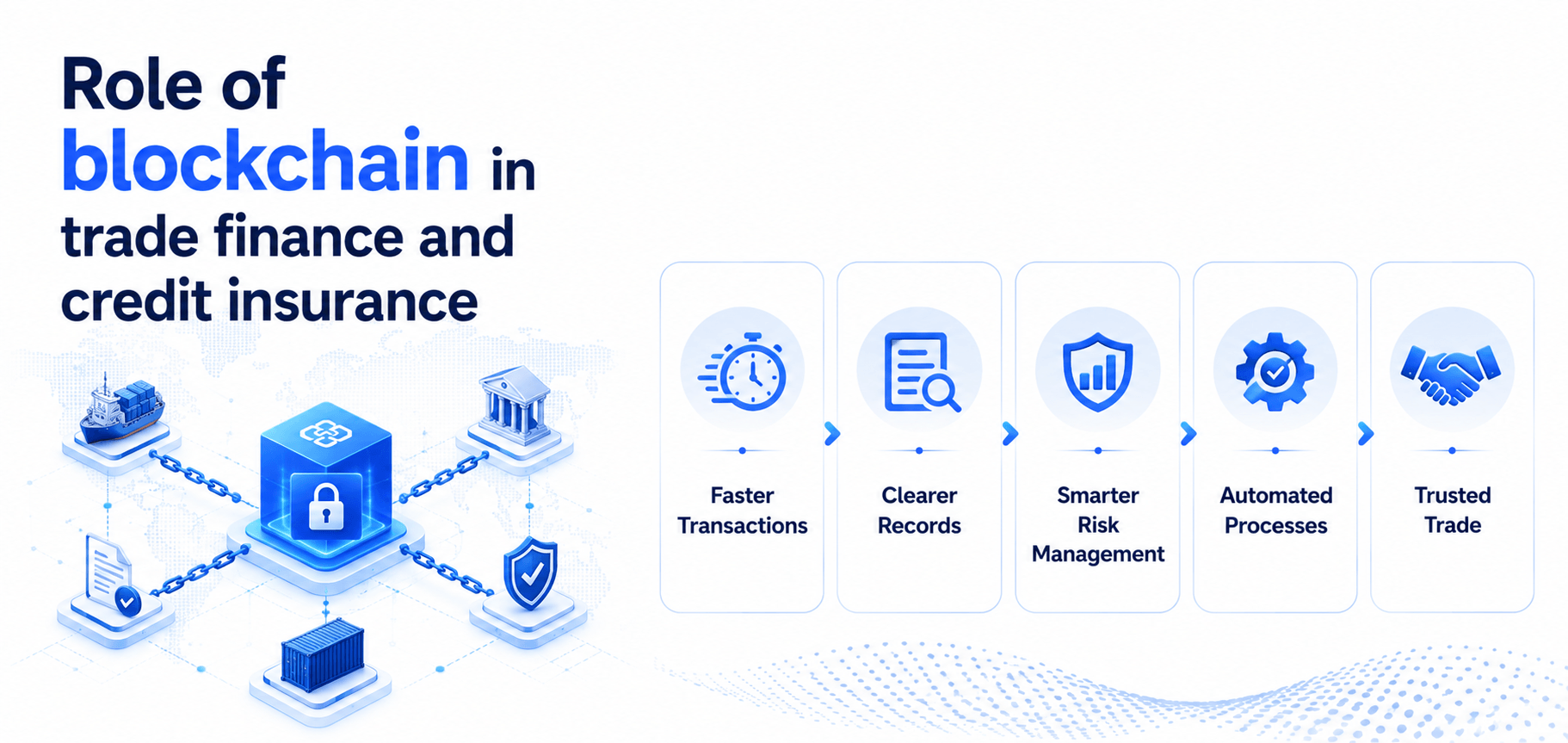
Instead of relying on isolated systems, blockchain introduces a shared ledger where all participants (banks, insurers, exporters, importers) access the same real-time data. Every transaction is recorded, verified, and locked in a way that cannot be altered.
For credit insurance, this means in modern fintech systems:
- Faster risk assessment using verified transaction history
- Reduced fraud through transparent records
- Automated claims processing using smart contracts
If a single trade deal needs five different parties just to confirm the same information, the problem is not the trade. It is the system around it.
Why do traditional trade finance systems struggle?
Before we talk about how blockchain is transforming trade finance, let’s look at what’s broken in the current system.
Despite supporting trillions of dollars in global transactions, traditional trade finance still relies on processes that are slow, fragmented, and heavily dependent on manual intervention.
Many transactions still depend on manual documentation, multiple intermediaries, and disconnected systems that don’t communicate efficiently with each other. And as a result, delays, inconsistencies, and operational bottlenecks have become a normal part of the process, rather than exceptions.
Too much paper, not enough progress
Trade finance still relies on physical documents like invoices, bills of lading, and letters of credit. These documents move across departments, banks, and borders (often manually).
That’s not just inefficient. It’s risky.
Fragmented data across stakeholders
Each participant maintains their own records. That means:
- Data mismatches
- Delayed reconciliations
- Endless back-and-forth communication
Even minor discrepancies can slow down the entire process, since there’s no single, reliable source of truth to refer to.
Time is lost in verification
Every transaction needs to be verified multiple times by different parties. What should take hours ends up taking days, or even weeks.
Fraud finds the gaps
Where there’s fragmentation, there’s opportunity for fraud. Duplicate financing, forged documents, and identity manipulation are all real challenges in trade finance.
These inefficiencies aren’t new. What’s new is that we now have the technology to fix them, especially with innovations like blockchain and AI in fintech which are helping reduce errors, speed up verification, and improve trust across financial systems.
Major benefits of blockchain in trade finance for modern businesses
When you look at the benefits of blockchain in trade finance, the impact goes beyond technology; it directly improves how businesses operate, scale, and compete in global markets. Traditional processes that once slowed transactions down are being replaced with systems designed for speed, efficiency, and trust.
Speed that matches modern trade
Speed is one of the largest advantages. The blockchain eliminates the need to verify at an unnecessary number of levels, and transactions that used to take days to be finalized can now be done in hours or even minutes. This quicker turnover enhances the cash flow and prevents delays in the operations.
Cost reduction without compromise
Another significant advantage is cost-cutting. The reduced costs of transactions and administration that businesses achieve as a result of reducing the necessity of intermediaries and automating manual processes mean that there is no reduction in security or reliability.
Transparency that builds confidence
It is also critical that there is transparency. Blockchain also allows all parties to access the same real-time information, and it reduces misunderstandings and the possibility of disagreements. Such mutual visibility creates trust with trading partners.
This can be helpful, particularly in trade finance and other related products such as credit insurance, where risk assessment is paramount.
Security that’s built in
Meanwhile, security is incorporated into the system. Every transaction is encrypted and interconnected and therefore can be very resistant to tampering or fraud. This will guarantee that trade information will be secured during the process.
Better access for smaller players
Probably the most important, blockchain provides access to smaller businesses. It makes trade finance more accessible by simplifying processes and reducing costs, and SMEs are more easily involved in global commerce.
Smart contracts in trade finance: Automating trust
Smart contracts in trade finance are one of the strongest innovations that blockchain introduces. At their core, smart contracts are simple: “If this happens, then do that.” In reality, however, they do much more than that simplicity by eliminating the necessity of repeated manual intervention and third-party verification. Rather than using several approvals and checkpoints, one can conduct their transactions automatically on the basis of previously stipulated conditions.
Consider an ordinary trade situation. A ship is delivered, and its arrival is verified by sensors or logistics information and this data is automatically checked in the system, so that payment is issued without emailing, approvals, or delays. What used to take the coordination of several parties is now happening in a single automated flow, and sometimes AI is also involved in validating the data, because it helps detect inconsistencies faster.
This is where the real value is… smart contracts reduce human error, remove processing bottlenecks and ensure that agreements are executed exactly as intended. They build trust into the system itself so parties do not always have to keep checking or verifying every step. And when AI is added into the process, it becomes even more efficient, more accurate… therefore trade finance becomes faster, more reliable, and much more effective overall.
Blockchain for cross-border payments
Cross-border payments are one of the biggest pain points in global trade.
Conventional cross-border payments have involved several intermediaries, currency conversion and clearing processes, and in most cases will cause delays and high costs of transactions.
Through blockchain, transactions can be carried out by connecting directly with parties, and therefore, transactions do not have to involve any intermediary and are also settled faster. Smart contracts also expand on this by automatically releasing payments once predefined conditions (for example, the delivery of the shipments) are fulfilled.
This not only accelerates transactions but also enhances transparency and minimizes the chances of making errors, thus making cross-border payments efficient and reliable.
Top use cases of blockchain in global trade
What if every step of a global trade transaction (documents, approvals, and payments) could happen in real time, without delays or constant follow-ups?
This is the change this technology is introducing. It makes trade processes much more efficient and reliable by streamlining the flow of information between stakeholders and making the system more connected and transparent, which helps to reduce the number of manual operations and improves efficiency in the trade processes.
The major use cases are the following:
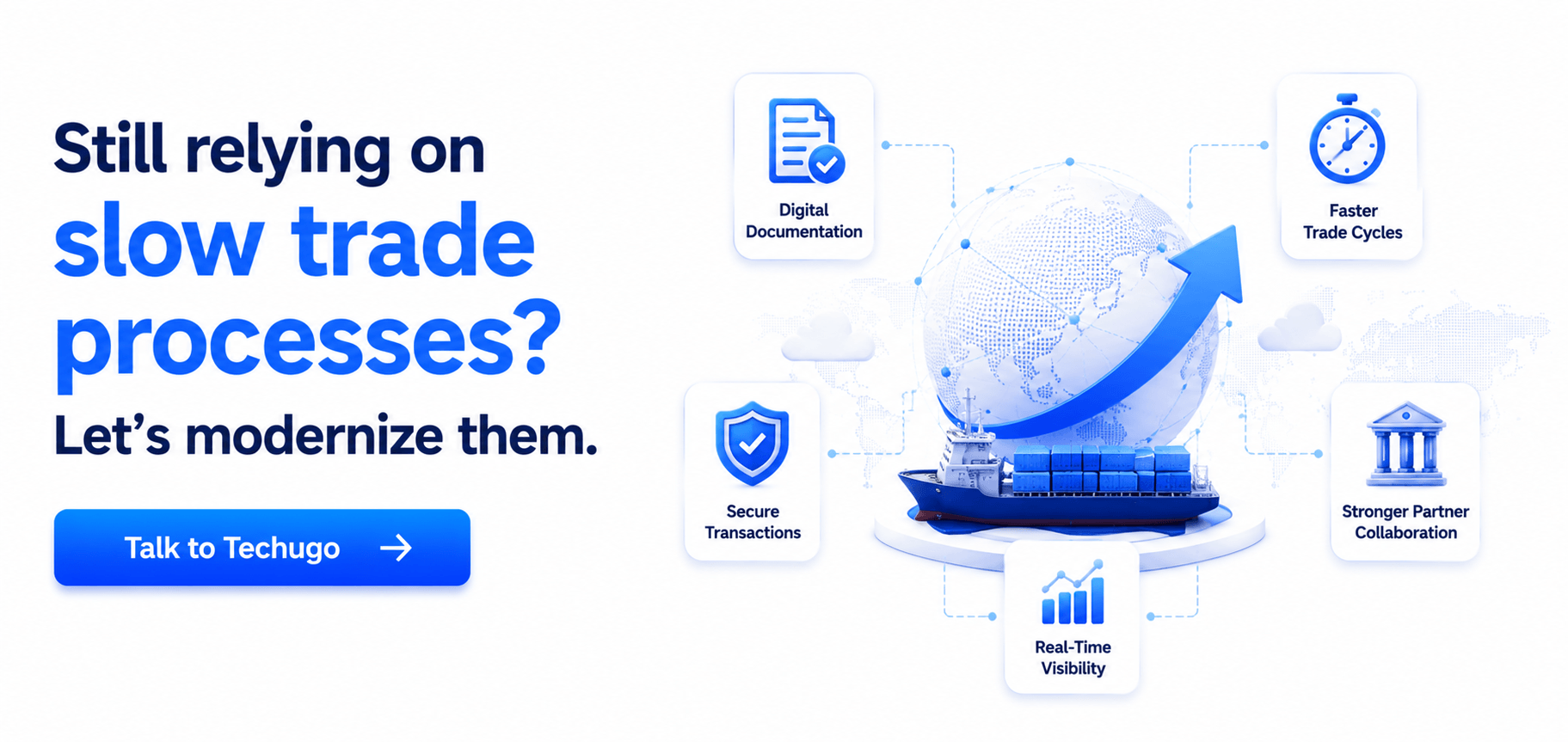
1. Digital documentation
Trade has been very dependent on documents, which are time-consuming to process and are often lost or manipulated. Blockchain substitutes them with safe digital documents that may be accessed and verified instantly, minimizing delays and enhancing accuracy.
2. Supply chain visibility
All parts of the supply chain may be documented and monitored in real time, which provides businesses with perfect insight into the flow of products. This can be used to spot the bottlenecks beforehand and react fast to disruptions.
3. Fraud prevention
In records that have tamper-resistant features, it will be very hard to change the data or copy the transactions. This greatly reduces the chances of fraud and makes trade activities more reliable.
4. Trade settlement
Automation of transactions can be done when specified conditions are fulfilled, and it eliminates the use of intermediaries and also accelerates the process of settlement.
5. Compliance and auditing
The audit trail should be transparent and permanent in order to comply with regulatory requirements. Audits are quicker and more precise because all the information about transactions can be easily presented and verified.
Challenges of blockchain in trade finance
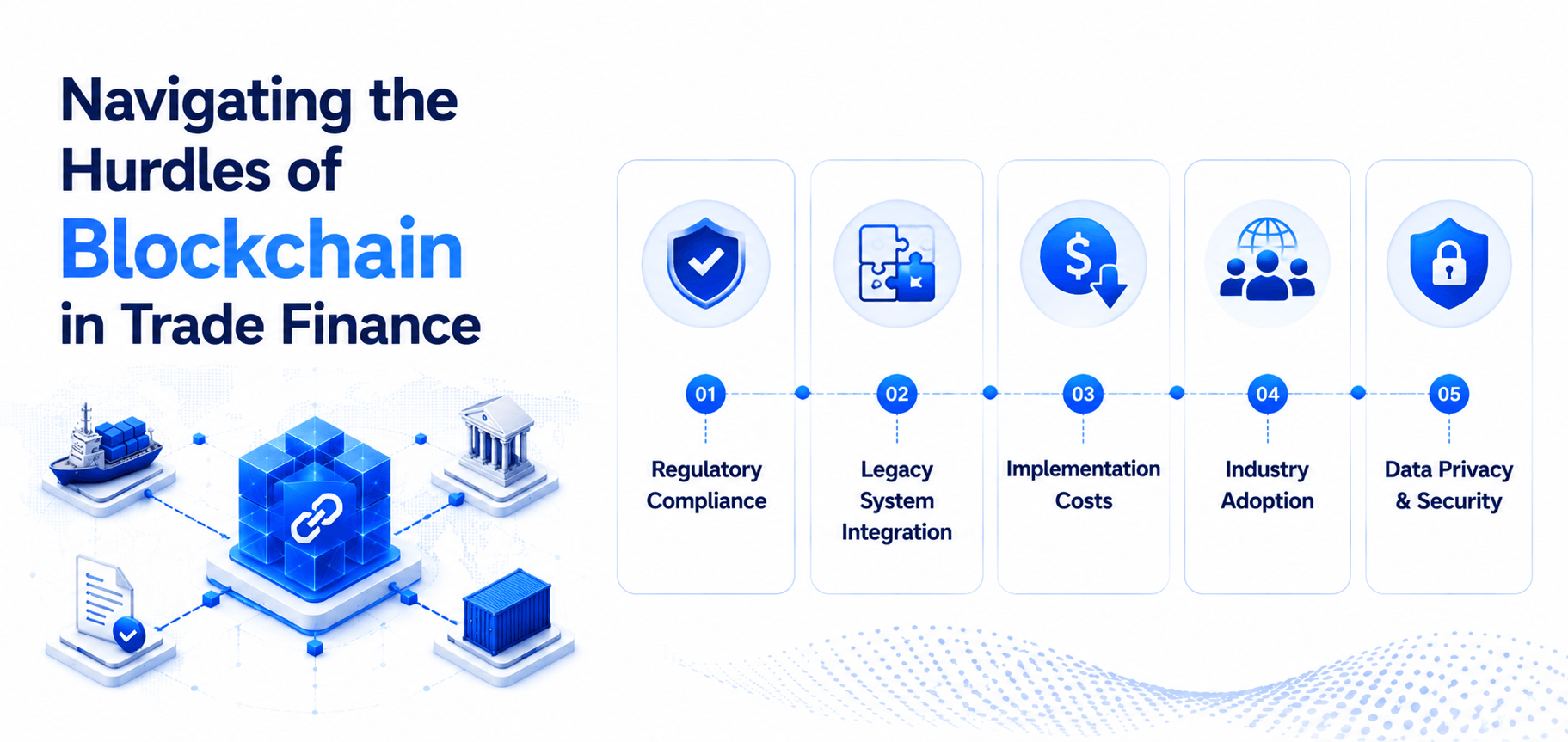
While the potential is massive, the challenges of blockchain in trade finance cannot be ignored.
Regulatory uncertainty: Different countries have different rules regarding blockchain and digital transactions. This lack of uniformity slows adoption.
Integration with existing systems: Most financial institutions still rely on legacy infrastructure. Integrating blockchain with these systems is not always straightforward.
Lack of standardization: There’s no universal framework for blockchain in trade finance, which creates compatibility issues between platforms.
Adoption barriers: For blockchain to work effectively, multiple stakeholders need to adopt it simultaneously. That’s easier said than done.
Initial investment: Implementing blockchain solutions requires upfront costs in technology, training, and system redesign.
These challenges are real, but they’re not permanent. As adoption grows, solutions are evolving quickly.
How companies are using blockchain to solve real problems today
Blockchain is no longer an experiment for big businesses. It is probably not as complicated as it sounds, and businesses of any size are beginning to look at where it actually fits into their day-to-day operations.
It does not attempt to change everything at once, but begins with a question: what is making things slow today? It may be redundant approvals, not seeing each other, or overly manual processes. These are the points at which a little change will be felt.
In many businesses, collaboration with a trusted blockchain app development company might assist them in transforming these concepts into workable solutions. It is already undergoing tests in industries such as logistics, finance, import-export, and insurance, where this method is best applied.
However, the aim is not to recreate systems in a day; it is to make specific changes that will resolve actual issues and develop slowly on top of them.
How Techugo can help you get started with blockchain solutions
As a mobile app development company, Techugo doesn’t just build apps; it helps businesses figure out what actually makes sense to build. Because not every process needs blockchain, and not every idea needs to be over-engineered. The focus is on identifying what’s worth fixing, what’s slowing you down, and where this technology can genuinely make things smoother.
Working with us means you get:
- Clear strategy and roadmap, not just tech hype
- Practical blockchain integrations that solve actual business problems
- User‑centric design so solutions aren’t just powerful, they’re easy to use
- AI integration tailored to modern business needs
- End‑to‑end development support from concept to launch
No unnecessary layers. No overcomplication. Just solutions that fit into your workflow and actually improve how things run.
If you are ready to turn a blockchain idea into a working application, Techugo can help make it happen without the guesswork or confusion.
Your next-level trade solution is one click away. So, connect with us now!
Final thoughts
Blockchain is not only enhancing trade finance; it is redefining the concept of trust in international trade. By replacing manual processes with secure, automated systems, it addresses some of the most persistent challenges in international trade.
Yes, there are hurdles to overcome. But the momentum is undeniable.
To any business that is willing to change, blockchain is not only efficient, but it is also an advantage in an ever-changing world of global business.
And in a fast, transparent, trust-based world, where speed, transparency, and trust are now more than ever, it can be that edge.
FAQs
1. What is blockchain in trade finance?
The application of blockchain in trade finance is the utilization of decentralized digital registers to document, authenticate, and control trade transactions. It allows sharing data in real time and between more than two parties in a secure manner, reducing delays and enhancing transparency.
2. What is the purpose of blockchain in trade finance and credit insurance?
Blockchain in trade finance and credit insurance is aimed at enhancing trust, transparency, and efficiency. It assists insurers in estimating risk based on verified transaction data, mitigates fraud, and provides automatic systems (such as smart contracts) to handle claims faster.
3. How do smart contracts work in trade finance?
Trade finance Smart contracts are self-executing contracts coded on a blockchain. They automatically activate operations (like issuing payments) when specific conditions, such as confirmation of delivery, are achieved.
4. What is the solution to cross-border payments via blockchain?
Cross-border payment through blockchain can eliminate the middlemen in a transaction and facilitate quicker and less expensive transactions. The payments may be made in near real-time, and this enhances the cash flow and minimizes the delays in settlement.

Get in touch
We'd love to hear from you.