

 SA
SA  KW
KW  IE
IE AU
AU UAE
UAE UK
UK USA
USA  CA
CA DE
DE  QA
QA ZA
ZA  BH
BH NL
NL  MU
MU FR
FR 






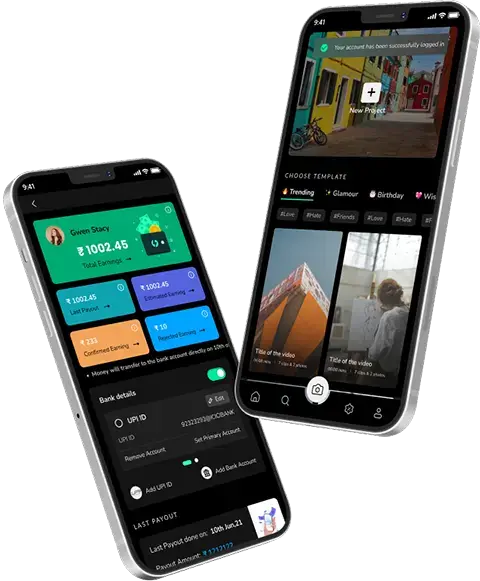








Several reports claim that, by the year 2030, the global wearable technology market is expected to reach between USD 176 and 186 billion.
The term technology today is embroidered with new innovations and techniques, evolving the technology business every day. One of the trendiest sparks of the latest technology hub is wearable technology, as the name suggests, it is the tech gadgets that can easily be worn around or on our bodies. People across the globe love to don wearable gadgets, since it gives a glut of personalisation, imbued in our lives, it can be in the form of clothing, glasses, helmets to watches, but in spite of so much in demand, wearable technology needs to overcome the number of challenges in the development phase to improve its efficiency further…
Challenge 1: Cross Platform Capability
The wearable devices come in different flavours and work well across multiple devices, but it is very important for an app developer to ensure that the wearable apps work efficiently on multiple devices. When you develop an app, your main aim is to make your app popular and to achieve this milestone, you need to reach out to a wider audience, which can only be accomplished if your app is not a specific platform based, but is easily accessible by various platforms. So make sure to get a wearable mobile app developed on a cross-platform, which would help your mobile app to reach a wider audience and beat the competition.
Challenge 2: Battery Friendly
When your users utilise the wearable mobile app, they look for better battery usage consumption, so ensure your mobile app is able to optimise the performance and keep the battery consumption features at arm’s length. This would help your users to pick the mobile app since it would not affect the phone battery.
Challenge 3: Design Complexity
Many app developers mistake the wearable device’s app similar to smartphone mobile apps, and they forget the screen resolution and the screen size of the wearable gadget, which does not go well with the wearable gadgets or devices. As an app developer, you need to emphasize more on collecting data and voice commands, which can streamline the user experience efficiently. Since wearable devices have compact screen space, so there is a lack of space for flash icons and detailed navigation. As an app developer, you must keep the navigation as easy and minimal as possible.
Challenge 4: Market Demands
In app technology, the new technologies make their entrance every passing moment, which marks a line for you to develop the app as quickly as possible, so the app can be launched on time before any new technology goes round and round.
Challenge 5: API & Protocols
Another challenge app developers find with wearable app development is in the coding standards. Every wearable device comes in the market with a huge set of changes in the coding standards, which make many applications fail to function fully on a particular device and as no coding standards and protocols are mentioned, the API needs to be developed differently for each device, so developers need to keep pace with the new API that brings compatibility with devices.
Challenge 6: Define A Purpose
Many app developers make a wearable app, for the sake of development only, but they forget what purpose this app is going to serve, how it is going to be different from existing wearable apps?
Ask yourself these questions and get into the development phase, since without finding a purpose behind the app development, you can never win the hearts of your users.
Although there are challenges, or you may call them roadblocks, in wearable app development, yet the wearable apps are much in demand and have a potential market to benefit from. You just need to play carefully and take care of the above-mentioned aspects to make a winning wearable app.
Are There Any Additional Wearable App Development Challenges Businesses Face Today?
Yes, there are some additional wearable app development challenges, and the first one is a big one these days. I.e., data accuracy and sensor reliability.
Data Accuracy and Sensor Reliability
Wearables rely heavily on sensors. Heart rate, SpO2, sleep, motion, temperature. Even minor inaccuracies can lead to misleading insights, especially in healthcare or fitness apps. Developers often struggle to balance sensor limitations with user expectations of “medical-grade” accuracy.
Regulatory and Compliance Complexity
This challenge has grown sharply over the last few years.
Depending on the use case, wearable apps may need to comply with HIPAA, GDPR, FDA guidelines, or regional health regulations. Even non-medical wearables now handle sensitive personal data, making compliance unavoidable.
User Retention and Long-Term Engagement
This is one of the most common post-launch problems.
Many wearable apps see strong initial downloads but poor long-term usage. Users stop wearing devices, disable notifications, or abandon apps due to low perceived value over time.
Key reasons:
- Repetitive insights
- Notification fatigue
- No personalisation beyond basics
Limited Monetisation Opportunities
Very common, rarely discussed openly.
Wearable apps often struggle to justify revenue models. Users resist subscriptions. Ads ruin the experience. Freemium models plateau quickly. Many teams realise too late that monetisation was an afterthought.
Ecosystem Dependency and Platform Lock-In
Wearable apps do not live independently. They depend on:
- Apple Health
- Google Fit
- Device OEM APIs
- OS update cycles
Any change in these ecosystems can break features or restrict data access overnight.
Scaling Wearable Apps Beyond MVP
Another very real issue.
What works for 10,000 users often fails at 1 million. Sync delays, data processing costs, analytics overload, and backend performance issues surface quickly as adoption grows.
Techugo’s Best Practices to Navigate Wearable App Development Challenges
Building a wearable app is not only about overcoming technical limitations. It also requires thoughtful planning, user empathy, and long-term scalability.
Over the years, Techugo, as a trusted mobile app development company in India, has worked closely with businesses to address wearable app development challenges using a practical, experience-led approach.
1.One of the key best practices is designing with the device first, not the feature list. Wearable devices have small screens and limited interaction windows. Successful wearable app development focuses on glanceable interfaces, minimal inputs, and meaningful outputs, rather than replicating mobile app experiences.
2.Another important practice is optimising performance from day 1. Battery efficiency, background processes, and data sync frequency must be carefully managed. Lightweight architecture and efficient APIs help ensure the wearable app delivers real-time value without draining device resources.
3.Security and data privacy are also built into the foundation, not added later. Wearable apps often handle sensitive personal data. Using encrypted data transmission, secure authentication, and compliance-ready frameworks helps reduce risks and supports long-term trust.
4.To address platform diversity, Techugo follows a cross-platform wearable app development strategy. This allows businesses to support multiple operating systems and devices while maintaining consistent performance and user experience.
5.Finally, continuous testing and iteration play a critical role. Wearable technology evolves quickly. Regular updates, device testing, and user feedback loops help wearable apps stay relevant, accurate, and engaging over time.
By combining technical expertise with real-world product thinking, Techugo helps businesses build wearable applications that are reliable, scalable, and ready for future growth.
Emerging Trends Shaping Wearable App Development in 2026
Wearable app development is evolving beyond basic activity tracking. In 2026, wearable apps are becoming smarter, more contextual, and deeply integrated into everyday digital ecosystems.
- AI-driven insights
- remote health monitoring
- Voice-based interactions and gesture controls
- seamless integration with IoT and smart devices
One major trend is the use of AI-driven insights, where wearable apps analyse real-time data to deliver personalised health, fitness, and productivity recommendations.
Another growing trend is remote health monitoring, as wearable devices increasingly support continuous tracking and integration with telehealth platforms.
Voice-based interactions and gesture controls are also gaining traction, enabling hands-free usage and improving accessibility.
At the same time, wearable apps are moving towards seamless integration with IoT and smart devices, creating connected experiences across homes, workplaces, and healthcare systems.
As user expectations rise, the focus in 2026 is on building wearable apps that are intelligent, interoperable, and capable of delivering meaningful value over time.
Summing Up…
If you have got a concept of the wearable app, you must not delay it any further, and must get in touch with Techugo, a top mobile app development company in USA and India. Our team is full of tech-experts who have delivered some of the most successful mobile apps to many established brands and startups across the globe. You can give us a call; we are just a buzz away to make your dream concept turn into a successful mobile app.
Frequently Asked Questions
1. What are the biggest challenges in wearable app development today?
One of the biggest challenges is the wearable app security challenges. But, other wearable app development challenges include – device fragmentation, battery constraints, data accuracy issues, regulatory compliance, and maintaining long-term user engagement across different platforms.
2. How is wearable app development different from mobile app development?
Wearable apps are built for smaller screens, limited interactions, and lower processing power. They focus on glanceable experiences, real-time data, and seamless integration with smartphones and IoT ecosystems.
3. How do wearable apps handle data privacy and security?
Facing wearable app security challenges is common. But to overcome this, wearable applications use encrypted data transmission, secure authentication, and compliance-ready architectures to protect sensitive user data, especially when handling health, fitness, or personal information.
4. What industries benefit most from wearable app development?
Healthcare, fitness, enterprise productivity, retail, sports, and remote monitoring industries benefit significantly, as wearable apps enable real-time insights, tracking, and personalized user experiences.
5. How long does it take to build a wearable app?
Wearable application development timeline depends on features, device compatibility, and integrations. On average, a wearable app may take 3 to 6 months, including design, development, testing, and deployment.

Get in touch
We'd love to hear from you.