

 SA
SA  KW
KW  IE
IE AU
AU UAE
UAE UK
UK USA
USA  CA
CA DE
DE  QA
QA ZA
ZA  BH
BH NL
NL  MU
MU FR
FR [ LET’S TALK AI ]
X
Discover AI-
Powered Solutions
Get ready to explore cutting-edge AI technologies that can transform your workflow!



Get ready to explore cutting-edge AI technologies that can transform your workflow!






Social media isn’t what it used to be. For years, platforms have relied heavily on ads, data tracking, and algorithms that shape what users see online.
But things are starting to change.
Ads are everywhere, algorithms decide what we see, and user data has become a major part of how these platforms operate. Because of this, many users are starting to question the trade-off between staying connected and giving up their privacy.
This shift in mindset is exactly where apps like MeWe start to stand out.
If you’ve been exploring privacy-focused social platforms, you’ve probably wondered what is MeWe application and why it’s getting attention as an ad-free alternative to traditional social media.
Unlike many mainstream platforms, MeWe positions itself as a network built around user privacy, no ads, and greater control over personal data.
That’s also why the platform has caught the attention of entrepreneurs and startups interested in building similar privacy-first social networks. But before turning the idea into a real product, the next thing to consider is the cost of developing an app like MeWe.
Realistically, the cost of MeWe app development can range between $40,000 to $150,000 or higher, depending on the features and platform you choose.
So what exactly goes into building a MeWe-like social platform? Let’s walk through the features, development process, and the factors that influence the overall cost.
Also Read: Native vs Hybrid Apps: What to Choose in 2026 (Guide for Businesses)
Ever feel like most social media apps know a little too much about you? Every click, every like, every scroll somehow turns into another ad. That’s exactly the problem MeWe is trying to solve.
MeWe is a modern social networking platform built around the idea that users should have control over their own data. At a time when many social media platforms rely heavily on ads and data tracking, MeWe takes a different path. It focuses on privacy, transparency, and a cleaner social media experience.
Instead of monetizing user data, MeWe focuses on creating a space where people can connect and share content without being constantly targeted by advertisements or algorithms.
The platform still lets you do all the things you’d normally expect from a social media app, like share posts, join communities, and message friends. The difference is, MeWe app does all of this while putting a much stronger focus on privacy.
In simple terms, the MeWe application is basically a social network built with privacy in mind.
It gives people a space to connect, share, and interact, just without all the ads and constant data tracking you usually see on traditional social media platforms.
Some of the features that make MeWe stand out include:
Because of its strong focus on privacy, MeWe has started getting attention not just from everyday users, but also from entrepreneurs and startups.
Many businesses are now curious about how platforms like this work and what makes them appealing to users.
As more people look for social media options that respect their privacy, the idea of building an app like MeWe is becoming more interesting for businesses that want to tap into this growing demand.
Also Read: Cost to Develop an Ecommerce App Like Iconic in Australia
There’s more than one factor that influences the cost to build an app like MeWe.
The cost of MeWe app development usually depends on the features you include, how detailed the design is, the developers you hire, and the platforms you want the app to run on.
Since MeWe focuses on privacy, security becomes a key factor.
User data needs protection. Messaging needs reliability. And for that, the platform needs a strong backend and a smooth front-end experience. All of these elements come together to shape the overall cost to build an app like MeWe.
Below is a rough breakdown of the major components that influence the cost of MeWe app development.
| App Type | Estimated Cost | Features Included | Timeline |
| MVP Version | $20,000 – $40,000 | Basic user profiles, content posting, simple feed, messaging, basic notifications | 2 – 4 months |
| Basic Social Media App | $40,000 – $80,000 | User profiles, news feed, groups/communities, media sharing, messaging, push notifications | 4 – 6 months |
| Advanced MeWe-Like Platform | $80,000 – $150,000+ | Advanced privacy controls, secure messaging, group features, media, sharing, real-time notifications, scalable backend | 6 – 9+ months |
To understand the budget more clearly, let’s break down the main cost components involved in the development of MeWe app.
Before users post, comment, or message anyone, the first thing they notice is the design.
It shapes how the app feels from the very first screen. A clean and intuitive interface is essential to ensure users can easily navigate the platform, interact with content, and communicate with others.
The design process usually includes:
A well-designed social media app can cost anywhere between $5,000 and $15,000.
Frontend development is all about what users actually see and interact with inside the app.
Think of the scrolling feed, user profiles, messaging screens, and the tools used to post photos or updates. This is the layer that turns the app into something people can tap, swipe, and explore.
To build this experience, developers often use technologies like React Native, Flutter, Swift, or Kotlin for mobile platforms.
Depending on the number of features and whether the app is built for one platform or multiple, frontend development typically costs between $15,000 and $40,000.
Not everything in a social media app happens on the screen. There’s a lot happening in the background.
That’s where backend development comes in. It powers the system behind the app.
It handles things like user logins, data storage, and server management. It also supports real-time features such as messaging and notifications. And since social media apps deal with huge amounts of user activity and data, the backend needs to be strong, reliable, and scalable as the platform grows.
The backend development cost usually ranges between $20,000 and $50,000, based on infrastructure and scalability requirements.
Features can change the entire cost of building the app. The more functionality you add, the more development work goes into it.
Even core features take effort. Messaging systems, groups, notifications, and media sharing all require proper development and testing.
Adding these basic features can cost around $10,000 to $30,000. But if the app includes more advanced capabilities like live streaming, end-to-end encryption, or AI-powered feeds, the overall development budget can increase further.
Before the app goes live, it needs to be tested properly. Every feature has to work the way it’s supposed to.
This stage focuses on things like checking functionality, fixing bugs, improving performance, and making sure the app is secure.
For a social media app, testing becomes especially important. Users expect everything, from messaging to notifications.
On average, testing and quality assurance can cost around $5,000 to $10,000.
Even after the app is launched, ongoing maintenance is required to fix bugs, release updates, and improve security. Regular updates also help keep the app compatible with new operating system versions.
Typically, businesses allocate 15–20% of the total development cost per year for maintenance and improvements.
When you look at it closely, building an app like MeWe isn’t just one task, it’s a whole ecosystem of work happening together. Design, development, testing, and maintenance all play their part. And each layer adds to the final cost of bringing the platform to life.
That’s exactly why the total cost can vary from project to project.
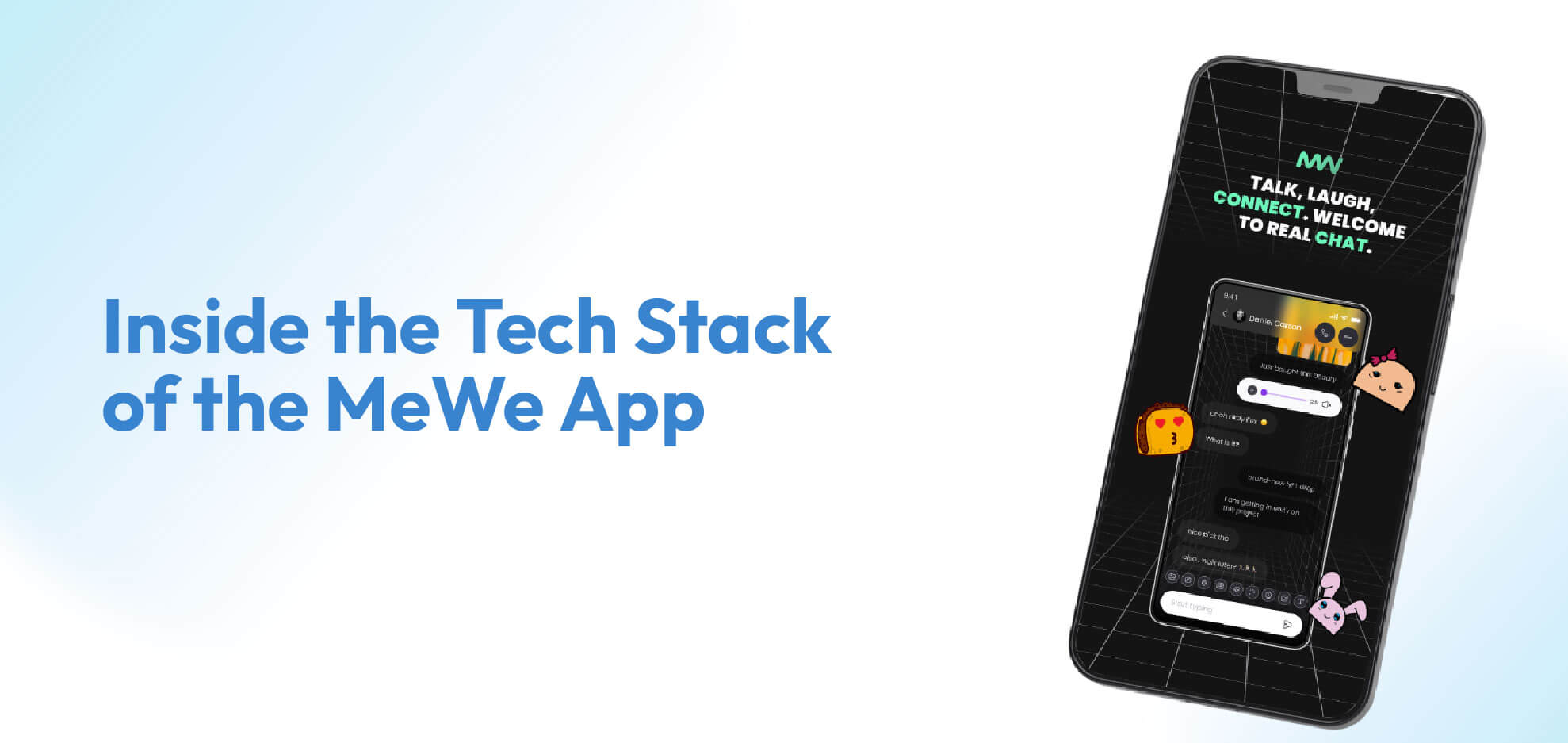
When people think about a social media app like MeWe, they usually focus on the features: posts, groups, messaging, and media sharing.
But that’s just the surface. Behind it, a whole stack of technologies is making everything work.
From the interface users interact with to the systems managing data and security in the background, several technologies play an important role in building a platform like this.
Let’s take a look at the main ones.
This is the part of the app users see and interact with every day. The feed you scroll through, the profile pages, the messaging screens, everything visible lives on the frontend.
To build these experiences for mobile devices, developers often rely on technologies like React Native, Flutter, Swift, or Kotlin. These frameworks help create fast, responsive apps that work well across both Android and iOS platforms.
If the frontend is what users see, the backend is what keeps everything working behind the scenes.
This layer manages things like user authentication, data processing, messaging systems, and notifications. Frameworks such as Node.js, Django, or Ruby on Rails are commonly used to build these systems and keep the platform running reliably.
Social media platforms deal with a lot of data – posts, comments, messages, media files, and user activity happening all the time.
That’s why social media platform development needs a strong system behind it. All of that data has to be stored somewhere and organized properly.
So developers use databases like MongoDB, PostgreSQL, or MySQL.
A growing social media platform needs an infrastructure that can handle traffic as more users join.
Cloud platforms like AWS, Google Cloud, or Microsoft Azure are often used to host the application, store data, and scale the system whenever demand increases.
Since MeWe positions itself as a privacy-focused social network, security becomes a big part of the technology stack. This often includes secure authentication systems, encryption technologies, and data protection mechanisms designed to keep user information safe.
Users might see posts, messages, and communities while using the platform.
But the technology used for MeWe application is what supports every scroll, upload, and interaction. And when the right technologies come together, the platform becomes faster, more secure, and ready to grow with its users.
Building a social media platform is one thing. Making it sustainable is another. For apps like MeWe, monetization works a little differently.
Since it positions itself as an ad-free social media platform, the usual “fill the feed with ads” strategy doesn’t really fit. That’s why platforms like this usually look at other ways to generate revenue.
One of the most common approaches is a subscription model. Users can continue using the core platform for free, but those who want a little more can upgrade to a premium plan.
These plans might offer things like stronger privacy controls, larger file uploads, better community tools, or a few extra features designed for power users.
Another option is offering paid add-ons inside the app. Not every user needs them, but some people enjoy extra customization.
Features like custom emojis, bigger group limits, or additional profile features can be offered as small upgrades without affecting the free experience for everyone else.
Communities are a big part of social media today. That’s why many platforms are building tools specifically for creators and group leaders.
A MeWe-like app could allow creators to run paid communities, offer exclusive content, or charge small membership fees for private groups. This benefits both the creators and the platform.
Photos and videos take up your space.
Since social media apps deal with large amounts of photos and videos, platforms can offer paid storage upgrades. Users who need more storage space or higher media quality can upgrade their plans.
Even without intrusive ads, platforms can still generate revenue through brand collaborations or sponsored communities that align with the platform’s values.
In the end, monetizing a privacy-focused platform comes down to balance. The goal is to generate revenue without disrupting the user experience that attracted people to the platform in the first place.
Developing an app like MeWe is far more layered than it looks.
What users see is simple, but building something that runs for thousands of people takes real expertise. It’s about understanding how people connect, what makes them stay, and most importantly, how to build a space they trust.
That’s where the right development partner like Techugo, becomes important.
Techugo has built 1400+ mobile apps for over 150 clients around the world, working with everyone from growing startups to large enterprises and even Fortune 500 companies.
When you partner with the right mobile app development company who understands performance, user psychology, scalability, and security, the process becomes smoother and the product becomes stronger.
We don’t just “develop apps”. We help shape ideas into real digital experiences. And that’s why businesses looking to develop apps like MeWe choose Techugo.
The MeWe app is basically a social networking platform where people can connect, share posts, join groups, and message each other, just like other social media apps.
The only difference is that it promotes itself as an ad-free social media platform.
Building an app like MeWe can cost anywhere from around $40,000 to $150,000 or more, depending on the features, design, and overall complexity.
Many companies start with a simpler version first and then expand the platform as more users join.
To build a social media platform, developers usually use technologies for both the front end and the backend.
For example, frameworks like React Native or Flutter are often used to build the app interface, while databases like MongoDB or PostgreSQL help store and manage large amounts of user data.
A social media app like MeWe usually includes user profiles, a news feed, messaging, groups, and media sharing.
Privacy and control are a big part of it too. So, make sure the platform includes clear privacy settings. Let users manage their data and who can see their content.
Users are now becoming aware of how their data is used online. That’s why ad-free social media platforms like MeWe are gaining attention, as they prioritize privacy and give users greater control over their data.
In the growing food and grocery delivery market, taking your first step is only feasible when you have an application or have given the task to someon..

Understanding how much it costs to build a dating app matters a lot more today, especially as online dating keeps turning into a massive multi-billion..



Write Us
sales@techugo.comOr fill this form