

 SA
SA
 KW
KW
 IE
IE AU
AU UAE
UAE UK
UK USA
USA
 CA
CA DE
DE
 QA
QA ZA
ZA
 BH
BH NL
NL
 MU
MU FR
FR







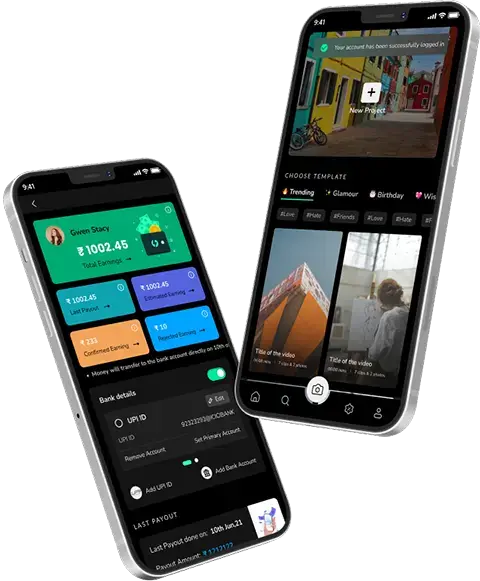








What’s your most loved platform for taking inspiration? Be it following a fashion statement or decorating one’s personal space, we all look for references from visual discovery apps that are built for the same.
We know your mind is leading you somewhere. Let us guess!
Is it the Pinterest app?
What does Pinterest do?
Well, social media networking has become a paramount activity in everyone’s lifestyle, and undoubtedly, we are always at arm’s distance from our smartphones.
Honestly, Pinterest started as a platform for people to create their mood boards, and soon it became a comfortable space for all the creative heads and businesses exploring Pinterest-like app development opportunities.
Did you know?
The Pinterest Android and iOS applications now have more than 619 million monthly active users, making it one of the most popular image sharing and inspiration apps today.
Jaw dropping, isn’t it?
What Is Pinterest and How Does It Work?
Undoubtedly, human beings are able to perceive visual details in a much-enhanced manner. Therefore, it is not shocking that apps like Pinterest are doing well by emphasizing text and visual information. It is a popular social network app that enables its visitors to browse and come across content they want to see to acquire inspiration.
Additionally, it enables the audience to bookmark or ‘pin’ their likes and interests in the form of videos, graphics, and GIFs.
Furthermore, the platform has got the back of one of the most powerful technologies known as Machine Learning that identifies and puts forward content based on user history and saved pins.
Launched back in 2010, the platform has witnessed tremendous growth and bagged awards, including Best New Startup, Best SocialMedia App, and People’s Voice Awards.
Why Pinterest-Like Apps Are Still in Demand
The reason behind Pinterest’s success, and what transformed the idea into a money making app?
1. Innovation and Originality
Did you ever come across an app like Pinterest before it got launched?
It won’t be wrong to say that Pinterest built the foundation for visual marketing, and now excels at communicating via graphics. Moreover, it promotes itself as a platform where visitors can land to seek creativity and inspiration.
Additionally, businesses are also making Pinterest a part of their marketing strategy since brands see a visual-centric approach as a benefit to develop their value and attract a higher customer base.
2. Simplified Yet Classy UI/UX
If you’re a regular Pinterest user or have visited the platform, you would have noticed a clean and flexible user interface.
It is precisely one of the best traits offered by the platform that enables visitors to seamlessly understand the app’s functionality. Additionally, the layout perfectly fits with the user’s photo collections, making it easier for them to discover anything they want.
3. Autonomy and Ownership
Do you know why the growth team of Pinterest managed to gain the trust of its audience?
The entire credit goes to autonomy that drove user growth.
It enabled the team to support quick decision-making and delivery of efficient results. Not only this, but the autonomy culture was also passed down as a legacy to every member of the growth team, including the designers, managers, etc.
The strategy helped the team to follow the same objective, which is to drive the company’s success and deliver an exceptional user experience.
4. Last But Not Least- Women’s Favorite
At an earlier stage, the platform’s target audience was the homemakers in the Midwest, engaging them to try their own DIVs and more.
According to reports, Pinterest holds a solid female-oriented customer base with 71% due to the content posted on the platform.
Who Should Build a Pinterest-Like App?
A Pinterest-like app development strategy works best for businesses that rely on visual inspiration, product discovery, and user-curated content.
If your idea revolves around images, collections, or recommendations, building an app like Pinterest can be a strong business move.
Below are the most relevant use cases where a Pinterest clone app or Pinterest alternative app makes commercial sense.
1. Fashion & Lifestyle Brands
Fashion brands thrive on visuals. A visual discovery app allows users to browse outfits, save looks to boards, and discover styling ideas. By combining AI image recognition app capabilities with curated feeds, brands can turn casual browsing into purchase intent. This model fits well with image sharing app development and influencer-driven discovery.
2. Interior Design & Furniture Companies
Home décor is one of the biggest inspirations behind building a Pinterest clone app. Users can create boards for room ideas, color palettes, and furniture layouts. Adding visual search app functionality enables customers to upload an image and find similar furniture or décor items instantly, bridging inspiration with commerce.
3. Travel & Tourism Platforms
Travel companies can use a Pinterest-like app development model to help users plan trips visually. Boards for destinations, food, hotels, and itineraries turn the app into an inspiration app development product rather than a standard booking platform. This approach increases session time and repeat visits.
4. Food, Recipes & Cooking Communities
Recipe platforms benefit from a build app like Pinterest structure where users save dishes, create meal boards, and explore cuisines visually. With AI image recognition app tools, users can search recipes by uploading food photos, making discovery more natural than text-based search.
5. E-commerce & D2C Brands
For ecommerce businesses, a Pinterest alternative app works as a visual catalog. Instead of browsing endless product grids, users explore themed collections (fashion looks, gift ideas, home setups). This merges social media app development with product discovery, creating a high-conversion visual shopping experience.
6. Real Estate & Architecture Platforms
Property platforms can adopt Pinterest-like app development to showcase interior layouts, exterior designs, and architectural inspirations. Buyers can save properties or design ideas into boards, turning browsing into long-term planning. This use case strongly aligns with visual discovery app and image sharing app development models.
7. Creative & DIY Communities
Artists, photographers, and DIY creators benefit from a Pinterest clone app where users pin ideas, tutorials, and artwork. It works as both a portfolio and a discovery engine, powered by visual search app features and categorized inspiration boards.
Core Features of a Pinterest-Like App
To develop an applaud-worthy Pinterest-like app, it is vital to rope in a team of app developers that invests their sweat and blood in making your product a massive success.
Therefore, connect with a reliable mobile app development company that supports your journey and helps make your rollercoaster ride a smooth one.
User Panel Features (Front-End)
These are the features visible to end users in a Pinterest-like app development model:
Take a closer look!
1. Account Creation and Login
For any app to operate smoothly, it must allow users to create an account by entering their personal details like name, age, gender, etc. Moreover, you can also incorporate login via social handles to speed up the process.
2. Search & Visual Search
To easily move through the platform’s content, the search feature adds to the convenience as a user can type the keyword, and all the related information will appear. Furthermore, users can also narrow down their search results by applying filters.
Pinterest also has a ‘magnifying glass’ in the pin’s corner that enables users to conduct a visual search. Users can upload or tap on an image to find similar images or products, supporting visual discovery app behavior.
3. Home Feed (Personalized Content)
Pinterest’s home feed monitors users’ preferences and likes based on their search history and directs content similar to it. Moreover, all the latest updates posted by the ones they follow appear in the tab.
4. Save and Share Pins
Tapping on a pin pops up options like ‘Save’ and ‘Share,’ which enable you to create a board or share the images via social accounts respectively.
5. Board Creation & Management
We have already discussed digital boards on Pinterest that can be created by saving the pins. In this manner, images can be grouped together as collections based on their niche, such as travel, fashion, interior designs, and whatnot! Not only this, but users can also upload images from their gallery and remove them whenever they want.
7. Push Notifications
The push notification feature of Pinterest directs new messages and updates from friends to intrigue people, so they visit the app.
8. Following & Recommendation Tab
Users can follow other users and topics. The recommendation tab helps discover trending and relevant content automatically.
9. Location-Based Content
It is one of the incredible features incorporated by Pinterest as it displays content based on the user’s location. Therefore, end users are more likely to come across pins from users who reside in the same area.
10. Dashboard
Every profile will have a dashboard that displays all the information about the user subscriptions, subscribers, and all the pins created. For an improved content organization, Pinterest sorts out the same in alphabetical order.
Other user features include in-app messaging, advanced filters & categories, comments & reactions, and content upload (images & videos).
Admin Panel Features (Back-End)
The admin panel manages the platform and supports scalability for Pinterest clone app development.
1. User Management
Admins can view, verify, block, or suspend users. Suspicious or inactive accounts can be handled centrally.
2. Content Moderation
Admins can review reported pins, remove inappropriate content, and apply community guidelines.
3. Category & Tag Management
Admins can create, edit, or delete categories and hashtags for better content organization.
4. Analytics & Reporting Dashboard
Admins can monitor user growth, engagement rate, popular boards, trending content, and search behavior as well.
5. Advertisement & Monetization Control
Admins manage sponsored pins, promoted content, and in-app advertisements for revenue generation.
6. AI Recommendation Control
Admins can train and tune recommendation algorithms based on trending searches and engagement data.
7. Push Notification Management
Admins schedule and control promotional and system notifications.
8. Location-Based Content Rules
Admins manage geo-targeted content and location tagging features.
Other features for the admin include CMS (Content Management System), fraud & spam detection, API & integration control, role-based access control, and data backup & recovery.
Technology Behind Pinterest-Like Apps
Really?
Well, its tech infrastructure says it loud and clear! So, do you want to know more about Pinterest’s business model and technological advancements?
DRUMROLL!
Take a look.
1. Pinterest Machine Learning
The technical engineers of Pinterest have now integrated Machine Learning into the app to understand users’ preferences based on their previously saved content. Therefore, it suggests content based on the same.
The ML algorithms help the app deliver accurate and inspiring content to its users for them to easily add pins to the boards.
2. Pinterest AI
Pinterest Lens is a prime example of how the app utilizes Artificial Intelligence to enable users to conduct a visual search online or offline.
It is pretty simple! The users can point their smartphone’s camera at an item, and then AI monitors the same for presenting the suggested products.
3. Pinterest Augmented Reality
As mentioned earlier, with females being a higher number of users of the app, Pinterest has introduced features like try-on by amalgamating augmented reality technology.
4. Pinterest CVT
You must be familiar that Computer Vision Technology (CVT) is an AI element that Pinterest uses to transform the manner people shop nowadays.
Considering advertising, CVT is effective as it enables targeting the right audience based on their saved mood boards and pins.
How to Build a Pinterest-Like App (Step-by-Step)
For building a platform like Pinterest, it is vital to plan the development stages efficiently. Therefore, moving ahead step by step and in an accurate manner is what’ll develop a frictionless app for the long run.
1. Start By Conducting Market Research
Market research demands studying the target audience, competitors, and the demand for your app idea. It is significant to work in a direction that’ll generate revenue and harvest additional profits.
However, primarily, studying the target audience is relevant to find the volume of the potential customer base. Additionally, it also helps unveil the end user’s likes and dislikes for the delivery of improved services.
Listed below are a few pointers that are crucial to analyze:
– Features that the audience would love to see
– Pain points experienced from Pinterest-like applications
– Reasons that motivate customers to download the app
2. Emphasize a Monetization Strategy
One of the most asked questions is does Pinterest cost money?
Applications like Pinterest most commonly follow a monetization strategy from the three models below:
- Subscription Model
The subscription model allows customers access to premium features and other services in exchange for a monthly or yearly fee. However, it is advised to sell services in recurring revenue on a month to month basis as it brings more profit and advantage.
- In-App Advertising
Companies can monetize using in-app advertising by running ads for third parties. Therefore, a few popular models include:
– Cost per view for viewing a video
– Cost per action for tapping a banner to grow the platform’s conversion
– Cost per click for enhancing the platform’s traffic
– Cost per impression for showing a certain number of ads
Notably, Pinterest ads do not work in the manner you think it does! These ads are modernized and appear in the form of pins. Therefore, whenever a user taps on any image, it is taken as an interaction with the ad banner.
- Freemium
The freemium model provides a basic version of an app with limited features. Furthermore, if users are willing to use its advanced or premium version, a certain amount is charged.
Talking about Pinterest-like applications, it is not easy to juggle between premium and free models. However, the freemium model possesses the power to attract a higher audience.
3. Prioritize UI/UX Design
Amongst all the image hosting platforms, Pinterest is considered to be top-notch for a variety of reasons; however, one of its elements worth flaunting is the UI/UX design.
Pinterest comprises a consistent vertical grid which makes it a clean interface. Sure, it is not necessary to follow in the same footsteps; however, you must emphasize your consumer’s preferences before designing the entire app.
4. Pick a Tech Stack
While you’re dealing with the tech stack to develop a platform like Pinterest, it is significant to consider scalability possibilities. Therefore, pick out technologies that easily scale, and it entirely depends upon your project size and conditions.
5. The Mobile App Development Stage
While developing a mobile application like Pinterest, there are numerous pointers that need attention. For instance, media content must load as fast as possible without buffering. Additionally, it must also maintain a good quality image.
How Much Does it Cost to Develop an App Like Pinterest
The cost to build an app like Pinterest depends on the feature set, platform choice, and technology used. On average, the Pinterest-like app development cost can fall within the following ranges:
- Basic MVP version: $25,000 – $40,000
(essential features like login, image feed, boards, and basic search)
- Mid-level app: $40,000 – $70,000
(includes AI-based recommendations, advanced search, and better UI/UX)
- Advanced Pinterest clone app: $70,000 – $120,000+
(visual search, AR features, machine learning algorithms, and scalable cloud infrastructure)
These estimates apply to businesses planning to build an app like Pinterest with standard functionality. However, the final Pinterest clone app development cost varies based on technical and business requirements.
There are numerous factors that contribute to the mobile app development cost of a Pinterest-like app. What are the prime factors?
Take a look!
1. Choice of the Platform
It is vital to pay attention to the detail that the cost of developing an iPhone app varies from the Android platform. Sometimes, businesses opt for cross-platform app development; however, if you’re a startup, it is advised to pick one platform to keep from burning a hole in your pocket.
Another exceptional option is to develop an MVP incorporating basic functionality and features. Thus, you may make alterations based on the feedback at an early stage!
2. Complexity of the App
Again, a number of elements comprise app complexity, for instance, tech stack, set of features, design elements, and whatnot!
Pinterest is indeed a complex mobile app; however, it entirely depends on how complex a framework you choose for your business.
3. Size of the Team
Another factor that highly contributes to the cost of Pinterest-like app development is the team size, and the composition looks like team lead, project manager, QA, frontend and backend developers, etc.
4. Location of the Organization
Where’s the development agency located?
Yes, it is one of the factors that again affects the cost of app development. For instance, a mobile app development company in US will charge a lot more than one that resides in India.
5. Testing and Launch
Once the product development is done, the product must be tested to check for bugs and any other drawbacks. Therefore, these issues must be tested well and rectified to provide app users with a frictionless experience.
Create a Pinterest-Like App with Techugo
Indeed, developing a Pinterest-like app demands a thorough analysis of the market, an exceptional UI/UX design, architecture, AI-driven recommendations, and more. A successful Pinterest-like app development project depends on how well these elements come together.
Now that you have a clear understanding of how to build an app like Pinterest, its core features, and the cost to develop a Pinterest clone app, the next step is choosing the right development partner.
Therefore, if you’re looking forward to on-demand app development, it’s time to get in touch with the best social media app development company for more insights.
Techugo can help you turn your idea into a market-ready product. From strategy and design to development and post-launch support, our team delivers secure, scalable, and user-focused solutions tailored to your business goals.
So, whether you want to launch an MVP or a full-scale Pinterest clone app, now is the right time to take the first step toward building a platform that inspires users and drives real engagement.
Happy innovation.

Get in touch
We'd love to hear from you.