

 SA
SA  KW
KW  IE
IE AU
AU UAE
UAE UK
UK USA
USA  CA
CA DE
DE  QA
QA ZA
ZA  BH
BH NL
NL  MU
MU FR
FR [ LET’S TALK AI ]
X
Discover AI-
Powered Solutions
Get ready to explore cutting-edge AI technologies that can transform your workflow!



Get ready to explore cutting-edge AI technologies that can transform your workflow!






Even now, in 2026, companies still rely heavily on social media to reach people and build groups around their work.
Instead of fading, social media mobile apps built on scrolling updates, short clips, chat features, or live posts keep pulling in time and revenue from brands. Take Instagram – roughly 3 billion users log in each month, which hints at just how involved online crowds have become.
Starting a social media app in 2026 isn’t just about setting up a simple site. Real-time updates, sharing photos or videos, chat functions, alerts, along with tailored suggestions bring extra layers of complexity.
Usually, early test models can take social media app development costs up to $40,000 and $80,000. Platforms that go further – offering live broadcasts, artificial intelligence for filtering content, plus tools to help users connect – often reach $100,000 to $300,000, sometimes beyond.
Costs of building a social media mobile app shifts based on what the app does, whether it runs on iOS, Android, or both, how deep the backend goes, plus the look and feel. A smart plan keeps core functions tight while leaving room to grow and hold attention.
Knowing all this lets businesses, new ventures, and funders weigh choices wisely ahead of building any social media mobile app in 2026.

Scrolling takes up big chunks of their days, filled with posts from friends, companies, and influencers.
What once felt like just chatting online now shapes entire economies.
Time spent clicking, liking, posting adds up fast. This space keeps shifting, growing sharper, deeper. Not fading away – it’s getting stronger by the day.
Every click adds up, turning personal posts into actual income via brand deals, collaborations, or built-in tools on platforms.
As more people crave homemade content, companies behind social media mobile apps find themselves right in the middle of how we connect and share today.
One way social media mobile apps in 2026 make revenue is by charging people who use them every day.
Instead of free access, some get extra perks if they pay each month – like special posts or upgraded functions.
These small payments add up into steady earnings over time.
Companies also find value here, especially those trying to grow their audience online.
They often look for tools that track performance or help manage multiple accounts at once.
When an app offers useful systems for planning ads or studying results, businesses will spend revenue to stay ahead.
Because of this mix – regular users paying bit by bit and organizations investing larger amounts – income flows from different directions.
Relying only on advertisements becomes less necessary when several streams exist together.
Most big social media applications run on ad revenue, pulling in revenue every time someone sees a sponsored post.
By 2026, worldwide spending on these ads should climb past 230 billion dollars.
Companies invest heavily where people spend their time scrolling and liking posts. That kind of reach turns social platforms into top earners online.
Yet there’s more than just ads now – people also open wallets for extra features.
Some choose paid memberships to skip commercials altogether. Others join special groups only available behind a fee. Tools that boost how they connect or share can come at a price too.
Tips roll in for creators, plus they earn from live shows that cost a fee.
Revenue splits help them stay active, pulling others into longer hangs on the app.
With revenue flowing multiple ways, companies see these platforms as smart places to back.
Also Read – Winning Social Media Strategy for Business & App Success
What began as a trend on TikTok spreads wider every week. Bite-sized videos stick because they move fast, feel familiar, land quick.
Making them takes little effort. Sharing happens without thought. Attention stays locked, drawn in by rhythm, sound, motion.
Everyday screen habits now orbit around social platforms built for phones first. Short bursts of content keep people sticking around longer than before.
These apps hold attention better, measured by how often users return plus how long they stay.
What once seemed like a passing wave has settled into routine – scrolling feeds, sharing moments, reacting on instinct.
Digital connection through these tools feels less optional now. Routine checks shape mornings, fill gaps between tasks, and color evenings.
Not because ads say so, but because behavior shifted quietly over years.
Still, smaller spaces exist beyond the reach of giants like Facebook, Instagram, and TikTok.
Though these platforms grab most attention worldwide, pockets thrive where interests narrow.
Hobbies gather people on tiny networks, professionals bond in private circles, niche topics spark deep chats.
Privacy matters more now than before – many want tight-knit spots, not endless scrolling feeds.
Some crave fresh ways to connect, formats big sites ignore or overlook. Focus drives loyalty; meeting real needs builds staying power slowly.
Value grows quietly when tools match purpose well.
Monetization follows naturally if users feel at home. Success takes time, yet it favors those who serve a clear group without noise.
Building a social media mobile app in 2026 is both an exciting opportunity and a significant investment.
The cost of building a social media app varies widely based on features, platform support (iOS, Android, web), integrations, and the scale of the infrastructure you need.
Here’s a general cost overview for social media app development in 2026:
| App Type | Cost Range | Timeline Range |
| MVP Social Media App | $40,000 – $80,000 | 3 – 6 months |
| Mid-Level Social Media App | $80,000 – $200,000 | 6 – 10 months |
| Enterprise Social Media App | $200,000 – $500,000+ | 10 – 18+ months |
A starting version of a product includes only what people usually look for in social media apps – things like joining, signing in, creating a profile, seeing updates, sharing posts, reacting, commenting, plus alerts that work just enough.
Built to check if the concept fits real interest without heavy spending.
Feedback comes fast when actual users interact with it, showing whether they find value.
Early reactions shape changes while keeping costs low ahead of bigger development steps.
Now imagine a step up from basic tools – this version brings live chat, an index you can actually search, tighter locks on your data, sharing pictures or quick clips, alerts that pop up when something happens, even hints about what to check next.
Behind the scenes, things get trickier since it needs stronger support systems just to keep messages flowing and files moving without hiccups.
A step up from basic tools, this kind of system packs more power under the hood.
Live video broadcasts run alongside smart feeds that learn user preferences over time instead of relying on guesswork.
Control panels give teams fine-grained oversight without cluttering workflows.
Language options open access across regions while infrastructure handles growth smoothly behind the scenes.
Numbers tell stories through reports that track behavior patterns deeply rather than skimming surfaces.
Outside apps connect seamlessly so data flows where it needs to go.
Big companies lean into these setups when building digital spaces meant to stand tall among giants.
| Development Stages | Estimated Cost |
| UI/UX Design | $4,000 – $15,000 |
| Frontend Development | $10,000 – $50,000 |
| Backend Development | $15,000 – $100,000 |
| Testing & QA | $5000 – $30,000 |
| Deployment | $3,000 – $10,000 |
Smooth screens come together when touches feel natural. Moving through sections should just make sense. What keeps people looking is how it all fits today’s way of connecting online.
Starting with how users see things on phones and computers, shaping each screen to fit different sizes comes next. Feeding posts smoothly into view matters just as much as playing videos without hiccups. What shows up adjusts itself depending on whether it is a tablet, phone, or desktop browser.
Running the server’s brain lives behind every click. Databases tuck away information like quiet librarians. User control slips into place when profiles form. Feeds sort what shows up, shaped by hidden math. Pictures and videos nestle into storage spaces built to scale. Connections open through gateways called APIs. Messages fly instantly using live circuits underneath.
Fine-tuned checks on how it works, how easy it is to use, speed under load, also safety – so the app stays steady whether on a phone or facing thousands.
Device hiccups? User jumps?
Handled without fuss. Runs clean, holds up when traffic climbs, keeps data locked down through every tap and scroll.
Getting apps into stores while systems go live on servers. Clouds get shaped behind the scenes before anything runs. Code lands where it can grow beyond test grounds. Eyes stay open once things move outward.
Now shaping how we scroll, artificial intelligence powers today’s top social media mobile apps by steering what users see, keeping feeds unique to each person, and also helping apps earn through smart targeting.
Feeds shaped by artificial intelligence study how people act, what they like, and how they engage online. Because of this, platforms notice more activity – content guided by smart systems lifts interaction levels around 15% when measured overall.
Spending jumps fast when AI enters the scene. A tool that suggests products or runs automated replies often brings bills between ten thousand and fifty thousand dollars, sometimes more, depending on how an AI app development company structures the solution.
Real time adjustments made just for you, written material created on the fly, or forecasts built from data – each of these pushes overall spending up three to five out of every ten dollars spent already.
When apps use artificial intelligence, they often need more cloud power, which pushes the cost of building a social media higher up.
Running these systems means handling large amounts of data, then teaching models how to respond – each step costing extra.
Now people use social media mobile apps for much more than just connecting.
Depending on who they want to reach, what kind of material they share, or how they plan to earn revenue, companies pick different setups.
Every setup brings its own tools, how users act, and tech needs. That shapes how hard it is to build – plus how much it costs.
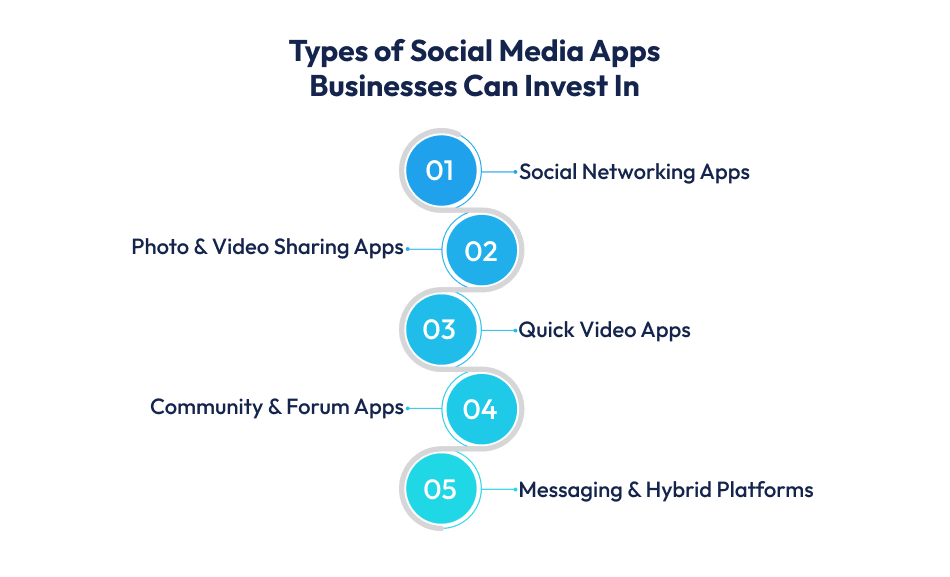
Starting off, these apps help people link up in wide networks. User profiles show up alongside friend invitations, while news streams roll through daily life bits.
Messages travel between contacts, plus group chats form around shared interests. Events pop into calendars after quick clicks.
What matters most is letting people talk, post moments, leave comments – keeping ties alive. Behind it all sits heavy-duty server work, handling who sees what and how fast things load.
Pictures and clips take the spotlight here. Uploading snapshots or moving images happens easily, while filters tweak how they look.
Reactions come through hearts or written notes left below each piece. Following someone keeps their updates within reach.
Some tools go further – short bursts of moments appear as stories, quick clips play like reels, longer pieces stretch into full scenes, suggestions pop up shaped by smart sorting.
Storing all that media needs solid systems, delivering it fast depends on wide-reaching nets, scrolling without hiccups demands a clean, responsive layout.
Fun jumps fast on short-video platforms through snappy clips that grab attention right away.
Tools let people shape videos their own way, tossing in wild visuals or sound bites along the way.
Feeds fill up with what’s buzzing now, guided by smart systems that learn what you like without saying it out loud.
Heavy computing runs nonstop behind the scenes so everything loads instantly, every time.
Strong servers hold it all together while clever software adapts quietly to keep things feeling personal.
Not every app aims for everyone. Some thrive by serving small groups tied to specific interests.Conversations unfold through threaded posts, where users signal approval or disapproval.
Standing out comes from earned credibility, shaped by how members interact over time. Topics stay organized through clear labeling, helping people find what matters.
Keeping things running means strong oversight tools are built into the system. Connection grows from common ground, not personal profiles or follower counts.
Behind the scenes, infrastructure must handle filtering content at scale. Finding posts quickly relies on smart sorting behind search bars. Alerts keep participants looped in without falling behind.
Messaging tools now link chats, updates, and shared files together.
Take WhatsApp’s group threads, for instance – or services blending live streams with direct conversations. Instant texts move fast, photos pass through easily, calls happen in voice or video, alerts pop up instantly, and some even show mini timelines of posts. Building these needs live data handling, protected message transfer rules, strong server networks ready to run many tasks at once. One piece fails, and everything slows down.
Picking a social media app format ties back to what your business wants to achieve, who you’re trying to reach, because growth plans shape the choice. One model might demand more coding effort while another stretches the cost of social media app development, since knowing what users want matters just as much as tech specs before building begins.

Starting strong on social media means more than sharing posts or tracking friends – it hinges on smooth design that holds attention and offers companies clear oversight plus data.
Every tool adds layers to building it, pushing expenses higher as complexity grows.
Signing up should feel straightforward – no confusion, no hassle. Email works. So does a phone number.
Social media accounts offer another path. Security grows stronger with extra steps: think fingerprint scans or verification codes.
These extras take longer to build, though.
Profiles show what matters to each person – their choices, their history, their voice. Private details stay locked away when done right.
What runs a social media app? The feed. A basic timeline, one after another, takes fewer resources to build.
Yet when systems study user actions, adjusting posts using artificial intelligence, work expands – so does expense.
Seeing familiar things makes people stay put, scroll more, and return often. That is why shaping what appears feels essential, worth the effort spent.
Pictures, clips, or quick reels need to move without hiccups once someone hits upload.
Cloud space, speedy delivery networks, and smart shrinking tech keep big files running fast.
Tossing in edits, tweaks, or visual tricks piles on layers behind the scenes – costs climb too.
Each time someone taps a like or adds a comment, the system responds instantly – if the foundation supports it.
Updates that show up immediately depend on strong behind-the-scenes systems.
Sharing something widely? That affects how information is stored and managed later.
How data grows shapes what kind of setup works long-term.
Fresh messages flying between people demand a system that keeps up without delay.
Group talks and shared photos work smoothly only when the backend runs fast.
Seeing someone type helps timing, while knowing they’ve read it adds clarity – yet both make demands behind the scenes.
Scrambling data for safety improves trust, though it asks more from the machinery underneath.
Midway through a busy day, getting pinged about new messages helps you stay on track.
When tools adapt to how people actually behave, sticking around feels natural instead of forced.
Building those smart triggers takes extra time up front – yet users notice when things just work without fuss.
Watching what users post, say, or share helps stop misuse before it spreads.
Tools that highlight suspicious activity often rely on smart software, though people still need to check things too.
Each extra layer of control means more work behind the scenes, heavier systems, and higher upkeep demands.
When it comes to staying compliant, handling user access and tracking reported issues matters a lot.
Dashboards for admins need ways to sort data, narrow results, along with records of actions taken – all backed by protected server infrastructure.
What users do, how they interact, plus how content performs shapes better decisions.
When dashboards include visuals, reports you can save, and forecasts built by AI, building them takes longer and costs more.
Tools for handling ads, discounts, member access, plus paid features drive income.
Profit comes from live data views and audience targeting – yet setting it up gets tricky.
Security around personal information has to be solid. Meeting standards such as GDPR or HIPAA isn’t optional.
Storing data safely matters just as much. Encryption helps keep details locked down. Backup setups guard against loss. Audit trails show who did what.
These tools raise the overall cost to build a social media app in 2026 . Still, they’re necessary for credibility over time. Long-term success leans on them.
Most of the costs that occur while building a social media app goes toward tools for users and controls for administrators – typically between 55% and 70%.
What people actually need, paired with clear company targets, shapes which parts get built first.
Working together on building a social media mobile app? Who’s involved and where they are shapes how much it costs.
Picking a setup that fits might mean less spending, faster progress, better results.
Working inside your own company means you decide how things move, who works together, when tasks finish.
Still, bringing on local builders, creators, testers costs a lot – think America, where time spent pays between $100 to $180 per hour.
Faster launches come possible when skilled groups step in, already shaped by past work on social platforms.
Oversight duties shrink as these teams arrive prepared, knowing the path forward.
Price tags shift – some higher, some lower – tied to where the group sits on the map or how well known they are.
Long hiring loops fade since commitments stay short and focused.
Costs of development for social media apps often stay put when businesses pick overseas coders for social media app development. On average, Indian tech builders charge $25 to $45 each hour.
Across the Gulf region, that figure climbs – $60 right up to $100 per hour.
Solid results come through remote squads more than once.
Yet messages might lag across hours of day, so scheduling needs thought now and then.
Out there, some teams mix inside staff with outside help to keep expenses in check without losing oversight.
Core pieces stay under internal supervision, whereas secondary tasks go to external partners.
With this setup, the cost of building a social media application stays lean even as quality holds firm.
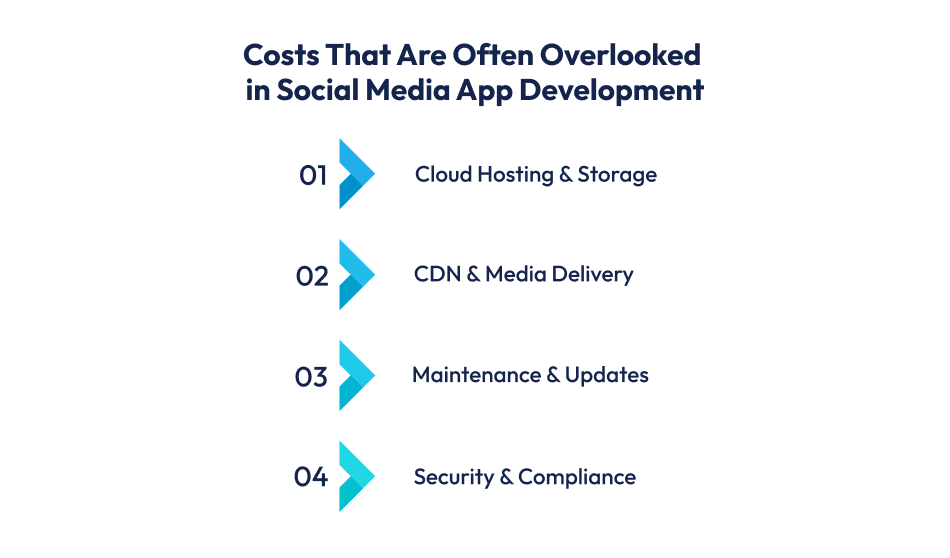
Hidden costs start small yet pile up – maintenance, updates, backend work – all usually overlooked at first.
These quieter charges build slowly, like roots under pavement.
Without planning, they crack through financial limits without warning. Projects stumble when these are ignored, losing speed or purpose almost without notice.
Now imagine photos, chats, live clips piling up nonstop across social platforms.
Each profile update, every video upload slips into vast digital warehouses behind the scenes. Speed matters when pulling that flood of bits on demand.
Those remote server networks handle the load without skipping. Storage spreads wide, yet feels instant when you tap a feed.
Spending changes based on stored data size, number of people using the system each month, also how often files get opened.
A tool serving roughly one hundred thousand users every thirty days might pay $2000 to $10,000 just for online servers every single month.
Growth pushes those numbers higher – each new user adds pressure. Poor foresight turns file space and internet flow into heavy drains over time.
Quick delivery counts when scrolling through feeds.
When pictures or clips drag on loading, people move away. CDNs fix that – by spreading duplicates of your files over many servers around the world, they let visitors pull data quicker from places close to them.
Performance gets a boost, yet expenses grow too. Pricing often ties to data volume moving through CDNs.
Heavy media apps – particularly those built around video – see monthly bills ranging from $1,500 to $7,000. More user activity means higher delivery costs follow close behind.
After launch, effort stays necessary.
Glitches demand correction while functions require adjustments because tech environments shift constantly.
Skip routine upkeep? Speed dips occur alongside frustration for those using it. Things slow down when ignored – people notice.
Yearly upkeep usually takes up between fifteen 15% to 20% of what it first cost to build.
When upgrades get pushed back, problems start piling up – bugs appear, defenses weaken, users drift away.
Outmoded or glitchy behavior on a social platform? That drives people off fast.
When people share their information, trust is on the line. Skipping safety steps isn’t an option here.
Scrambling data helps, so do strong sign-in methods, while frequent checks uncover weak spots before they cause harm.
Following rules such as GDPR matters just as much – staying clear of fines means respecting local laws without exception.
Spending at the start might run from $5000 to $25,000.
Following that, regular checks, reviews, and system changes feed into annual costs. Skipping key steps? That brings danger – trust slips, operations suffer.
Surprise expenses might push your total social media app development cost up by a quarter to nearly half – occasionally beyond that.
Starting early with cloud setup, content streaming, artificial intelligence tools, upkeep, and protection puts you in charge.
That way, your system stays steady, able to expand, prepared for growth while avoiding sudden revenue strain.
Coding an app begins long before touching a keyboard. First comes thought, patience, slow movement forward.
Users matter most – their habits, needs, small frustrations shape every screen.
Progress happens piece by piece, not all at once. Each stage checked, tested, and watched closely avoids future chaos.
Costs stay lower when plans are tight and focus stays sharp. Skipping steps often means rebuilding what could have been solid early on.
Stability grows slowly, like roots under pavement. What lasts tends to rise without noise.
Start by seeing things through your users’ eyes. When you understand where they hang out online, their actions start making sense.
Notice which posts grab interest, which ones fade away, which tools they return to again and again.
At this moment, brief clips and spaces built around shared involvement are gaining speed quickly.
A crowd takes shape when details like age or daily routines come into view.
Picture someone who checks their phone while waiting for coffee, drawn by certain hobbies.
Decisions start making sense once grounded in actions people actually take.
Skip the guesswork early and odd choices fade away later. Real patterns keep design sharp without extra clutter.
Building too much right away feels good, yet this is when revenue slips away. Begin small instead.
What counts? User profiles come first, then adding posts, followed by a feed you can scroll through, while messaging stays straightforward.
A few extras – think live video, smart tips, or editing help – might show up down the road.
What matters now is rolling out something straightforward and working well enough for real users to get going easily. That’s what you’re aiming for right here.
Feedback shapes where things go once people begin using them.
Rather than assuming the next step, decisions follow actual behavior.
This way, progress stays on track while avoiding wasted effort. Development listens – spending matches are needed.
A single moment of confusion can drive someone away. When things seem messy, that first impression sticks around.
Begin by focusing on straightforward designs instead of complex ones.
Clear paths through the interface matter more than extra features. Visual calm wins every time.
Pictures of screens come first. Not until then does any building start.
These sketches link together – making a fake version people can click through.
That way, it shows where users get stuck. Mistakes caught now cost less. Changing real code after? Far more expensive.
Start with mobile. Since most folks scroll through apps on their phones, shape each screen around small displays.
Buttons need to fit thumbs without strain. Interactions work best when they follow how people actually hold their devices.
Here’s when things start taking shape. What people interact with – the feeds, the profiles, those little taps and swipes – that’s handled up front.
Behind it all, hidden away, databases spin, servers hum, alerts fire off, updates flow without pause – all kept running by the system beneath.
Every tap, post, or message keeps social platforms buzzing nonstop.
When people share photos, chat, or get alerts, the tech behind must keep up without slowing down. Running smoothly under pressure is built into how these apps work.
Building your team means making choices. More control comes with an internal group, though expenses rise.
Moving tasks outside might accelerate progress, yet adaptability could shrink.
Balance appears when mixing approaches, shaped by time and revenue available.
Testing each part thoroughly comes first, only then does launch make sense.
When crowds of people use it all at once, nothing breaks if done right.
Under heavy load, speed stays steady because checks happen ahead of time.
Staying safe matters just as much. Handling private details means social platforms must guard what users share – no exceptions.
Following rules such as GDPR keeps trouble away from courts and fines.
Fewer errors appear when tests are solid, which also makes the system more reliable. Smooth performance keeps people around, simply because things work without breaking or freezing.
After tests finish, the app can launch on app stores and run on cloud servers. Yet going live isn’t an endpoint.
Getting people to use it means running marketing efforts – posts on social platforms, working with online creators, using focused advertisements.
Once it’s live, watch how people use it. Engagement, then retention, followed by comments – these show what clicks and where things fall short.
The numbers reveal strengths, also gaps worth fixing.
Start slow. Once people use it regularly, bring in extras – AI suggestions, live video, ways to earn revenue.
The cost of building a social media app stays manageable that way. Growth follows its own rhythm.
Starting small helps you stay on track. This way, costs stay under control while risks drop bit by bit – confidence grows along with progress.
Done well, what begins as an idea becomes something people rely on, day after day.
Limited funds hit most new ventures hard, so aiming too high early burns through revenue fast.
Rather than packing in endless tools right away, narrow the aim first.
Build only what matters at the start – this lets teams release sooner, see how people actually respond, then adapt slowly based on feedback.
Sticking to a short plan with fewer moving parts cuts down failure chances while keeping spending tied closely to actions users take again and again.
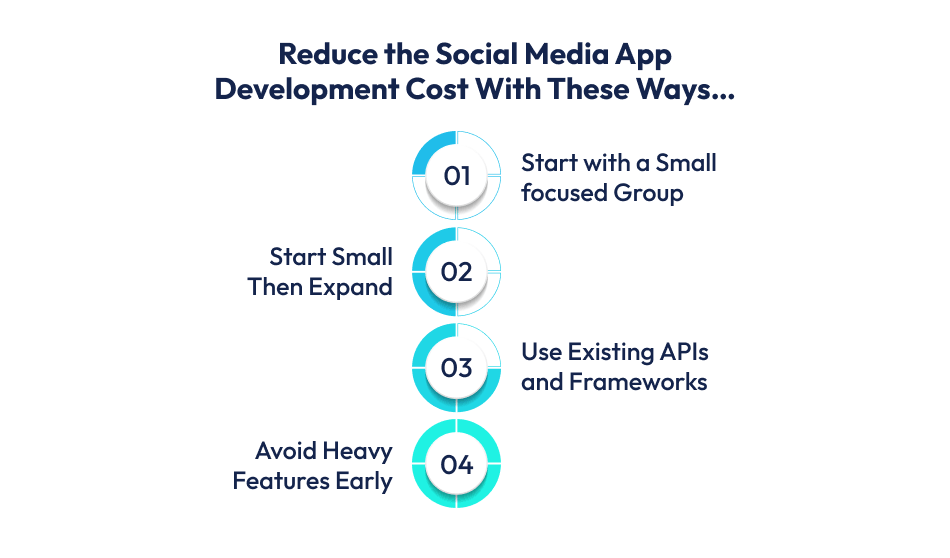
Start small by focusing on people who already connect through shared habits, places, or passions. Because these groups think alike, shaping tools around how they act becomes easier.
Their real-world reactions help shape updates right from the beginning.
With a core crew engaged early, choices about what to build gain clarity fast. Learning happens quickly when mistakes come cheap. This way keeps errors from getting too pricey.
Rather than betting on what a million people may like, actual user actions guide how the app grows – cutting down wasted time and revenue testing blind guesses.
Start with just what the app must do – things like profiles, posts, messages, because those matter most.
Real people start using it fast once it launches, which shows how they actually behave. Because of their responses, changes happen in ways that make sense for them, not guesses.
Revenue goes toward updates only when proof exists someone will use them. New bits come online slowly so spending stays under control, since extras arrive after seeing real interest.
Build one piece at a time to skip unused flashiness, cutting waste while leaving room to shift later.
Starting with ready-to-use programs often cuts down work hours plus keeps the budget under control.
Built-in options for things such as file hosting, image editing, alerts, message delivery, and suggestions skip long coding phases. These parts run on outside systems that grow when needed, so fewer internal servers are required.
Take online spaces that store videos or photos – they remove the burden of managing hardware.
Messaging functions powered by external code let conversations happen fast, without setting up private networks. Sometimes outside tools handle smart feed sorting or recommend users just fine.
Using ready-made pieces lets groups build faster without spending too much on upkeep, getting a working, steady app up early.
Fancy features such as live video feeds or smart filters powered by artificial intelligence – tends to stretch both timelines and budgets. Tackling those too soon might hold up release day while demanding extra engineers or specialists.
Begin instead with essentials people actually interact with: putting up posts, reacting, replying, forwarding thoughts, sending notes. Growth brings breathing room. Profit opens doors. Only then bring in heavier tech piece by piece.
Later works better than sooner here. Funding flows into what works right away, skipping guesswork about future needs. Because choices follow real usage, bulky additions enter only when they prove useful.
Begin with something tiny. Aim at just one group of people instead of everyone. Build only what works first, skip the fancy parts.
Lean on tools already built, save time and effort. Delay big upgrades until later. These choices cut expenses, lower danger.
Doing it this way means a live, active social media app shows up fast – no wasted revenue . Thoughtful steps forward let things grow slowly but surely.
More members come in, functions get deeper, interaction rises as momentum builds. Start tight, stay sharp – space opens up naturally when the base is solid.
Turning clicks into revenue matters if your app lives online.
Some ways pull revenue from fans others from companies – each keeps the lights on. Pick what fits: who shows up how they act when they join.
Most social media mobile apps make revenue mainly through advertising. Display, video, or native ads fit into these systems without much fuss.
Payment often follows a model based on every thousand views – or one tied to each click instead.
One method counts exposure; the other tracks actual interaction. When users open an app many times each day, earnings start to add up.
Even smaller platforms pull in large sums when people stay involved regularly. Think of Instagram or Facebook – proof that focused communities bring returns too.
A step up from free might mean paying to skip ads or unlock special tools.
Some users hand over revenue each month just to get early looks at new stuff.
Revenue rolls in steady when people sign up for longer stretches.
Different price levels help draw in a wider crowd while spotting what makes users spend more.
Creators making revenue on your platform often stick around longer.
Because they earn through revenue splits, tips, or brand posts, their drive to produce stays strong.
A cut of the earnings goes to you, which turns activity into profit. Good work gets rewarded, so people post more useful stuff.
More effort means users stay active instead of drifting away. Big names notice when others succeed and decide to join.
Platforms like TikTok prove this loop builds momentum without ads pushing it. Growth happens because real value moves both ways.
Picking up extra income might come from selling things like coins, stickers, emojis, or filters online.
Because people enjoy customizing their experience, they often open their wallets for these small digital touches.
These kinds of buys fit neatly beside subscriptions and ads, building different ways to earn.
Younger users tend to spend more here, turning fun extras into steady profit.
Working alongside companies through sponsorships, ad pushes, or placing products inside content can bring in steady income while still helping viewers.
When businesses run themed segments, paid activities, or shared tools, they tap into focused groups already interested.
Sites that weave brand work smoothly – without crowding out normal use – tend to keep people more involved plus boost average earnings.
A mix of ads, membership fees, payouts to creators, digital buys inside apps, alongside partnerships with brands makes up a solid income plan.
When you see how users act, what holds their attention, plus where the platform really works well, picking earnings that last becomes clearer without harming how people feel about using it.
Success on social media isn’t just about code, it’s about understanding user behavior, engagement, and scalability. That’s where it stands out as a trusted mobile app development company.
Techugo helps startups and enterprises turn ideas into high-performing digital products. As a leading social media app development company, they focus on building intuitive interfaces, seamless user experiences, and scalable backend systems that grow without breaking.
From real-time messaging to AI-driven recommendations, every feature is designed to adapt to user needs. Their apps run on secure cloud infrastructure, ensuring performance, data protection, and smooth handling of high user loads across devices.
Techugo’s approach starts with market research and user-first design, ensuring your app aligns with real-world needs. Their agile development process enables faster launches, continuous improvements, and easy scalability.
Whether you’re building a niche platform or a large-scale social app, Techugo delivers reliable, intelligent solutions backed by experience and long-term support.

Let’s be real. Most travel businesses today don’t have a demand problem. They have a control problem. If you’re planning to build a flight booking ..

The use of AI-powered matchmaking apps is changing the dynamics of interactions during networking events, conferences, and social gatherings. Inst..


Write Us
sales@techugo.comOr fill this form