

 SA
SA  KW
KW  IE
IE AU
AU UAE
UAE UK
UK USA
USA  CA
CA DE
DE  QA
QA ZA
ZA  BH
BH NL
NL  MU
MU FR
FR 







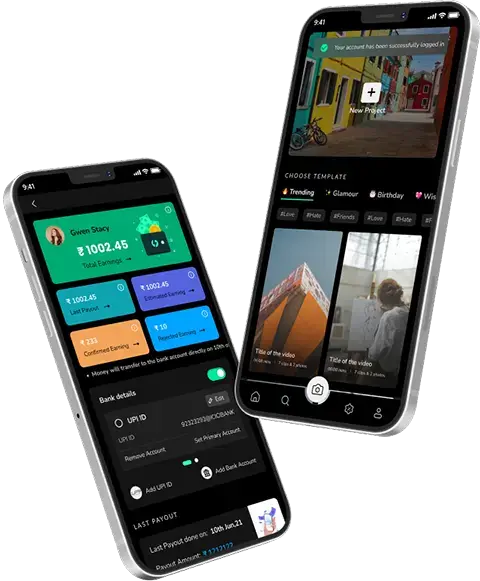








There are more than 6.3 billion smartphone users worldwide. They spend more than 88 % of their time in apps rather than mobile browsers. This is clear evidence of why businesses are prioritising mobile app strategies.
Every industry now wants to ride the mobile app revolution to increase business revenue, which is a good and non-negotiable strategy for business success, but… they often get confused between native app development and hybrid app development. This confusion should be cleared before investing in mobile app development. And it’s worth noting that cross-platform and hybrid frameworks now support over 60 % of global app builds.
Hybrid mobile apps are now becoming a go‑to solution in 2026 for startups and enterprises alike. So today’s blog is dedicated to explaining why investing in hybrid mobile app development makes sense in 2026 and the benefits associated with this app development platform.
Also Read: Cost to Hire a Hybrid App Developer
A quick tour of Hybrid Mobile App
A hybrid app development (hybrid application) is one that combines elements of both native and Web applications. To discuss the technical aspect of Hybrid mobile apps, these are designed with a combination of HTML, CSS, and JavaScript. It is accessible due to the combined elements of native and web and due to this feature, the Hybrid app can be easily deployed across multiple platforms.
Is investing in Hybrid App development a good idea in 2026?
The gap between native and hybrid apps will be bridged with technology growing at light speed.
The hybrid app comes with many benefits but has its own set of limitations as well, despite it covers certain challenges, on-going development in the technology is coming up with solutions to overcome them.
- Reduces cost of development across multiple platforms
- Retains full use of device features
- Brings easy maintenance
- Enables offline working
- Allows access to device data
- Multiple singular codebases for Cross-platform development
- Gives access to Native APIs
- Engaging User Experience
Well, in 2026, hybrid mobile apps are not just cheaper anymore… they are becoming, like, strategic assets, seriously. Companies, big, small, everyone, is realizing that hybrid app development is flexible, efficient, and somehow still fast. So yes, reaching users on multiple platforms, but without the usual headache.
One big thing, cost. You can save money, obviously, because a single codebase works for both iOS and Android. No need to make separate native apps for each. Startups love this, and even big businesses, because scaling is easier, or so they say.
And device features, yes, hybrid apps can use the camera, GPS, sensors, basically everything a native app can. Maintenance? Easier, mostly. You update once, and it works everywhere. Offline too, which is great. Imagine e-commerce, healthcare apps, travel apps – users keep going even without internet.
Frameworks like React Native or Flutter. Native APIs. Push notifications, biometrics, AR, all possible. UI? Smooth animations, responsive, interactive – almost like native apps. Sometimes, maybe even better?
And cross-platform development… this is huge. Scaling across iOS development and Android app development is simpler, lifecycle faster, teams focus on innovation, and less rewriting code.
The line between hybrid and native apps? Shrinking. AI-driven features, Progressive Web Apps (PWAs), low-code stuff – hybrid apps can do it all now, more or less. So yeah, future-proof, engaging, scalable, and somehow essential in 2026.
Also Read: Convert Your Web App Into A Mobile App Using Hybrid App Development
Emerging trends in hybrid mobile app development for 2026
1. AI-powered hybrid apps
Artificial Intelligence is changing how mobile app development is done, and in 2026 it is not optional anymore. It is becoming central to how hybrid mobile apps work because businesses now expect apps to think and learn and respond, and user data has been growing, therefore AI has been used to study behavior and patterns and preferences, in real time.
Hybrid apps have been integrating AI-driven personalization, and chatbots, and predictive analytics, so that user engagement does not feel random anymore, for example, AI-based recommendation engines in e-commerce apps suggest products because of browsing history and purchase intent. And AI chat support handles real-time customer queries when human agents are not available. Smart notifications are also being powered by machine learning so that users are reached when they are most likely to respond. Sometimes too often. Sometimes not.
What makes this important for cross-platform app development is that AI models can be deployed across iOS development and Android app development at the same time. It was earlier difficult to maintain such intelligence across platforms, but now it is easier therefore hybrid apps are becoming smarter and more adaptive and more capable of delivering experiences that feel close to native apps. And sometimes even better, maybe.
2. Low-code and no-code development platforms
In 2026, low-code and no-code platforms have been changing the app development lifecycle, because development is no longer limited to engineers only. These platforms allow applications to be built using visual tools and prebuilt components and automated logic so that development is faster and more flexible.
When these platforms are combined with hybrid app development, time-to-market is reduced. Teams are smaller, and dependence on large mobile app development teams is lower. So iteration becomes easier. And MVPs can be launched quickly. And changes can be made without rewriting the entire application, which was earlier not possible.
This trend is useful for startups and for enterprises that want to build an app from website concepts, because ideas can be tested before heavy investment is made. And because these apps are still based on cross-platform compatibility, they work across devices and operating systems. Therefore, businesses can experiment and scale and improve. But without slowing down innovation.
3. Progressive web app (PWA) convergence
Progressive Web Apps have been moving closer to hybrid mobile apps, and this convergence is becoming stronger in 2026. PWAs were first designed to behave like apps on the web. But now they are being used inside hybrid frameworks so that performance and accessibility improve together.
Hybrid apps that use PWA technologies can work offline, and they can load faster, and they can store content locally. This means users are not fully dependent on internet connectivity. It also means experiences are smoother. And frustration is lower, especially in regions where networks are unstable, or slow, or both.
From a business point of view, PWA convergence helps because apps become more discoverable through search engines, and therefore organic traffic increases. And because web and mobile features are handled in one system, development and maintenance costs remain controlled. So integrating PWA features into hybrid mobile app development ensures that applications remain relevant and flexible and ready for future usage patterns. Or at least closer to it.
Also Read: PWA Development Will Grow More Popular In 2026
4. Focus on security and compliance
Security has been becoming more critical every year, and in 2026 it is no longer treated as an afterthought in hybrid app development. It is being built into the architecture from the beginning because cyber threats are increasing and data laws are becoming stricter.
Modern hybrid apps are using secure API connections and data encryption and strong authentication systems so that user information is protected at every level. This includes biometric logins, and token-based access, and encrypted storage across both iOS and Android platforms.
Compliance has also become a major requirement. Regulations such as GDPR and CCPA and local privacy laws have been shaping how data is collected and processed. Hybrid apps now have to support transparency and secure data handling and audit-ready systems. This is especially important for fintech and healthcare and enterprise applications, where trust and regulation are closely linked.
Because of this focus on security and compliance, hybrid mobile apps are no longer seen as lightweight solutions. They are now being positioned as stable and enterprise-ready platforms that can support long-term business growth. Slowly, but clearly.
Industry use cases of hybrid mobile apps in 2026
In 2026, hybrid mobile apps are not limited to small projects anymore, and they are also not experimental now. They have been used across industries because businesses want speed and reach and cost control, but they also want flexibility. And because cross-platform app development allows one solution to work on many devices, adoption has been increasing, slowly, and then very quickly.
Hybrid mobile apps in eCommerce
In eCommerce, hybrid app development is being used to deliver fast and responsive shopping experiences, because users expect smooth browsing and quick checkouts. Product catalogs are synced in real time, and AI-based recommendations are shown based on user behavior, and payment gateways and order tracking are integrated so that users can shop easily on both iOS development and Android app development.
Retail brands prefer hybrid apps because inventory updates and UI changes can be pushed through one update only. And because these apps support offline browsing, users can still explore products when connectivity is weak. This is important. And therefore performance matters.
Hybrid mobile apps in healthcare
Healthcare in 2026 is relying more on hybrid mobile apps for patient engagement and remote care, because access and continuity are important. Appointment scheduling and teleconsultation and health record access are handled through secure hybrid platforms. And because mobile application security has been built into modern frameworks, sensitive data is encrypted and protected.
Doctors and patients use the same application across devices, so that continuity of care is maintained. And because these apps integrate with wearables and sensors, real-time health data can be monitored. Slowly. Constantly. And sometimes urgently.
Hybrid mobile apps in fintech
Fintech companies are using hybrid app development to launch digital wallets and loan platforms and investment apps faster than before. Transactions and identity verification and fraud detection are powered by APIs and AI models, which work across Android and iOS environments.
Security is critical here, but speed is also important. So biometric authentication and encrypted sessions are implemented. And because hybrid apps allow faster deployment cycles, new financial features can be rolled out without rebuilding the entire system. Which saves time. And money. Therefore adoption continues.
Hybrid mobile apps in education
Education platforms are using hybrid mobile apps to deliver online courses and live classes and interactive content. Video streaming and quizzes and progress tracking are combined in one application that works across devices. This allows institutions to reach more students, because they do not need to build separate native apps.
Offline learning modules are also added, so that students can access content without internet. And because these apps support cross-platform compatibility, the same learning experience is delivered on tablets and smartphones. And laptops too. Sometimes.
Hybrid mobile apps in travel and logistics
In travel and logistics, hybrid apps are being used for booking systems and route optimization and real-time tracking. Customers can book tickets and receive updates and manage itineraries through one app. And drivers can use the same system for navigation and delivery confirmation.
These apps integrate GPS and mapping services, and they send alerts when routes change, so that operations remain efficient. And because updates are centralized, businesses can improve workflows without disrupting users. Which is important.
Hybrid mobile apps in enterprise and SaaS
Enterprises are adopting hybrid mobile apps for internal tools such as CRM systems and workforce management and analytics dashboards. Employees use these apps across multiple devices, and data remains synchronized through cloud backends.
For SaaS companies, hybrid app development allows faster product launches and feature testing. MVPs can be created quickly. And feedback can be collected before scaling. This supports continuous improvement. And long-term product strategy. And stability too.
Hybrid vs native apps: what’s right for you?
While native apps offer optimized performance for each platform, hybrid apps are catching up fast. Benefits of hybrid mobile apps in 2026 include:
- Faster time-to-market for startups and SMEs
- Single codebase maintenance
- Reduced development and update costs
- Easy scalability across iOS and Android platforms
The choice ultimately depends on your business goals, budget, and target audience. Hybrid apps, especially when combined with React Native or Flutter frameworks, can deliver near-native performance with lower costs.
Read in detail: Native vs Hybrid Apps: What to Choose in 2026 (Guide for Businesses)
Why Choose Techugo for Your Hybrid App Development?
At Techugo, we take pride in developing the hybrid mobile apps for the leading brands to startups and our mobile app development company has the expertise to create a unique variety of mobile app solutions for your business needs, which would help you to showcase your idea, goal, and dream in the most informative and engaging way.
Our team of top mobile app designers is here to help assist you with every step of your mobile app development strategy. We consult, brainstorm, manage the project, design, develop, test, launch, and market apps in the best possible way.
You can get in touch with our team to discuss further your concept to bring into reality. The discussion would help you to gain a better insight into your app requirement.

Get in touch
We'd love to hear from you.