

 SA
SA  KW
KW  IE
IE AU
AU UAE
UAE UK
UK USA
USA  CA
CA DE
DE  QA
QA ZA
ZA  BH
BH NL
NL  MU
MU FR
FR 






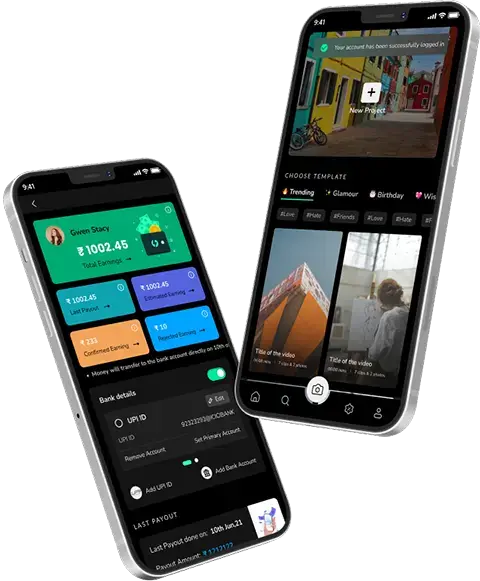








Within a decade, mobile app development has been able to mark its territory in the business world. It has triggered a wave of digitalization, that multiple processes are incorporating to provide better services to the global user base. Because of the ongoing Pandemic, even traditional brick and mortar businesses are realizing the value of being present on a digital platform.
Have you too shifted to a digital platform?
Are you planning to?
Since the world is moving towards mobile app creation, it is becoming more and more crucial for everyone to learn the basic related technicalities. On that note, we would be focusing our today’s blog on the ever-growing war between the two most popular app development platforms – Android and iOS, and understand Android vs iOS app development in detail.
We would be analyzing the superiority of each platform under different conditions. It will not only help you understand the basic app development concepts, but it will also help you decide which platform is better – Android or iOS for your business. So let’s begin!
Android vs iOS Market Share in 2026
When you look at Android vs iOS app development, the market share is one of those factors that you simply cannot ignore, because it shapes everything like reach, revenue, and even the long-term growth of your app.
As per recent reports from StatCounter and other industry sources, Android holds around 70–72% of the global smartphone market, while iOS accounts for nearly 28–30%. So yes, Android clearly dominates in terms of numbers, and it has been leading for years now. But, that is not the full picture.
Because if you shift your focus from users to revenue, things start to look a little different. iOS, despite having a smaller user base, generates close to 70% of global app revenue, and therefore, it has been the preferred choice for businesses that prioritize monetization over sheer scale.
Now, when you break this down further, the regional trends also start to make more sense. Android is widely used in markets like India, Brazil, and Southeast Asia, and that is mainly because of the availability of affordable devices. But iOS performs strongly in regions like the US, UK, and parts of Europe, where users tend to spend more on apps and in-app purchases.
Leading Apps Across Android & iOS Ecosystems
Platforms like Instagram, TikTok, and ChatGPT have been dominating both ecosystems, so it is not really about Android or iOS exclusivity anymore. It is more about presence across both. Still, many startups choose to launch on iOS first, because it is easier to test, and the users are more likely to pay. Android versions usually follow later, so that businesses can expand their reach.
So what does this actually mean for you?
If your goal is to reach a larger audience, and you want scale, then Android makes more sense. But if you are aiming for better revenue, and a more premium user base, then iOS is often the better option. And therefore, most businesses today do not really choose one over the other, they go for both eventually, because that is what balances growth and profitability.
Comparing Android & iOS Under Different Parameters
To understand Android and ios app development, it is important that you look at both platforms across different technical parameters, because each one behaves differently, and therefore, the final choice is not always that simple.
1. Development time
When we talk about Android vs iOS development time, Android usually takes more time, and this has been seen across multiple development scenarios. Because Android has a lot of device fragmentation, and there are different screen sizes, OS versions, and hardware variations, the development process becomes longer, and sometimes unpredictable too.
On average, Android app development is 30 to 40% slower, and that is mainly because developers have to test the app again and again, across multiple devices so that it works properly everywhere. It sounds manageable but it adds up.
iOS, on the other hand, is built for a limited number of devices, and therefore, the development cycle is faster, more controlled, and easier to manage. So if you are aiming for a quicker launch, iOS does have an advantage, but then again, Android gives you wider reach so it depends on what you are prioritizing.
To make it a bit clearer, here is a rough comparison of how timelines usually look:
| App Complexity | iOS Development Time | Android Development Time |
| Simple App | 2 – 3 months | 3 – 4 months |
| Medium Complexity | 3 – 5 months | 4 – 7 months |
| Complex App | 6 – 9 months | 8 – 12+ months |
These timelines are not fixed, and they can change based on features, integrations, and the team you are working with but they have been a fairly accurate benchmark when you look at the iOS vs Android development time comparison overall.
2. Development cost
When it comes to iOS vs Android development cost, the difference is not always straightforward, because cost is influenced by time, tools, devices, and even the level of testing involved.
Since Android takes more time to develop, it can be a bit expensive for a brand, especially when you consider the longer development cycles, and the need to test across multiple devices. But Android development uses Android Studio, which can run on a standard computer, so you do not necessarily need expensive hardware… and that reduces the initial investment.
On the other hand, iOS development depends on Xcode, and it only works on Mac devices. So companies have to invest in Mac systems, and often iPhones or iPads for testing, and therefore, the upfront cost becomes higher.
But then, iOS apps are usually faster to build, and easier to test, so the overall cost may balance out depending on the project. It is not always cheaper or more expensive; it shifts based on what you are building, and how complex it is.
To give you a clearer picture, here is a rough estimate of Android and iOS app development costs at techugo, a top Android and iOS app development company:
| App Complexity | iOS Development Cost (USD) | Android Development Cost (USD) |
| Simple App | $15,000 – $30,000 | $20,000 – $35,000 |
| Medium Complexity | $30,000 – $70,000 | $40,000 – $90,000 |
| Complex App | $80,000 – $150,000+ | $100,000 – $180,000+ |
These are estimated ranges, and they can vary depending on features, integrations, location of the development team, and timelines but they reflect a realistic android vs ios app development cost comparison in today’s market.
So yes, Android may cost more because it takes longer, but iOS requires higher initial investment and in the end, both come with their own trade-offs, and you have to choose based on your priorities.
3. Development complexity
When you look at the complexity of iOS and Android app development, Android is generally more complex, and this has been the case for a long time, because of how widely it is used, and how many variations exist in the ecosystem.
As far as development complexity is concerned, Android is much more complex as compared to iOS, and the reason is not very complicated – iOS has a limited number of devices, but Android runs on hundreds of devices, from different brands, with different configurations. Therefore, the development effort increases and sometimes unpredictably.
Fragmentation is a major issue with Android, and it affects both development and testing. Since there are multiple devices, and each comes with different screen sizes, hardware capabilities, and OS versions, developers have to continuously adjust the app so that it works properly across all of them. It sounds manageable, but in practice, it slows things down.
For Android, developers need to keep a check on:
- Screen sizes
- Aspect ratios
- Operating systems
For example, an app that works smoothly on a flagship device like the Samsung Galaxy S series may not perform the same way on a budget device like the Xiaomi Redmi series, because the hardware and performance capabilities are different. And therefore, more testing, more fixes… more effort.
On the other hand, iOS development is more controlled, and it is built around a limited ecosystem of devices like the iPhone 15 and its recent versions. Because of this, developers deal with fewer variations, and the OS updates are consistent, so the process becomes simpler, and more predictable.
So, in the Android vs iOS app development comparison, Android gives you flexibility and reach, but it also brings complexity, while iOS keeps things structured, and easier to manage but within its own boundaries.
4. Programming languages
When you look at Android vs iOS programming languages, the difference is quite clear, and it plays an important role in how apps are built, maintained, and scaled over time.
The popular choice for native Android app development has been Kotlin and Java, and both are widely used, but Kotlin has been gaining more preference in recent years because it is more modern, and reduces boilerplate code. So developers find it easier and faster, in many cases.
For iOS app development, the primary languages are Swift and Objective-C. Swift, especially, has been designed by Apple to be safer, and more efficient, so that developers can build high-performance apps with fewer errors.
Now, if a brand wants to build apps for both platforms, things become a bit more layered, because you need expertise in multiple languages, and that increases both the development effort and the cost. Therefore, it is usually recommended to hire developers who are skilled in these technologies, so that the app quality does not suffer.
And yes, there is also a growing shift towards cross-platform frameworks, but native development with Kotlin, Java, Swift, and Objective-C still remains the foundation especially when performance and scalability are priorities.
5. The level of security
The advantage usually leans towards iOS, and this has been widely observed, because Apple maintains a very controlled ecosystem and that makes a difference.
When it comes to the security factor, the ball definitely falls into iOS’s court, since it keeps a close check on the complete ecosystem such as hardware, software, and even firmware. Because everything is tightly integrated, the chances of vulnerabilities are reduced, and therefore, the overall security level is stronger than Android.
Before any app is published on the App Store, it goes through a strict review process, and Apple checks each and every application thoroughly, so that malicious or low-quality apps are filtered out. This process, although time-consuming, protects users from downloading harmful applications… and ensures better data safety.
On the other hand, Android apps are distributed through the Google Play Store, and while Google has improved its security measures over time, the open nature of Android still makes it relatively more vulnerable, especially when users install apps from third-party sources.
To put the cherry on top, iOS devices have strong legacy support, and Apple ensures that even older devices, like the iPhone 11, continue to receive regular security updates. So users are able to operate on newer software versions, with updated security patches which is not always consistent across Android devices.
So yes, in the Android vs iOS app development comparison, iOS offers tighter security and better control, while Android provides flexibility but that flexibility sometimes comes with added risks.
6. Publishing process
When it comes to the Android vs iOS app publishing process, things start to differ quite a bit, and not always in the way you would expect.
We have already learned that iOS app development is quicker, but that does not mean the publishing process is simple. In fact, before an application can be published on the App Store, it has to go through Apple’s strict and often lengthy approval process. The app is reviewed for quality, security, performance, and compliance with guidelines and sometimes, even small issues can lead to rejection. So yes, it takes time, and it can feel restrictive but it ensures a high-quality ecosystem.
On the other hand, Android apps can be published much more easily on the Google Play Store. Developers just need to pay a one-time fee of $25, and then they can submit their apps with relatively fewer restrictions. The review process is faster, and in many cases, apps go live within a few hours or days.
But then again, this flexibility comes with its own trade-offs. Because the process is less strict, the platform may have more low-quality or potentially harmful apps so while publishing is easier, maintaining quality becomes a shared responsibility.
So, in the Android vs iOS app development comparison, iOS gives you a controlled, secure, and premium publishing environment, but it takes time. Android, on the other hand, offers speed and flexibility, but with fewer barriers and therefore, different risks.
7. User base & audience
When you look at Android vs iOS user base, this is where things become very practical, because the choice is not just about technology, but about who you are building the app for and where they are.
Android has the largest user base globally, and it has been dominating markets like India, Southeast Asia, and parts of Africa, mainly because Android devices are available across all price ranges. So if your goal is to reach a wider audience, and you want scale, Android becomes the obvious choice, and therefore, many businesses start here.
On the other hand, iOS has a smaller but more premium audience, and it is strong in regions like the US, UK, and Europe. These users generally have higher purchasing power, and they are more likely to spend on apps, subscriptions, and in-app purchases. So while the numbers are lower, the value per user is often higher and that changes the strategy.
For example, apps like Instagram and Spotify are built for both platforms, because they target a global audience. But many startups, especially in the early stage, prefer launching on iOS first, because it helps them validate the product with a more engaged and paying user base.
So, in the android vs ios app development comparison, Android gives you reach, and iOS gives you value but the right choice depends on your target audience, your business model, and what you are trying to achieve because both platforms serve very different user behaviors.
8. Revenue potential
When you compare android vs ios revenue potential, the difference becomes quite interesting, because it is not always about how many users you have, but how much those users are willing to spend.
Android, as we know, has a much larger user base, and therefore, it drives a higher number of downloads. But when it comes to monetization, iOS tends to perform better, and this has been consistent over the years. iOS users are generally more inclined towards in-app purchases, subscriptions, and paid apps and that directly impacts revenue.
Platforms like Spotify, Netflix, and YouTube generate a significant portion of their revenue from iOS users, even though their Android user base is larger. So yes, the volume comes from Android but the value often comes from iOS.
To break it down more clearly:
- Android drives higher downloads, because of its global reach and affordability
- iOS generates higher revenue per user, as users are more willing to spend
- In-app purchases perform better on iOS, especially for premium apps and services
- Subscription-based models (like OTT or SaaS apps) tend to succeed more on iOS
- Ad-based monetization works well on Android, where scale matters more than spending
- iOS users have higher lifetime value (LTV), which benefits long-term growth
So, if your business model depends on subscriptions, in-app purchases, or premium services, iOS can be more profitable. But if your strategy is based on ads, reach, and user acquisition, Android might bring better results.
And therefore, in the android vs ios app development comparison, revenue potential is not about choosing one over the other; it is about aligning the platform with your monetization strategy because both can be profitable, just in different ways.
9. Maintenance & updates
When you look at android vs ios app maintenance, this is one of those factors that is often overlooked in the beginning, but it becomes very important over time, because an app is not just built once; it has to be maintained, updated, and improved continuously.
Android apps usually require more frequent maintenance, and this is mainly because of device fragmentation. There are multiple manufacturers, screen sizes, and OS versions, and therefore, developers have to keep optimizing the app so that it works smoothly across all devices. It sounds manageable at first, but over time, it increases the effort… and the cost too.
On the other hand, iOS apps are easier to maintain, because they operate in a controlled ecosystem. Apple releases updates that are quickly adopted by users, and since the number of devices is limited, developers can roll out updates more efficiently, and with fewer compatibility issues.
Here is a quick comparison for better understanding:
| Factor | Android | iOS |
| Device Compatibility | High (multiple devices) | Low (limited devices) |
| OS Update Adoption | Slower, fragmented | Faster, more uniform |
| Testing Effort | High (many devices & versions) | Lower (controlled ecosystem) |
| Maintenance Cost | Higher over time | More predictable and controlled |
| Update Rollout Speed | Slower and phased | Faster and more consistent |
Keeping up with maintenance and updates can get overwhelming, especially across platforms. That is where the right expertise matters. With Techugo’s mobile app development services, you can reduce long-term costs, streamline updates, and keep your app running smoothly without the constant hassle. Get in touch!
Android vs iOS for Business: Which One Should You Choose?
When it comes to android vs ios for business, there is no single answer, and that is exactly where most businesses get stuck, because the “better” platform depends on what you are trying to build, and who you are building it for… and even how you plan to grow over time.
If your goal is to reach a larger audience, and you are targeting markets where affordability matters, then Android makes more sense, because it has a wider global presence, and therefore, it helps you scale faster. But if your focus is on premium users, and you want better monetization, through subscriptions or in-app purchases, then iOS tends to perform better so the priorities shift.
So instead of asking which one is better, you should really be asking what fits your business model, and what aligns with your users. To make it a bit easier:
Choose Android if:
- You want maximum reach and user acquisition, and scale is important
- Your target audience is in regions like India, Southeast Asia, or Africa
- Your app relies on ads, or large user volume
- You need more flexibility, and customization options
Choose iOS if:
- You want higher revenue per user, and better ROI
- Your audience is in premium markets like the US, UK, or Europe
- Your app is based on subscriptions, or paid features
- You prefer a more controlled, and secure ecosystem
But then again, this is not always a strict choice. Most businesses today do not stick to just one platform. They start with one, validate their idea, and then move to the other because that is how you balance reach and revenue.
So, in the android vs ios app development comparison, the smarter approach is not choosing one over the other, but choosing where to begin, and then scaling accordingly because both platforms, in their own way, have been equally important.
Pros and Cons of Android vs iOS App Development for Businesses
When you look at android vs ios app development, the pros and cons are not just technical. They are closely tied to business goals, and how you want to scale, monetize, and maintain your app over time so it makes more sense to compare them side by side.
Advantages of Android vs iOS for Businesses
| Factor | Android | iOS |
| User Reach | Larger global audience, especially in emerging markets | Smaller but premium user base |
| Flexibility | High customization, and fewer restrictions | Controlled environment, but consistent experience |
| Publishing Process | Faster, and easier approval process | Strict guidelines, but better quality control |
| Device Availability | Wide range of devices across price segments | Limited devices, but optimized performance |
| Monetization (Ads) | Strong for ad-based revenue models | Moderate for ads, but better for paid models |
Disadvantages of Android vs iOS for Businesses
| Factor | Android | iOS |
| Fragmentation | High, multiple devices and OS versions | Low, limited devices |
| Development Time | Longer due to testing and compatibility | Faster, more predictable |
| Maintenance Effort | Higher, continuous updates required | Lower, easier to manage |
| Security | More open ecosystem, slightly higher risk | Closed ecosystem, stricter security |
| Entry Cost | Lower initial cost, but may increase over time | Higher initial investment (Mac devices, testing) |
Quick Summary
| Business Goal | Better Platform |
| Maximum user reach | Android |
| Higher revenue per user | iOS |
| Faster development | iOS |
| Flexibility & customization | Android |
| Easier maintenance | iOS |
So, in the android vs ios for business comparison, Android gives you scale, and flexibility but it comes with complexity. iOS, on the other hand, offers control, better monetization, and smoother performance but within a more restricted ecosystem.
And that is why, most businesses do not really choose one; they balance both, depending on where they are in their growth journey.
In A Nutshell
We now know that both these popular platforms have their own perks. So when it comes to making the final choice, a brand needs to prioritize its users’ needs. They need to make a decision depending upon their target market and future goals. For example, if the aim is to reach a wider audience with a customized application, one must go with Android, but for better revenue and a less complex development process, iOS is the best option.
One needs to check out all the related parameters that are required to create a successful application. If you are looking forward to launching your own application in the market, make sure you have a strong understanding of the related technicalities.
For a detailed analysis, you can connect with our professionals. We would be delighted to guide your idea towards a successful path. But until then, stay tuned for more tech updates.
Build Your App with Techugo
Choosing between Android and iOS is just the starting point, and once that decision is made, the real work begins. Because building an app is not only about the platform, but also about how well it is designed, developed, and scaled over time.
By connecting with Techugo, a leading and trusted mobile app development company, you get a team that understands both Android and iOS ecosystems, and helps you build the right solution based on your business goals, not just trends. From strategy and development to post-launch support, everything is aligned so that your app performs, grows, and stays relevant. Visit: Techugo’s portfolio!
So if you are planning to build an app, or even refine an existing one, Techugo can help you move forward with clarity, and the right technical direction. Get in touch today!

Get in touch
We'd love to hear from you.