

 SA
SA  KW
KW  IE
IE AU
AU UAE
UAE UK
UK USA
USA  CA
CA DE
DE  QA
QA ZA
ZA  BH
BH NL
NL  MU
MU FR
FR [ LET’S TALK AI ]
X
Discover AI-
Powered Solutions
Get ready to explore cutting-edge AI technologies that can transform your workflow!



Get ready to explore cutting-edge AI technologies that can transform your workflow!






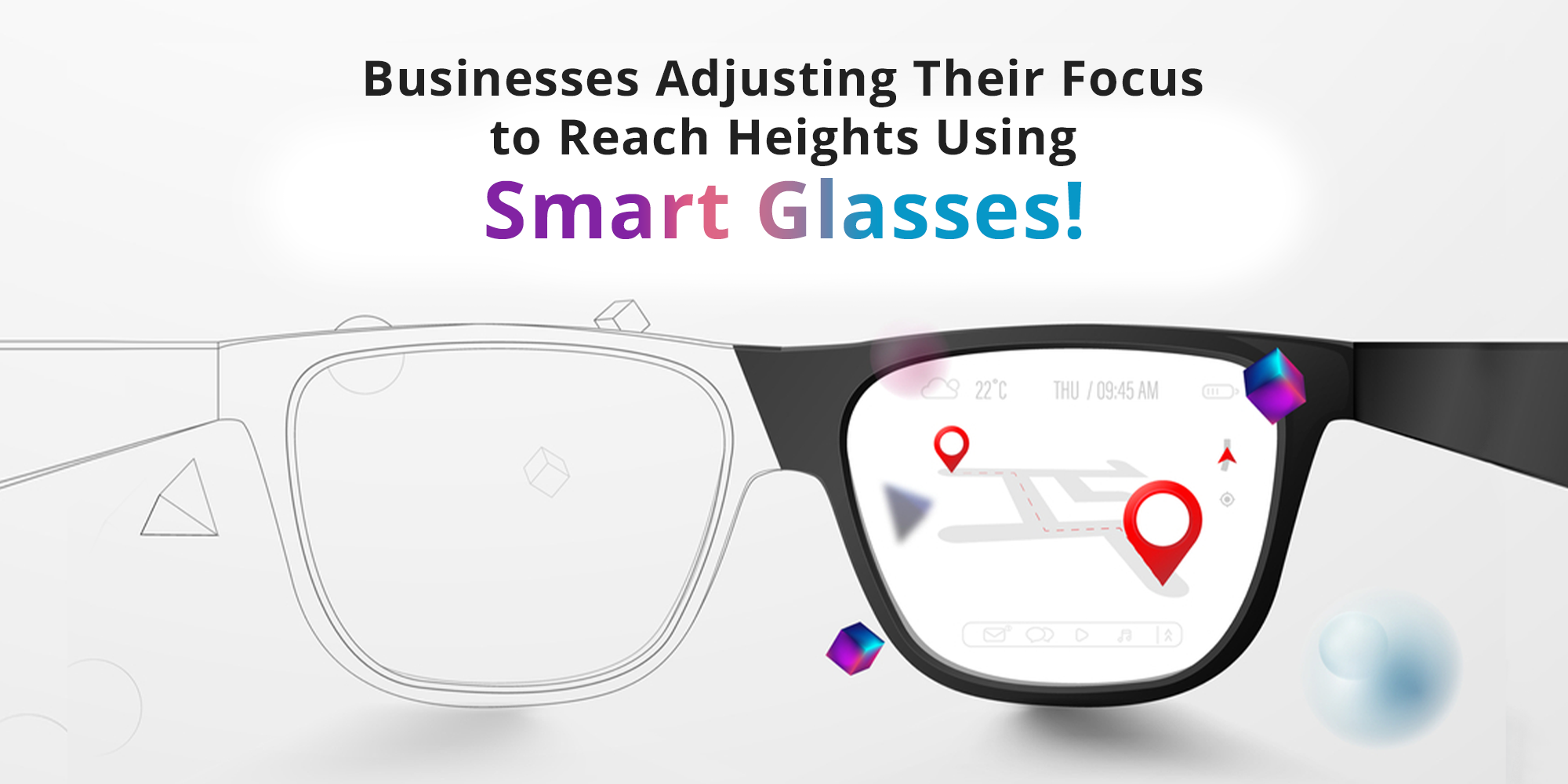
UNDOUBTEDLY, the 21st century is a witness to the tremendous technological enhancement and businesses adopting the same. Technologies like Artificial Intelligence, Augmented Reality, Virtual Reality, and more came forward to contribute to our lifestyle and make it easier for good.
After the COVID-19 pandemic, many businesses permanently shifted to the digital approach because of the advantage and convenience it offers. And since then, the shift hasn’t slowed down, in fact, it has only accelerated.
Now that businesses were operating online, it became essential to convince and assure their customers about the quality of the products and services. WHICH IS WHY; more and more brands are integrating AR into their mobile applications.
For instance, you must have seen apps that let users try clothes, glasses, or even furniture virtually before making a purchase.
IT IS PRECISELY WHAT AR DOES!
AR also supports wearables such as smart glasses that uniquely incorporate physical and virtual information in a user’s view field. Moreover, smart glasses are widely being used for efficient working due to the availability of real-time information.
Do you want to know more about the future of AR-based smart glasses? Let’s dive in.
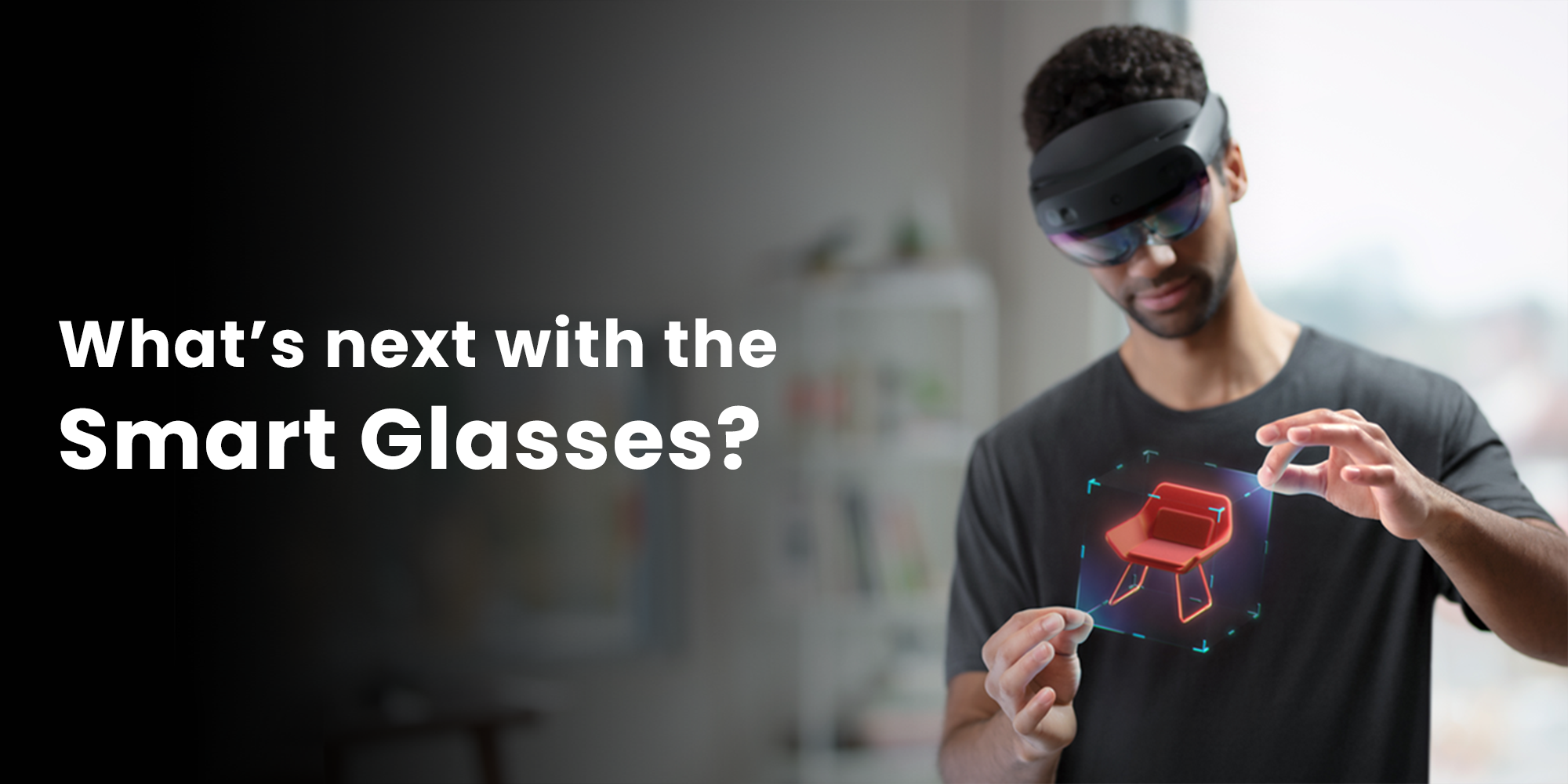
For centuries, we’ve been using glasses to improve our vision. It was like a support to the weak eyesight. But, now as we see a massive improvement in the ways technology works, glasses are being turned into smart glasses.
But, what are they?
We know you must be curious to learn about the functioning of smart glasses. Therefore, sit tight as we are going to talk about the same.
In simple words, it is similar to wireless connectivity that we see on our smartphones or computers. The only difference is that now the information will be displayed on the glasses or lenses of the smart wear.
Isn’t it cool?
How can smart glasses improve the overall lifestyle?
What are the smart solutions offered by the technology?
These are some of the most asked questions by people. So, therefore, here we are answering it for you today.
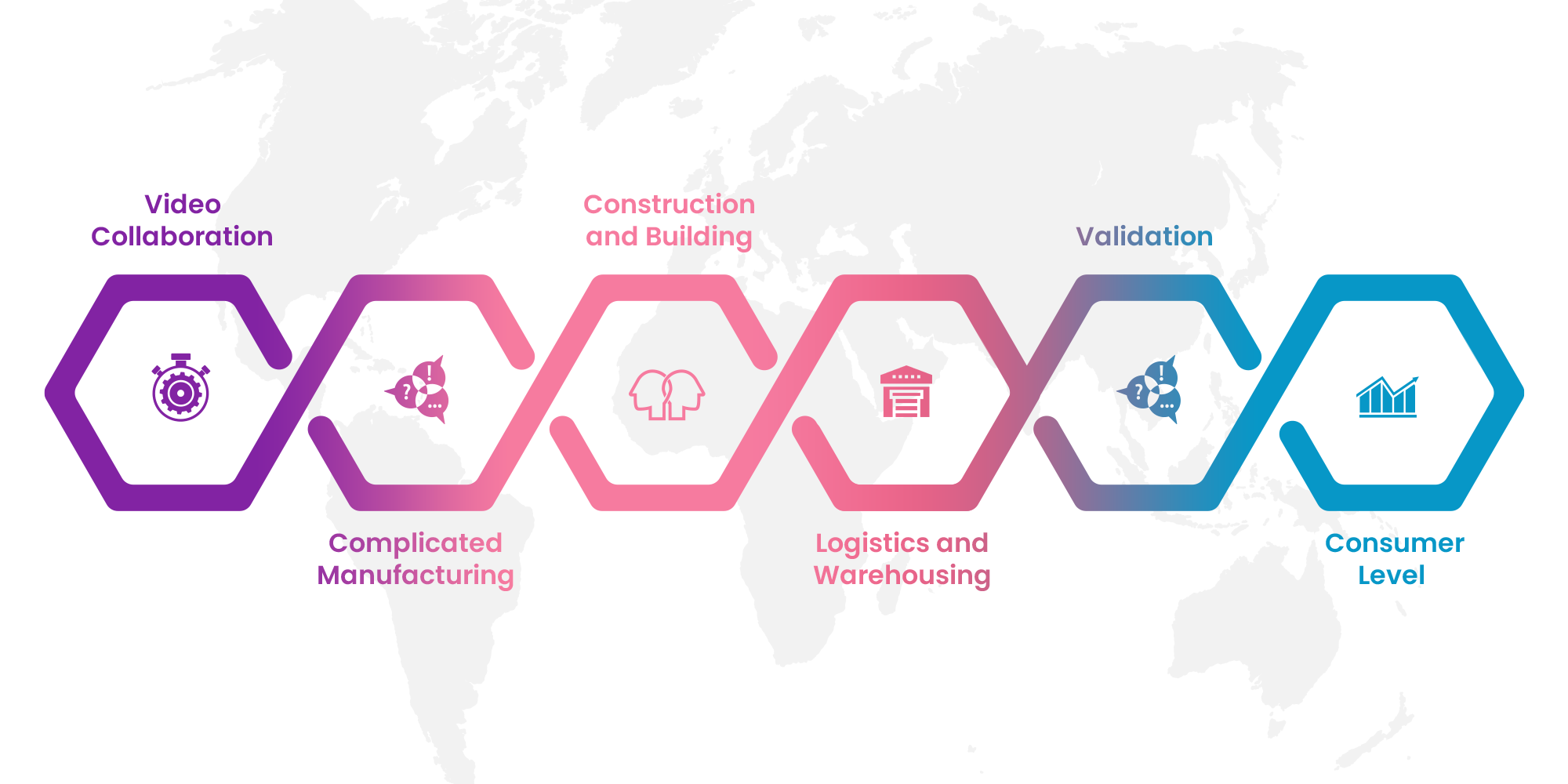
Take a look at some of the top-notch use cases of the tech:
One of the leading applications of AR-based smart glasses is video collaboration, which enables working with the experts in a “See-what-I-see” mechanism. It is a remote system functionality that can improve the working of numerous sectors.
Be it field service or complicated engineering support; more and more organizations are heading towards adopting smart glasses for boosted mechanisms.
It is a mix of productivity, speed, accuracy, quality, and compliance, considering the assembly lines. These are the primary areas, and the functioning of smart glasses fits perfectly with them to maintain standards.
Smart glasses in the construction and building industry can provide a safer and hands-free workflow, leading to improved speed and productivity. Additionally, the tech also helps in eliminating errors and structural inspections.
While workers can be hands-free because of receiving real-time information in their field of view, they can spontaneously locate, collect, and deliver items to their destinations. Notably, smart glasses have become a perfect substitute for scanners, printed material, and more. Therefore, it leads to an acceleration of productivity, decreased errors, and expenses.
When it comes to maintenance, nothing else can beat AR solutions. Technicians can receive visual information using the glasses; therefore, they can effectively execute tasks like assembling, repairing, etc.
Smart glasses can play a vital role on the consumer level.
Do you want to know how?
Interestingly, the consumers can use the tech in museums to enhance their experience by displaying the information. Tourists can use the same for directions and exploring unknown places.
Additionally, sports people can use the smart-wear to monitor their speed, distance covered, and other information.
It is not really about experimentation anymore, and that phase… it has already passed.
Today, businesses are investing in AR and VR because they are solving real problems, and not just surface-level ones, but deeper operational and customer-facing gaps that have been there for years. And because of that, the shift is becoming more visible now.
Let’s understand this a little better.
One of the biggest issues in digital commerce is hesitation, and it has always been there. Customers are unsure, and they hesitate because they cannot fully trust what they see on a screen.
So, when you think about it, things like size, fit, and placement, they create confusion, and therefore, people either delay decisions or abandon them altogether. This is where AR comes in, and it changes things quite practically.
Take IKEA, for example. Their AR app allows users to place furniture in their own space, and because of that, the guesswork is reduced. You are not imagining anymore, you are actually seeing.
Returns have been reduced because of this. And that matters. This is the kind of solution an AR app development company builds today, not just features, but experiences that directly affect how users decide.
Now if you move towards manufacturing, things get more critical, because even a small mistake… It can cost a lot.
Companies like Boeing have been using AR-powered smart glasses, and what happens is that the instructions are shown directly in front of the worker’s eyes. So they don’t have to look away or switch between systems.
It sounds simple, but it works because it removes friction. And therefore, efficiency improves.
Training has always been a challenge, and it still is. It is expensive, and sometimes inconsistent, and honestly… not always effective. So, businesses have been shifting towards VR, because it allows repetition, control, and safety.
In healthcare, surgeons are using VR to practice procedures before they perform them in real life. And because of that, they are more prepared.
In retail, Walmart has used VR to train employees for high-pressure situations, like peak sales events. So employees experience the rush before it actually happens.
A good VR app development company focuses on building these environments so that learning feels real, even when it is not.
This is where AR becomes even more useful, especially in field operations.
Imagine a technician working somewhere remote, and they face an issue. Instead of waiting, they can connect with an expert, and the expert can see exactly what they see.
So, guidance happens in real time.
Companies like Siemens have been using this model, and because of that:
It is simple, but it changes how teams operate.
Attention is limited today, and users move quickly. They scroll, they check, and then they leave. So, businesses are trying to hold that attention, and AR/VR helps with that.
You will see:
These are not just add-ons, they are being used because they keep users engaged for longer. And when users stay longer, they are more likely to convert.
Now, this part is often ignored, but it is important. No matter how advanced AR or VR becomes, it still depends on the application layer. And if that is not strong, then the experience breaks.
This is where a mobile app development company plays a key role, because everything needs to work together.
Otherwise, even a good idea fails in execution.
So, when businesses invest in AR and VR, they are not just following a trend.
They are solving real things such as – customer confidence, operational efficiency, and training challenges, and because of that, they are seeing results.
Not just engagement, but actual impact.
Costs are being reduced, decisions are faster, and processes… they are becoming more efficient. And that is the shift.
Not innovation for the sake of it, but innovation that works.
The current usage of smart glasses is convincing businesses to adopt the same as it has the potential to perform wonders in the near future. Though the tech still lacks when it comes to public usage, it is not surprising that big names like Apple and Facebook are working with AR-powered technology.
There’s a significant increase in the adoption rate of tech by businesses, and they are efficiently using the opportunity to remain competitive in the market.
In conclusion of the same, we can only say that AR-based smart glasses are a great technological asset and addition to the market. It adds great value and provides convenience to an exceptional extent.
Are you impressed with the functioning of Augmented Reality?
If that’s a yes, why sit back?
Connect with our team of professionals and get insights on how you can integrate AR into your business for skyrocketing benefits.
With the influx of AI, the healthcare industry is going through a series of changes. Some of them affect cost and some benefits, but it is fair to say..

When was the last time you really stopped to appreciate just how handy it is to unlock your phone with just your face? We use facial recognition softw..



Write Us
sales@techugo.comOr fill this form