


 SA
SA  KW
KW  IE
IE AU
AU UAE
UAE UK
UK USA
USA  CA
CA DE
DE  QA
QA ZA
ZA  BH
BH NL
NL  MU
MU FR
FR 



















📌 Key Takeaways
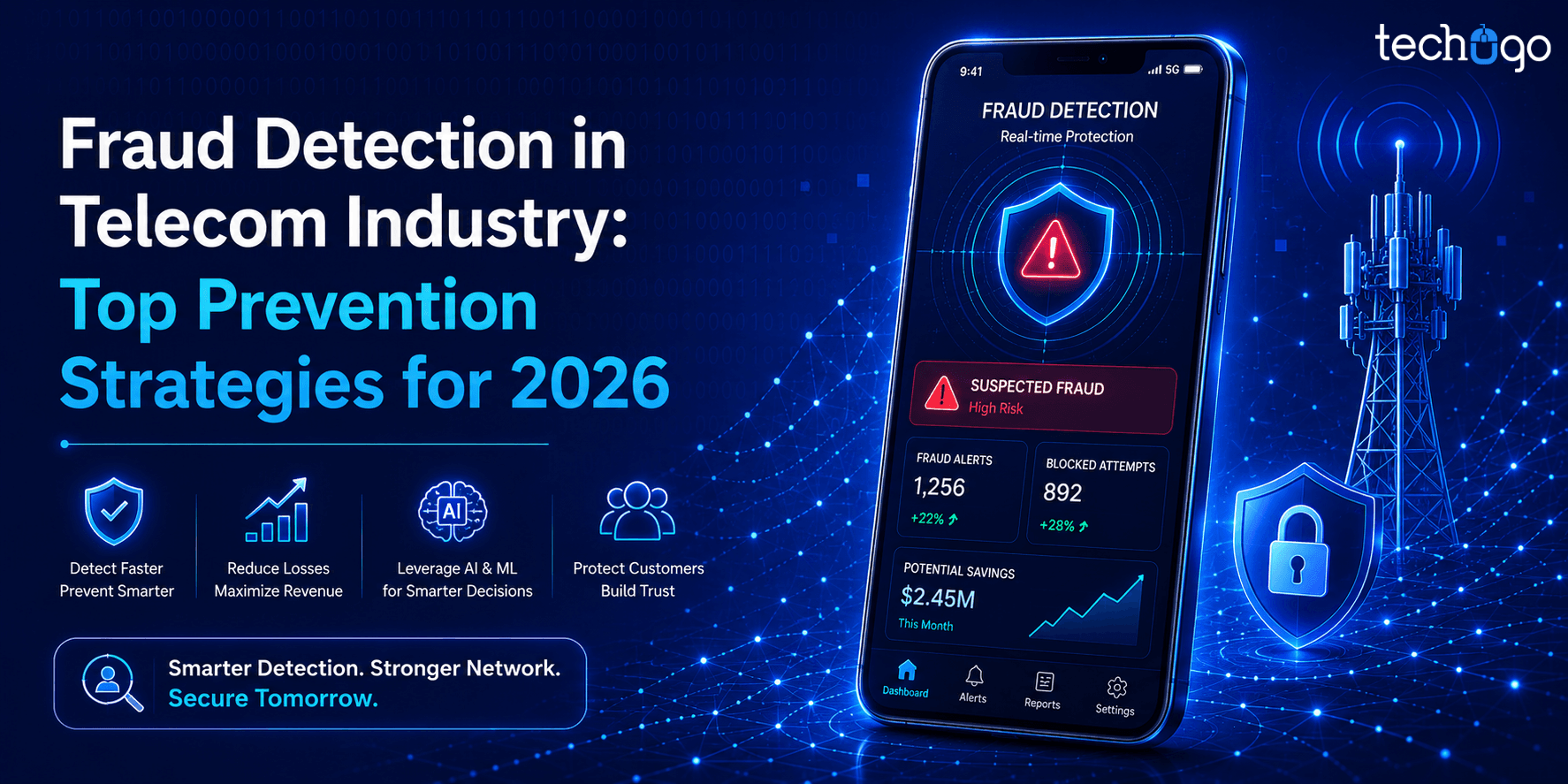
- Fraud detection in telecom industry became a top priority after global telecom fraud losses crossed nearly $39 billion in 2023.
- Traditional fraud detection systems are too slow to handle modern AI-powered telecom attacks.
- Telecom companies are shifting from reactive detection to proactive fraud prevention strategies in 2026.
- AI and predictive analytics help telecom companies detect fraud in real time and reduce financial losses.
- Voice biometrics, blockchain, and cloud-based systems are strengthening telecom fraud detection and prevention capabilities.
Fraud detection in telecom industry is becoming more critical than ever. In 2023, there was a noticeable rise in SIM swap fraud across the UK telecom sector, and because of that, many users suddenly lost access to their numbers, and their bank accounts were drained within hours. It was not just one case, but repeated incidents, and this showed how quickly they can escalate once they have the potential to control a victim’s phone.
Not only this, telecom operators across Africa and parts of the Middle East experienced International Revenue Share Fraud (IRSF), where overseas calls generated false revenue before the operators could monitor or block them.
The frequency of these incidents is growing because the con artists get smarter, while many traditional telecom fraud detection systems are improving at a very slow rate. According to reports from CFCA, the worldwide total fraud-related losses suffered by the telecom industry over the last year has been between $38-40 billion, which is representative of all types of fraud, including SIM swaps, subscription fraud, and IRSF.
But the real problem is the speed. Attackers now use automation and AI, so that they can exploit networks in real time, but traditional systems are not able to keep up, and they detect fraud after the damage is done.
So telecom companies are now focusing on modern telecom fraud prevention strategies, because it is not just about detection anymore; it is about prediction. With AI in telecom fraud detection and telecom analytics for fraud management, businesses can identify risks early and act faster.
Through this blog, you’ll get to know about top strategies for fraud detection in telecom industry for 2026 and how businesses can stay prepared because the threat is growing and the need to act is urgent.
Understanding fraud detection in telecom industry
Telecom fraud is when someone uses the telecom networks, and the systems, in a way that they were not meant to be used, because they want to gain money, or access, or even sensitive data, and it often goes unnoticed in the beginning. It can involve users, and operators, and even third-party platforms, so the impact is not always limited to one area, it spreads.
Earlier, it was easier to detect these issues, and the fraud types were simpler, like unauthorized calls or fake subscriptions, but now things have changed, and the methods have become more advanced, and more structured. Attackers are using automation, and digital tools, and sometimes AI to bypass traditional fraud detection in telecom industry mechanisms, so that they can act faster, and operate at scale, which makes detection harder.
Telecom networks are also changing as they adopt new technologies such as 5G, IoT, and digital services; this growth in connectivity has resulted in an exponential increase in the potential for vulnerability.
As more customers connect to telecom networks and data flows continue to increase, the number of entry points a fraudster has to exploit will also increase.
As such, the importance of telecom fraud management is transitioning from reactive to proactive. By using accurate and timely data to identify anomalies in user behaviour at the earliest possible stage, the primary focus has shifted from detection to prevention. In doing so, fraud management has gone from being purely a technical issue to being a major business issue that impacts revenue, trust in the network, and the overall security of the telecom network.
Common telecom fraud types affecting the telecom industry
Telecom fraud comes in many forms, and it keeps evolving because attackers are always finding new ways to exploit systems, therefore you need to understand the most common types so that you can prevent them better. Some of these frauds are easy to notice but others are silent, and they continue for a long time before they are detected.
SIM swap fraud
This happens when a fraudster takes control of a user’s SIM card and transfers the number to another device so that they can access bank accounts, OTPs, and sensitive data. It is dangerous because the user often does not realize it immediately, and the damage is already done.
International revenue share fraud (IRSF)
In this type, attackers generate high volumes of international calls to premium numbers, and because of that, telecom operators end up paying huge interconnect charges. It often goes unnoticed at first, but the losses can be massive.
Wangiri fraud (Missed call fraud)
You may have seen this, where you get a missed call from an unknown international number, and when you call back, you are charged high rates. It seems simple, but it has been very effective, and widely used.
Subscription fraud
This is when fake identities or stolen documents are used to create new telecom accounts, and then services are used without paying the bills. It leads to direct revenue loss, and also affects customer data integrity.
PBX hacking
In this case, attackers break into private branch exchange (PBX) systems, and use them to make unauthorized calls, often international, and therefore companies receive unexpectedly high bills.
All these fraud types are different, but they have one thing in common, they exploit gaps in the system, and because telecom networks are large and complex, these gaps are not always easy to detect, which is why strong strategies are important for fraud detection in telecom industry.
Why traditional methods used for fraud detection in telecom industry are no longer enough?
Telecommunications companies have relied on traditional fraud detection systems for decades, based on rules, historical data, and manual investigations; due to the evolution of fraud, however, those systems are no longer adequate since they can’t keep up with the rapid pace and complexity of fraud as it exists today. Modern fraud detection in telecom industry requires real-time visibility, predictive analytics, and AI-driven monitoring because fraud attacks now happen within seconds.
1. Reactive, not proactive, is one of the primary issues associated with the traditional systems; they can only identify fraud after it has occurred –as such, all losses resulting from fraudulent activity have already been incurred at that point. An example of this would be that many telecom operators still rely on Call Detail Records (CDRs) to identify fraudulent transactions; however, as CDRs are only generated after a call has been completed –this creates a window of opportunity for a fraudster to inflate their charges before the CDR can be used for detection purposes; therefore, these companies are constantly behind the curve. During large-scale fraud events, such as IRSF, it takes only minutes for thousands of calls to be generated –and even a slight delay in the detection and prevention of those calls can result in significant financial losses.
2. A lack of real-time visibility is another issue; traditional systems often operate in silos, and therefore cannot track activities across multiple networks simultaneously; thus when a fraudulently placed call travels over multiple carriers, the system has no ability to see the full end-to-end lifecycle of that call, making the detection of such calls extremely complicated.
3. There is also the challenge of scale and data volume. Telecom networks generate massive amounts of data every day, and traditional systems were not designed to handle this level of complexity. They struggle with processing speed, and therefore, they miss patterns that happen quickly or across large datasets .
4. And then comes the issue of false positives which creates another problem. When systems rely on simple rules, they often flag normal user behavior as fraud, that’s why genuine customers get affected, services get blocked, and also the trust of customer goes down.
5. Also fraud continues to be on the rise. The Communications Fraud Control Association (CFCA) reported that losses from telecom fraud amounted to $38.95 billion in 2023, and they are continuing to increase rapidly, so detecting fraud is taking much longer than in past years.
Thus when you take all these elements into account, you can see that traditional fraud detection systems were designed for an older era and therefore are not equipped to handle today’s level of sophistication in how fraud is being perpetrated. They have become slow, independent of each other and consequences of automation as well as fraudsters using advanced methods; these systems can no longer perform at their previously established levels of performance.
Technologies that help in fraud detection in telecom industry in 2026
As telecom fraud is growing, and it has become more complex, the technologies that are used to detect it have also been evolving, because the older systems were not enough, and therefore companies are now using smarter tools so that they can detect fraud earlier, and reduce losses before they grow.
1. Artificial intelligence and machine learning
AI and ML are widely used now, and they are important in AI in telecom fraud detection, because they can process large amounts of data, and find patterns that you cannot easily see. These systems learn from past fraud cases, and they keep improving, so that even new fraud types can be detected, and it becomes easier to stop them in real time.
2. Cybersecurity and threat intelligence platforms
Cybersecurity platforms help telecom companies monitor network vulnerabilities, suspicious access attempts, and malicious activities in real time. Combined with threat intelligence, these systems strengthen fraud detection in telecom industry by identifying potential attacks before they impact customers or network operations.
3. Telecom analytics for fraud management
Telecom analytics for fraud management is also important, because it helps companies understand how users behave, and what normal activity looks like, so that anything unusual can be detected. It analyzes call data, and usage patterns, and transactions, and therefore helps in identifying risks early, and taking faster action.
4. Blockchain technology
Blockchain technology is used because it creates secure records, and the data once stored cannot be changed, so that fraudsters cannot manipulate it. It also helps in maintaining transparency, and therefore reduces the chances of fraud in transactions.
5. Voice biometrics
Voice biometrics works by analyzing a person’s voice, and since every voice is different, it becomes difficult for fraudsters to copy it. It is mostly used during customer calls, and it adds an extra layer of security, because identity can be verified quickly.
6. Geolocation tracking
Geolocation helps in tracking where the user is, and if there is a sudden change in location, it raises alerts, because it may indicate fraud. This is useful in cases like SIM swap or unauthorized access, and therefore helps in early detection.
7. Cloud-based fraud detection systems
Cloud systems are being used more, because they provide speed, and scalability, and real-time access to data. Telecom companies can monitor activities across networks, and respond faster, and it also supports integration with AI and analytics, so that detection becomes more efficient.
All these technologies are connected, and they are often used together, because one alone is not enough, and therefore telecom companies are building stronger telecom fraud detection systems.
As fraud continues to evolve, these technologies have become essential, and they will help with fraud detection in telecom industry in 2026, and beyond as well.
10+ proven strategies for fraud detection in telecom industry to secure business in 2026
Due to the rise in fraud in the telecommunications industry, companies are changing their methods of prevention and detection by implementing real-time fraud detection. Rather than relying only on post-incident investigations, they’re focusing more on fraud detection in telecom industry.
Companies understand that the faster they react to fraud and prevent it before it happens, the larger their reduction in financial loss. While there are many strategies for fraud prevention and detection, they only work well when done consistently and in conjunction with one another.
Suggested Read: Top Application Security Risks Startups Overlook (And How to Fix Them)
1. Implement real-time fraud detection
Implementing computerized monitoring of telecommunications activities to identify suspicious activities in real time is crucial. Because of the fast pace at which fraud occurs, if a delay occurs within the fraud detection systems, the loss will already have occurred. Therefore, companies are implementing systems that monitor telecommunications activity 24/7 and provide real-time alerts. For example, if the volume of international calls to a region increases unexpectedly, the fraud detection system will generate a real-time alert.
2. Use AI and predictive analytics
AI is being used more, and it helps because it can analyze past data, and predict future risks, so that companies can act earlier and prevent fraud. It identifies unusual patterns and behaviors, and therefore even new fraud types can be detected, which was difficult before.
3. Strengthen identity verification
Identity verification is important, because many fraud cases start when the identity is compromised, and therefore companies are using methods like multi-factor authentication, and biometrics, so that only the right users can access the services, and misuse can be reduced.
4. Continuous network monitoring
Network monitoring has to be continuous because fraud can happen anytime, and if there are gaps, they can be exploited. So companies are monitoring networks all the time, and this helps in detecting unusual activities early, and reducing risks.
5. Use multi-layer security systems
Having just one layer of protection isn’t enough, as it can easily be breached. By using more than one layer (encryption, firewall and password protection for instance) there are other layers of protection even if one layer fails.
6. Strengthen telecom cybersecurity infrastructure
Telecom companies are investing in stronger cybersecurity frameworks because fraud attacks often begin through weak endpoints, unsecured APIs, or compromised network systems. Advanced cybersecurity practices help reduce vulnerabilities and improve fraud detection capabilities.
Also Read – How US companies can manage cybersecurity during recession
7. Share information within fraud intelligence networks
Businesses now work together and share information regarding fraud patterns because these fraud patterns are typically repeated. As a result, if one company detects fraud it helps prepare others to be ready for that same type of fraud. This also reduces the risk of fraud to all businesses in the telecom industry.
8. Conduct periodic audits & assess risk
Periodic audits assist companies in determining where weakness exists within their system; if a company looks through their billing systems, network access and security controls, then they can fix the issues found so that fraudsters cannot take advantage of them.
9. Secure PBX and network systems
Because PBX systems are most frequently targeted as they can be used to make unauthorized calls, companies are now securing PBX systems using strong passwords, firewalls and access restrictions. Also, companies are continuously updating network security systems. The longer a system goes without being updated, the easier it is for an attacker to enter into that system easily.
10. Implement call blocking and filtering
Call blocking helps in stopping suspicious calls before they even reach the network, and therefore reduces the chances of fraud. Filtering systems identify high-risk numbers and block them automatically, which adds another layer of protection.
11. Ensure regulatory compliance
Following telecom regulations is important because it ensures that security standards are maintained and risks are minimized. Companies that follow compliance guidelines are better prepared and therefore less vulnerable to fraud.
These strategies for fraud detection in telecom industry are effective, but they are not meant to work alone, and they have to be combined, because telecom fraud is evolving, therefore the prevention approach also has to evolve continuously.
In 2026, companies that have been investing in these strong strategies for fraud detection in telecom industry are the ones that are better prepared, and are able to protect their revenue, and their customers, more effectively.
Key features of an effective telecom fraud management system
An effective telecom fraud management system is important, because fraud is increasing, and it has become more complex, so that it needs to be detected, and prevented quickly, and therefore companies are focusing on smarter systems.
Real-time monitoring
It tracks the activities continuously, and detects fraud instantly, because delays can cause losses, and so quick action is needed.
Cybersecurity integration
The system should integrate with telecom cybersecurity tools so that threats, unauthorized access, and fraud attempts can be monitored together, improving overall network protection.
AI-based detection
AI is used, because it can analyze large data, and identify unusual patterns, and it keeps improving, so that new fraud types can also be detected.
Advanced analytics
Analytics helps in understanding user behavior, and trends, and therefore risks can be identified early, and actions can be planned.
Automated response
The system takes immediate action, like blocking suspicious activity, because manual response is slow, and it may not be effective.
Risk scoring
It assigns risk levels to activities, and highlights high-risk cases, so that attention can be given where it is needed the most.
System integration
It works with the existing telecom systems, and tools, so that there are no gaps, and monitoring becomes smooth.
Scalability
The system can handle large data, and growing networks, because telecom usage is increasing, and therefore it needs to scale.
These features are important, and they work together, because one alone is not enough, and so a strong system is built, so that fraud can be managed, and controlled effectively.
Challenges in telecom fraud detection and how to overcome them
Telecom fraud is increasing every second and it has become more advanced. Companies are facing many challenges because the systems are changing and the fraud methods are also evolving, hence, fraud detection in telecom industry in 2026 is not as simple as it was before.
Suggested Read: Top 10 Cybersecurity Measures for Businesses to Prevent Cyber Attacks in 2026
1. Evolving fraud techniques
As we all know that fraudsters constantly change their methods and use new technologies so that they are not properly detected by older systems. So to overcome this, what companies do instead, they are using AI-based systems. These systems can learn from new patterns and keep improving, thus they help in detecting even new fraud types.
2. High volume of data
Telecom networks generate a large amount of data, and it becomes difficult to process it quickly, and detect fraud on time. Real-time analytics tools are used because they can handle large data, and process it faster, so that detection does not get delayed.
3. Global nature of fraud
Fraud happens almost in every country and it becomes difficult to track and control because regulations and systems are different everywhere. That’s why companies are collaborating and using cross-border tools to detect fraud across regions and reduce risks.
4. Integration with legacy systems
Many systems are old and were not designed to work with modern technologies so integration in those old systems is very challenging. To overcome this, systems can be updated gradually or integrated carefully so that detection can be improved without affecting operations.
5. Resource and cost constraints
Some companies do not have enough budget or skilled teams, hence they struggle to implement strong fraud detection systems, therefore they partner with third-party providers and use scalable solutions so that they can manage fraud without heavy investment.
These challenges are real and they have been increasing but they can be managed with the right tools and strategies. Companies are improving their fraud detection in telecom industry and building stronger systems over time.
How Techugo can help build secure telecom fraud prevention solutions
Telecom fraud is not just a technical issue, and it is not something you can solve with one tool, because it involves data, networks, user behavior, and evolving threats, and therefore you need AI-driven solutions for fraud detection in telecom industry, that are built carefully, and designed to adapt over time. This is where Techugo helps.
Techugo has been working with businesses across industries and they understand how complex digital systems can be, and how important it is to build secure & intelligent solutions so that risks can be reduced before they turn into losses.
We as a pre-eminent software app development company, build AI-driven fraud detection systems for telecom industry because we all know that traditional systems are not enough anymore, and businesses need smarter tools. Our team focuses on real-time monitoring, and telecom analytics for fraud management so that fraud can be detected early, and controlled quickly.
At the same time, the solutions are customized because every telecom network is different, and a one-size approach does not work. If you want to build a future-ready telecom fraud prevention system, Techugo provides the right mix of technology and expertise. Get a free 45-min consultation today!
FAQs
Q. What is telecom fraud and how does it work?
Telecom fraud is when individuals misuse telecom networks, and services, to gain money or access illegally, because they exploit system gaps. It works by using methods like SIM swap, fake subscriptions, or unauthorized calls, so that fraudsters can bypass security and generate financial loss.
Q. What is fraud detection in telecom industry?
Fraud detection in telecom industry is the process of identifying suspicious activities, unauthorized access, and fraudulent telecom usage through technologies like AI, analytics, and real-time monitoring. It helps telecom companies reduce financial losses and improve network security.
Q. How can telecom companies prevent fraud effectively?
Telecom companies can prevent fraud by using real-time monitoring, and AI-based detection systems, because these help in identifying suspicious activity early. They also use strong authentication, and telecom analytics for fraud management, so that risks can be reduced before they grow.
Q. What is the role of AI in telecom fraud detection?
AI plays a key role, because it analyzes large amounts of data, and identifies unusual patterns that may indicate fraud. It learns from past behavior, and improves over time, so that even new and complex fraud types can be detected quickly.
Q. Which technologies are used for fraud detection in telecom industry?
Technologies such as AI, machine learning, telecom analytics, blockchain, cloud monitoring, geolocation tracking, and voice biometrics are commonly used for fraud detection in telecom industry because they improve accuracy and speed.

Get in touch
We'd love to hear from you.