

 SA
SA  KW
KW  IE
IE AU
AU UAE
UAE UK
UK USA
USA  CA
CA DE
DE  QA
QA ZA
ZA  BH
BH NL
NL  MU
MU FR
FR [ LET’S TALK AI ]
X
Discover AI-
Powered Solutions
Get ready to explore cutting-edge AI technologies that can transform your workflow!



Get ready to explore cutting-edge AI technologies that can transform your workflow!






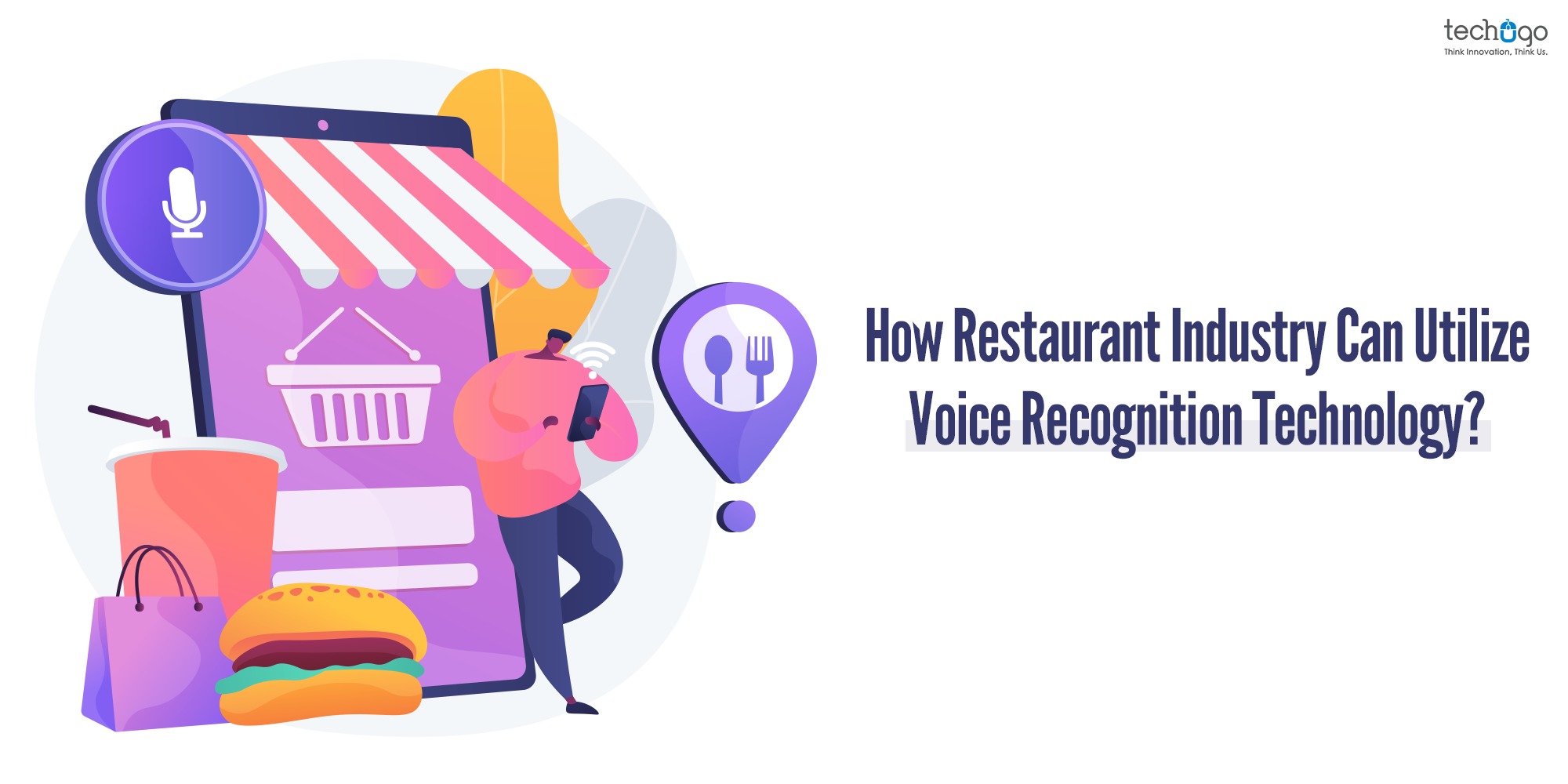
“Alexa, order my usual pizza.”
What once sounded futuristic is now becoming part of everyday dining in 2026. Voice technology is slowly, and sometimes suddenly, changing the way different industries work, and the restaurant industry is also becoming a part of it. Not long ago, ordering food meant calling a restaurant or waiting in a queue.
But today things are different, because technology has been growing and businesses are trying to keep up with what customers expect.
Because of this shift, voice recognition in restaurants has started gaining attention. It is not only about convenience, and it is not just about answering simple commands either. Restaurants are using it so that they can manage orders better, reduce mistakes, and understand their customers in a more practical way.
Nearly 30% of quick-service restaurants have been experimenting with AI-based voice assistants, and many others are testing similar solutions in their ordering systems.
Customers are also adapting to it and therefore their expectations are changing. Studies show that more than 60% of consumers are comfortable using voice assistants or automated systems for placing orders, mainly because it is faster and requires less effort. And when restaurants adopt voice technology for restaurants, the process becomes smoother, but it also creates useful data that owners can analyze later.
Another important reason behind this adoption is efficiency. Modern AI voice systems have been reported to reach around 95% order accuracy, and they can reduce ordering time by nearly 30–40%, so that both customers and staff experience fewer delays. This is why the use of voice recognition technology in the food industry is steadily increasing, although the adoption pace still varies from one restaurant to another.
So, the digital dining experience continues to grow and update, and restaurants are exploring voice technology to support their growth and improve service quality.
Are you interested in learning more about its use in the restaurant industry?
If yes, then keep reading this blog for developing a better understanding of the same.
In the simplest terms, voice technology allows a system to listen to what a person says, understand it, and respond with the right action. You speak, the system processes your words, and it delivers a result whether that is answering a question, placing an order, or guiding you through a service.
You have probably already used this technology in everyday life. Think about assistants like Amazon Alexa, Google Assistant, or Apple Siri. When someone says, “Play music,” or “Order my usual coffee,” the system recognizes the command and responds instantly.
The same idea is now entering restaurants as well. Some food chains are already testing voice-powered ordering systems.
For example, McDonald’s experimented with AI voice ordering at drive-thrus, while Wendy’s introduced an AI drive-thru assistant that can take orders through natural conversation. These systems allow customers to place orders quickly without needing direct staff interaction.
Broadly, voice technology works in two ways:
These rely on specific commands or predefined phrases. For example, a customer might say, “Order a large pepperoni pizza,” and the system processes that exact request.
These are more advanced and rely on conversational speech. Instead of fixed commands, customers can speak naturally, such as: “Can I get a large pizza with extra cheese and a Coke?” The system understands the request even if the wording changes.
Behind the scenes, voice technology follows a sequence of steps to understand what a customer says.
First, the device captures the user’s voice through a microphone. The audio signal that it receives is analog in nature, so the system converts it into digital signals. This process is known as analog-to-digital conversion, and it allows the software to process spoken language.
Once converted, the system analyzes the sound using several components:
These elements work together to interpret the user’s request. The processed signals are then compared through pattern recognition algorithms, and the system identifies the closest possible meaning.
For example, if a customer at a drive-thru says, “I’d like two burgers and fries,” the system recognizes the words, matches them with menu items, and adds them to the order automatically.
This is exactly how modern voice-powered ordering systems work in many quick-service restaurants today. Instead of manually taking orders, AI-based systems listen, understand, and respond which speeds up service and reduces the chances of errors.
There are several reasons why voice technology is becoming the first choice of restaurants to improve their digital platforms. By harnessing the technology’s rising popularity the digital restaurant industry can become more discoverable and searchable. This tech is an asset for restaurants, as it can help them to get in front of as many foodies as possible.
Voice technology allows customers to place orders quickly without navigating complex menus. This reduces waiting time and improves service speed.
AI-powered voice systems can understand menu items and customer preferences, which reduces human errors during busy hours.
Automated voice ordering can reduce dependency on manual order-taking, helping restaurants optimize staffing costs.
Voice-enabled ordering provides convenience and accessibility, especially for users who prefer hands-free interaction.
Voice systems capture ordering patterns and customer preferences, allowing restaurants to personalize offers and improve marketing strategies.
Do you own a restaurant and are looking to expand? If yes, then you must consider the voice technology for the following reasons-
Restaurants can integrate voice ordering into their mobile apps, websites, and smart devices so that customers can place orders without navigating menus. A user can simply say something like “Order a large pepperoni pizza and garlic bread,” and the system processes the request instantly. These systems can also work alongside a chatbot app, allowing customers to either speak or type their requests depending on their preference. With voice recognition in restaurants, this reduces ordering friction and improves convenience for customers.
Many quick-service restaurants are experimenting with automated voice ordering systems at drive-thrus. Instead of a staff member taking orders, an AI system listens to the customer, confirms the order, and sends it directly to the kitchen. This reduces wait times and helps restaurants handle high order volumes more efficiently.
Restaurants can also use voice assistants to manage reservations. Customers can ask a voice assistant to book a table, check availability, or confirm reservation details. This simplifies the reservation process and ensures restaurants do not miss potential bookings.
Restaurants can also use voice technology to handle common customer queries quickly and efficiently. A voice-enabled system can answer questions related to menu items, operating hours, order status, or delivery timelines. Instead of waiting for a staff member to respond, customers can simply ask their question and receive an instant reply. This not only improves response time but also allows restaurants to manage customer interactions more efficiently during busy hours. With voice technology for restaurants, businesses can provide consistent support while reducing pressure on staff.
Voice technology can also help customers track their food orders in real time. For example, a customer can ask a voice assistant about the status of their order, and the system can instantly provide updates such as preparation time or delivery progress. This feature makes the ordering experience more transparent and convenient for users. As voice recognition technology in the food industry continues to evolve, such features can help restaurants build stronger communication with customers and deliver a smoother digital dining experience.
We all know that different generations have their own way of consuming and responding to online information. Therefore, restaurants can use this tech to draw the attention of as many customers as possible. It can be utilized to provide a flawless platform for everyone, which would improve the overall user experience. Apart from convenience in ordering, it can also be utilized in delivering exquisite and advertised speech experiences.
To adopt voice technology, it is not enough to just add a new feature into an application. Restaurants need a well-planned strategy so that voice systems work smoothly with their ordering platforms, mobile apps, and customer engagement tools. And you need an experienced tech partner to do the same.
At Techugo, our experts help restaurants design intelligent digital solutions that improve customer experience and streamline operations. From AI-powered ordering systems to smart automation tools, our team works closely with businesses to build scalable platforms tailored to their needs.
Through our generative AI development services, we help restaurants build advanced conversational systems that can understand customer requests, respond intelligently, and improve ordering accuracy. These AI-powered solutions can analyze user behavior, personalize recommendations, and create a more engaging digital dining experience.
Along with development, we also provide generative AI integration services that allow restaurants to seamlessly connect voice technology with their existing mobile apps, POS software systems, and digital platforms. This ensures that businesses can introduce voice-enabled features without disrupting their current operations.
With the right technology strategy and expert implementation, restaurants can unlock the full potential of voice recognition and build smarter, more efficient customer experiences.
Utilizing this technology in the right manner would allow the online restaurant industry to eradicate any sort of gaps between their process and the customer base. This tech presents a great opportunity to anyone who wants to build a deeper connection with their customers.
If a restaurant wants to integrate voice technology in order to enhance its digital transformation, it must address the customers’ concerns during the development. Properly integrating voice technology for restaurants allows the industry to bridge gaps between operations and customers. Leveraging a restaurant voice assistant ensures seamless ordering, personalized experiences, and smoother digital transformation.
But restaurants also need to consider all the involved risks. One needs to ensure that its integration does not create a negative experience for the users, as this is one of the most common mistakes committed during the development process.
The best way to stay clear of all the problems is to collaborate with a team that has the potential to seamlessly integrate the same.
Our experts at Techugo, a leading mobile app development company ensure that the digital platform has a seamless user experience (UX). Doing this would also highlight the voice technology feature in a manner that resonates with the growing demand of the user base.
If you want to fetch more related details about voice technology and the constantly transforming digital world, then make sure that you connect with the professionals right away. Otherwise, stay hooked to this space for more insights from the tech world.
What happens when artificial intelligence stops living inside screens and starts interacting with the real world? That’s where physical AI comes in..

Google’s new Google AI dictation app, called Google AI Edge Eloquent, runs fully on-device, and it works even when there is no internet connection. It..


Write Us
sales@techugo.comOr fill this form