

 SA
SA  KW
KW  IE
IE AU
AU UAE
UAE UK
UK USA
USA  CA
CA DE
DE  QA
QA ZA
ZA  BH
BH NL
NL  MU
MU FR
FR [ LET’S TALK AI ]
X
Discover AI-
Powered Solutions
Get ready to explore cutting-edge AI technologies that can transform your workflow!



Get ready to explore cutting-edge AI technologies that can transform your workflow!






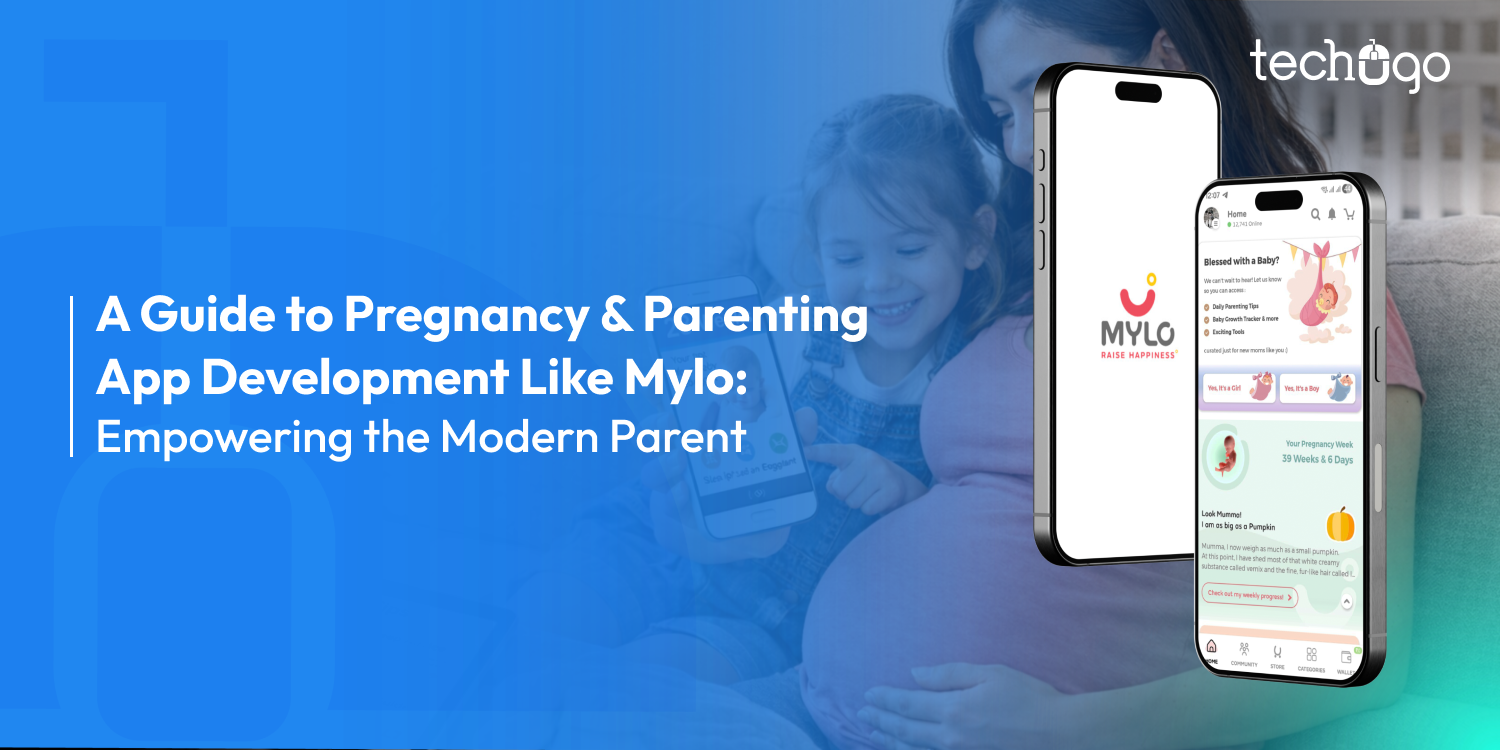
The whole process from conception through young children is a huge transition that can lead to a lot of stress, uncertainty, and difficulties in finding accurate information. Through the use of digital tools, parents are moving away from standard internet search engine results toward a more specialized platform. Building a solution for pregnancy tracking application development or a complete developing platform for parenting is one of the fastest moving and most resilient segments of the healthcare industry.
Examples of platforms like Mylo have established a standard to strive for by providing community, commerce, and health tracking capabilities all within one platform. This guide outlines how to create a pregnancy application similar to Mylo to help make your application more prominent in today’s competitive and growing international marketplace.
Are you considering developing an application for your new parenting lifestyle but aren’t sure where to begin? The transition into parenthood has been transformed from printed guides held in one’s hands to always-with-you, digital solutions.
There are projections that the worldwide market for pregnancy tracking applications will be nearly $39.07 billion, with a healthy growth of 20% reported over the previous year regarding parenting tools facilitated by A.I.
The struggle for both expectant mothers and new parents is clear: their struggle is that of information overload. It’s not simply a matter of having enough information but rather having access to personal health resources tailored to their week of pregnancy and baby’s unique milestones from birth through infancy. In this article, we will delve into the critical components of mobile application development for tracking pregnancy, provide an overview of top AI-enabled parenting application features, and share a high-level breakdown of the expenses associated with creating an app so that you are fully informed on your options.
This guide outlines everything that you need to know about developing a successful parenting application in India.
When you aim to develop a pregnancy app like Mylo, you aren’t just building a utility; you are creating a “full-stack” companion for the modern family. Mylo has redefined the category by blending personalized health tracking with a high-engagement community and a curated marketplace.
At its core, pregnancy tracking app development within the Mylo framework is about creating a digital lifecycle. It begins the moment a user thinks about conceiving and stays with them until their child is a toddler. This comprehensive approach is why Mylo has secured over 10 million users and has become a benchmark for any parenting app development company globally.
What makes applications such as Mylo or Ovia successful? Not only does it come from the application’s function, but it also includes the community aspect and purchases.
The essence and features of a pregnancy tracking app development is to create a digital ecosystem for tracking the health of a mother through each week of pregnancy (from Week 1 to Week 40) and monitoring the growth of her unborn (fetal) child. These types of applications are much more complex than just having a calendar.
a. Pregnancy Trackers: Apps that focus on tracking fetal growth, keeping track of the mother’s prenatal health, and receiving a reminder when it is time to attend her next prenatal appointment.
b. Baby Care Apps: Apps that track babies post-birth (the “fourth trimester”) that can help track baby sleep cycles, feeding patterns, and immunisations.
c. AI-Based Parenting Assistance Apps: Apps that use AI technology to monitor a baby’s cries (cry analysis) and provide parents with suggestions regarding diet (nutrition plans) for their babies.
d. Healthcare Apps: Apps that allow parents to connect with pediatricians and OB-GYNs through telemedicine (using video) and also have sorely needed apps in their toolboxes.
The type of platform you choose when selecting an app development company in India or any other country is very important. While native (Swift for iOS or Kotlin for Android) apps provide the fastest speed with the best performance, Many leaders of mobile application development companies suggest using a cross-platform application development framework such as Flutter or React Native. These platforms are ideal for providing all users with the same or similar experience and can significantly reduce the time it takes to initially develop an app.
Also Read: What To Choose For Cross-Platform Development; React Native Or Ionic?
The “Digital Parent” will be the major consumer. With more nuclear families and dual-income households, there is more need for app developers to assist with even more usage of applications. Recent surveys indicate that 92% of parents now use smartphones or tablets for parenting-related activities, with 78% specifically using apps to monitor health, sleep, and feeding.
Creating an impactful app requires a combination of medical accuracy and excellent user experience. Below is a phased approach to developing your pregnancy app.
Before writing any code for your parenting app, you need to ensure that you have researched all of the regulations that govern your app.
Design your pregnancy app in a way that is “soothing.” This can be accomplished through using pastel colors, designs that are easy to navigate, and designs that allow parents to use the app with one hand noted that many parents are holding their babies.
To offer the developer’s best pregnancy development app, you need to incorporate the following features into your app:
At this stage, your mobile application development services provider will develop the technological infrastructure of your application. For example, when developing a social networking app, such as Mylo, a strong back-end programming language should be implemented to ensure that large volumes of concurrent users can log onto the network, especially if the network contains a community forum with several million users.
For healthcare applications to be successful and not cause harm, any bugs must be tested in advance. Testing should include:
When developing a competitive product, it is important to learn from the companies that are already leading the way in the development of parenting apps that people use today. In 2026, these five companies captured the most market share in terms of providing parents with medically accurate information, community-based support, and innovative technology.
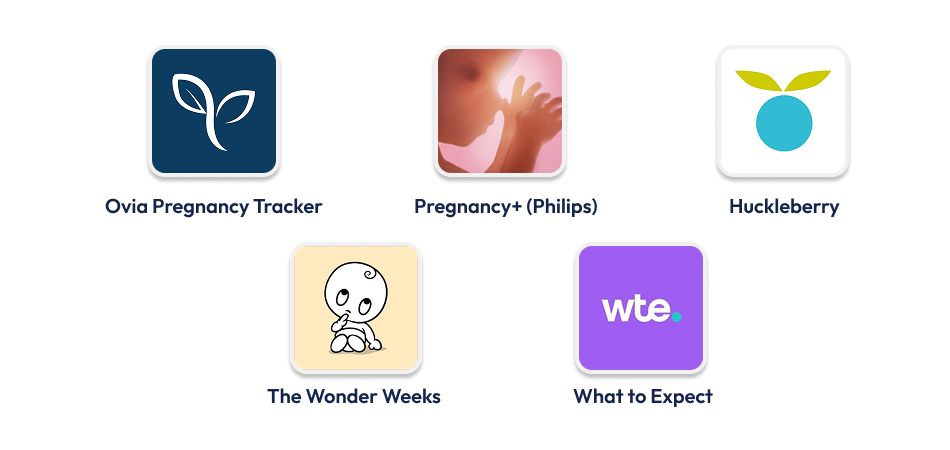
The “What to Expect” pregnancy tracking app remains one of the powerhouses of pregnancy tracking mobile applications. Using its strong legacy as an internationally known brand of books for parents, they have built an extensive social network that connects parents together by their birth month.
Ovia is often mentioned as the premier pregnancy tracking app for parents who love data. The Ovia app acts as a personal health coach for its users by using data to monitor the user’s health metrics.
If you are looking for a high-quality design in the development of your Healthcare mobile application, then check out Pregnancy+. Pregnancy+ is widely known for its incredible, 3D interactive model visualizations of a developing fetus.
Huckleberry has made a name for itself as a leader in the development of AI parenting apps and has created a solution to the number one challenge faced by new parents – not getting enough sleep! Huckleberry utilizes a proprietary “SweetSpot” AI algorithm to predict when your baby should have their next nap, ultimately providing you and your baby with better sleep.
While other apps focus on physical growth, this app dominates the parenting app development market by focusing on mental development. It helps parents navigate the “why” behind their baby’s behavior.
Building a robust parenting app development solution typically takes 5 to 10 months, depending on complexity.
| App Complexity | Estimated Timeline | Price Range (Global Avg) |
| MVP (Basic Tracker) | 3-4 Months | $25,000 – $45,000 |
| Mid-Level (Mylo-like) | 6-8 Months | $50,000 – $90,000 |
| Enterprise (AI + Telemedicine) | 10+ Months | $100,000 – $250,000+ |
At this time, supporting pregnant women through AI in terms of the apps they use is changing. AI parenting app development is changing and growing from being only chatbots to incorporating proactive “health coaches”. To be considered the leading pregnancy development app, the platform must utilise machine learning to offer hyper-personalised support that anticipates the needs of each parent.
These days, most mobile apps developed for tracking your pregnancy come with predictive models that use logs of various activities (for example: sleep, heart-rate, and mood), to help identify potential health issues (for example: gestational diabetes and preeclampsia) so that healthcare teams can take the appropriate action if the mother shows any of the signs or symptoms predicted by the app. By having your app interface with wearables such as Fitbits, you will be able to give triggers/alerts to parents in real-time, thus creating synergies between the data that they monitor at home with the data monitored by healthcare professionals in clinical settings.
In regards to baby care app development, the introduction of AI has made a major impact. New applications such as “Cry Translators” (that can differentiate between a baby’s cry when he/she is hungry or tired versus when he/she is in pain) will allow parents to make informed decisions about how to care for their child. Likewise, the introduction of data-driven “SweetSpot” predictions (utilized by applications like Huckleberry) will allow parents to accurately determine when their baby will be ready for his/her next nap; thereby dramatically reducing parental burnout.
The development of women-focused health applications has increasingly been directed towards the ‘invisible burden’ of motherhood, and AI-based sentiment analysis can monitor a mother’s journal entries and voice notes for signs of postpartum anxiety and depression, and provide instant access to resources or recommend an online consultation with a professional in connection to your organization’s mobile application development infrastructure.
Partnering with an app development company means developing monetization strategies just as important as the app’s technological platform. The objective for apps like Mylo is to create a sustainable ecosystem and provide value for users at every point of their journey through the app.
Most experienced mobile app development companies will advise that creating both a free and a subscription-based model for the app has produced the greatest success.
a) Free Tier: This would include the basic features of the app (i.e. week-by-week pregnancy updates, access to a community) as a free, no-cost download.
b) Premium Tier: Users must pay for an ad-free app experience and access to additional longer format content regarding medically-related webinars, personalized meal plans, and around-the-clock access to artificial intelligence-assisted health/medical technology.
Modern day parents prefer to shop through a trusted portal; therefore, by developing a curated online marketplace for mothers to purchase prenatal vitamins, maternity apparel, baby equipment, etc., – it is possible to generate a significant profit from both direct sales and/or a commission from the affiliate sales program. The “Commerce Community” model is part of the reason for the tremendous valuation growth of companies like Mylo and others.
In the coming years, many large businesses will be offering their employees a subscription to your parenting app as an employee benefit. Partnering with insurance groups, to promote your app as a preventative medical tool in the “High-Risk Pregnancy Management Market,” is another high-growth source of B2B revenue and lending the app/affiliate group more credibility.
At Techugo, we do not only build applications, but also provide digital lifelines to users. As a premier mobile app development company, we create pioneering solutions to the healthcare and femtech community, guaranteeing that every platform we develop will be secure, scalable and designed with empathy for the user’s journey.
A pregnancy tracker’s application or developing an entire platform for decorating your family life through various forms of technology provides an outlet beyond just profit; It also allows for creating support systems with pregnant women (and their families) and family members who give birth to children and being there for each other during times of celebration. By incorporating artificial intelligence into the design and development process, you can develop an application that is catered towards your specific clientele while also providing assurance in data privacy/security —- similar to how ‘Mylo’ provides assurance to moms having children and being there for them.
A full-service pregnancy application that incorporates a community forum, AI-based tips and support, and a marketplace typically takes between 7 to 9 months to create from the idea stage through the final product launch.
Although there isn’t a ‘necessity’ to develop AI for parenting applications, AI is currently trending in the marketplace. AI allows developers to provide predictive health alerts and personalised content to user’s, thus, greatly increasing user engagement and retention.
The three most successful revenue generation methods of pregnancy applications include: subscription (premium expert content), in-app purchase (health kits and e-books) and affiliate commerce (link to baby products).
Data security is the single biggest concern amongst mobile healthcare application owners. Due to the sensitivity and level of personal information that users provide; all application developers must ensure their application provides end-to-end encryption and is compliant with applicable laws regarding health data in their region, both in India and internationally.
Every big startup starts with an idea. But ideas alone don’t pay the bills or build the product. Pre-seed investment does. So, what is pre-see..
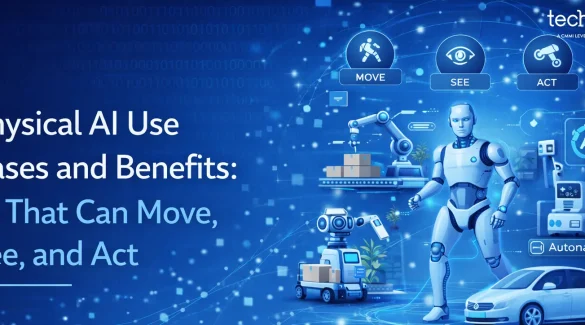
What happens when artificial intelligence stops living inside screens and starts interacting with the real world? That’s where physical AI comes in..


Write Us
sales@techugo.comOr fill this form