

 SA
SA
 KW
KW
 IE
IE AU
AU UAE
UAE UK
UK USA
USA
 CA
CA DE
DE
 QA
QA ZA
ZA
 BH
BH NL
NL
 MU
MU FR
FR
















📌 Key Takeaways
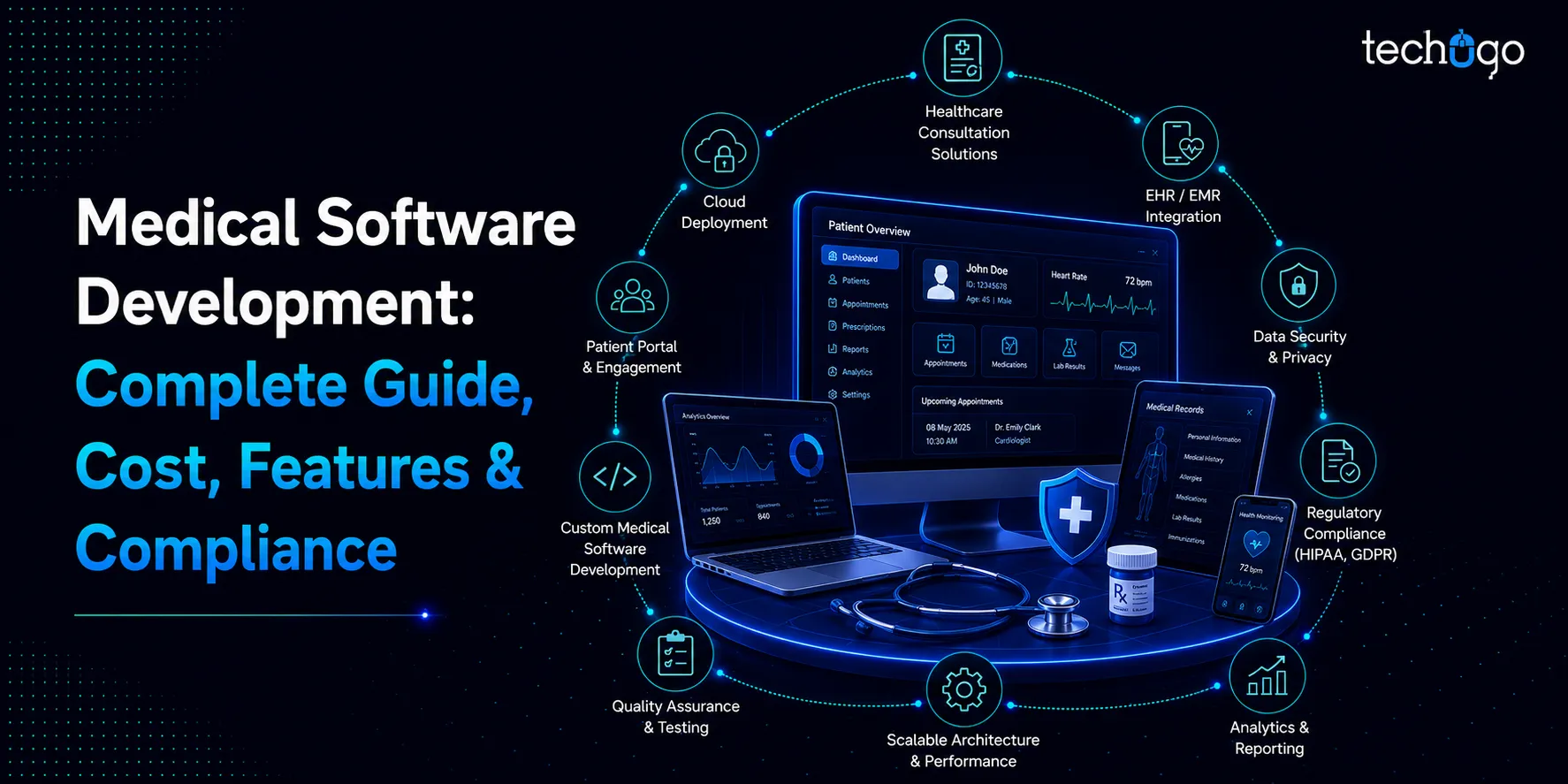
- The global healthcare market is projected to hit $120.54 billion by 2030, driven by AI-enabled fast and secure patient demand.
- Medical software development costs range from $20,000 for a basic MVP to $200,000 enterprise grade for complex operations.
- It is a must to ensure the medical device software is compliant with regional and global standards, which include HIPAA, GDPR, FDA, ISO 13485, and IEC 62304.
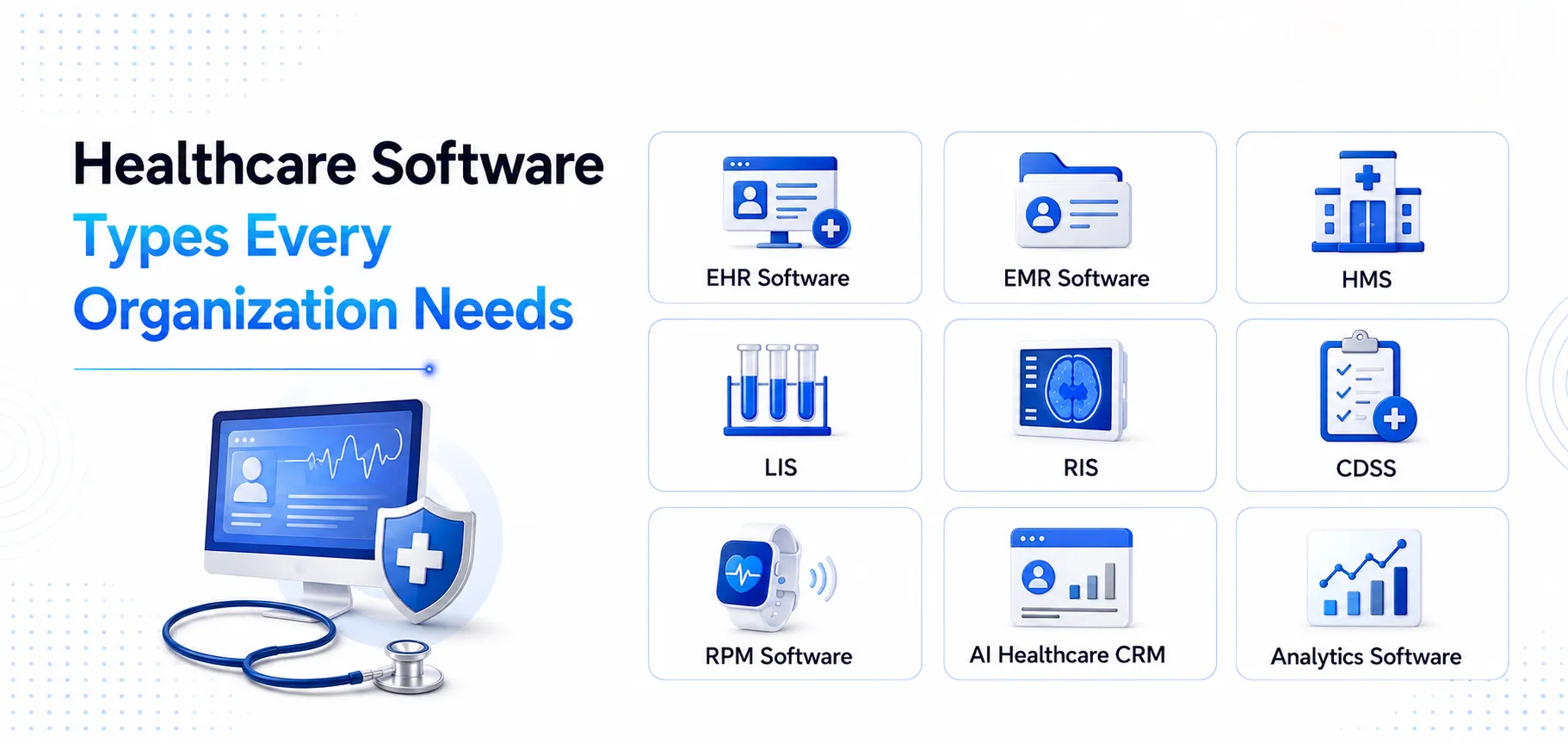
- Most common medical software solutions, including Electronic Health Records (EHR/EMR), Hospital Management Systems (HMS), Telemedicine, Laboratory (LIS), Radiology (RIS), and Remote Patient Monitoring (RPM), are shaping the future of digital care delivery.
Healthcare has seen one of the most rapid digital evolutions in recent years. Telehealth applications of technology include audio and video communication between clinicians and patients, home-based monitoring of patients’ vital signs and digital medical office visits.
To keep up with user expectations and market trends, it is a must for healthcare businesses, whether it is hospitals, clinics, pharmacies or medical service providers, to invest in medical software development to stay competitive.
The global digital health market is expected to reach $120.54 billion by 2030, growing at a CAGR of 26.4%.
So, what does that mean for your healthcare business?
- Higher revenue opportunities
- Stronger competitive advantage
- Increased patient reach and retention
Users nowadays prefer fast and convenient options, from scheduling appointments online, consulting doctors over telemedicine, maintaining digital health records, to booking medicines; they want fast solutions.
This is the right time to invest in good software, and if you are looking for a complete guide on what medical software development is, what types of solutions are available, what the medical software development cost is, and so on.
This guide is for you to give a complete understanding of hospital software development. Let’s dive in:
What is Medical Software Development?
Medical software development is the process of designing and developing software that provides solutions for healthcare providers, medical centers, and patients. Such solutions are intended to improve clinical workflows and patient care, drive operational efficiency, and ensure compliance with complex healthcare regulations. A compliant-ready medical device software solution should be designed with emphasis on data security, interoperability, reliability, and regulatory compliance, since the healthcare devices are involved with sensitive data of patients and the healthcare business.
The biggest benefit of these applications is that they enable the business to store patient records, book appointments, provide virtual consultations for patients, track chronic illnesses, interpret medical images, automate administrative processes, and assist with clinical decisions based on data.
Why healthcare organizations are investing in digital medical solutions
Worldwide healthcare businesses are embracing digital medical solutions to enhance care quality and streamline operations to cop up with growing patient expectations. Traditional healthcare services often meant long queues, repeated hospital trips, filling out forms, and late delivery of medical reports. Patients would devote hours to making appointments, waiting to be seen, and coming back to pick up test results. People have come to expect healthcare to be convenient like other digitized services in today’s fast-moving world.
Applications for medical services today set a very different scene where patients are booking appointments online, having teleconsultations with doctors, receiving digital prescriptions and even have instant access to their medical reports at home. From receiving diagnostic results on your smartphone by the end of the day, to consulting a doctor from afar, digital healthcare saves time, removes hassle and generally improves the patient experience.
- Eliminate delays in healthcare through digitization of appointment, diagnosis, and treatment processes.
- Offer timely availability of reports enabling patients to get their reports online without going to the hospital again.
- Increase the convenience of patients through the use of telemedicine, scheduling online, and electronic health records.
- Automate administration and clinical processes to minimize manual errors.
- Cater to the demands of today’s patients for speedy and technologically driven healthcare services.
A Closer Look at the Different Types of Medical Software
Electronic Health Records (EHR) Software
EHR software offers a safe environment to store, update and share patient health records in real-time. It is designed to enable hospitals and clinics to automate workflow, minimize manual documentation and collaborate care teams.
Electronic Medical Records (EMR) Software
EMR software development involves designing intelligent EMR systems that enable healthcare providers to convert patient data into digital format and simplify daily clinical operations. These solutions enhance the efficiency, accuracy and accessibility of data between medical practitioners.
Hospital Management Systems (HMS)
Hospital Management System (HMS) consolidates clinical and administrative information to enhance productivity of overall hospital functioning. Along with doctor appointment app development, it enables healthcare providers to provide seamless online booking, appointment reminders, and virtual consultation management.
Laboratory Information Systems (LIS)
LIS software digitizes laboratory operations, enabling healthcare providers to track samples, process tests, and deliver accurate results faster. It enhances operational efficiency and supports high-quality patient care.
Radiology Information Systems (RIS)
The whole radiology workflow is automated and tracked with Radiology Information Systems (RIS). Based in medical imaging software, these solutions provide a secure platform for viewing images, using AI assistance for diagnosis, reporting efficiently, and making good clinical decisions.
Clinical Decision Support Systems (CDSS)
The CDSS application reviews information about the patient, their medical history and clinical guidelines to provide intelligent suggestions to the clinician during patient care. This help in more timely and informed decision-making and improves the quality of delivering healthcare.
Remote Patient Monitoring (RPM) Software
RPM software unites patients, providers, and smart healthcare devices in a single platform. Combined with medical analytics software development, it continuously monitors patients’ health, detects anomalies at an early stage, supports clinical decisions, and contributes to improving long-term patient outcomes through data-driven care.
AI-Powered Healthcare CRM Software
An intelligent patient management solution that integrates patient data, communication, scheduling, and treatment into one secure system. AI capabilities boost engagement, streamline workflows, and enable health professionals to focus on improved patient care.
Benefits of Custom Medical Software Development for Healthcare Providers and Patients
Custom medical software development services are provided by top development companies to cater to the unique needs of users, whether it is a patient or medical professionals. With rising demand for instant healthcare services and stricter compliance requirements, investing in a reliable software development company is not an option; it’s an advantage.
Here are some benefits of choosing custom software development for medical professionals and patient care in the Healthtech era:
For Patients
1. Faster appointment booking and automated reminders – Patients can book medical appointments online without waiting in long queues at hospitals and medical centres.
2. Convenient Access to Medical Records and Reports – There was a time when you had to take extra time to go to the hospital for a medical checkup and then again for the reports. But now with modern software integrations, you can directly download your report online anytime, anywhere.
3. Better Healthcare Through Telemedicine and Remote Monitoring – Through advanced software for medical devices, patients can directly monitor their health from their wearable devices, consult a doctor at home, and order medicine directly from a pharmacy in real time, allowing healthcare more convenient.
4. Personalized and More Accurate Care – Medical software provides more personalized healthcare capabilities with complete patient histories, personalized treatment plans, old records of disease, etc, for better treatment outcomes.
5. Enhanced patient experience – Faster medical software features allow patients to experience stress-free and convenient healthcare options like online appointment booking, digital check-ins, secure messaging, e-prescriptions, automated reminders, and online payments.
For Medical Professionals
1. Centralized Patient Records – Hospitals and other healthcare departments can access data like patient histories, prescriptions, diagnostic reports, and treatment plans from the centralized software solutions that eliminate extra paperwork and fetching time.
2. Reduced Administrative Work – During emergency or extra critical times, the software gives extra efficiency in routine tasks such as appointment scheduling, billing, patient registration, documentation, and insurance claims.
3. Reduced operational costs – By automating repetitive tasks and making better use of resources, hospitals and clinics can reduce their costs and improve their productivity.
4. Better Collaboration Across Healthcare Teams – Intelligent, tailored medical software offers a collaborative platform for medical experts , including doctors, nurses, specialists, laboratories, pharmacies and administrative teams.
5. Enhanced Data Security and Regulatory Compliance – Protecting consumer data is also a priority in the healthcare industry, and using HIPAA-compliant software development services ensures that the risk of data breaches and compliance violations is minimized.
Essential Medical Software Features Every Healthcare Solution Needs
Before developing a software solution for a medical organization, the important step is asking for a set of advanced features that are a must to improve customer experience and streamline clinical workflow. Here are some of the features that every healthcare app development company should provide –
Electronic Health Records (EHR/EMR)
EHR and EMR are among the most essential features of HIPAA-compliant software development. They contain a centralized dashboard that secures patient data like diagnoses, prescriptions, allergies, laboratory reports, as well as previous hospital records, patient that lead to faster diagnoses and better treatment decisions
Appointment Scheduling & Patient Management
Scheduling appointments and patient management work together to make patient interaction seamless from scheduling their appointment to follow-up care. The patient will be able to manage his schedule, timing, and receive reminders through his smartphone and computer without even visiting physically.
Telemedicine & Virtual Consultations
Telemedicine features allow users to get online consultations through video calls and voice consultations directly from home. This increases your business revenue by connecting with a wider patient base.
Patient Portal
A healthcare application keeps all the patient data and updates that align both healthcare professionals and patients. It is a must-feature that enhances user experience through remote data access of medical records, viewing lab reports, download prescriptions from any device.
Medical Billing & Payment Processing
The medical billing aspect of the app eliminates complex billing, insurance claims, and online payments through a single application. Healthcare providers can reduce billing mistakes, receive additional payments faster, and offer patients a safe and easy way to pay for their healthcare costs
Analytics & Reporting Dashboard
Analytics Dashboard gives hospitals and clinics access to all aspects of their organization such as patient movement, treatment effectiveness, billing and resource management. This gives health institutions an opportunity to make operations more efficient, reduce costs and improve healthcare services.
AI-Powered Clinical Decision Support
AI-Powered clinical software development provides a clinical decision support system designed to analyze complicated data about patients for physicians and helps them concentrate on the patients who need the most attention.
Advanced Technologies Shaping the Future of Medical Software Development
1. Artificial Intelligence (AI)
AI in healthcare is transforming the medical industry by improving diagnostic accuracy, reducing manual workloads, and delivering faster, more efficient patient care through smart digital medical devices and solutions.
2. Machine Learning (ML)
ML in the medical industry enables intelligent systems to learn from large data of patient records, lab reports and medical history. It helps organizations to make informed decisions based on available data.
3. Internet of Medical Things (IoMT)
IoMT helps users to get real time update of their health condition by sharing heartbeat, pulse rate and blood pressure. This makes health monitoring easy in this busy life, giving a convenient way to monitor health issues without regular medical checkups.
4. Cloud Computing
With cloud computing, medical information is stored securely online rather than on a hospital’s own servers. This provides healthcare teams with the ability to share information, access records immediately, and streamline operations.
5. Big Data Analytics
Every patient interaction produces useful data. Big data analysis is used to process this data to discover patterns, predict health threats, and enable care providers to provide more personalized care and better care.
6. Blockchain Technology
With blockchain, updates to a patient’s medical record are securely recorded and easily traceable. This enhances data security, streamlines the process of sharing records, and creates more trust within the healthcare ecosystem.
7. AR/VR Technology
AR and VR help facilitate interactive experiences in healthcare, such as surgery simulations and rehabilitation programs, while also being used in medical education. They improve learning, precision, and patient participation.
8. Medical Image Analysis
Medical image analysis entails the use of AI technologies and state-of-the-art imaging techniques in order to offer advanced image analysis of X-rays, CT scans, MRIs, and ultrasounds. This allows physicians to detect illnesses in early stages, avoid mistakes in diagnostics, and make treatment decisions much faster.
9. Robotic Process Automation (RPA)
Robotic process automation is a process that involves performing repetitive and rules-based tasks without any human involvement. This enables hospitals and clinics to operate more efficiently and faster.
Ultimate Modern Tech Stack for Building Medical Software
The tech stack plays an important role in the medical software development journey; it determines compatibility with modern healthcare technologies. Now medical professionals treat, diagnose, and manage diseases through various devices, whether it is wearables, glucose checkups, or any IoMT devices. Your device must be compatible of these integrated devices to ensure secure data exchange. So, before approaching any software development. Here are the most trending tech stack options used by leading healthcare organizations sounds more natural and authoritative.
1. Frontend Development
- React.js
- Angular
- Vue.js
2. Backend Development
- Node.js
- .NET Core
- Java (Spring Boot)
4. Database Management
- PostgreSQL
- MySQL
- MongoDB
5. Cloud & Infrastructure
- AWS
- Microsoft Azure
- Google Cloud Platform (GCP)
6. AI & Machine Learning
- TensorFlow
- PyTorch
- OpenAI APIs
7. Healthcare APIs & Interoperability
- HL7
- FHIR
- SMART on FHIR
Medical Software Development Process: Step-by-Step Guide
Before building a healthcare solution, as a business owner, you must know what the ideal medical software development process is and what your contribution is in each phase. This ensures you will get a secure, reliable and compatible solution in the end that fulfils patient needs along with your business needs.
Having a clear understanding of the process and streamlining collaboration with a medical software development company can increase the satisfaction rate.
1. Requirement Analysis
Define your business goals, target users, required features, compliance requirements, and project scope.
2. UI/UX Design
Create wireframes, prototypes, and user-friendly designs focused on patients and healthcare professionals.
3. Software Development
Develop the application, integrate essential features, and connect with third-party healthcare systems.
4. Testing & Compliance
Test the software for functionality, security, performance, and compliance with healthcare regulations.
5. Deployment
Launch the software on the production environment and ensure a smooth, secure rollout.
6. Maintenance & Updates
Provide ongoing support, security updates, bug fixes, and feature enhancements to keep the software reliable and compliant.
Healthcare Compliance and Regulations You Must Know
| Compliance Standard | Applicable Region | Purpose |
| HIPAA (Health Insurance Portability and Accountability Act) | United States (USA) | Protects the privacy and security of Protected Health Information (PHI). |
| FDA (Food and Drug Administration) | United States (USA) | Regulates software that functions as a medical device (SaMD) or is part of a medical device. |
| GDPR (General Data Protection Regulation) | European Union (EU) | Governs how organizations collect, process, and store personal data securely. |
| PIPEDA (Personal Information Protection and Electronic Documents Act) | Canada | Protects personal information collected by private-sector organizations. |
| Australian Privacy Act & My Health Records Act | Australia | Regulates the protection of personal health information and Australia’s digital health record system. |
| Digital Personal Data Protection (DPDP) Act, 2023 | India | Establishes rules for collecting, processing, and safeguarding digital personal data. |
| UAE Personal Data Protection Law (PDPL) | United Arab Emirates (UAE) | Ensures the lawful processing and protection of personal data. |
| IEC 62304 | Global | Defines the software development lifecycle requirements for medical device software. |
| ISO 13485 | Global | Specifies quality management system requirements for medical device organizations. |
| HL7 (Health Level Seven) | Global | Standardizes the exchange of healthcare information between different systems. |
| FHIR (Fast Healthcare Interoperability Resources) | Global | A modern interoperability standard that enables secure healthcare data exchange through APIs. |
How Much Does Medical Software Development Cost?
Every medical software project is different, which means the cost can vary too. To give you a better idea, here’s an estimated price range based on the type of healthcare solution you want to build.
| Medical Software Type | Estimated Cost (USD) |
| Basic Healthcare Mobile App | $20,000–$50,000 |
| Telemedicine Platform | $40,000–$120,000 |
| Patient Portal | $30,000–$80,000 |
| EHR/EMR Software | $80,000–$300,000+ |
| Hospital Management System (HMS) | $100,000–$500,000+ |
| Medical Billing Software | $40,000–$120,000 |
| AI-Powered Healthcare Solution | $120,000–$500,000+ |
| Medical Imaging Software | $150,000–$600,000+ |
| Remote Patient Monitoring Platform | $60,000–$200,000 |
Factors That Influence Medical Software Development Costs
1. Software Complexity & Scope
Before choosing any software development company for developing medical software, it is very important to discuss the project scope and complexity, and this is the major factor that impacts time and budget.
2. Features & Functionality
Most key features of software development in medical field require more effort and investment because of it’s high development requirement complexity, so choosing advanced features such as EHR/EMR, AI diagnostics, analytics, and remote monitoring will be a little costlier.
3. Compliance & Security Requirements
Companies that provide compliance-ready medical software development services charge higher because of extra documentation, larger specialized expertise and quality assurance efforts, which increase the overall project cost.
4. Technology Integration
Third-party integration, payment gateway integration and EHR and medical record automation require additional testing, deployment and ongoing maintenance that significantly increases overall budget.
5. Development Team Location & Expertise
Location and expertise play a major role in software consulting services, as companies based in India and Eastern Europe offer more affordable pay structures while US, UK, and Australia-based medical software development companies charge higher.
Mistakes to Avoid When Developing Medical Software
1. Ignoring Healthcare Compliance Requirements
Failing to consider regulations like HIPAA, GDPR, FDA, or other regional standards can lead to legal issues and security risks. Compliance should be planned from the beginning of development, not added later.
2. Building Without Understanding User Needs
Developing software without adequate input from physicians, patients, and healthcare staff can lead to poorly functioning software. A good solution should align with real-world healthcare workflow and user expectations.
3. Compromising on Data Security
Poor security measures can compromise patient records. Robust encryption, access controls, and secure handling of data are necessary to safeguard healthcare data.
4. Adding Too Many Features at the Start
Adding every possible feature can add complexity, cost and development time. It’s better to begin with core functionalities and add scale the software.
5. Choosing the Wrong Development Partner
Collaborating with a team that is unfamiliar with healthcare could create compliance gaps, technical obstacles, and bad quality outputs. Select a medical software development company that has experience in healthcare technologies and standards.
Medical Software Launch Checklist: What to Do Before Going Live
1. Verify Healthcare Compliance
Before choosing any medical software development company, ensure the company comply with regulatory standards like HIPAA, GDPR, FDA, DPDP Act, ISO 13485, etc.
2. Complete Security Testing
Along with agile software development services, the company must conduct platform testing for vulnerabilities, encryption, access controls, and other measures related to protecting patient data.
3. Ensure Data Accuracy & Migration
If you already have a medical software solution and are thinking of moving into an advanced system, ensure that migration has been performed accurately.
4. Conduct User Acceptance Testing (UAT)
Pick companies that allow doctors, healthcare staff, and patients to test thoroughly on their own and launch after considerable feedback.
6. Prepare Training & Support
Pick a company that specializes in medical device software development as well as training support so that you and your team will have a clear understanding of the software and features.
Future Trends in Medical Software Development
The healthcare industry is rapidly moving toward smarter, more connected, and patient-centric digital solutions. Emerging technologies are reshaping how doctors diagnose diseases, how hospitals manage operations, and how patients access care. Here are the top trends expected to drive the future of medical software development.
1. AI-Powered Healthcare Solutions
AI integration and functionalities are at their peak and are going to rule in the upcoming years too. Whether it’s about disease diagnosis, personalized treatments, and administrative efficiency, AI features in medical devices help medical professionals by delivering accurate results and predictive analysis.
2. Remote Patient Monitoring (RPM) & Wearable Technology
Almost everyone is using smartwatches and digital smartwatches, fitness bands, glucose monitors, ECG patches, and blood pressure monitors to monitor real-time health conditions. As wearable technologies are becoming more accurate and a regular part of our daily life, RPM is going to boom in the future for a better preventive healthcare experience.
3. Advanced Telemedicine Platforms
On-demand telemedicine solutions is becoming the new face of healthcare. Patients don’t want to wait days for appointments when they can speak to a doctor from their own home in a matter of minutes. With increasing demand for more accessible, convenient healthcare, telemedicine platforms are set to expand even further, making virtual consultations, e-prescriptions and remote f/u part of the healthcare landscape for the next several years.
4. Healthcare Data Analytics & Predictive Insights
Healthcare software will use big data analytics for analyzing health trends, predicting risks of illnesses, managing hospitals, and decision-making based on facts. In addition, data-driven healthcare will help deliver a more customized experience to patients by doctors.
5. Interoperable Healthcare Systems
The future of medical applications is going to be focused on seamless data flow among hospitals, clinics, labs, pharmacies and other healthcare apps. Standards such as HL7 and FHIR will be crucial in creating healthcare ecosystems that will enable individuals to have access to their data no matter what application they have used.
How to Choose the Right Medical Software Development Company
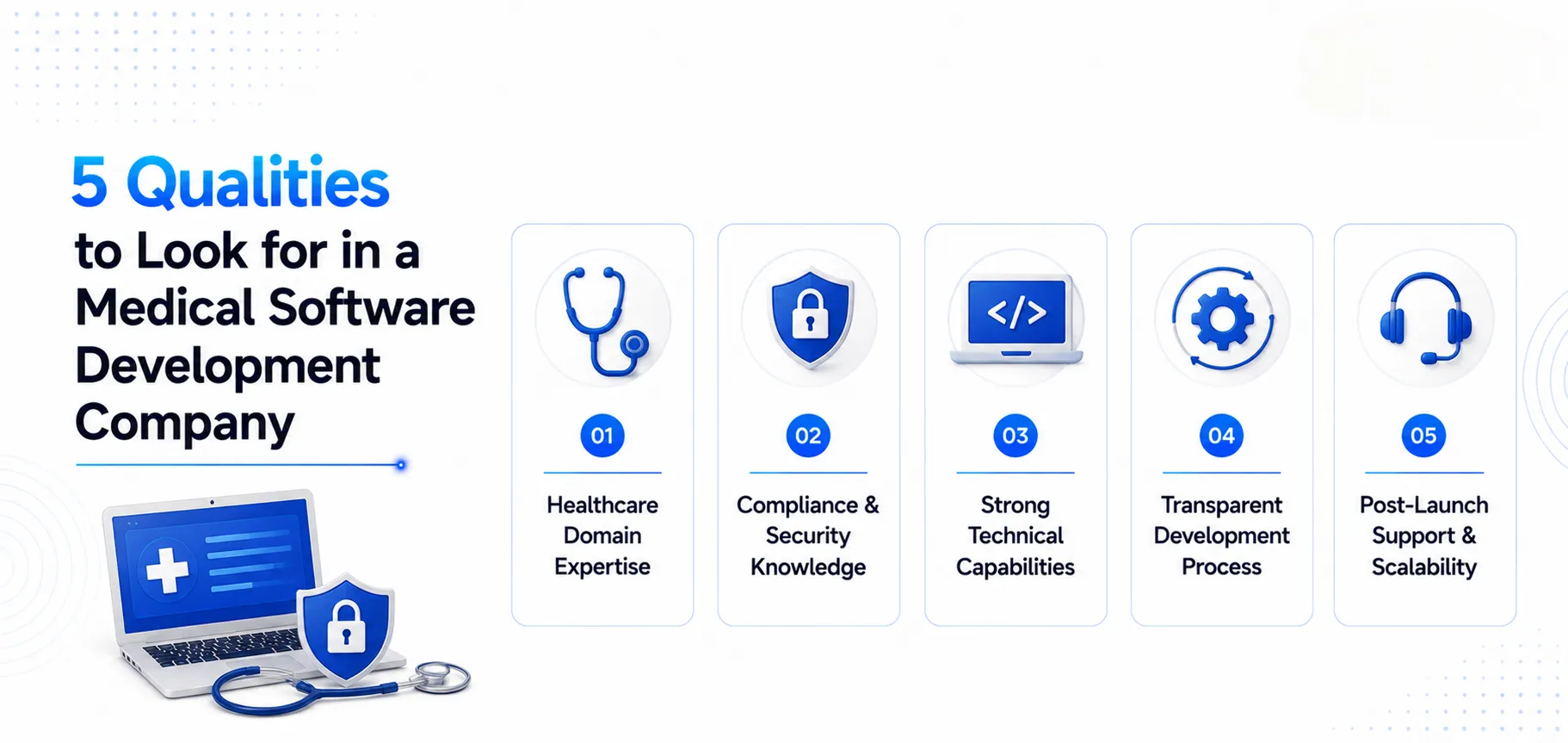
Choosing a software development company for your healthcare initiative is an important choice that needs to be made for its success. A good development partner not only has excellent technical capabilities but also understands the healthcare environment, the intricacies involved in it, and other issues like regulatory compliance, data security and so on. Working with an experienced healthcare software development company can make your project a secure and scalable one.
How Techugo Helps
As a globally trusted custom medical software development company, Techugo provides digital solutions to hospitals, clinics, startups and enterprises that are secure, scalable and compliant with healthcare industry requirements. Our medical software solutions range from strategy, UI/UX design to development, regulatory compliance, third-party integration and post-launch support. Our medical software solutions help you to innovate with peace of mind, whether you are building a telemedicine platform, patient portal, electronic health record system, or an AI-based healthcare application.
FAQs
1. What tech stack is best for medical software development?
To develop enterprise-level custom medtech software development solutions, include React or Angular, Node.js, Python (Django), or C# (.NET), and PostgreSQL, but the real tech stack depends on the project requirements and scope.
2. How can I choose the right medical software development company?
To choose a reliable medical software development firm, it is important to first define the project scope, or the type of project you want to launch in the market, then check compliance credentials that the medical software development company implies on the software. Along with this you must also evaluate domain expertise, engagement model, and technical interoperability.
3. How much does it cost to develop medical software in 2026?
To develop MVP medical software solutions, the cost ranges between $20,000 and $40,000 while for the complex enterprise level, the cost can go up to $200,000.
4. How long does it take to develop medical software?
To build a medical software solution, the timeline depends on the project complexities and engagement model; an MVP solution typically takes 3 to 4 months, while mid-size and complex solutions can take up to 6 months to 1 year duration.
5. Which healthcare compliance standards apply to medical software?
The compliance needs are based on the countries where your software is used. Such as HIPAA in the USA, GDPR in the European Union, DPDP Act in India, PIPEDA in Canada, etc. The software for medical devices may also require approval to FDA, IEC 62304 or ISO 13485.

Get in touch
We'd love to hear from you.