

 SA
SA  KW
KW  IE
IE AU
AU UAE
UAE UK
UK USA
USA  CA
CA DE
DE  QA
QA ZA
ZA  BH
BH NL
NL  MU
MU FR
FR [ LET’S TALK AI ]
X
Discover AI-
Powered Solutions
Get ready to explore cutting-edge AI technologies that can transform your workflow!



Get ready to explore cutting-edge AI technologies that can transform your workflow!






Order management software (OMS) is a digital system that is used to manage the entire order process, from when the order is placed to when it is delivered. It helps businesses track orders, and inventory, and customer information, and shipping updates, so that everything stays connected and teams can work together without confusion. Most modern order management systems are built to connect with CRM, ERP, and eCommerce order management systems, and therefore businesses are able to manage online sales and offline sales from one place. It sounds simple, but it changes a lot.
This type of cloud-based order management software automates daily work, and because of that, businesses are able to work faster and make fewer mistakes. It improves customer satisfaction because orders are processed quickly, and they are tracked in real time, so that deliveries are not delayed. It also helps with inventory control and demand planning, so you do not run out of stock and you do not sell more than what is available. These small things matter, and over time, they help build trust and strengthen the brand image.
Businesses that do not use a proper order management system often face many issues. Orders are handled manually, and because of this, data entry errors happen, and communication becomes weak, and shipments get delayed. As the number of orders increases, it becomes harder to manage them, especially when a business is selling through many channels like websites, marketplaces, mobile apps, and physical stores. But without real-time data and reports, companies cannot predict demand correctly, and therefore they end up with too much stock or not enough stock. These problems lead to lost sales, higher operating costs, and unhappy customers. And over time, this affects business growth, and profitability too.
This blog would help businesses understand the importance of adopting the best order management systems. It would explain how adopting such a solution would enable automation, reduced errors, and satisfaction through real-time order and inventory visibility. Let’s consider some key features of top software solutions that help businesses create a tool to facilitate increased business productivity, manage several sales channels, and scale operations effectively.
Also Read: How Yard Management System Software Optimizes Logistics & Supply Chain?
There are several types of OMS, each fitted to a specific business model or operational need. Each type of OMS is tailored to particular business needs, ensuring that companies can optimize operations and enhance customer satisfaction through the right solutions. Take a look on the main types:
This order management software is for business-to-business (B2B) operations. It manages bulk orders and recurring purchases, along with complex pricing structures. It integrates with ERP systems while handling relationships with the supplier, managing large inventories, and managing the purchase orders.
This software is business-to-consumer (B2C) transaction-based and is typically used in e-commerce apps. It is supported by features such as real-time order tracking, shipping integration, and personalized customer experiences in meeting high volume and fast-paced customer expectations.
This OMS has been designed specifically for an online store and integrates with sales channels such as Amazon, Shopify, eBay, and many more. This tool enables hassle-free management of orders from many outlets, always ensuring inventory synchronization, automated shipping, and payment processing. It is about smooth eCommerce operations.
Retail OMS manages in-store and online orders in one place for both physical stores and online platforms. Retail OMS also includes features such as inventory tracking, POS integration, and real-time product availability. All of these features help support omnichannel retail experiences.
This software maintains contactless integration with over one channel, which can be websites, mobile apps, stores, and social media sites. Therefore, the unified order visibility allows businesses to provide a seamless and integrated experience to their customers, irrespective of the used channel.
This OMS is especially developed for wholesalers and distributors dealing with bulk orders, warehouse management, and supplier coordination. All the tasks such as purchasing orders, invoicing, and fulfillment workflows are automated within the wholesale order management software to ensure quick response to large-scale orders.
Designed for businesses providing subscription-based products or services, this software manages the recurring orders, renewals, and payment processing. It ensures automated billing and smooth customer experience in subscription services.
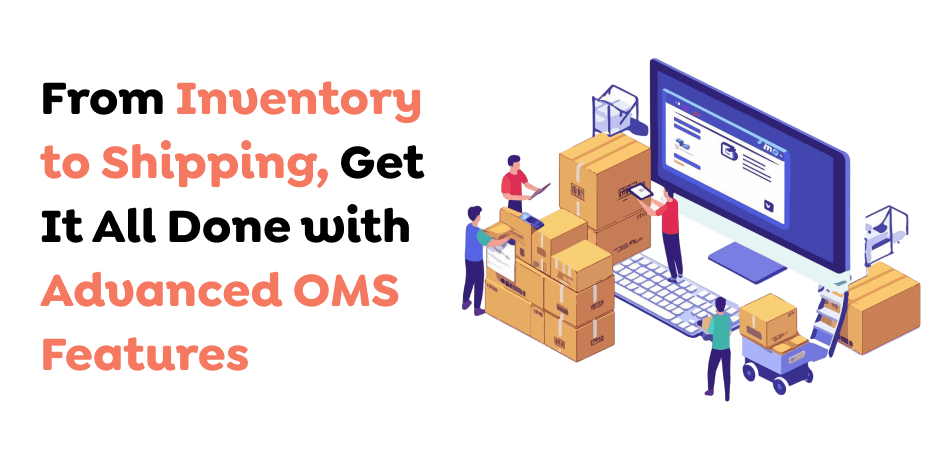

Order management software automatically obliterates numerous redundant tasks by automatically registering orders manually. Such an application would help improve the staff’s productivity by keeping them more engaged in activities of strategic importance, thereby accelerating the order processing and, hence, improving productivity. As a result of streamlined workflows, companies can manage higher volumes of orders without compromising quality.
Importantly, it also permits businesses to provide faster order fulfillment and to grant their customers real-time tracking information. This empowers customers who will know each step in the order’s lifecycle. Such transparency allows for building customers’ trust and loyalty. Positive customer experiences result from timely and accurate deliveries, ensuring return business and possible referrals.
Also Read : Achieve Customer Satisfaction Mobile App
Eradicating human error in processing, like with order management software, reduces the risk of data entry mistakes and misplaced orders. Businesses can improve the integrity of data with this accurate data and automatized process, making inventory management much better and giving fewer disagreements about the exactness between orders and stock levels.
Because it has real-time data and complete analytics, a business can make informed decisions, creating a current basis from trends and performance metrics. Order management software offers insights into sales patterns, customer behavior, and stock levels. This way, a business can adapt its real-time strategies to improve the scope for better outputs.
Also Read : Documenting The Future The Power Of HR Document Management Software
As business grows, order volumes typically increase and require a more robust order management system. The order management software allows companies to scale their activities without requiring extensive manual intervention and accommodation of growth without dismantling business performance. It enables businesses to change market demands by expanding reach without holding on to low performance.
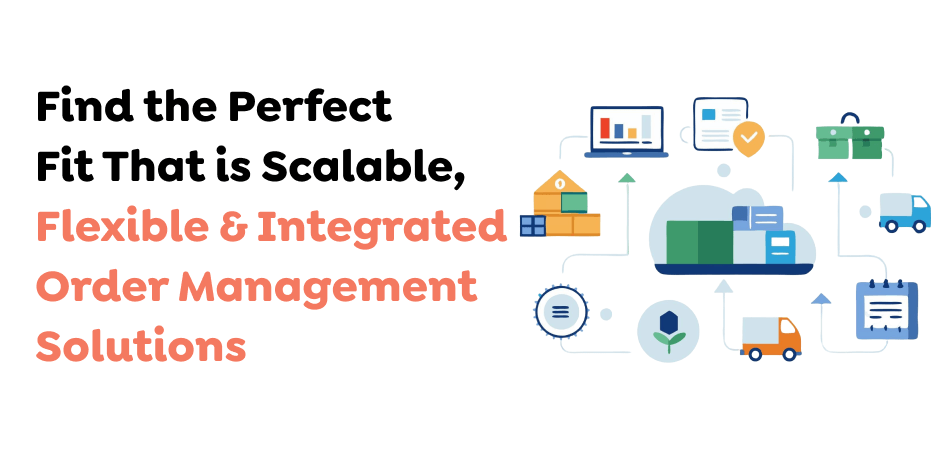
When selecting order management software, evaluate your business requirements and priorities, improve the shopping landscape, the size of your operation, the complexity of your order processes, and the types of products you sell. For example, suppose your business has a high volume of online orders. In that case, you’ll need software to handle large quantities efficiently while providing real-time inventory management and automated order processing features. Assessing your needs helps ensure that the chosen software will enhance your operations rather than complicate them. Thus, building a custom work order management software by a professional software development company would be your best decision.
Also Read : Driving Progress The Rise Of Software Development In The Middle East
As your business grows, your order management software should be able to scale accordingly. Look for flexible solutions for increasing order volumes, diverse sales channels, and additional locations. Scalable software means you can quickly change to meet your market’s needs by either entering new markets or launching a new product. A system that grows along with you will save time and resources in the long run as you avoid the many frequent upgrades or replacements.
Also Read : Everything You Need To Know Before Launching Your First Mobile App
Compatibility with existing systems is a preeminent factor in deciding your choice of order management software. Make sure that your order management software can integrate well with your current means like:
ERP systems are fully packaged software designed to operate one or multiple organizational business functions, such as finance, supply chain, manufacturing, and human resource functions. The order management software in the ERP system helps the system run smoothly. The order management software is usually integrated with the following: it provides real-time levels of stock and financial performance and order statuses. This way, all departments are working with the same information. This keeps the orders being processed and fulfilled efficiently and accurately.
CRM platforms focus on the interactions and relations between a company and its customers. They centralized the customer information, including the order history, preferences, and communication logs. With order management software integration, CRMs enhance customer services by providing an order view and allowing a personal touch. Businesses can effectively follow the course of their customers’ interactions, close orders fast, and, in the long term, win loyalty through marketing efforts and follow-ups.
Also Read : AIOPS Platform AI Driven It Operations Revolution
The software’s ease of use is critical in effective deployment across your company. Select an order management system with an intuitive interface so that employees’ learning curve would be lowered as much as possible. Usability simplifies the rapid period of learning with regard to using the software. It shall minimize the training period and maximize the serious usage; hence, the system to be chosen should be requested to provide a demo or trial so you can check whether the interface and features comply with the requirements and tendencies of your team.
The investing cost in the order management software and the return on investment are to be made. Evaluate the revenue model: subscription fees, implementation charges, and other expenditures for training and support. Calculate the benefits such as better efficiency, fewer errors, and higher customer satisfaction, which may be assumed when the expected benefits of order management software increase its value. A well-chosen order management system will save considerable costs and generate revenue. So, indeed, it is a good investment for your business.
Now let’s consider some case studies of companies that have completed and implemented the order management software and have derived benefits from that implementation:

Zalando is the largest European online fashion platform. Because of rapid growth, this company faced challenges in order processing and inventory handling. Advanced order management has enabled Zalando to automate order processing and enhance the visibility of its inventory across multiple warehouses. With this, they achieved higher-order fulfillment speed, thus increasing conversion rates and repeat sales. They will get fast delivery and live tracking, improving the shopping experience. Manual mistakes are reduced, and optimal inventory levels will be achieved through automation, lowering relevant costs.
Also Read : When Ecommerce Meets AI Explore The Perfect Match For Fashion?
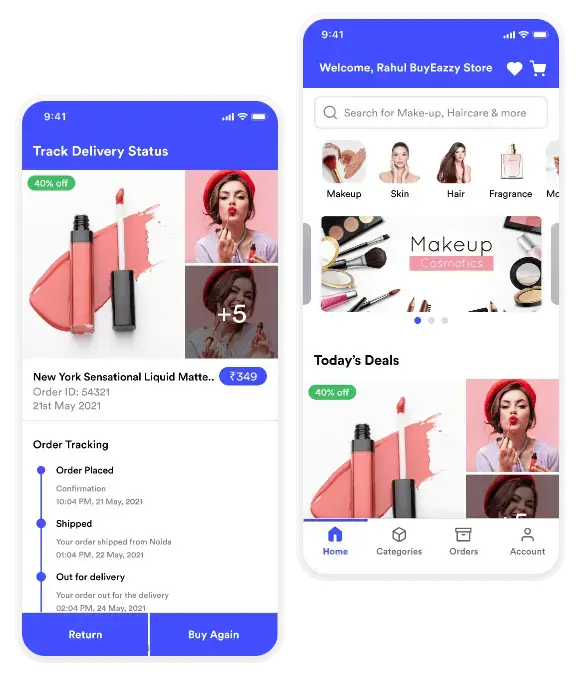
Sephora is a global cosmetics chain store. The company wanted to enhance its omnichannel approach, improving its order management through online and offline purchases. So, the company opted for an order management software that integrates with the currently implemented ERP and CRM systems. This could process online orders and in-store pickups more effectively. Customers appreciated the order tracking as well as click-and-collect flexible fulfillment options. Operation streamlined ensured labor costs and inventory turnovers were decreased.
Birchbox, an online beauty product subscription box company, faced the challenge of handling an increasing number of subscribers and order fulfillment. Birchbox streamlined the subscription management and order processing workflows using a complex order management system. With effective order management, Birchbox could upsell and cross-sell orders to increase the average value of an order. With the timely updates by the customer regarding changes in the status of the orders, order delays were minimized, and user retention rates improved. Moreover, automation also eliminated the high operational overhead and optimized inventory management, which led to a low fulfillment cost.
Also Read : Mastering Mobile App Onboarding Seamless User Experience Higher Retention
L.L. Bean is an outdoor gear retailer that aims to optimize order management since the company’s e-commerce sales are increasing. The company invested in an all-encompassing order management system coupled directly with its supply chain and logistics activities. Faster order processing and improved stock visibility allowed L.L. Bean to fulfill customer demands quickly and boost sales. Enhanced order tracking and timely updates kept customers informed, leading to positive shopping experiences. Optimized inventory management reduced excess stock and associated carrying costs, improving overall profitability.
This e-commerce agency leveraged streamlined order management systems to support global sales on platforms like Amazon and Walmart. Their focus on efficient workflows resulted in a high customer retention rate (80%) and consistent monthly revenue of $140,000 without needing paid advertising. This success showcases the importance of a well-integrated order management solution in maintaining customer relationships and scaling operations efficiently.
Also Read : How To Develop An App Like Amazon Learn Here?
A data analytics and AI-based platform built by two friends in Boston helped small businesses automate operational tasks and optimize order management. With over 50 businesses engaging with their free assessment tool shortly after launch, they generated $23,000 in revenue in just one month. Their case highlights how automating back-end processes can quickly improve profitability and scale.
Also Read : Revolutionizing Tourism The Impact Of Artificial Intelligence App
This SaaS platform was initially developed to automate order and data management tasks for internal Shopify brands and now serves over 5,000 businesses. The company grew into an eight-figure business, showing how centralizing order, inventory, and analytics data into a unified platform can enable businesses to make data-driven decisions and significantly increase revenue streams.
These cases illustrate the transformative impact of adopting order management software beyond operational efficiency, leading to strategic insights and long-term customer satisfaction.
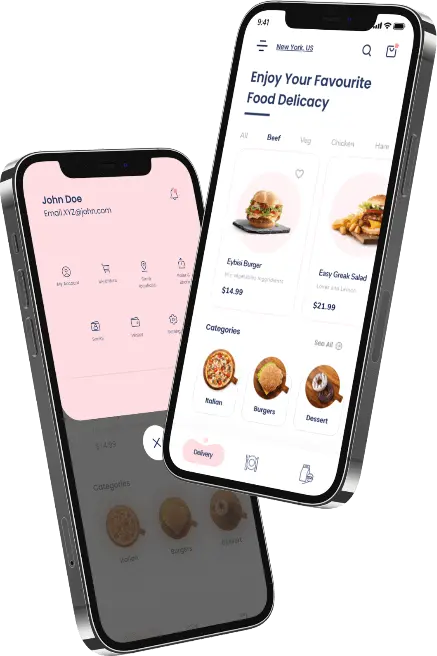
Mobile apps have turned out to be one of the most essential tools for order management companies, and they keep providing businesses with options for flexibility, efficiency, and more vigorous customer engagement. Mobile apps instantly make data and operations available on the move such that employees and customers can easily manage orders conveniently, improving the order fulfillment process.
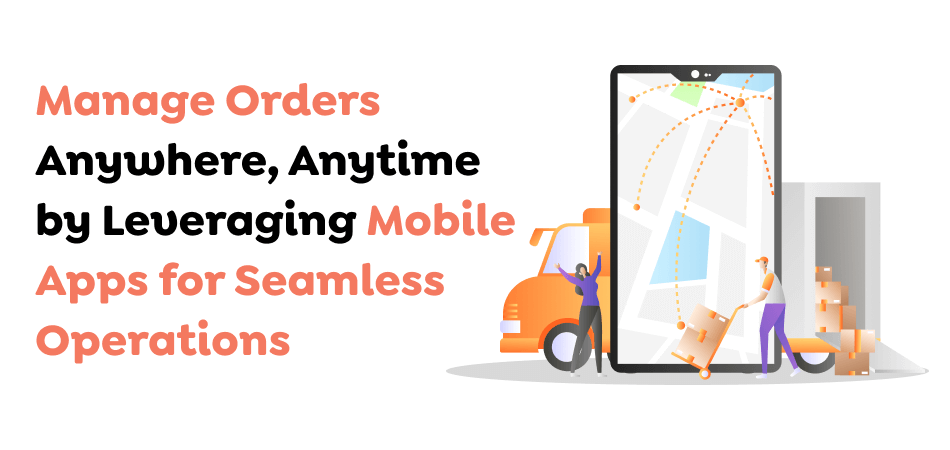
The cost of developing a mobile app for order management can change a lot, because it depends on the level of complexity, and the features you want, and the platforms you choose such as iOS, Android, or both. A simple order management app usually costs less, but a fully customized order management system software costs more, because it needs deeper design and stronger architecture. And therefore, before you decide anything, you must understand what each level includes. It matters, more than it seems.
A basic order management mobile app usually focuses on the core features such as order creation, order tracking, and simple inventory management. It may connect with eCommerce platforms or POS systems, but only in a limited way, because the goal is to keep the system light and easy to use. These apps are often built for startups and small businesses, so that they can manage orders without much technical effort.
But even at this level, the cost of mobile app development for order management includes UI design, backend development, and testing. And if testing is skipped, the app may fail later, so it is not optional. It is part of the cost.
A mid-level order management system app includes more features because businesses need more control as they grow. It usually supports real-time order updates, multi-channel sales, and customer data management. It is also connected with CRM systems and ERP tools, and payment gateways too, so that everything works together.
At this stage, the order management software development cost increases, because the app must handle more users, more data, and more security needs. It also includes reporting tools and sales dashboards, so that businesses can see what is working and what is not. This level is often chosen by growing companies. Not too small, not too large, but somewhere in between.
An advanced mobile app for order management systems is built for enterprises and large organizations, and it is designed to manage high order volumes across many locations and sales channels. These systems include AI-driven analytics, demand forecasting, and custom workflows, because standard features are not enough at this scale.
This type of custom order management software also needs strong security, role-based access, and high performance, so that thousands of orders can be processed without delay. And because of this, long-term costs increase too. App maintenance, cloud hosting, system upgrades, and compliance requirements all add to the total. Therefore, the overall mobile app development cost for order management can go beyond $100,000 and continue to rise based on business needs.
Long-term investment in a mobile application for order management system software helps businesses improve efficiency and reduce order errors, and it also helps increase sales accuracy and customer trust. Because the system automates many tasks, businesses save time and money over time. And so, even though the initial order management app development cost may look high, it often becomes one of the most important digital investments a business can make. Over time, it pays back. Slowly, and then faster.
Also Read: Understanding the Cost of Developing an AI-Powered Mobile App in 2026

While exploring the core concepts of order management software (OMS), we have seen how it improves overall business operations and supports smoother workflows. We discussed key features such as automated order processing, inventory management, shipping coordination, and CRM integration within an order management system. All these functions help reduce operational errors, improve efficiency, and increase customer satisfaction. The blog also highlighted the growing importance of a mobile app for order management, which allows businesses to track orders in real time and manage operations remotely.
Moreover, we shared guidance on how to choose the right order management system software by assessing scalability, flexibility, ERP and CRM integration, and long-term return on investment (ROI). Real-world examples showed how businesses achieved higher growth, reduced operating costs, and improved customer retention by adopting modern order management software solutions.
To remain competitive and optimize daily operations, businesses should consider investing in reliable OMS solutions. Techugo, a trusted mobile app development company in the USA, can help design and develop custom mobile apps that work seamlessly with your order management system, ensuring smooth order processing and better business performance.
Contact Techugo to bring your project to life. Our team can build customized order management software and mobile solutions tailored to your business needs, enabling seamless order handling and improved system performance. Let’s collaborate and take your business to the next level.

A healthcare team decides to build an AI app; the goal is to detect a rare disease early because patient data already exists inside the Electronic Hea..


The idea of pharmacy app development in the UAE can feel overwhelming at first. From planning the features to understanding regulations and prepar..



Write Us
sales@techugo.comOr fill this form