

 SA
SA
 KW
KW
 IE
IE AU
AU UAE
UAE UK
UK USA
USA
 CA
CA DE
DE
 QA
QA ZA
ZA
 BH
BH NL
NL
 MU
MU FR
FR







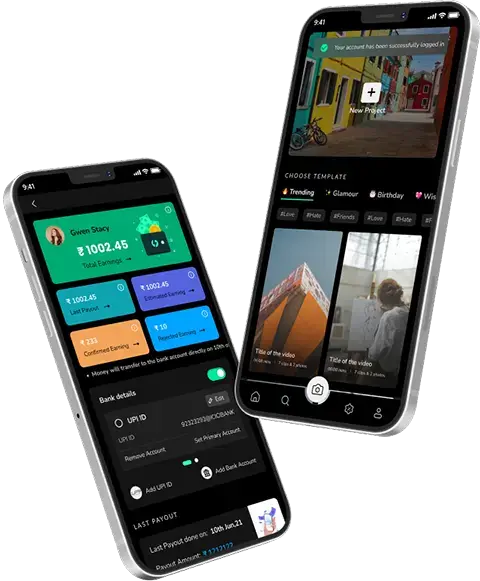



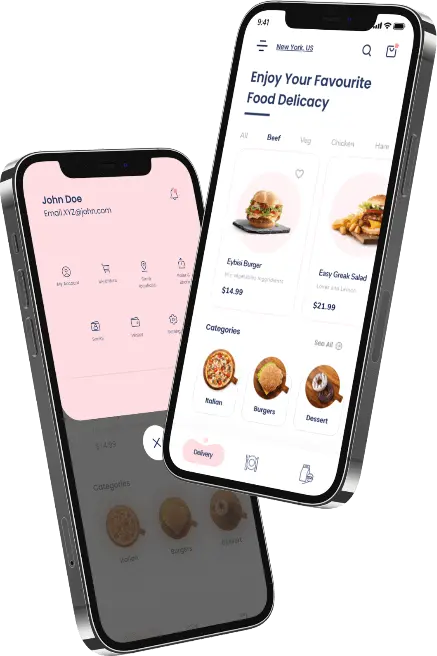

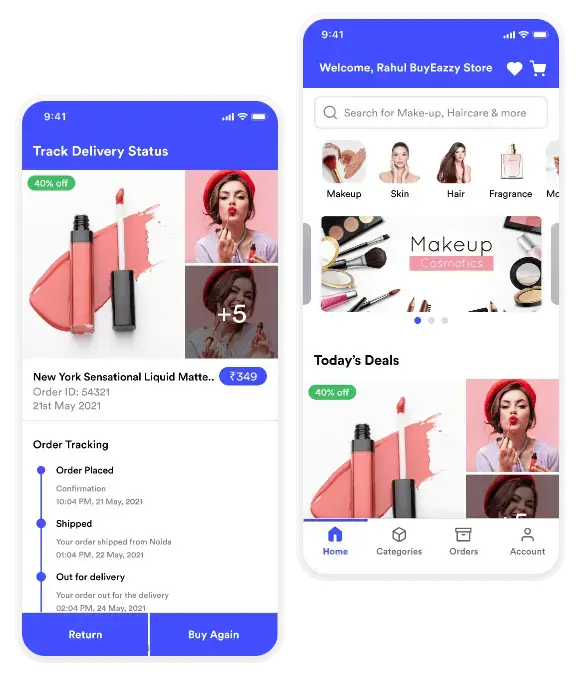



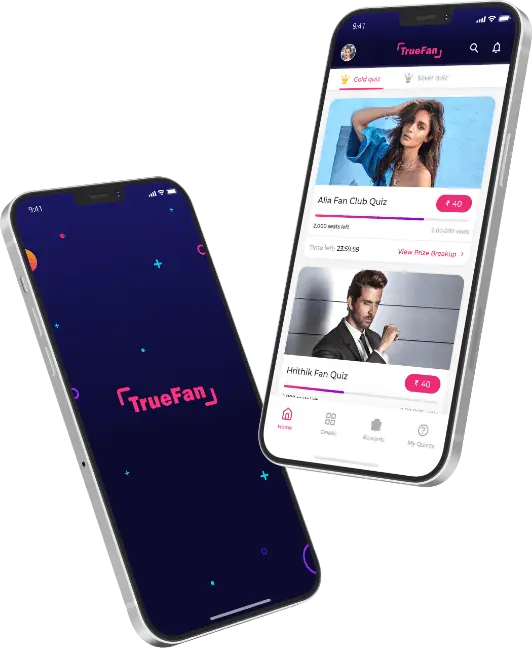


Indeed, mobile apps have proven their value to businesses. Therefore, if you’re still thinking of developing one, you’re missing a plethora of opportunities that could help your business skyrocket.
Worldwide, smartphone users now spend about 4.9 hours per day on mobile apps, and nearly 88% of their mobile time is spent inside apps rather than browsing the web. This is a clear sign of how central mobile applications are to everyday life.
Take a moment and look around you; all the people you notice have their eyes glued to the screen. What do you think they are doing?
Spending most of their time using mobile apps that connect, entertain, and assist them throughout the day.
And you know what? It is precisely the reason entrepreneurs are inclined toward providing efficient solutions to their customers through mobile apps.
Developing mobile apps is a structured process that needs thoughtful planning to successfully cater to the consumers’ needs. Before you dive in, it’s important to understand what goes into building an app and how it can impact your business. And that’s exactly what we’ll be targeting in this blog.
BUT BEFORE THAT…
Why Should Your Business Build a Mobile App?
If you’re still facing dilemmas in developing a mobile app for your business, here are a few powerful reasons all organizations should consider:
-
Apps Have Powerful Targeting Potential
Consumers’ dynamic requirements have now started intriguing them to acquire services that offer them a unique and convenient experience. Thus, mobile applications leverage modern technologies that provide mobile app owners with efficient mechanisms to connect with their customers.
For instance, geo-targeting is one of the top-notch mobile-specific technologies that enable mobile marketers to target their potential audience on a granular level by tracking their location.
-
Boosts Customer Service
Businesses have understood the need of the hour and are investing in mobile apps to enhance their customer services.
How is it being done?
The two primary methods via which mobile apps provide their customers with the services of their dreams are convenience and chatbots that take instant queries.
-
Enhanced Customer Loyalty
What do you expect a business to acquire that is offering its best facilities to the customers? That is ‘customer loyalty.’
Indeed, when businesses invest their sweat, blood, and money in obtaining a competitive advantage by providing their customers with the best of what they can, customer loyalty is the reward.
Therefore, you must leverage loyalty programs to retain customers. For instance, Starbucks’ loyalty program presents rewards to its regular customers and also enables them to place orders before they enter the store.
Tips to Consider Before Mobile App Development
Now, if you’ve finally decided to take your first step towards success, it is crucial to gauge its results beforehand. Here are a few tips, so take a sneak peek:
- Should You Really Invest in an App?
Confused?
What you seem to take for granted has made headlines each year.
There’s no comparison of the potential that mobile apps hold in the modern era. The traditional brick-and-mortar approach is now being replaced with mobile app services, since it is allowing businesses to achieve their desired goals.
Before you begin looking for the right team that’ll offer you the mobile app development services, give a quick thought to a few questions like:
- Is it worth your investment?
- Is it likely to increase the revenue you reap?
- How is it going to fulfil your long-term business goals?
ETC.
Now that you’ve made up your mind to invest in an app, the next big question is whether your audience needs the services you’re willing to offer.
If that’s a yes, hop on the success bandwagon and build a hassle-free mobile app service.
Choose Your Platform Wisely – Hybrid or Native
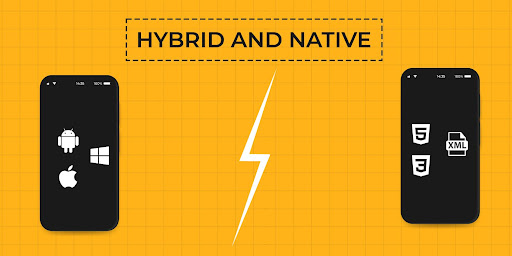
What’s befuddling can be the dilemma of choosing the best platform for your mobile app. However, you can always choose between hybrid or native app development.
Selecting the right platform is an extremely crucial step as the future of your app’s success entirely depends on the same.
But, what are hybrid and native apps?
Hybrid applications: These apps are downloaded on a device like any other app; however, what differentiates them is their native app-like elements that perform for specific platforms like Android and iOS.
Additionally, hybrid apps can be built for multiple platforms using the same codebase; therefore, it saves a lot of time and expenses.
Native applications: These apps are built for a specific platform or device using device-specific software and hardware. Native apps are developed using different codebases for different platforms; however, the functionality is top-notch.
-
Don’t Forget the Market Research
To start with any business, project, or anything else; it is vital to acquire all the mandatory data for informed decision-making, and developing an app is no exception.
Therefore, it is advised to conduct in-depth market research that’ll help you obtain insights into your potential customers, their strategies, weaknesses, and more.
Thus, you can use the information to your advantage and strategize your business plans accordingly.
-
Are There Enough Opportunities for You?
Are you wondering the same?
Indeed, acquiring a competitive edge is accompanied by a lot of advantages for a business owner. For instance, they help businesses leverage strategies that attract a solid consumer base.
Besides this, apps are also a tremendous tool for the reduction of marketing expenses since they can be used to market new products, and so on.
Undoubtedly, mobile apps have been tremendously dominating the business ecosystem. Thus, give a thought to the fact that what value is being added to your organization once you develop the app.
-
Get a Better Understanding of Your Users
Nobody wants to fire a shot in the dark, do you agree?
So how would you build an app without knowing who your target audience is?
Remember, customers can make or break your business; thus, you must ensure that your mobile app caters to their requirements and adds value to their lives.
Moreover, user feedback always helps; therefore, keep a check on your audience’s opinions to work on improvements, if any.
-
Hire the Best Technology Partners
Sure, the app idea will solely remain yours; however, it’s best to get second opinions for polishing the same. Additionally, you’ll also require a team of app developers who deliver an efficient product for your audience.
The icing on the cake is the strategy adopted by an app development company to develop an aesthetic and user-friendly app.
Are you looking forward to hiring a leading mobile app development company in India? Keep the following pointers in mind:
- Check their coding skills and the technologies they leverage
- Get in touch with their existing clientele for testimonials
- Take a look at their prior portfolio
Ensure that your developers develop an app in such a manner that users do not have to acquire any assistance to use the same. Or else, they might end up uninstalling the same from their smartphones.
-
Develop an MVP
How about testing your app’s basic functionality before adding advanced features to the same to save yourself from burning a hole in your pocket?
A basic form of an app built for testing before it is out in the market is called a ‘minimum viable product.’
MVPs are similar to beta testers, who enable understanding the essence of an app in a precise manner.
-
Measure App Performance Using Key Metrics
Once the app’s MVP is built, measuring performance is the next significant step. If accurate metrics are utilized for the same, any issues roadblocking the app’s performance can be eliminated, making it a smooth mechanism.
Notably, numerous parameters are to be considered to measure the performance, including user growth rate, UI/UX, organic conversion rate, and more.
-
Ensure Mobile App Security & Data Protection
Once app issues are removed, app security has to be emphasized, especially if your app contains sensitive data.
Do not neglect the fact that your audience’s data is a valuable asset; thus, taking it for granted can land you in real trouble.
How Artificial Intelligence Can Strengthen Your Mobile App Strategy
Artificial Intelligence is no longer limited to experimental products or large enterprises. Today, AI is becoming a practical layer in modern mobile application development that improves user experience, automation, and decision-making.
Before building a mobile application, businesses should evaluate whether AI-driven features can add measurable value to their product. AI enables apps to move beyond static functionality and adapt dynamically based on user behavior, preferences, and real-time data.
Some of the most impactful applications of AI in mobile apps include:
-
Make Your App Smarter with Personalization
AI algorithms analyze user interactions, browsing patterns, and in-app behavior to deliver personalized content and recommendations. This helps businesses increase engagement and retention by showing users what is most relevant to them instead of generic content.
-
Instant Help with AI Chatbots and Virtual Assistants
AI-powered chatbots can handle customer queries, provide onboarding assistance, and resolve common issues without human intervention. This reduces support costs while offering users instant responses, improving overall service quality.
-
Predict What Users Want
Machine learning models help businesses forecast user actions, identify churn risks, and optimize features based on usage patterns. These insights allow companies to make data-backed decisions while improving product strategy over time.
-
Keep Data and Users Safe
AI plays a critical role in identifying suspicious activity by monitoring anomalies and behavioral inconsistencies. This is especially valuable for fintech, healthcare, and eCommerce applications where sensitive user data is involved.
-
Voice, Image, and More
AI-driven features such as voice commands, facial recognition, and image-based search enhance accessibility and convenience. These technologies are increasingly used in travel apps, retail apps, and customer service platforms.
However, integrating AI into a mobile application requires careful planning. Businesses must consider data availability, model training, ethical usage, and infrastructure readiness before implementation. AI should solve a real user problem rather than being added purely as a trend-driven feature.
When aligned with business goals, Artificial Intelligence can transform a standard mobile app into an intelligent digital solution that learns, adapts, and evolves with user needs
Determine the Monetizing Methods
Now that you’re entirely ready with your plan, have you thought about how you would make money from the same?
To bring it to your notice, there are multiple monetization models that you may adopt. The most crucial ones are as follows:
1) Free and Paid App Model
One of the most popular models is offering both- a free and paid app version of your mobile app. The free app version consists of basic features of an app that encourages the users to pay and upgrade for the advanced functionality.
2) Subscription Model
Some of the apps are released for free along with a subscription model. Basically, these apps are free to download and provide the basic content and features. However, to enjoy the full benefits of the app, an amount is to be paid for the same.
3) Paid Model
A few developers release their apps only in the paid form that charges a fee to download and use the same.
Notably, if you choose to go this way, ensure that your app offers tremendous value to its users. Which, according to you, is the most beneficial monetization model?
How Much Does it Cost to Develop an Application
Numerous factors have a role to play behind the fluctuating cost of app development. What are these factors? Take a look.
- Choice of the platform- Android, iOS, or other
- Tech stack used
- Complexity of the project
- Number of features integrated
- UI/UX design
- Integration of technologies like AI, AR/VR, Blockchain, etc.
- Developer’s cost
Depending on your requirements, a typical mobile app development cost can range anywhere from $10K – $50K for a simple app, $50K – $150K for a medium-complexity app, and $150K+ for a complex, feature-rich app with AI, AR/VR, or blockchain integration.
Common Mistakes to Avoid Before Building an App
We get it, building a mobile app is exciting, but it can also feel overwhelming. With so many moving parts, it’s easy to make mistakes that slow you down or frustrate your users.
The good news? You can avoid them if you know what to watch out for. Here are the most common pitfalls businesses face, and how to sidestep them.
1. Skipping Market Research
It’s tempting to jump straight into development when you have a great idea. But imagine building something nobody actually needs. That’s why mobile app research and app market analysis are essential. Understanding your audience, competitors, and industry trends early on saves you time, money, and headaches.
2. Trying to Do Everything at Once
We’ve seen it a lot, entrepreneurs pack in every feature they can think of. The result? A cluttered app that confuses users and delays your launch. Start small with an MVP app development approach. Focus on the features that solve the core problem first, then grow from there. This is what mobile app feature prioritization is all about.
3. Ignoring the User Experience
Even the best idea can fall flat if the app is hard to use. Poor mobile app UX design or a confusing interface can make users uninstall your app in days. Take the time to map user journeys, test wireframes, and ensure every interaction is smooth. Remember, your users’ frustration is your lost opportunity.
4. Neglecting Security and Compliance
Your users trust you with their data, and failing to protect it can have serious consequences. From encryption to secure authentication, planning for mobile app security is non-negotiable. Treat app data protection as a top priority. It is one way to show your users you value them.
5. Overlooking AI and Smart Features
Here’s the reality: apps without AI risk falling behind. Even simple AI-powered mobile applications, like chatbots, personalization, or predictive analytics, can make your app feel intuitive and helpful. Don’t shy away from AI in mobile apps. It’s not just tech for tech’s sake; it directly improves the user experience.
6. Underestimating Post-Launch Maintenance
Your work isn’t done when the app goes live. Updates, bug fixes, and OS compatibility are all part of keeping your users happy. Planning for mobile app maintenance and post-launch app support ensures your app continues to delight rather than frustrate.
7. Not Defining Monetization Early
We’ve seen amazing apps struggle because monetization wasn’t clear from the start. Whether you’re using a free, subscription, or paid model, deciding early how your app will generate revenue is key. Thoughtful mobile app monetization planning ensures your app is not just loved by users but also sustainable.
Next Steps After Mobile Application Development
As important as it is to develop an app for your audience, since it’s the mobility era, it is equally important to market the product to build a solid consumer base.
Do you want to take your audience by storm?
Deploy marketing strategies that would help you stay ahead of your competitors.
For instance, you ask?
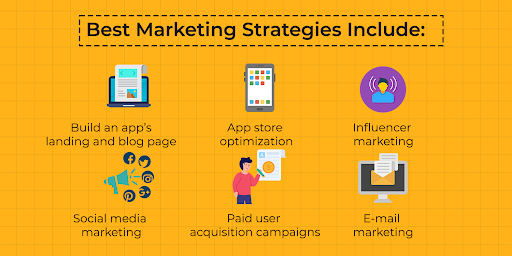
Some of the best marketing strategies include:
Final Verdict
Now that we have covered the most crucial aspects of building a mobile app, here’s your inspiration to develop a cutting-edge and flawless mechanism.
What do you think?
Looking forward to meeting a brood of professionals for more insights on your app idea? We’re all ears.
How about discussing it over a cup of coffee?
Get in touch with us today.
FAQs
Q. How long does it take to develop a mobile app?
The development timeline varies with complexity. A basic app can take 2–3 months, a medium app 4–6 months, and advanced apps with AI or multi-platform support can take 6–12 months or more.
Q. Should I build an MVP first or go full-scale?
Most experts recommend starting with an MVP app development approach. It helps validate your idea, test features, and gather user feedback without overspending. You can always scale later.
Q. Native app vs hybrid app – which is better for my business?
Choosing between native vs hybrid app development depends on your goals. Native apps offer high performance for a specific platform, while hybrid apps save time and cost by running on multiple platforms using a single codebase.
Q. Is AI necessary in modern mobile apps?
Not every app absolutely needs AI, but in 2026 and beyond, AI in mobile apps is becoming more of a smart expectation than a luxury. Users now expect apps to feel personalized, intuitive, and responsive. Features powered by AI-powered mobile applications, like chatbots, predictive recommendations, and smart automation, aren’t just cool; rather, they improve engagement, retention, and overall user satisfaction.
Even small integrations of machine learning in mobile apps can make a big difference. For example, personalized content, predictive analytics, or AI-based search help your app feel smarter without overcomplicating development.
So while AI isn’t mandatory for all apps, incorporating artificial intelligence in app development can give your mobile app a competitive edge, make it more user-friendly, and ensure it stays relevant in an increasingly AI-driven market.

Get in touch
We'd love to hear from you.