

 SA
SA  KW
KW  IE
IE AU
AU UAE
UAE UK
UK USA
USA  CA
CA DE
DE  QA
QA ZA
ZA  BH
BH NL
NL  MU
MU FR
FR 












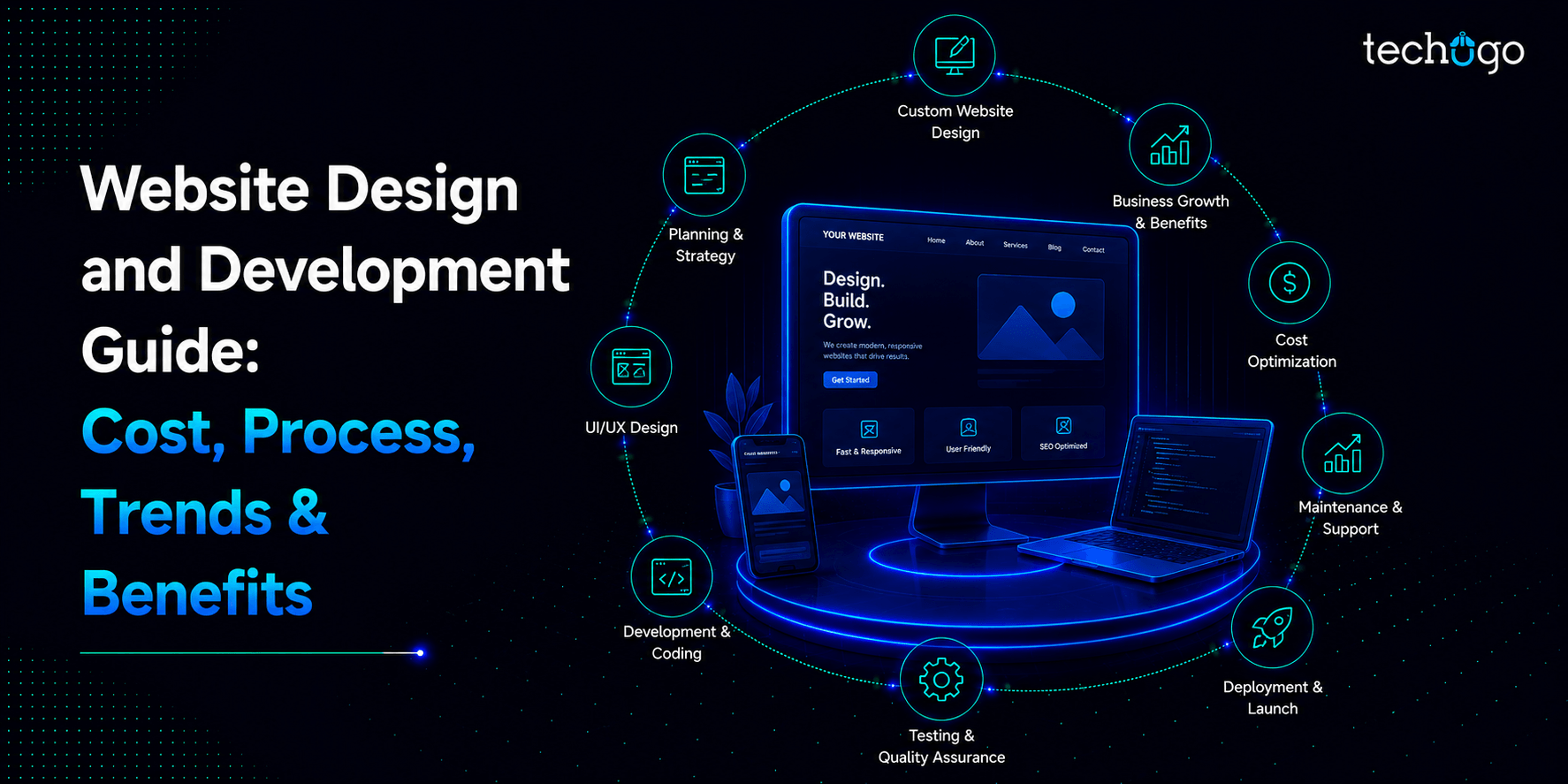


📌 Key Takeaways
- Website design and development go hand in hand, design is about how it looks and development is what actually makes it work.
- A well-built website is a business asset. It helps build credibility, improve user engagement & even increase conversions.
- The average web design and development cost ranges from $10,000 to $150,000+.
- Looking ahead to 2026, expect AI-powered experiences, PWAs, accessibility, and headless setups to lead the way websites get built.
“First impression is the last impression”.
It does sound cliché, but your website is the first impression people have of your business.
Whether someone wants to learn about your services or just wants to make a purchase, where do they go? Straight to your website. It’s like the powerhouse of your business.
Good design keeps people around. Good development means the site doesn’t break or lag while they’re deciding. On the other hand, if your site is slow, outdated or full of clunky visuals, it’s a red flag. Because it can turn-off your users which is the last thing you want.
So in this guide we will explain what website design and development involve, how the two differ, the main elements of a successful website, development process, role of AI, current trends & basically everything that you need to know before building or redesigning a website.
Let’s explore.
What Do Website Design and Development Services Include & Why It Matters?
Website design and development services cover way more than just making a basic site and calling it done. It’s a combination of creative work and technical work, so you end up with something that looks good, runs smooth, and helps your business do what it needs to do.
1. What does website design services include?
This is the part people actually see and judge you on. And it includes –
- UI/UX design
- Wireframes and prototypes
- Visual branding – colors, fonts, graphics, etc.
- Responsive layouts so it works on phones, tablets, etc.
- Navigation and how people move through the site
- Where your CTAs sit, because placement matters more than you’d think
This is the kind of work a UI-UX design company typically handles. Basically the goal is a site that makes people stay and interact.
2. What does website development services include?
This one is more technical. Development’s role is basically to make sure everything that is designed works.
Usually covers:
- Front-end development
- Back-end development
- CMS development
- API and third-party integrations
- Database development
- Security and performance optimization
- Testing and fixing bugs
- Progressive web app development, for businesses that want their site to feel fast and app-like, even on bad connections
In short, design is what pulls people in, but development is what keeps them from leaving because of a bug or a slow-loading page. So yes, it’s worth going with a proper website design and development company that provides these services. You get a site that looks good and one that can keep up as your business grows too.
Difference Between Website Design and Website Development
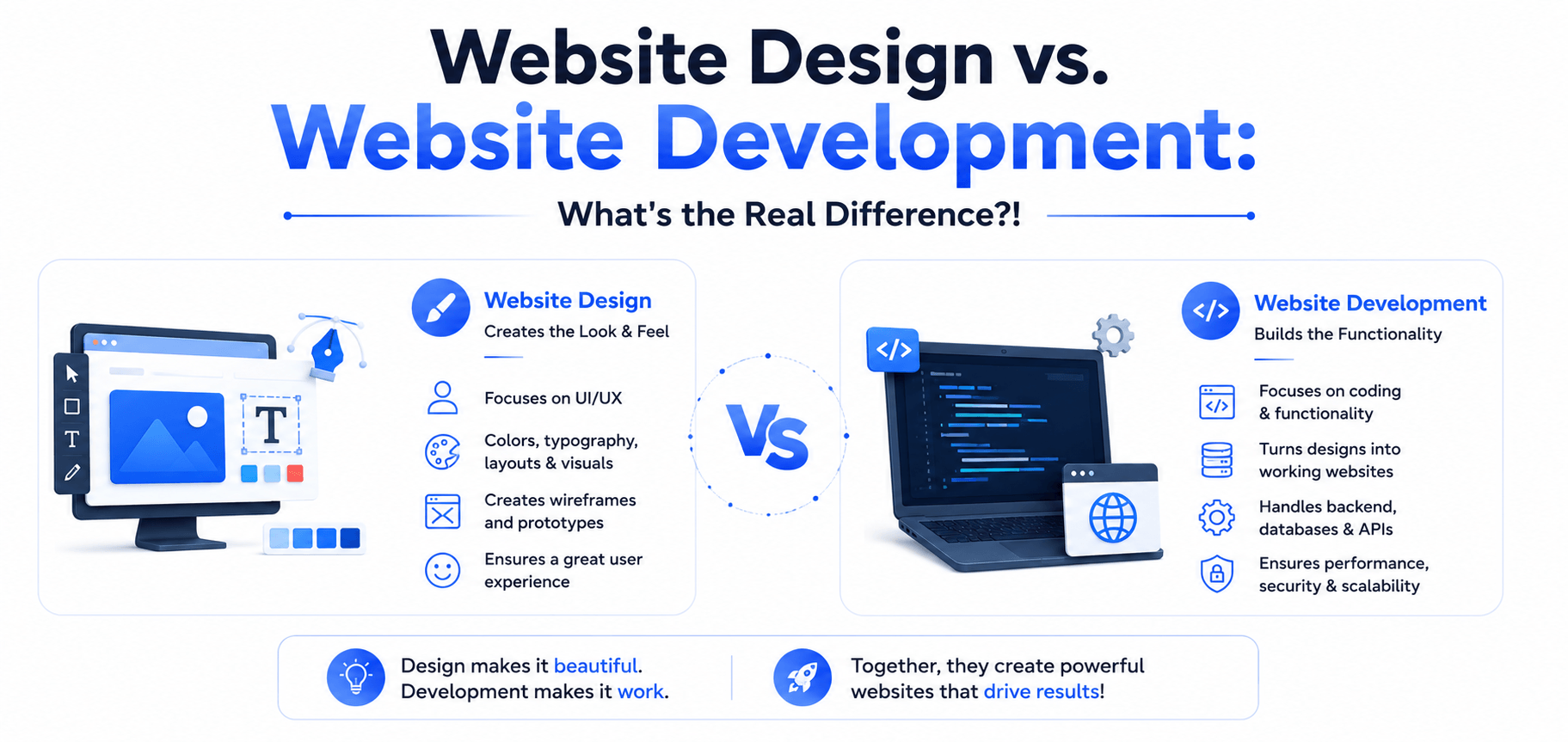
The biggest misconception is now clear: that website design and website development aren’t the same thing.
If you’re investing in corporate website design and development or even just researching how to become a web developer, understanding both and their differences is important.
So now we will look at the aspects that make them both differ from each other.
| Aspect | Website Design | Website Development |
| Primary Focus | Creating the visual appearance and user experience | Building the functionality and technical foundation of the website |
| Main Goal | Make the website attractive, intuitive, and easy to navigate | Ensure the website works smoothly, securely, and efficiently |
| Key Tasks | UI/UX design, wireframing, layouts, branding, typography, and responsive design | Front-end development, back-end development, databases, APIs, CMS integration, and security |
| Tools Used | Figma, Adobe XD, Sketch | HTML, CSS, JavaScript, React, Angular, Node.js, PHP, Python, .NET |
| Output | Website mockups and design prototypes | A fully functional, responsive, and interactive website |
| Success Metric | Better user engagement and experience | Faster performance, reliability, and seamless functionality |
It’s a classic case of two sides of the same coin. Website design attracts visitors, while website development ensures everything works exactly as it should.
The best websites strike the perfect balance between the two. A good looking design may attract visitors but if the development is poor… your website can be slow, it can be difficult to use or prone to technical issues. And similarly, a technically sound website with poor design may fail to capture attention or convert visitors. Combining both is what creates a website that not only looks great but also gives a flawless user experience.
Benefits of Custom Website Design and Development
1. Builds brand credibility
Get website development and design right, and people would trust your business. It’s a fact. Because a clean, well-built site makes you look legit right away, while a clunky, outdated one sends visitors straight to a competitor.
2. Improves user experience
Easy navigation and fast load times mean visitors actually stick around. Custom website design and development means you get a site built around your potential audience specifically. So they find what they need faster.
3. Supports SEO and online visibility
Better speed and structure mean search engines find you faster, so you rank higher without extra ad spend.
4. Increases conversions
A well-planned custom site does more than look good. It gets people to take action. Clear CTAs and a smooth journey mean visitors are more likely to buy, book or reach out instead of just browsing and leaving.
Studies show that 75% of users judge a company’s credibility based on its website design. This is why partnering with an experienced website design and development company in USA would be beneficial for you. Along with building your website, it helps build trust from the very first click.
Key Elements of Effective Website Design and Development
1. Responsive design
Your site should look great on desktops, tablets, and phones alike – that is the backbone of credible website development and design services.
2. Fast loading speed
A sluggish site sends visitors straight to your competitor. Optimized images and clean code keep visitors happy and bounce rates low.
3. User-friendly navigation
Clear menus and logical layouts help people actually find what they came for.
4. SEO-friendly structure
Clean code, smart URLs – and proper headings help search engines (and users) find you faster.
5. Strong security
HTTPS, secure logins & regular updates protect your users’ trust.
6. Clear calls-to-action (CTAs)
Every page should nudge visitors toward action. After all this is what good web app development is all about.
How the Website Design and Development Process Works
1. Requirement analysis
The project starts with understanding your business goals, target audience, the features you need. If you work with a website design and development agency, they would take time upfront to define the full scope before starting the design work.
2. Planning and wireframing
After that, you sketch out a sitemap and wireframes – basically a rough layout of how pages connect and how someone would move through the site. It’s the blueprint stage, before it looks “designed.”
3. UI/UX design
This phase is where the interface starts to look good and feel easy to use, while staying true to the brand (usually the specialty of a UI/UX design company).
4. Website development
Then developers take over – building the front end and back end, hooking up features, databases, and content, and making sure it all works properly on different screens.
5. Testing and quality assurance
Before the site goes live, someone checks it for speed, security, bugs and whether it works the same across browsers and devices.
6. Launch and ongoing maintenance
And once it’s launched, it’s not really “done”. Why? Because website design and development agency usually keeps an eye on it, updating and optimizing things so it stays secure and runs well over time.
Role of AI in Website Design & Development
Okay, AI’s not out here replacing designers and developers, it’s more like a really fast assistant.
This is why AI is commonly used in web development and design:
1. To generate code, and fix bugs, so that development time is reduced.
2. To build layouts, and templates quickly, because you don’t need to start from scratch.
3. To offer affordable design options, that were once only for big budgets.
4. To automate testing, therefore fewer errors, are shipped to production.
So, when AI tools are combined with skilled coding, and design, you get affordable website design and development. And this is why, small businesses have been choosing AI tools for coding, because they have to compete, no matter what.
Different Types of Website Development
1. Front-end development
This is what people see first when they land on your site – buttons, layout, everything they click and scroll through.
2. Back-end development
This is what people do NOT see on your site. It works in the background to handle the server, database & application logic that power the website.
3. Full-stack development
Basically both sides put together, front and back, so the whole thing works as one piece.
4. Custom website development
A very common one… custom – like the term suggests – built from scratch around your business’s specific needs.
Pros –
- You get exactly what you need
- It’s way easier to scale later on
- Your site actually stands out (instead of looking like everyone else’s)
- Performance is usually better
- You’ve got full control over design, functionality, basically everything, which is great when your business does something a little different.
5. E-commerce website development
This one’s for online stores, and it covers shopping carts, payments, order tracking, etc.
6. CMS website development
Uses platforms like WordPress to make it easier for businesses to manage and update website content (without extensive technical knowledge).
As you saw, there’s a bunch of different types of website development, and which one you go with is determined by what you’re building, what it needs to do and how much you want to spend. And same goes for design. Knowing the types of website design services out there helps you land on something that looks good AND works for people using it.
Website Development Technologies Every Business Should Know
You don’t need to become a developer yourself, but knowing a few basics about website development technologies actually helps.
A few worth knowing:
1. HTML, CSS, and JavaScript – these are basically the base, or we can say the starting point of every website. It handles the structure, style and interactivity.
2. Frameworks like React, Angular, or Vue – a lot of website design and development companies use these to build faster, and to make sites feel smoother for users.
3. Backend languages like Python, PHP, or Node.js – handles the data & logic.
4. CMS platforms like WordPress or Shopify – great if you want more control without needing to code everything yourself.
5. Cloud hosting, like AWS or Google Cloud – keeps your site fast and reliable, no matter how much traffic shows up.
Website Design and Development Cost: What to Expect in 2026
How much does a website cost?
Everyone asks this eventually. But the answer varies.
Look, we have a whole range of costs because every project is different. And what you need changes everything. A basic business site is going to cost way less than, say, a custom platform full of AI features or integrations.
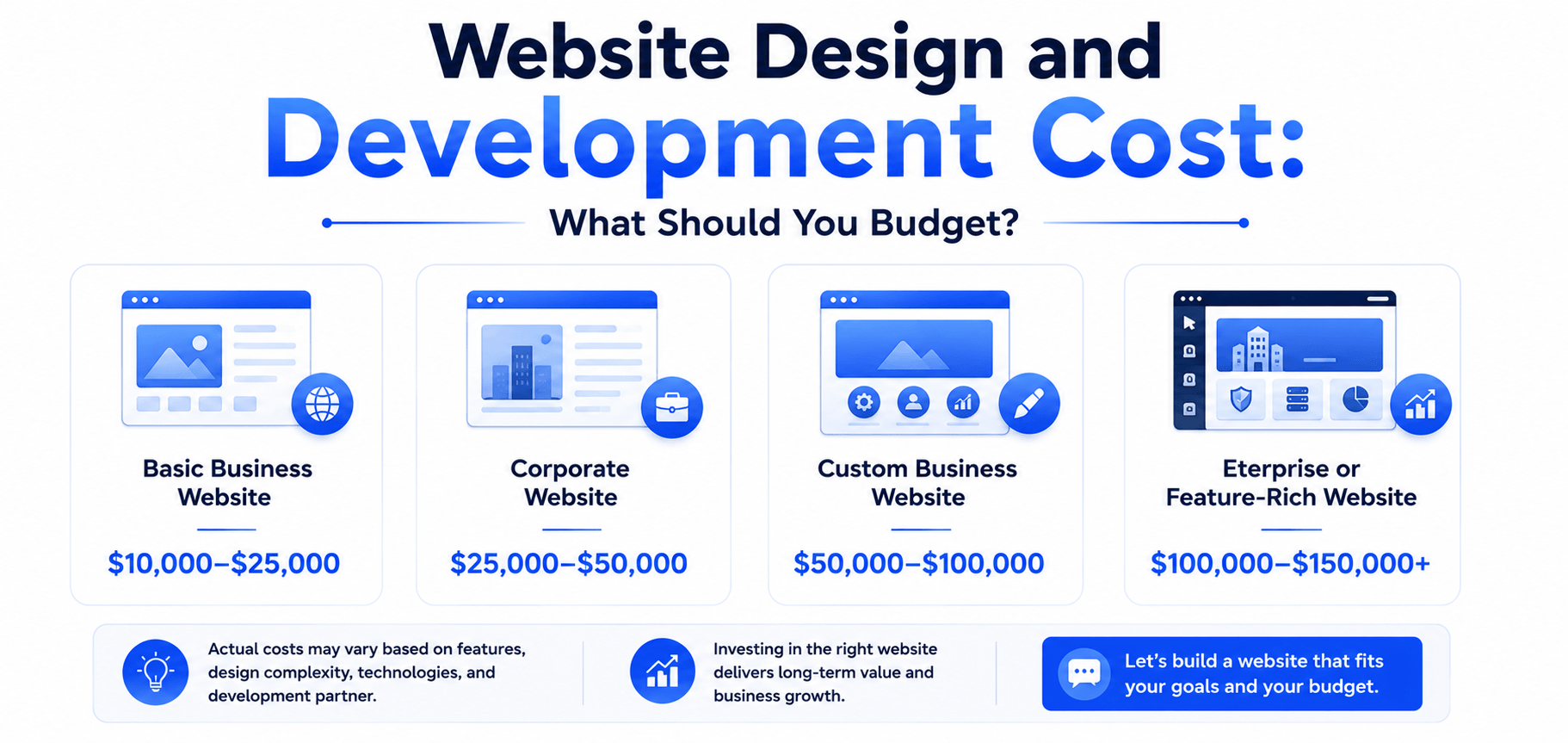
If we talk about the estimations, cost for website design and development usually falls between 10,000 USD and 150,000+ USD.
Let us break it all down –
| Website Type | Average Cost (USD) |
| Basic Business Website | $10,000–$25,000 |
| Corporate Website | $25,000–$50,000 |
| Custom Business Website | $50,000–$100,000 |
| Enterprise or Feature-Rich Website | $100,000–$150,000+ |
But really, everything revolves around your niche, what you want your site to do.
Is it an e-commerce, custom or enterprise level site? Any of those, and the website development cost is going up. Even more, if you add AI features.
So the smartest move is figuring out what you need right away (saves you from spending on unnecessary features later).
Latest Web Design and Development Trends in 2026
AI-powered personalization
With AI, websites are getting extremely smart in 2026. AI has gotten so smart that it notices what you’re into and shows you what matters to you, so naturally, people stick around longer and buy more.
Voice search optimization
Speaking is easier than typing. This is why people just ask Siri or Alexa instead of typing, so sites have to sound natural. It has to sound like a real conversation.
Also Read – AI Voice Assistants & NLP: How to Develop Voice-Enabled Apps
Progressive web apps (PWAs)
These are blowing up right now. Feels like an app but it’s just your browser, loads fast, works even offline, super smooth no matter what device you are on.
In fact, many businesses now work with a mobile app development company to bring this same experience to native apps too.
Accessibility-first design
Websites are now being built with accessibility in mind. Everyone should be able to use a site, period. Add in fast loading and mobile-friendly layouts and you’re covering the basics people actually expect.
Headless CMS and Modern Development
More businesses want flexibility to grow, so headless CMS (CMS that separates content from design) and API-first setups are the move. And partnering with the best website design and development company? Cherry on top. It’d make this whole switch way easier.
How to Choose the Right Website Design and Development Company
What if you end up partnering with the wrong company? Well, it won’t happen… if you follow the dos and don’ts below –
1. Check their experience & portfolio
The first thing to do is go through their past work and portfolio to see how experienced they are. If they are experienced enough for your project, partner with them!
2. Understand their development process
The second thing to do is – understand. To understand, you have to first ask them about their whole development process – planning, design, dev, testing, launch. (If they dodge your timeline questions, walk away!)
3. Don’t skip custom work
Templates are fine for a hobby blog. But a big no for your business. So just make sure that they are building something around you, not copy-pasting a theme.
4. Think about pricing vs. value
Well, cheapest option isn’t always the smartest option. Because choosing cheap has a high probability of getting cheap results. So ask what’s included – revisions, support, extra costs – so you’re not blindsided later.
5. Don’t forget after launch
Of course, you need someone around for updates, security, fixes, etc. Pick people who stick around, not the one’s who vanish once they’re paid.
How Techugo Can Be Your Website Design and Development Partner
Your website should do more than just look good, it should actually work for you. It has to attract visitors, keep them engaged and then turn them into your paying customers. That’s what Techugo does for businesses, and we’ve been doing it for over a decade now.
Our experts have built scalable websites, enterprise web platforms, SaaS solutions, and AI-powered digital experiences, because startups, growing businesses, and even global brands like BYJU’S and BookMyForex have trusted us with their vision.
The Techugo team has a good eye for design and knows how to build things right, so what you end up with is a website that’s fast, safe, and can actually keep up as you grow and compete in the market.
So if you’re looking for an expert partner for your project, Techugo is where you land.
Interested? Reach out and let’s talk about what we can build for you.
FAQs
1. What is website design and development?
It’s the process of creating a website from start to finish. Design focuses on how it looks and feels, while development makes everything work behind the website.
2. How much does web design and development cost?
Usually, the projects range between $10,000 and $150,000+. However, your final cost will depend on your design, features, integrations and of course – business goals.
3. How long does it take to build a website?
A simple website can take 4-8 weeks, while a custom solution may need 3-6 months (or more).
4. Can I redesign my existing website?
Absolutely. And why not? You can always update the design, improve performance, or completely rebuild it depending on what your website needs.

Get in touch
We'd love to hear from you.