

 SA
SA  KW
KW  IE
IE AU
AU UAE
UAE UK
UK USA
USA  CA
CA DE
DE  QA
QA ZA
ZA  BH
BH NL
NL  MU
MU FR
FR [ LET’S TALK AI ]
X
Discover AI-
Powered Solutions
Get ready to explore cutting-edge AI technologies that can transform your workflow!



Get ready to explore cutting-edge AI technologies that can transform your workflow!






Now shifting fast, healthcare leans on digital tools, where mobile apps play a key role. Not just for video visits but also tracking health data from afar, these apps speed up how people reach treatment. Doctors and clinics find smoother workflows through features like e-prescriptions plus easier booking systems. Because of such gains, building medical apps grabs serious attention – startups, hospitals, even tech firms now invest heavily behind them.
One forecast shows the worldwide digital health industry hitting more than $660 billion within a few years. Much of that growth comes from people wanting health apps on their phones. Devices you wear are linking up with medical systems more often now. Smart software shaped by artificial intelligence also plays a big role. Getting care easily through screens matters to patients today. Clinicians, meanwhile, look for tools that cut down paperwork tasks. Better results for those receiving care remain a key goal. Technology helps move things forward without slowing treatment.
Building a healthcare app isn’t like making regular mobile apps – it comes with extra layers. Instead of just focusing on design or features, you’re dealing with tight rules like HIPAA right from the start. Safeguarding personal medical details becomes non-negotiable, shaping how every part works. On top of that, connections are needed – think EHRs, insurers, hospital records – not optional extras but core demands. Each step forward pulls budget and time along with it. The result? Development slows, costs climb, all because compliance can’t be skipped.
Around 2026, building a healthcare app might start at forty thousand dollars if it’s simple. Yet complex systems – ones that include virtual visits, artificial intelligence, or deep connections to medical records – can climb past two hundred fifty grand. Knowing how these apps are built helps clarify why prices shift so much. Planning well means looking closely at each step before moving forward.
Building a healthcare app in 2026 is a smart investment considering the following reasons:
Telemedicine, monitoring from afar, and ways to keep patients involved online are becoming normal in hospitals and clinics everywhere.
The telehealth market around the world was worth about $50.8 billion in 2025. It is thought to get close to $177.9 billion by 2035.
That shows a big increase because of phone tech and healthcare platforms online.
More doctors and patients are using telemedicine, too.
Over 72% of doctors now do virtual visits, and over 60% of healthcare groups use ways to keep an eye on patients from a distance.
Health apps let people set times to meet, talk to doctors online, see their health records, and watch their health from their phones.
Research says that about 68% of patients would rather have online or virtual visits for basic care.
Over 72% pick virtual check-ups over going in person since it is easier and they wait less.
Healthcare apps also help people get care who live far away or cannot move around easily.
Tools that watch patients from afar, things people can wear, and online chats let doctors watch long-term health problems and give care without patients needing to come in.
Because of this, companies that put money into making healthcare apps for phones can give care that is faster and more personalized.
Programs that deal with patient information must follow rules like HIPAA (Health Insurance Portability and Accountability Act).
That says data must be kept safe, coded, and only certain people can see health info.
As health records go online, hospitals and new healthcare companies are putting money into making healthcare apps that follow HIPAA.
This makes sure they follow the rules and keep patient info private.
Ways to keep things safe, online places that code data, and safe ways to log in are now needed for healthcare apps.
Following the rules keeps patient data safe and makes users and healthcare places trust the apps.
Healthcare apps are not just tools, they also help businesses. Online spots help healthcare groups do more, keep patients, and make more money.
Telemedicine spots, apps that check health with subscriptions, and online talks let healthcare groups give care outside of clinics.
Also, things like reminders for visits, tracking medicine, and health info help patients stay involved and loyal.
Hospitals and clinics that use online health spots say they work better.
Studies say telehealth systems can make work flow better and cut down on office work across healthcare groups.
These good things make making healthcare apps for phones a smart move for groups wanting to grow and stay ahead in a healthcare world that is going more online.
How healthcare apps are made often changes based on who is making them.
New healthcare companies usually focus on new ideas and special helps like AI checks, watching patients from afar, mental health spots, or online treatments.
They want to quickly start with a simple product, see if people want it, and grow with money or help from others.
Hospitals and healthcare groups usually make healthcare spots for big groups that work with online health records, hospital systems, and safe patient info places.
These systems care most about following rules, being reliable, and being able to grow for a long time.
Even though they want different things, both ways show that making healthcare apps just for them is becoming more vital as a way to change healthcare online in 2026.
There are many kinds of healthcare apps out there, made for patients, doctors, and hospitals.
Each kind does something different, and how complicated the features are affects how much it costs, how long it takes to make, and what tech you need.
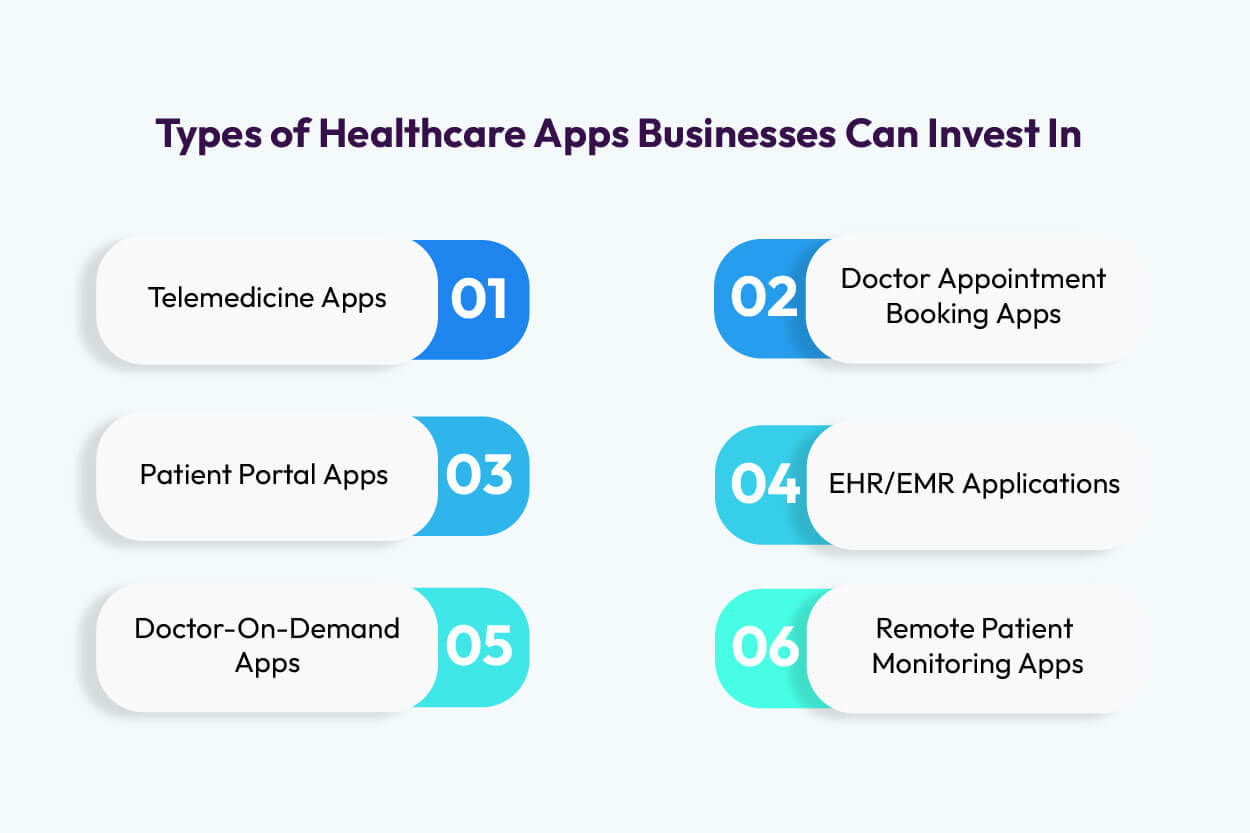
Telemedicine apps let you talk to a doctor online through video, chat, or calls. More and more people want these apps.
In fact, over 72% of healthcare places now offer telemedicine, and more patients are starting to use it.
These apps usually have video calls, online prescriptions, appointment booking, and secure messaging.
These apps need to follow health privacy laws and have good video quality. They also need to work with existing health records.
Making these apps can be pricier than regular apps because of the video stuff, data security, and computer-assisted suggestions.
These apps make it easier for patients to book appointments with doctors.
You can see when they’re free, book a time, get reminders, and change your appointment if you need to. They often work with clinic systems and payment systems.
More and more patients want to book online instead of calling. These apps aren’t too hard to make, but they need to sync with calendars, send notifications, and keep data safe.
Patient portals let you see your health info in one place.
You can look at lab results, medical history, prescriptions, and updates from your doctor.
These apps really need to be secure and protect your data because they have to follow health privacy laws.
More hospitals are using these apps because they get patients involved and cut down on office work.
To work right, they need to connect to electronic health records, which makes them harder and more expensive to build.
Electronic Health Record (EHR) and Electronic Medical Record (EMR) apps put patient records online and make things easier for hospitals and clinics.
These apps have a lot of rules to follow. They need to have good data security, cloud storage, and work with other systems.
Making EHR/EMR apps can be complicated and pricey because they have to follow rules, handle different user roles, and work with other services like lab systems and insurance.
Doctor-on-demand apps are for when you need urgent care.
They connect you with doctors quickly and often have computer-assisted checkups, symptom checkers, video calls, and payment options.
More people are using these apps because they want to see a doctor right away without going to the clinic, especially in cities.
The cost goes up with video features, computer help, and a system that can handle a lot of users.
Remote Patient Monitoring (RPM) apps track your health info using wearables, devices, or sensors.
The data goes to your doctor in real-time, so they can help you right away.
RPM apps are becoming important for managing long-term illnesses and older people.
More people are starting to use them because of computers, devices, and mobile health tech.
Building these apps involves complicated data, device connections, cloud storage, and computer-assisted analysis.
In 2026, how much it costs to build a healthcare app can change a lot depending on how complicated it is, what devices it runs on, what it does, and what the legal rules are.
To figure out a good budget, you need to get an idea on the basic costs, plus what makes healthcare apps specifically pricey.
From simple test versions to big business platforms, costs go up with how much work it takes to build, following the rules, and getting different tech to work together.
| App Complexity Level | Estimated Cost Range |
| Basic healthcare application | $40,000–$80,000 |
| Mid-level healthcare app | $80,000–$180,000 |
| Advanced, AI-powered healthcare app | $180,000–$400,000+ |
A basic healthcare app that checks if the idea is good with just a few things it can do. It usually has:
These are good for new companies checking the market or small offices that want to talk to patients easily.
They use ready-made pieces, third party tools, and not much special coding, keeping costs down.
These have more features, like:
Because they’re complex, they need special designs, safe cloud storage, and lots of testing. Following rules like HIPAA also adds to the cost.
These big apps handle lots of people, complicated tasks, and different admin roles.
They might have:
These need serious backend work, machine learning setups, and constant upkeep. They can cost over $400K for a safe, custom solution that can grow.
Healthcare apps must protect patient information. Using safe logins, storage, and audit trails makes building and running them more expensive.
Adding video calls and connecting to patient records needs special tools, safe data ways, and proof that it follows the rules.
Healthcare apps need clear info screens, easy design, and simple ways to move around for all users. Fancy designs and moving stuff can make it cost more.
AI features like symptom checkers and smart guesses can really increase costs. Building and using machine learning models can add a lot depending on the data and how tricky it is.
Hourly rates change by area:
Where you pick affects the final cost, how long it takes, and how well it can grow.
Wondering how much your healthcare app might cost? Get a detailed estimate based on features, integrations, & other requirements. Talk To Our Experts
| Feature Area | Key Functionalities | Estimated Cost Impact |
| User Registration & Onboarding | Secure signup, biometric login, patient profile setup, HIPAA-compliant data storage | 10–15% |
| Appointment Scheduling | Doctor search, real-time availability, calendar sync, reminders | 8–12% |
| Telemedicine / Video Consultation | Secure video calls, chat, file sharing, in-call record access | 15–20% |
| Patient Health Records Access | View prescriptions, test results, visit history, EHR integrations | 15–20% |
| Payments & Notifications | Secure payment gateway, billing history, push notifications, reminders | 5–10% |
| Admin Scheduling System | Doctor calendars, appointment management, automated reminders | 5–8% |
| EHR Dashboard | Centralized patient overview, alerts, compliance monitoring | 6–10% |
| Patient Records Management | Medical history tracking, prescriptions, notes, secure access control | 8–12% |
| Billing & Insurance Integration | Invoice creation, payment tracking, insurance claim integration | 5–10% |
| Analytics & Reporting | Usage analytics, treatment insights, financial reports, dashboards | 5–8% |
How much it costs to build a health app depends a lot on how complicated you want it to be.
Usually, these apps have two parts: what patients use and what doctors/admins use.
Each one does different things and needs different technology, which changes how much things cost and how much work it is to keep them running.
It’s important that signing up is easy and safe, so patients trust the app and keep using it. This usually includes:
This means extra tech work behind the scenes to keep things safe and make sure the app works right, which can add about 10–15% to the starting cost.
Patients want to book easily:
To make this happen, the app needs to connect to doctor schedules and send reminders on its own. This makes the behind-the-scenes work more involved and takes more time.
Video calls with doctors are a big reason why people use these apps:
Video needs strong internet tech and special connections, which really bumps up the cost of building and running the app.
Patients need to see their records easily and safely:
Connecting to these systems means special programming and following privacy rules, which can add 15–20% to the work needed behind the scenes.
Handling payments and updates without problems:
Taking payments involves safety and coding, while notifications need tech to send the right messages at the right time.
Doctors need to easily see their schedule and appointments:
Calendar use is important for keeping things running smoothly and takes some extra work to build.
Admins need to see all patient info in one place:
Making a dashboard that works well, is safe, and updates in real-time affects both what you see and the work behind the scenes.
Doctors need to safely see and change patient info:
This needs a strong database and safety measures.
Hospitals and clinics need to keep track of money:
Billing needs programming to handle accounting and connect to payment systems, which changes costs a bit.
Health reports give ideas on how to give better care:
For good reports, the app needs to connect to many databases and special AI, which can add a lot to the cost depending on what you want.
Overall, the patient panel and admin panel together usually account for about 55–70% of the total healthcare app development cost.
When you’re making a healthcare app, your development team’s structure and location really matters. It hits your costs, how fast you build, and the app’s quality.
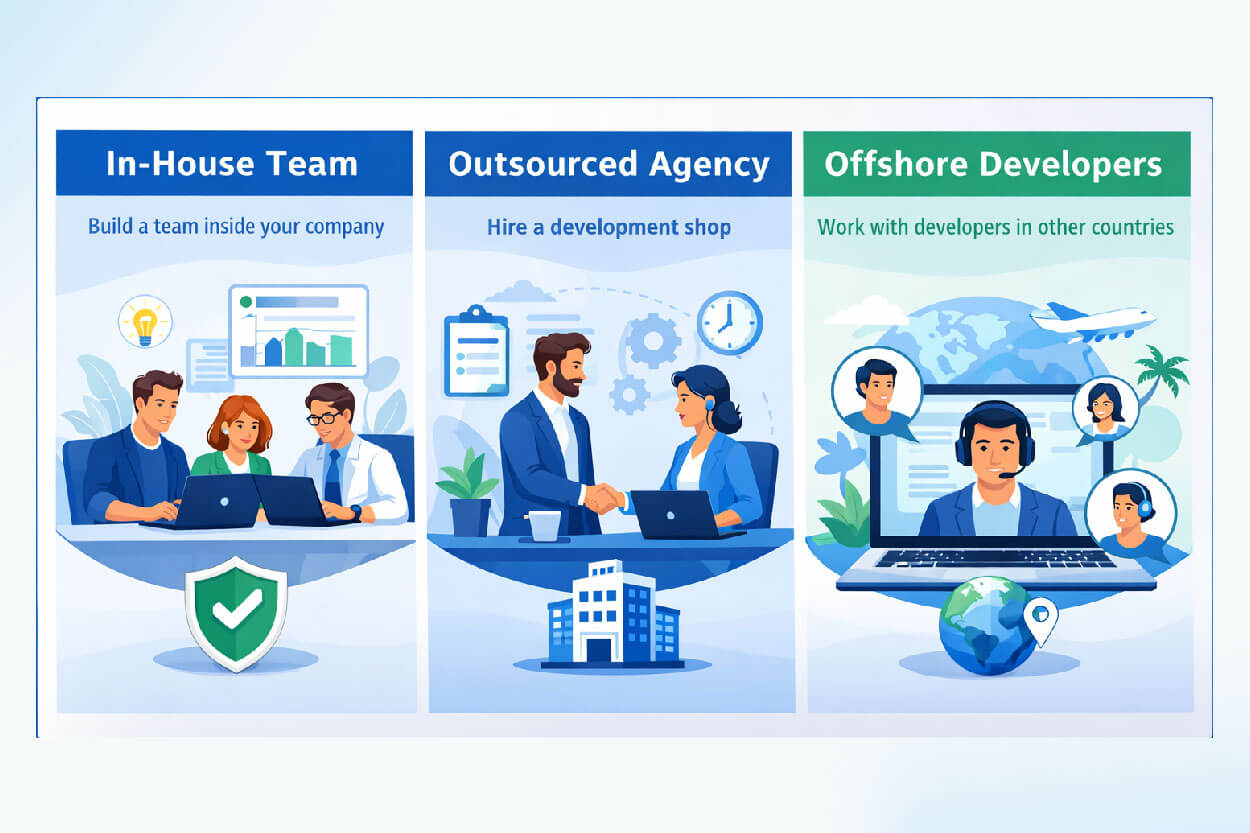
That’s why any business needs to think hard about these 3 choices as each pick changes what you pay, how long it takes, and how well your app follows rules like HIPAA.
An in-house team means hiring developers, designers, testers, and project managers who work for you directly.
The budget would be around $120,000 to $400,000+, but it jumps up based on how complex your app is, team pay, and following the rules.
Good communication is a big plus. Devs can talk to docs, managers, and compliance folks easily. This close teamwork tends to make a more custom product.
Another win is keeping knowledge for the future. Since the team only touches your stuff, they become experts, which helps as you keep improving the app.
However, staffing up internally can be pricey and slow. It could take months to find devs who can manage telemedicine, medical records, or HIPAA.
Besides salaries, you have to pay for benefits, gear, workplace, and training. Ramping the team up or down fast can also be tricky.
Keeping an in-house team can often run 30–50% higher than outsourcing.
So, this setup’s best for big healthcare organisations or well-funded companies going all-in on digital health for the long haul.
A healthcare app done by an outsourced agency usually lands around $70,000 to $250,000. This depends on the features, integrations, and where the agency is.
Here, you team up with a company that already has a full development squad: designers, developers, testers etc.
The biggest plus is speed. You get pros right away without a long hiring grind.
Many agencies know the healthcare mobile app game and understand security, rules, and standard practices.
They also have project management handled, which keeps things organized and on time.
That said, outsourcing can still be expensive, particularly with agencies in the US or similar high-cost areas.
Hourly rates usually go from $90 to $150 or higher.You might also have a bit less hands-on control than with your own team.
Communication can lag if the agency’s in a different time zone.
Still, outsourcing is a solid choice for companies that want pro support and planning without a huge internal team.
Offshore healthcare app projects usually run from $12,000 to $80,000 for smaller to mid-size apps.
Costs rely on complexity, hours, and rates in the region. This can cut total development costs by 40–60% compared to teams here.
One of the best parts of offshore development is relatively lower budget
Rates are way lower than in the US, often around $15 to $50 per hour in India and $60 to $80 in the UAE.
That knocks down your dev costs by as much as 40–60%.
Offshore teams also give you wiggle room to scale up the team as needed.
But, offshore dev calls for careful handling.
Time differences can slow talks if meetings aren’t planned well.
You’ll also need a close eye to make sure the code’s good and follows healthcare rules.
With the right planning and talks, offshore dev can make great healthcare apps while keeping costs down.
A hybrid setup usually costs about $60,000 to $200,000. It depends on how much work stays local versus going offshore.
Here, things like product strategy, rule-following, and talking to stakeholders stay local. Tech work and testing go to offshore experts.
Hybrid Development Teams help businesses balance cost with quality.
Local teams make sure the product hits compliance and business targets. Offshore developers build the technology
Hybrid teams also let you ramp up talent quickly without the cost of a full in-house team.
Hybrid development means things must be in sync. Clear communication, plans, and quality checks are key to keeping everyone aligned.
If done right, hybrid teams are often the sweet spot for cost, speed, and skill for healthcare app projects.
Creating a healthcare app can be a great chance for startups, hospitals, and digital health companies to grow.
But, many businesses mainly consider the basic app creation cost when planning.
The real cost is usually much more than that as there are always certain hidden costs. Knowing about these extra costs early can help you make a realistic budget and avoid money problems later on.
One of the biggest hidden costs when making a healthcare app is following the rules. In the U.S. apps that store or handle patient information must follow HIPAA.
Following HIPAA isn’t just about technical stuff. You’ll probably need to talk to lawyers, plan for compliance, and do regular checks to make sure your system is keeping medical info safe.
Companies usually hire legal experts who know healthcare rules to check the app’s design, patient permission processes, and data privacy policies.
Initial legal talks and compliance checks usually cost $5,000 to $15,000, depending on how complex the app is.
A simple appointment app might not need as many checks, but a telemedicine platform that handles patient records and video calls will need a more in-depth legal review.
Also, compliance never stops. Healthcare rules change, so apps must be updated to keep up. Regular checks help make sure your platform doesn’t get penalized.
Healthcare apps handle very private info like medical history, diagnoses, and personal data. So, security is super important when building healthcare software.
Besides basic security like encryption, many apps need advanced security tests.
A common one is penetration testing, where cybersecurity pros pretend to be hackers to find weak spots in the system.
This lets developers fix them before they cause problems.
Sometimes, healthcare platforms also get certifications like SOC 2 Type II to show they have strong data protection.
Security tests and certifications can really add to the cost.
Depending on the app’s size and complexity, these can cost $10,000 to $30,000 or even more.
Security checks aren’t just a one-time thing. You need them regularly to protect patient information and keep users trusting you as the app changes.
Most healthcare apps use outside tools and services for important tasks.
For instance, telemedicine apps might use video platforms, payment systems, analytics, AI, or electronic health record (EHR) systems.
These services usually work through APIs or cloud platforms and often have subscription or license fees.
Payment systems might charge for each transaction, AI services might charge by usage, and EHR platforms might have recurring subscription fees.
The cost of these integrations can vary a lot. Some might only be a few hundred dollars a month, while others can be thousands per year, depending on how much you use them.
Plus, these outside platforms often release updates, so developers might have to tweak the integrations to keep everything working together.
Healthcare rules are always changing as governments make new policies about patient privacy and digital health technology.
So, healthcare apps need updates to stay compliant.
These updates might mean changing privacy policies, updating consent forms, improving security, or changing how patient data is stored and shared.
Businesses often need legal and compliance teams to check these changes before putting them into the system.
A good way to budget is to set aside about 5–10% of the original development cost each year for compliance updates.
This helps make sure the app stays legal and avoids problems.
Releasing a healthcare app is just the beginning. You need ongoing maintenance to fix bugs, make it run better, and add new stuff. Apps also need to work with new phones, operating system updates, and integrated services.
Healthcare platforms rely on cloud infrastructure to store patient data and support things like telemedicine or remote monitoring.
As more people use the app, cloud hosting costs go up because you need more storage and processing power.
On average, annual maintenance costs are about 15 to 25% of the initial development cost. This usually includes server hosting, tech support, system monitoring, and regular updates.
When you add it all up, these hidden costs can increase the total project budget by 30–50% more than the initial estimate.
Avoid unexpected expenses by planning your healthcare app development the right way. Consult our experts!
Making a healthcare app involves careful preparation, awareness of the rules, and the correct technical plan.
Since these apps deal with sensitive information, they must be safe, dependable, and easy to use for patients and doctors.
A well-organized building method makes sure the app fits what the industry requires while being helpful.
Here’s a simple look at the main steps to build a healthcare app in 2026.
The start to building a healthcare app is knowing the market and figuring out what users really need.
Researching the market helps prove the idea and makes sure the app tackles real healthcare issues.
Market research involves the following:
Check into what’s getting more popular, like telemedicine, checking on patients from afar, and online health services.
This research lets businesses put first the most helpful features and lower risks early.
Healthcare apps must keep to strict rules that protect patient privacy and make sure data is handled safely.
Thinking about keeping to the rules from the start stops changes that cost much later.
Important steps:
Following these rules helps gain user trust and keeps businesses safe from law or money punishments.
A healthcare app must be clear and easy to move around in.
Patients and healthcare people count on interfaces that are easy to understand to get to medical info fast.
The design part usually has:
Good design makes users happier and makes them use the app often.
During this part, engineers build the technical part of the app and add main healthcare features.
App development generally includes:
This part is about building a safe and dependable healthcare place that can hold future growth.
Before starting, the app gets tested a lot to make sure it works right and keeps to safety rules.
Testing has testing how it works, testing how it fits together, checking safety, and if it works on all devices and networks.
Once testing is done, the app is sent out by setting up servers, putting it in app stores, and getting onboarding stuff ready for users.
After starting, keeping it going makes sure the place stays safe, new, and in line with changing healthcare rules.
Putting out updates often, watching how well it’s doing, and making features better helps keep the healthcare app dependable and helpful over time.
Healthcare app creation can get expensive quickly.Stringent rules, top-notch security, and tricky technology things can make the bill bigger.
But, a solid plan can keep costs down while making a safe and growing health platform. Start with must-have stuff and build up as things move forward.
Here are some ways to keep your healthcare app costs down in 2026.
Making a basic product is a great way to manage costs.
An MVP has the main things users need to fix their problem.
Instead of a huge platform, you can release a simple version to test with real people.
Basic features include:
By launching an MVP, health startups can get feedback from users.
This helps see what is important and what is not. Teams can then put energy into the right things, not stuff that might not get used.
Health platforms can have many features, but doing everything at once can take time and money. Focus on features that give the most value early on.
Important early features:
Sophisticated features like AI and reports can come later when things are stable and more people are using the app.
Getting must-have features done first keeps costs down but still gives useful services.
Because health apps use private data, they need strong infrastructure that keeps the rules.
The system also needs to handle more users as they come.
Cloud services have safe places for health apps. They have data storage, rule-following tools, and resources that can grow.
Using separate parts can also lower costs. Developers can build the system in pieces. This allows adding things without rebuilding everything.
Trying to make a super complex platform too soon is a mistake. While things like AI can be good, doing them too early can risk money and tech.
A step-by-step way is better. Start with a good base and add features based on feedback and demand. This makes sure everything added is worth the cost.
Keeping costs under control does not mean bad work.
It means being smart about features. Starting small, focusing on must-haves, using scalable infrastructure, and growing slowly can lower risk.
With good planning, health groups can launch safe and reliable platforms while staying on budget.
Also Read: Why Does Your App Require an MVP Model in Mobile App Development?
Healthcare apps present lots of ways to make money, but picking the right way to do it is key for staying successful.
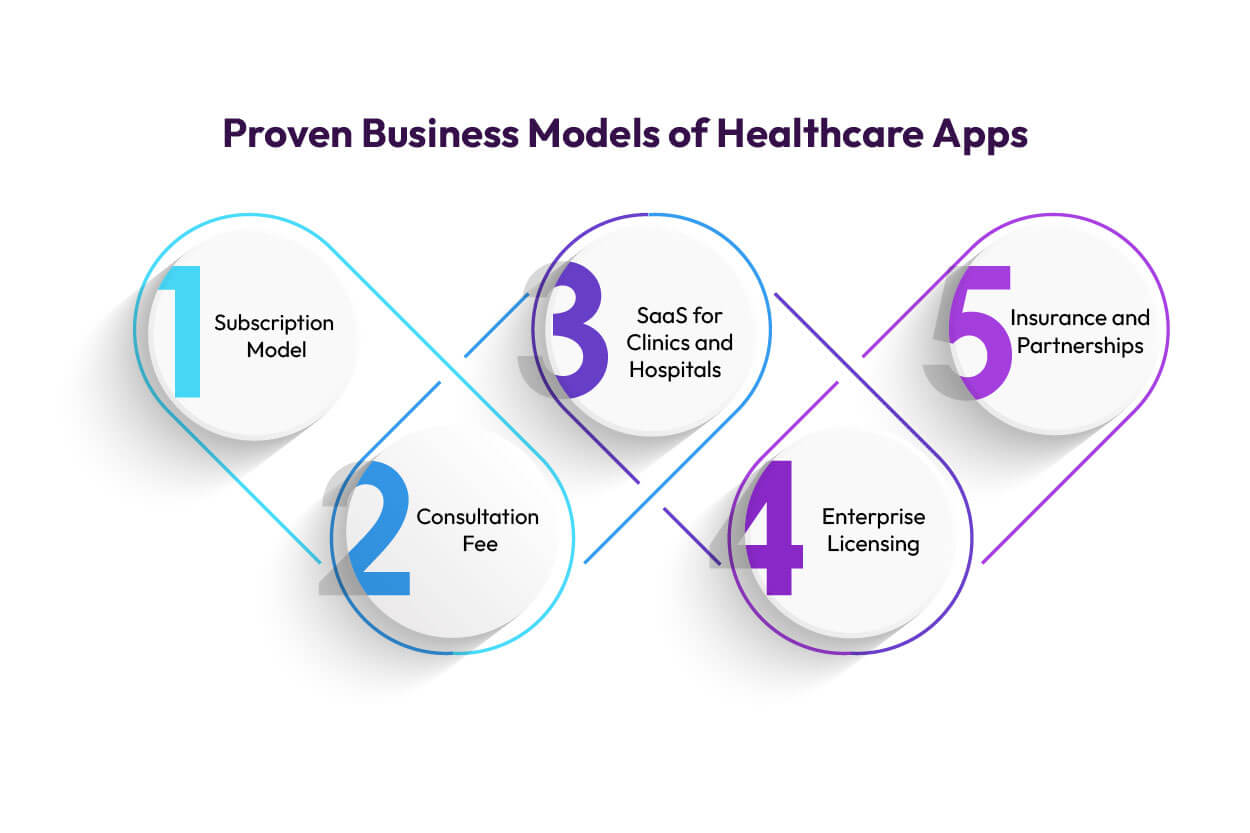
A common way for healthcare apps to bring in money is through subscriptions. Subscription brings the most amount of revenue to healthcare apps.
Users pay a monthly or yearly cost to get access to better services or extra features.
What you usually get with a subscription:
This way, businesses get a stable and predictable income, and it keeps users coming back.
It’s great for wellness apps, mental health platforms, systems for checking on patients remotely, and custom healthcare services where users use the app all the time.
Healthcare apps that help patients connect with doctors often make money by taking a cut of the consultation fees.
Each time a patient sets up an online visit or gets a telemedicine session, the app gets a percentage of what they pay.
The benefits of this include:
This is a good way for telemedicine platforms, apps for specialist visits, and healthcare services that give patients fast access to doctors to make money.
Software-as-a-Service (SaaS) is a strong way for healthcare apps to make money in the business world.
Clinics and hospitals pay to use the platform to handle their operations.
What SaaS features usually include:
The cost can change based on how many users there are, how many patient records there are, or what integrations are needed.
SaaS platforms create recurring money while building relationships with healthcare providers.
Big healthcare groups usually want to license the platform for their whole company.
Hospitals or healthcare networks buy a license to use the platform across different departments or locations.
What enterprise licensing includes:
This works well for platforms that focus on digital health records, telemedicine setups, or hospital management systems.
Working with insurance companies, drug companies, or wellness brands can create more ways to make money.
This can include telemedicine services that are paid for, sponsored wellness programs, or complete healthcare solutions.
These partnerships build trust with users while giving referral money, payments, or long-term business deals.
Lots of successful healthcare apps mix different ways to make money to get the most profit.
For example, a platform might have patient subscriptions, charge fees for consultations, and give SaaS solutions to healthcare providers.
Startups often start with one way to make money, like subscriptions or consultation fees, and then grow into enterprise solutions or partnerships as their platform gets bigger.
This lets healthcare apps grow their income while building trust in the healthcare world.
Techugo is known as a leading mobile app development company and has been building secure digital health solutions since 2015. And we, as a trusted partner, know that choosing the right development partner is critical for healthcare apps; they must meet strict regulations, protect patient data, and deliver a smooth user experience as well.
Techugo specializes in creating HIPAA-compliant healthcare applications, telemedicine platforms, and patient management systems. Our team has extensive experience integrating technologies such as EHR/EMR systems, AI-driven diagnostics, and remote patient monitoring tools.
Our developers work with modern technologies including Flutter, React Native, Swift, and Kotlin, along with cloud platforms like Amazon Web Services and Microsoft Azure to ensure reliable and scalable healthcare platforms.
The company focuses on building customized solutions tailored to each client’s needs.
Whether it is an MVP for a healthcare startup or a large digital platform for hospitals, Techugo designs applications that support operational efficiency and long-term growth.
In addition to development, Techugo offers end-to-end services including market research, compliance consulting, UI/UX design, testing, and post-launch support.
Continuous updates, cloud management, and performance monitoring help healthcare apps remain secure and competitive.
With strong technical expertise and deep healthcare domain knowledge, Techugo helps organizations transform digital health ideas into reliable mobile solutions that engage patients and scale with business growth.
Are you ready?
Connect with experienced developers to design, build, & launch a scalable healthcare solution. Partner with Techugo!

In 2026, developing an automobile app can cost anywhere from $20,000-$40,000 for a basic version to $300,000+ for a complex one using AI, depending on..


The price to build an AI app? It's a big deal for startups and corporations alike. Creating these apps isn't your typical mobile dev thing. You've ..



Write Us
sales@techugo.comOr fill this form