

 SA
SA  KW
KW  IE
IE AU
AU UAE
UAE UK
UK USA
USA  CA
CA DE
DE  QA
QA ZA
ZA  BH
BH NL
NL  MU
MU FR
FR 












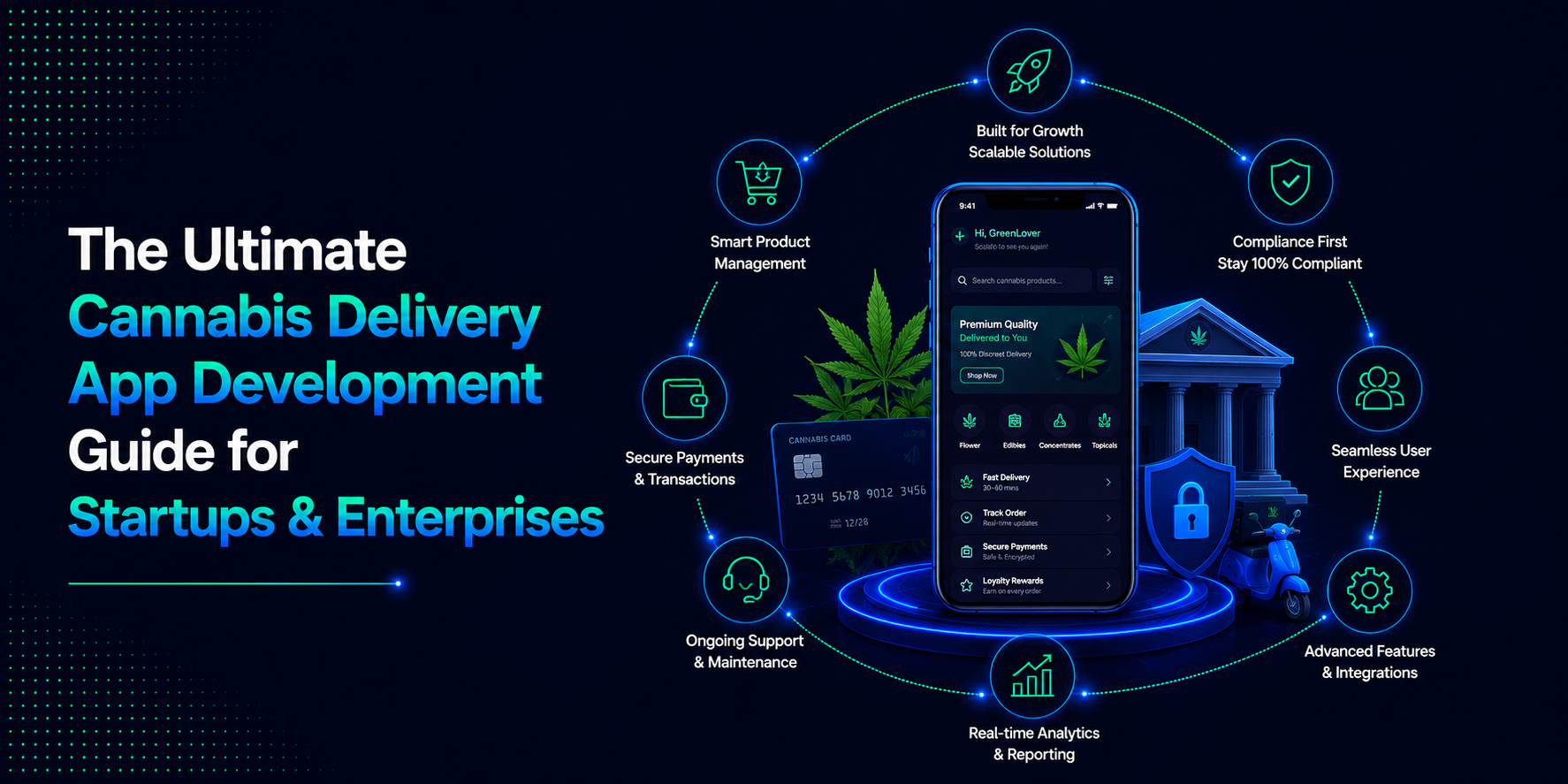


📌 Key Takeaways
- The cannabis delivery market is growing fast, making mobile apps a powerful tool for customer acquisition and retention.
- Cannabis delivery app development costs typically range from $20,000 to $250,000+, depending on the app’s complexity and feature set.
- Features like age verification, secure payments, and real-time tracking are critical for compliance and user trust.
- Regulatory compliance isn’t optional; it’s one of the biggest factors shaping cannabis app development.
A few years ago, delivery felt like a convenience. Now it’s just expected. From food to groceries to niche services, everything has moved toward instant access – and that shift has naturally opened space for cannabis delivery app development.
What’s interesting here isn’t just demand, but how the entire experience is being rebuilt. Users don’t want complexity; they want smooth, secure ordering that just works. That’s where modern platforms come in – combining real-time tracking, compliance systems, and clean user experiences into one flow.
At its core, when businesses set out to build a cannabis delivery app, it’s less about creating an app and more about building a system that can handle scale, trust, and regulation all at once.
In this guide, we’ll learn everything about cannabis app development – from key features and cost to what it takes to build a successful platform and more.
Why invest in cannabis delivery app development?
The demand for cannabis delivery app development is growing fast because users today expect everything to be quick, private, and completely hassle-free. Convenience isn’t a “nice to have” anymore – it’s just the baseline.
Businesses are adapting quickly to keep up with that shift. In fact, the U.S. cannabis market is now valued at around $40 billion+ in 2026, driven by expanding legalization and rising consumer demand (Source: Fortune Business Insights).
This is exactly where on demand cannabis app development comes in. It helps businesses build platforms that can handle real-time ordering, smoother delivery operations, and an overall experience that feels simple and reliable for users.
From a business point of view, it’s not just about launching an app. A well-built platform can actually open up multiple revenue streams – things like delivery fees, subscriptions, partnerships, and in-app services. That’s where a strong monetization strategy really matters, because it turns the app into a proper long-term business model, not just a product.
At the end of the day, investing in cannabis delivery app development is really about building something that can scale without breaking, handle real demand, and still feel smooth for users even as it grows. It’s less about “building an app” and more about building something that actually works in the real world.
Must-have features of a cannabis delivery app
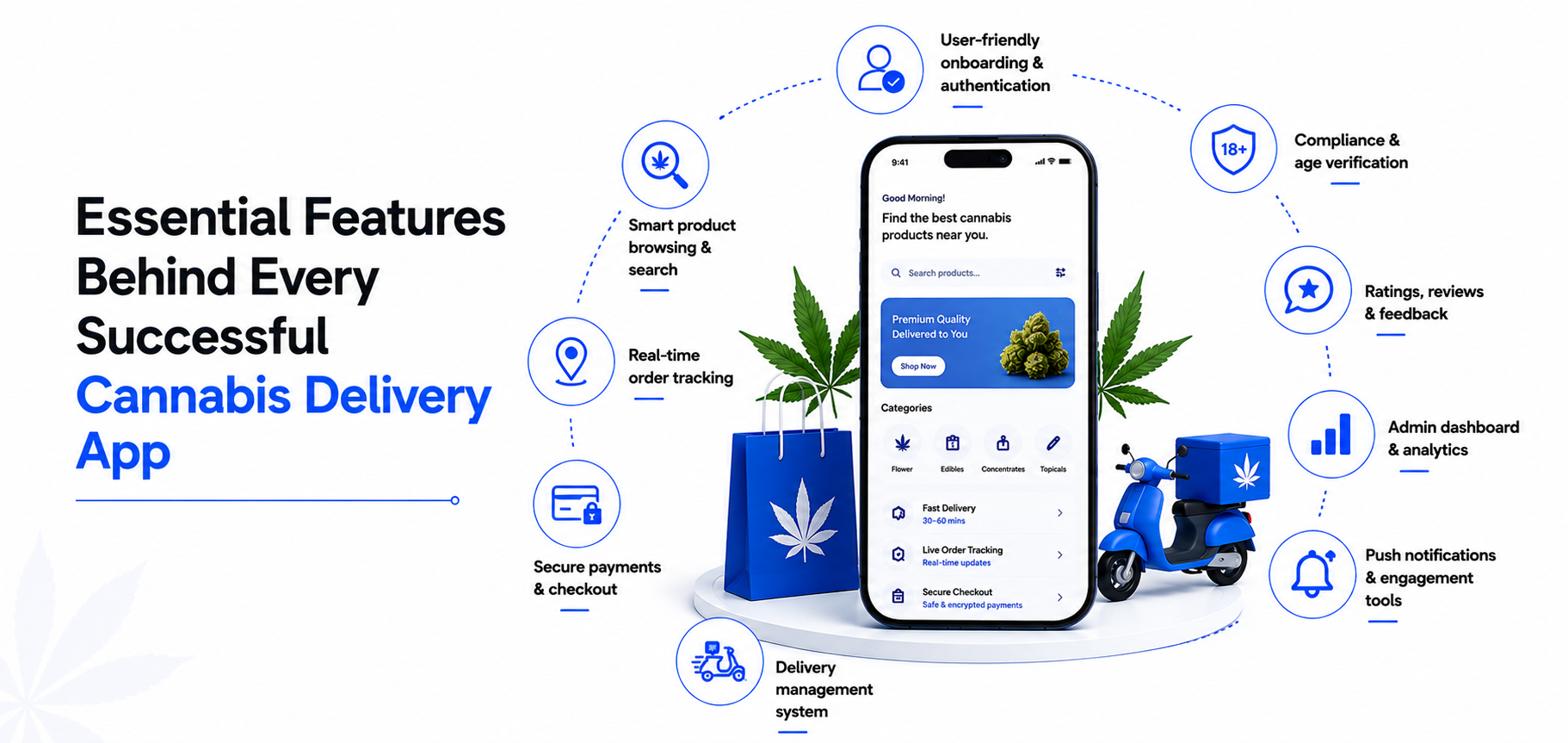
A well-built cannabis delivery app development project isn’t just about listing products and taking orders – it’s really about building a complete system that feels easy for users and still stays manageable for businesses behind the scenes. In modern cannabis app development, the features you choose basically decide how scalable, secure, and user-friendly the whole platform turns out.
Now that we’ve set the context, let’s break down the features that actually matter in such platforms.
1. User-friendly onboarding & authentication
First impressions matter. A simple signup process, paired with proper age verification and identity checks, helps keep things compliant while still making the experience feel smooth and quick for users.
2. Smart product browsing & search
A good cannabis ordering & delivery app development setup really focuses on discovery. With clean categories, filters, and smart search, users can find what they need without feeling lost or overwhelmed.
3. Real-time order tracking
Live tracking has basically become a standard now in cannabis mobile app development. Users want to see exactly where their order is, and businesses also need real-time visibility to manage deliveries properly.
4. Secure payments & checkout
Checkout needs to feel simple but secure. Encrypted payments, trusted gateways, and multiple payment options all work together to build confidence and reduce drop-offs.
5. Delivery management system
On the business side, this is where everything comes together. It handles order assignment, delivery agents, route planning, and real-time tracking (especially important in on demand cannabis app development setups).
6. Compliance & age verification
Since this is a regulated space, compliance isn’t optional. Strong verification systems make sure only eligible users can place orders, keeping the platform safe and legally sound.
7. Ratings, reviews & feedback
Feedback plays a big role in improving the overall experience. It helps businesses understand what’s working and what needs fixing: both on the product and delivery side.
8. Admin dashboard & analytics
A proper dashboard gives businesses full control – from managing inventory to tracking orders and understanding user behavior. It’s a must-have in any serious cannabis delivery app solution.
9. Push notifications & engagement tools
Order updates, offers, and reminders delivered through push notifications help keep users engaged without feeling intrusive. It’s a simple but powerful way to improve retention.
At the core, strong cannabis delivery mobile app development is really about balancing user convenience with backend control. When both work together smoothly, the product doesn’t just function – it scales properly and stays reliable long term.
AI-powered innovations in cannabis app development
AI is quickly changing how modern cannabis mobile app development works, making platforms smarter, faster, and more user-focused.
In today’s AI-powered cannabis apps, businesses are no longer just building basic delivery systems – they’re creating intelligent platforms that can learn, adapt, and improve user experience over time. This is becoming an important part of overall cannabis delivery app development, especially for businesses looking to scale efficiently.
Even in cross-platform app development, AI is playing a major role by ensuring consistent smart features across Android and iOS without compromising performance.
Key AI innovations
| AI Innovation | How It Works | Business Impact |
| Smart Product Recommendations | Uses user behavior and purchase patterns to suggest relevant products | Boosts conversions and improves user engagement |
| AI Chatbots | Handles customer queries instantly without human support | Reduces support cost and improves response time |
| Demand Forecasting | Predicts future orders based on user trends and history | Helps with inventory and delivery planning |
| Personalized Experience | Adapts app content and UI based on user preferences | Increases retention and app usage |
| Fraud & Compliance Detection | Identifies suspicious activity using AI models | Enhances platform safety and trust |
| Route Optimization | Calculates fastest delivery routes using real-time data | Reduces delivery time and operational cost |
At this point, AI is not something you add to cannabis app development – it’s already doing half the heavy lifting behind the scenes.
Types of cannabis delivery apps based on business models
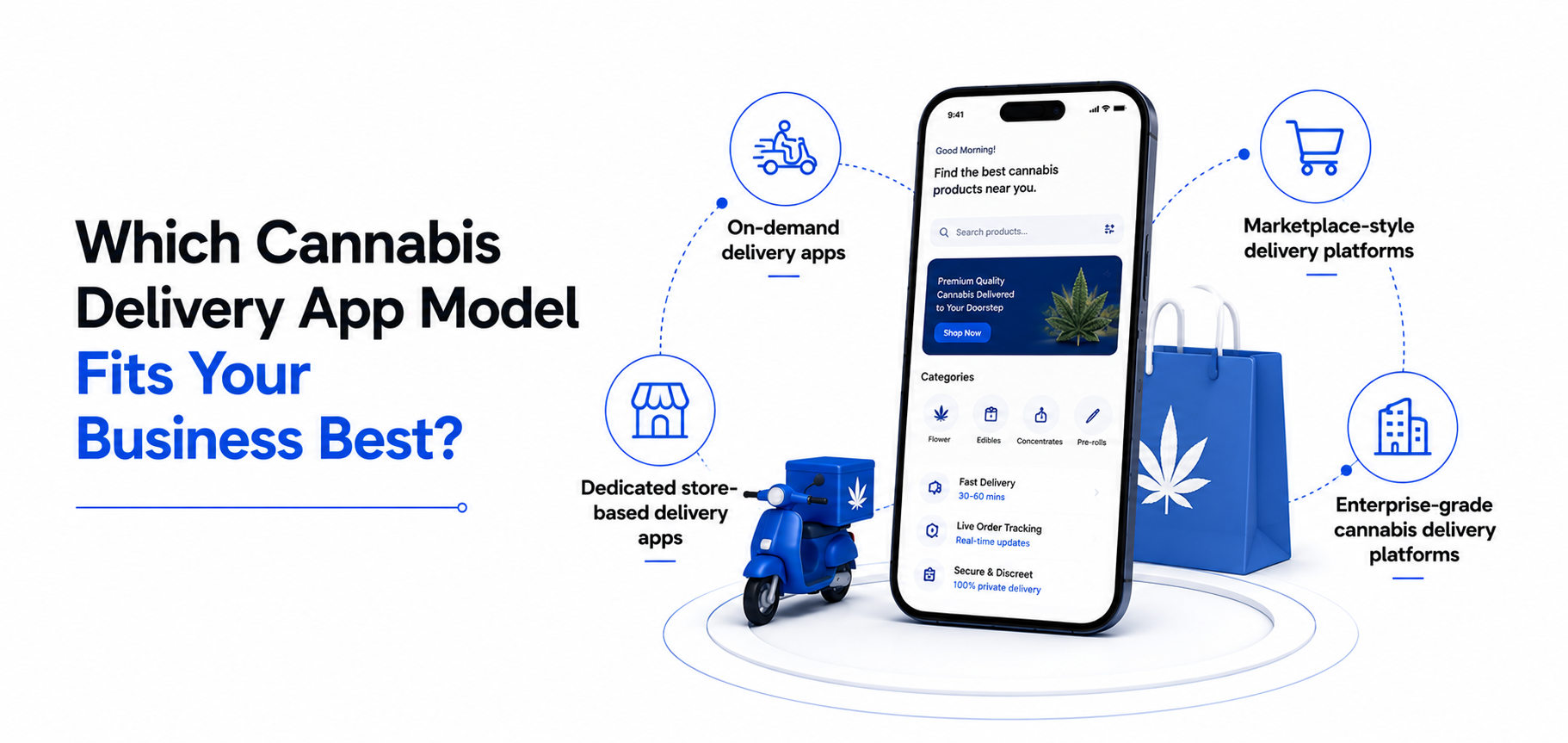
When we talk about cannabis delivery app development, it’s important to understand that not every platform is built in the same way. Different business models need different setups, and that’s exactly where cannabis ordering & delivery app development comes into the picture because the way an app is built really depends on how a business plans to operate and scale.
That said, not all platforms work the same way. So let’s look at the main types of cannabis delivery apps you’ll usually see in the market.
1. On-demand delivery apps
One of the most widely used models is on-demand app development, where users simply place an order and get it delivered in real time. The focus here is pretty straightforward – speed, convenience, and live tracking – which makes it a strong choice for businesses offering instant delivery services.
2. Marketplace-style delivery platforms
Here, the idea is to bring multiple vendors or dispensaries onto a single platform. A strong cannabis delivery app solution in this model basically acts like a bridge between users and different sellers, giving customers more choice and making discovery much easier.
3. Dedicated store-based delivery apps
Some businesses prefer to keep things more controlled. In this setup, a single brand handles everything – from inventory to delivery. This is commonly seen in cannabis delivery app development, where the goal is to build a direct-to-customer system with full control over operations and service quality.
4. Enterprise-grade cannabis delivery platforms
At a larger scale, things get more complex. Enterprises need systems that can handle high order volumes, multiple locations, strict compliance, and heavy workflows. These platforms are built with scalability and security in mind, making them ideal for large operators and growing multi-state businesses focused on long-term expansion.
How to build a cannabis delivery app: complete development process
1. Research & requirement gathering
The very first step in cannabis delivery app development is understanding the market, target users, and business model. Whether it’s on-demand delivery apps or scheduled delivery systems, this stage defines how the entire platform will function.
2. UI/UX design
Once the idea is clear, the focus shifts to designing an interface that feels simple and intuitive. The goal is to make the experience smooth so users can browse, order, and track without confusion.
3. App architecture & tech planning
At this stage, developers decide how the system will be built – backend structure, database, APIs, and scalability. Many businesses choose working with a cannabis delivery app development company here to ensure the architecture can handle long-term growth.
4. Development phase
This is where the actual product is built. Features like ordering, payments, delivery tracking, and user management are developed as part of cannabis delivery mobile app development, ensuring everything works together seamlessly.
5. Testing & quality assurance
Before launch, the app is tested for bugs, performance issues, and security gaps. This ensures the platform is stable and ready for real-world usage.
6. Deployment & launch
Once everything is tested, the app goes live. At this point, users can start using the platform, and the business officially enters the market.
7. Post-launch support & scaling
After launch, continuous updates, performance monitoring, and feature upgrades keep the system running smoothly and aligned with user needs.
Legal & compliance requirements for cannabis delivery apps
When it comes to cannabis delivery app development, compliance is one of those things you can’t really treat as an afterthought. It has to be baked into the system from day one because this is a heavily regulated space.
A lot of the structure here is actually similar to what you see in telemedicine app development, where user verification, privacy rules, and regulatory checks are deeply integrated into the platform. That same level of discipline is what keeps cannabis apps safe, reliable, and legally sound.
1. Age verification
Every platform needs proper age verification so only eligible users can access the app and place orders. It’s basic, but it’s also one of the most important parts of cannabis delivery app development.
2. Licensing requirements
Different rules apply across regions like the USA and Canada. And platforms need to stay aligned with them. This is where experience from a healthcare app development company often becomes relevant, since they already work with regulated systems and structured compliance flows.
3. Geofencing restrictions
Cannabis delivery doesn’t operate everywhere so geofencing is used to make sure services are only available in approved areas. It keeps the platform compliant while avoiding unnecessary legal risks.
4. Data security & privacy
Security is a big deal in this space. A lot of principles from HIPAA-compliant app development are applied here, especially around encryption, secure data storage, and controlled access to sensitive information.
5. Payment compliance
Even payments need extra attention since not every payment gateway supports this industry. A properly compliant setup ensures transactions are handled safely and within legal boundaries.
When everything is built the right way, cannabis delivery app development becomes a lot more stable and scalable, because the foundation already aligns with real-world regulations instead of trying to fix issues later.
Tech stack used in cannabis delivery app development
1. Frontend: React, Angular, or Flutter are used to make the app look clean and work smoothly on both web and mobile.
2. Backend: Node.js, Python, or Java handle everything behind the scenes like orders, data, and logic.
3. Cloud Infrastructure: AWS, Google Cloud, or Azure keep the app running fast and stable, even with heavy usage.
4. Payment Gateways: Secure payment systems are added so users can pay safely without issues.
5. GPS & Tracking: Google Maps API or similar tools help users track their orders in real time.
Cost of building a cannabis delivery app in 2026
The cost of cannabis delivery app development really depends on what you’re trying to build. A simple MVP will obviously cost a lot less than a full-featured marketplace with advanced features, integrations, and compliance systems.
If you work with a mobile app development company in USA, they usually break pricing down based on complexity, features, and scalability needs.
1. Basic app cost
If you’re just starting out, a basic cannabis delivery app is usually enough. It covers the essentials like user sign-up, product browsing, cart, and placing orders.
It’s basically your “get-to-market-fast” version.
👉 Estimated Cost: $20,000 – $50,000
👉 Best for testing the idea and launching an MVP
2. Mid-level app cost
This is where things start getting more serious. A mid-level app comes with better design, secure payments, real-time tracking, notifications, and a smoother overall experience.
Most growing businesses go for this stage when they’re ready to scale.
👉 Estimated Cost: $50,000 – $120,000
👉 Best for businesses expanding their delivery operations
3. Advanced marketplace cost
This is the full setup – a complete marketplace with multiple vendors, advanced admin control, analytics, compliance features, and smart recommendations.
It’s built for companies that want to operate at scale.
👉 Estimated Cost: $120,000 – $250,000+
👉 Best for enterprise-level cannabis delivery platforms
Here’s how the budget usually gets divided:
| Component | What it Covers | Estimated Cost (USD) |
| Design | UI/UX design, wireframes, branding, and overall app experience | $2,000 – $20,000 |
| Development | Frontend + backend development, core features, database, logic | $10,000 – $150,000 |
| Integrations | Payment gateways, maps, APIs, compliance tools, third-party services | $2,000 – $25,000 |
| Testing | QA testing, bug fixing, performance and security checks | $2,000 – $15,000 |
| Maintenance | Updates, security patches, server upkeep, ongoing improvements | $2,000 – $20,000+ per year |
Pro Tip: Start with a simple MVP first, validate your idea in the market, and then scale features step by step to save cost and reduce development risks in cannabis delivery app development.
Major cannabis delivery app development challenges to consider
1. Legal and compliance issues
One of the biggest challenges in cannabis delivery app development is dealing with strict and constantly changing regulations across different regions, making compliance a continuous requirement.
2. Age and identity verification
Ensuring only eligible users can access and purchase products requires strong age verification and secure identity validation systems.
3. Payment restrictions
Many mainstream payment gateways do not fully support cannabis-related transactions, so finding secure and compliant payment solutions becomes a challenge.
4. Security and data protection
Since the app handles sensitive user and transaction data, maintaining strong security standards is essential to prevent breaches and ensure trust.
5. Delivery and logistics management
Managing real-time tracking, inventory updates, and timely deliveries adds operational complexity, especially as the platform scales.
Why Techugo is the right choice for your cannabis delivery app
Building a successful cannabis delivery app is about much more than getting the technology right. You need an app that feels intuitive, performs flawlessly, scales as your business grows, and keeps up with industry regulations without compromising the user experience.
That’s where Techugo comes in.
As a trusted mobile app development company in USA, we’ve helped businesses turn ambitious ideas into high-performing digital products. Whether you’re planning to launch a simple MVP or a full-fledged cannabis marketplace, our team works closely with you to create a solution that fits your vision, business goals, and growth plans.
We don’t believe in one-size-fits-all development. Every business is different, which is why we focus on building customized solutions that deliver real value to both businesses and their customers.
Why businesses partner with Techugo?
- End-to-end app development services
- Custom solutions tailored to your business model
- Expertise in scalable and secure mobile applications
- User-centric UI/UX design approach
- Agile development and transparent communication
- Dedicated post-launch support and maintenance
- Proven experience delivering innovative solutions across industries
Want to turn your idea into the next big cannabis delivery platform? Speak with our experts!
FAQs
1. How much does cannabis delivery app development cost?
The cost of cannabis delivery app development typically ranges from $20,000 to $250,000+, depending on the app’s complexity, features, integrations, and compliance requirements.
2. How long does it take to build a cannabis delivery app?
A basic cannabis delivery app can take around 3–4 months to develop, while more advanced platforms with custom features and integrations may require 6–12 months or longer.
3. What features should a cannabis delivery app include?
Key features include user registration, product catalog, age verification, secure payments, order tracking, push notifications, inventory management, and an admin dashboard.
4. Why is age verification important in cannabis delivery apps?
Age verification helps ensure that only legally eligible users can access and purchase cannabis products, supporting compliance with local regulations.
5. How are AI-powered cannabis apps changing the cannabis industry?
AI-powered cannabis apps enhance the customer experience with personalized recommendations, smarter support, and data-driven insights, helping businesses enhance engagement and operate more efficiently.

Get in touch
We'd love to hear from you.