

 SA
SA
 KW
KW
 IE
IE AU
AU UAE
UAE UK
UK USA
USA
 CA
CA DE
DE
 QA
QA ZA
ZA
 BH
BH NL
NL
 MU
MU FR
FR
















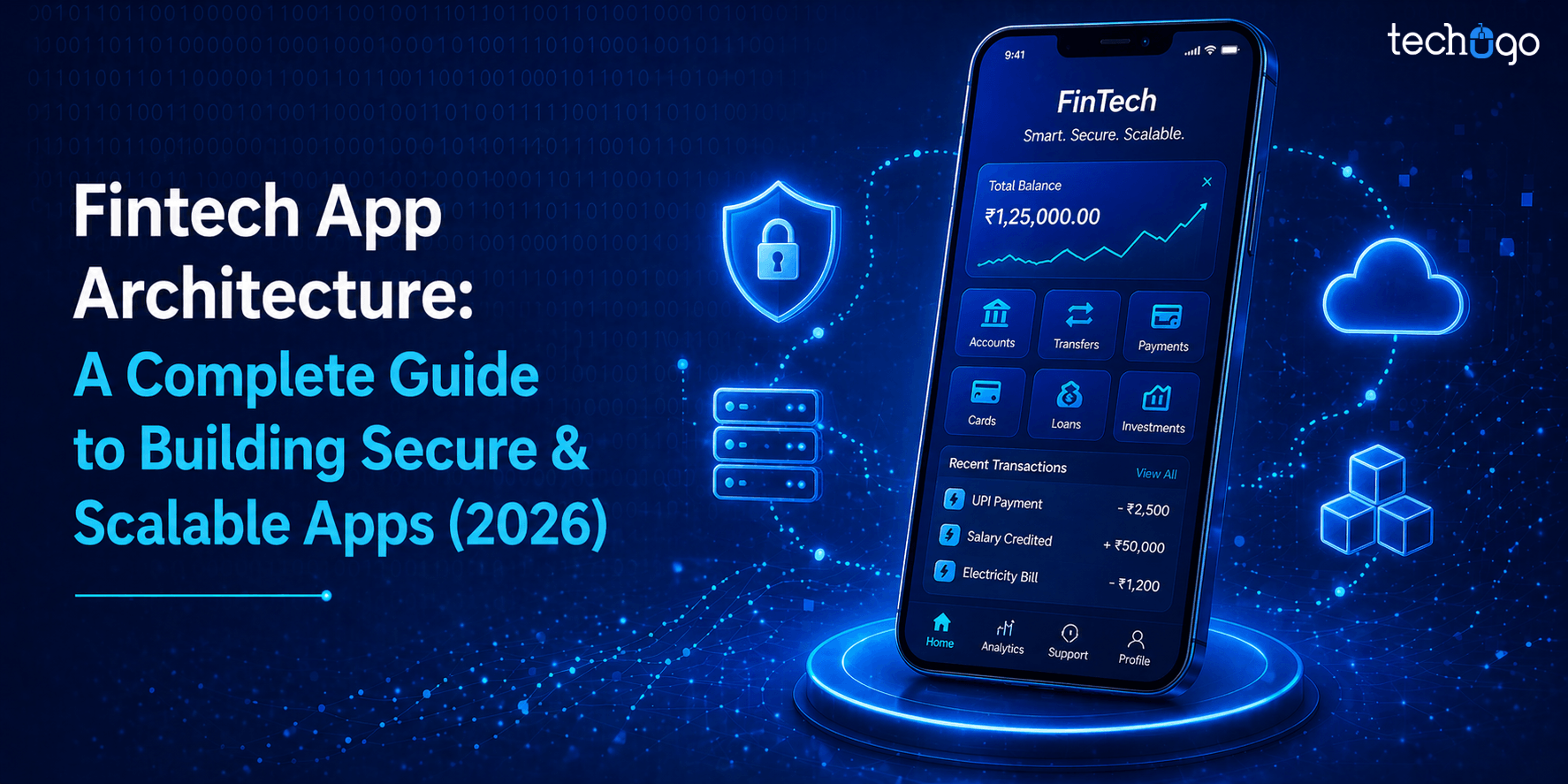


Until a few years ago, building a fintech app was mostly about the features and functionality, and whether the payments worked or not. It felt simple because if the transfers were going through and the users were able to log in, then it was considered enough. But now things are not the same and they have been changing fast. One small security gap can break the trust, and one sudden spike in users can slow everything down or even crash it. Therefore, the fintech app architecture is not something that you can ignore or delay.
At its core, the fintech application architecture is what connects everything, and it decides how the data flows, and how the system responds, and how secure it actually is.
Because when you are dealing with financial data, it is about performance but more about how safely the data is handled, and how reliably the system works when the users are active at the same time. So the architecture is not just a backend thing but the foundation of the entire experience.
And in 2026, the shift has been quite visible as businesses are moving toward the cloud-native fintech architecture and they are also adopting the API-first fintech architecture because it helps them stay flexible and connected.
At the same time, AI in fintech architecture is being used more often, so that fraud can be detected faster, and decisions can be improved. But even with all this, the need for scalable fintech applications and secure fintech app development is still at the center, because users expect everything to work instantly, and securely, without any delay.
So in this guide, you will understand how the components of fintech app architecture actually work, and how a proper scalable fintech architecture design is built.
We will also look into approaches like microservices architecture in fintech, and why they are being used more now, and how they help in building systems that are stable, and ready for growth.
Also Read – Cost To Develop a Fintech App Like CITI Mobile
What is Fintech App Architecture?
If you look at it simply, the fintech app architecture is the way a financial application is structured, and how all its parts are connected so that everything works together. It includes the frontend, the backend, the databases, the APIs and how they communicate with each other. But it is not just about connecting things randomly, it is about designing them in a way that they are secure, fast, and able to handle financial operations without failure.
Now, this is where the fintech application architecture starts to feel different from a regular app setup. Because in a normal app, delays can be tolerated, or small bugs can be fixed later, but in fintech, even a second of delay, or a minor issue, can affect transactions, and therefore, user trust. So the architecture here is built with more precision, and more control, and honestly, more pressure.
It also defines how your system behaves when things scale. For example, when thousands of users are making payments at the same time, or when real-time data is being processed continuously, the fintech system architecture design ensures that the app does not break, or slow down unexpectedly. And because financial apps deal with sensitive data, the focus on building a secure architecture for financial applications becomes even more critical.
You will also notice that the fintech app backend architecture plays a huge role here, because that is where most of the logic, processing, and security layers exist. The backend handles transactions, verifies users, connects with banking systems, and makes sure everything is accurate and consistent.
So, it is not just a technical blueprint, or a diagram that sits in documentation. It is the core of how your app performs, how it scales, and how safe it feels to the user because in fintech, all three are connected, and they always have been.
Key Requirements of a Fintech App Architecture
1. Security: Strong protection is needed because financial data is sensitive
2. Scalability: The system should handle growing users and transactions
3. Performance: Fast processing, especially for real-time operations
4. Reliability: Minimal downtime, consistent experience
5. Compliance: Must follow regulations for financial systems
Types of Fintech App Architecture
When you design a fintech app architecture, the structure you choose matters a lot because it affects how the app scales, and how secure and flexible it can be over time.
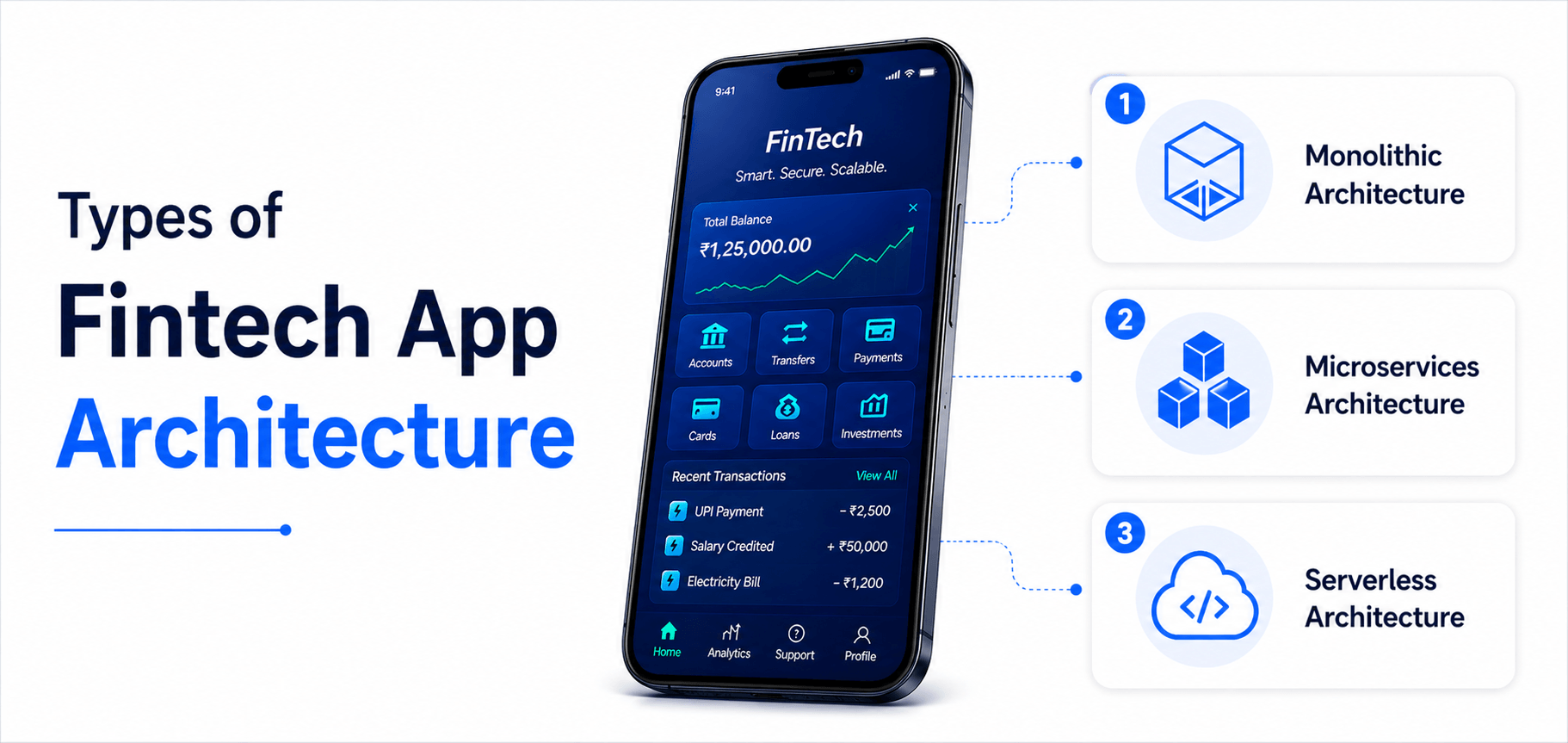
1. Monolithic Architecture
This is the traditional approach, where everything is built as a single system. It is simple to start with, and easier to manage in the early stage, but as the app grows, it becomes harder to scale and update without affecting the whole system.
2. Microservices Architecture
In microservices architecture in fintech, the app is divided into smaller services, and each service handles a specific function. This makes the system more flexible, and easier to scale, because you can update or expand one part without impacting others. It is widely used for building scalable fintech applications.
3. Serverless Architecture
This is a modern approach, where you don’t manage servers directly, but rely on cloud services. It helps reduce infrastructure management, and supports cloud-native fintech architecture, but it may require careful handling for complex financial operations.
So, the right choice depends on your app’s size, complexity, and long-term goals, because each architecture has its own trade-offs.
| Architecture Type | Structure | Scalability | Flexibility | Limitation |
| Monolithic | Single unified system | Limited, becomes hard over time | Low, changes affect entire app | Difficult to scale and maintain |
| Microservices | Multiple independent services | High, scales per service | High, easy to update components | Needs strong management & DevOps |
| Serverless | Cloud-managed functions | High, auto-scaling | Medium to high | Less control, complex for heavy logic |
Core Components of Fintech App Architecture
When you break down a fintech app architecture, it is not just one system, but a combination of multiple layers working together, and each layer has a specific role so that the app runs smoothly, and securely.
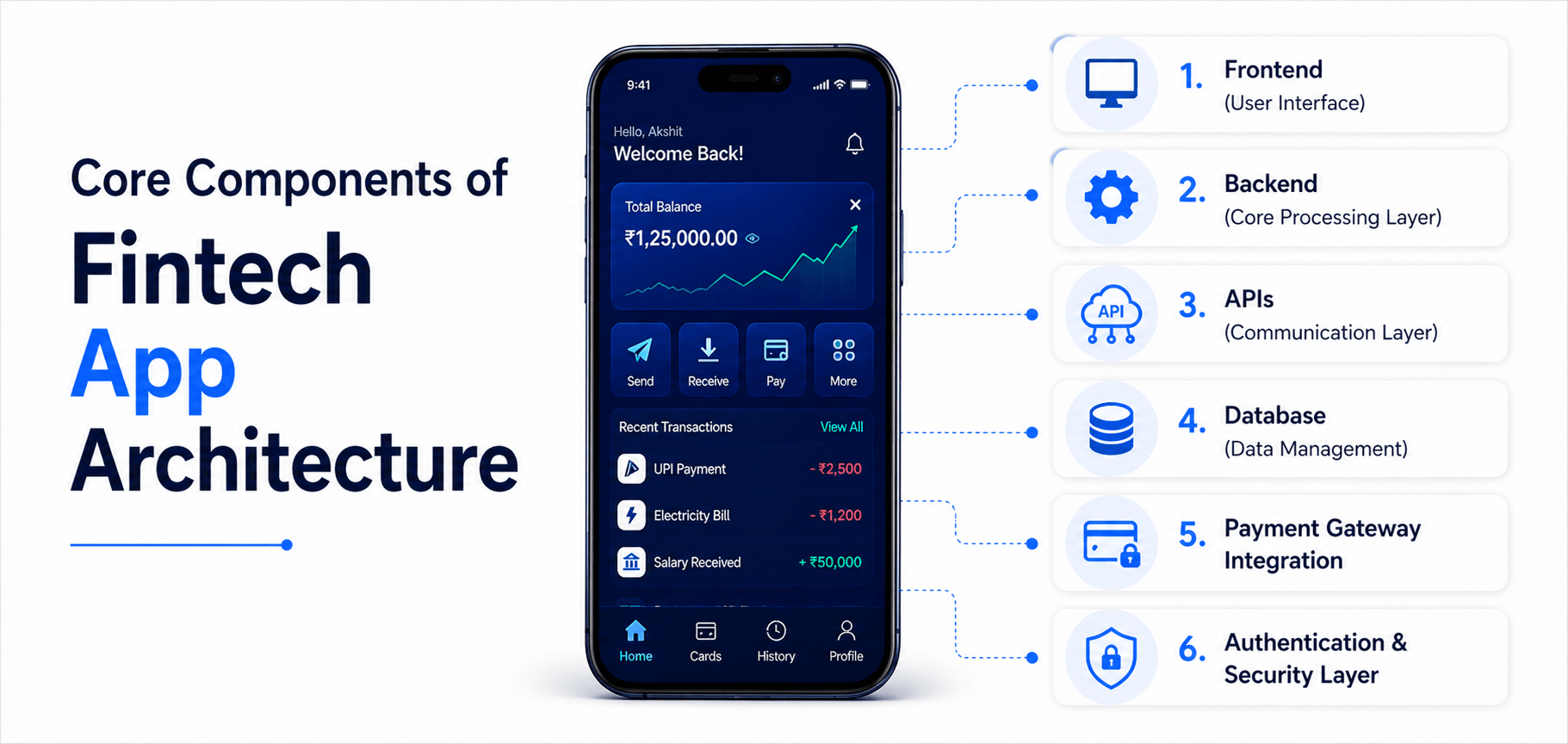
1. Frontend (User Interface)
This is what users interact with, whether it is a mobile app or a web platform. It handles user actions, displays data, and connects with the backend through APIs. In cases like a mobile banking app architecture, the frontend needs to be fast, clean, and responsive.
2. Backend (Core Processing Layer)
The fintech app backend architecture is where most of the logic exists. It processes transactions, manages users, applies business rules, and ensures everything works correctly behind the scenes.
3. APIs (Communication Layer)
APIs connect the frontend and backend, and also help integrate third-party services like payment gateways or banking systems. This is why API-first fintech architecture is widely used, because it keeps the system flexible and easy to scale.
4. Database (Data Management)
This stores user data, transaction records, and financial details. It must be designed carefully so that data is consistent, secure, and quickly accessible when needed.
5. Payment Gateway Integration
This component enables secure transactions between users and financial institutions. It ensures that payments are processed smoothly, and confirmations are handled in real time.
6. Authentication & Security Layer
This includes login systems, multi-factor authentication, KYC verification, and encryption. It supports a secure architecture for financial applications, making sure that user data and transactions are protected.
So, all these components are connected, and they depend on each other, because if one layer fails, the whole system can be affected. That’s why a well-planned fintech system architecture design always focuses on balancing performance, security, and scalability across every component.
How Security Architecture Works in Fintech Apps
In a fintech app architecture, security is not just a layer, it is built into every part of the system, because financial data is sensitive, and even a small gap can lead to serious risks. So the focus is always on creating a secure architecture for financial applications that protects users, transactions, and data at every step.
1. Data Encryption
All data is encrypted, both while it is being transferred and when it is stored. This ensures that even if data is intercepted, it cannot be read or misused.
2. Authentication & Access Control
Strong login systems are used, including multi-factor authentication (MFA), biometrics, and role-based access. This helps ensure that only authorized users can access the system.
3. Secure APIs
APIs are secured using tokens, encryption, and strict validation, because they connect multiple services and can become entry points if not protected properly. This is critical in API-first fintech architecture.
4. Fraud Detection Systems
Modern systems use AI in fintech architecture to monitor transactions in real time, and detect unusual patterns so that fraud can be prevented before it happens.
5. Compliance & Regulations
Fintech apps must follow standards like PCI DSS and GDPR, because they handle payments and personal data. Compliance is not optional, it is required to operate safely.
6. Tokenization
Sensitive data like card details is replaced with secure tokens, so that actual information is never exposed during transactions.
According to a report by IBM, the average cost of a data breach in the financial sector was over $5.9 million, which shows how critical security has become for fintech platforms.
So, in the end, secure fintech app development is not just about adding protection later, but about designing the system in a way where security is present at every level, and continues to evolve as threats change.
How Fintech Apps Handle Scalability & Performance
In a fintech app architecture, scalability and performance are not optional, because users expect transactions to happen instantly, and systems to work without delays even during peak traffic. So the focus is on building scalable fintech applications that can grow and still perform consistently.
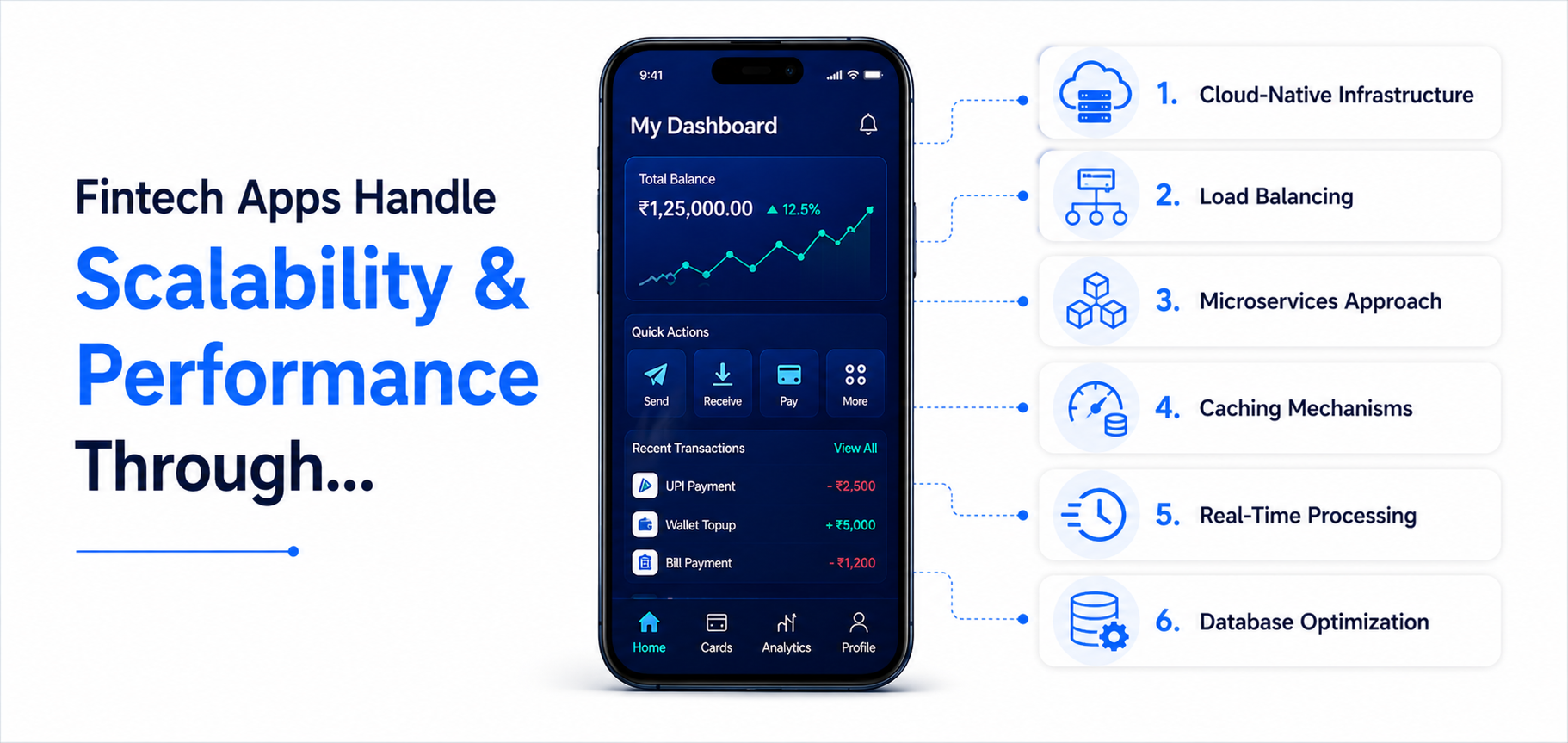
1. Cloud-Native Infrastructure
Using cloud-native fintech architecture allows apps to scale resources up or down based on demand. It helps handle sudden traffic spikes, without affecting performance.
2. Load Balancing
Traffic is distributed across multiple servers, so that no single system gets overloaded, and the app continues to run smoothly.
3. Microservices Approach
With microservices architecture in fintech, different services can scale independently. So if payments are increasing, only that service scales, not the entire system.
4. Caching Mechanisms
Frequently accessed data is stored temporarily, so that the system does not need to process the same request again and again, which improves speed.
5. Real-Time Processing
Fintech apps rely on fast data processing, especially for payments and transactions. Systems are designed to process data instantly, with minimal latency.
6. Database Optimization
Efficient database design ensures quick data retrieval and smooth handling of large transaction volumes, which is critical for performance.
According to Statista, global digital payments are expected to exceed $14 trillion by 2027, which clearly shows why building a scalable fintech architecture design is important from the beginning.
So, it is not just about handling more users, but about maintaining speed, stability, and user experience, even as the system grows. This is also where working with an experienced mobile app development company helps, because scalability is not just planned, it is engineered into the system from the beginning.
Role of AI & Modern Technologies in Fintech Architecture (2026)
The fintech app architecture in 2026 is not just about the structure anymore, and it is also not only about how the systems are connected, but it has been evolving with AI and modern technologies, and therefore the way fintech apps are built is changing a lot. Because now, it is not enough that the system works; it also needs to think and respond, and improve continuously.
1. AI for Fraud Detection & Risk Management
AI has become a core part of AI in fintech architecture, because it can analyze large volumes of transactions, and it does that in real time, so that unusual patterns are detected early. It helps reduce risks, and also improves accuracy, which was earlier difficult with manual systems.
2. Intelligent Decision-Making Systems
Now, AI is not just supporting the system, but it is also making decisions, and that includes loan approvals, credit scoring, and risk evaluation. Because it uses multiple data points, the process becomes faster, and more reliable, and less dependent on manual effort.
3. Cloud-Native & Serverless Infrastructure
The shift toward cloud-native fintech architecture has been growing, because it allows systems to scale automatically, and resources are adjusted based on demand. So even when the traffic increases, the performance is maintained, and the system does not slow down.
4. API-First Ecosystem
With API-first fintech architecture, different systems can connect easily, and that includes banks, payment gateways, and third-party services. It makes the app more flexible, and easier to update, because changes can be made without affecting the entire system.
5. Automation & Compliance
AI is also being used for compliance, and it helps automate processes like KYC and AML checks, so that errors are reduced, and speed is improved. Therefore, companies are able to manage regulations better, and with less manual work.
6. Personalization & User Experience
Fintech apps are using AI to understand user behavior, and based on that, they provide personalized insights and recommendations. This improves the experience, and also builds trust, because users feel the app understands their needs.
So overall, AI is not just an add-on, but it has become a part of the architecture itself, and as fintech keeps growing, this combination of AI, cloud, and scalable systems will continue to shape how modern applications are built.
Common Mistakes in Fintech App Architecture That Cost Millions
When building a fintech app architecture, mistakes are not just technical issues, but they can lead to financial losses, and broken user trust, and sometimes even compliance penalties. And the thing is, most of these mistakes are not obvious in the beginning, but they show up later, when the system starts to scale.
-
Ignoring Security from the Start
Many teams focus on features first, and security later, but that approach does not work in fintech, because without a secure architecture for financial applications, even a small vulnerability can lead to data breaches, and heavy losses.
-
Choosing the Wrong Architecture
Starting with a simple setup may feel easy, but if it is not aligned with growth, it creates problems later. Not using approaches like microservices architecture in fintech when needed can limit scalability, and make updates difficult.
-
Poor Backend Planning
If the fintech app backend architecture is not designed properly, it leads to slow processing, failed transactions, and system crashes, especially during high traffic.
-
Not Planning for Scalability
Some apps are built for current users, but not for future growth, and therefore they struggle when traffic increases. Without proper scalable fintech architecture design, performance drops, and user experience suffers.
-
Weak API Security
APIs connect multiple systems, but if they are not secured properly in an API-first fintech architecture, they become easy entry points for attacks.
-
Ignoring Compliance Requirements
Skipping regulations or delaying compliance can lead to legal issues, and financial penalties, because fintech apps must follow strict standards from the beginning.
-
Overcomplicating the Architecture
Sometimes, teams add too many technologies, and unnecessary complexity, which makes the system hard to manage, and increases cost without real benefits.
So, these mistakes may seem small at first, but they have been responsible for major failures, because in fintech, architecture decisions are directly linked to cost, performance, and trust.
Cost to Build a Fintech App Architecture
The cost of building a fintech app architecture depends on the complexity, and the kind of system you are planning, because not all fintech apps are built the same. A simple payment app will cost less, but a platform with lending, analytics, and real-time processing will require a more advanced fintech application architecture, and therefore a higher budget.
The choice of architecture also matters, because while basic setups are cheaper at the start, modern approaches like microservices architecture in fintech or cloud-native fintech architecture may cost more initially, but they support long-term growth. At the same time, building a secure architecture for financial applications adds to the cost, since security, compliance, and data protection cannot be skipped.
Your team plays a role too, because whether you hire fintech app developers or work with a banking app development company, the expertise and approach will affect both cost and quality. And if you are planning for scalable fintech applications from the beginning, it may increase the upfront investment, but it helps avoid expensive changes later.
Also Read – Top 10 Next Gen Banking App Features Every Modern Bank Needs
Estimated Cost Breakdown
| App Type / Architecture Level | Estimated Cost Range |
| Basic Fintech App | $20,000 – $50,000 |
| Mid-Level Fintech App | $50,000 – $120,000 |
| Advanced / Scalable System | $120,000+ |
So, the cost is not just about building the app, but about how well you plan for security, scalability, and future growth, because that is what defines the real value of your fintech system.
How to Build a Fintech App Architecture (Step-by-Step)
Building a fintech app architecture is not just about the tools, and it is also not only about the development, but it is about how you plan everything from the start, because the system needs to be secure, and scalable, and ready for real users. So, if you rush into it, things may work at first, but they can break later, and therefore a step-by-step approach becomes important.
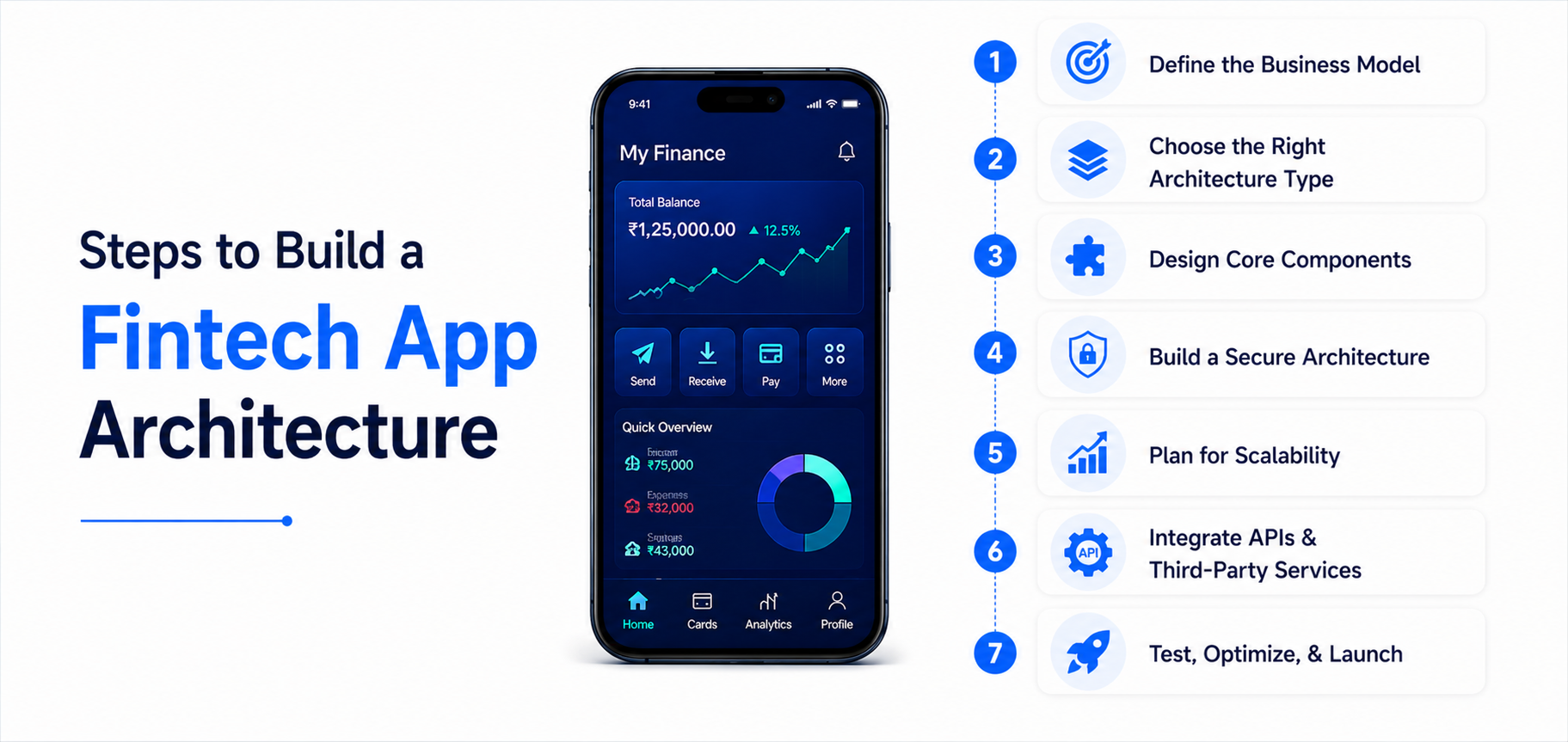
1. Define the Business Model
You need to be clear about what you are building, and why, because whether it is payments, lending, or trading, it will shape the entire fintech application architecture, and how complex it is going to be.
2. Choose the Right Architecture Type
Then you decide the structure, and it could be simple, or something more advanced like microservices architecture in fintech, because that will affect how the system grows, and how easily you can scale it later.
3. Design Core Components
After that, you plan the components of fintech app architecture, and that includes the frontend, the backend, the APIs, and the database, so that everything connects properly, and works without issues.
4. Build a Secure Architecture
Security has to be included from the beginning, and not later, because a secure architecture for financial applications requires encryption, authentication, and compliance, and if it is missed early, it becomes difficult to fix.
5. Plan for Scalability
You also need to think about growth, because users will increase, and transactions will grow, so using cloud-native fintech architecture helps the system adjust and scale when needed.
6. Integrate APIs & Third-Party Services
With API-first fintech architecture, you can connect the app with banking systems, and payment gateways, and other services, so that it stays flexible and easier to expand when required.
7. Test, Optimize, & Launch
At the end, everything needs to be tested and optimized because even small issues can create bigger problems in fintech apps, so you make sure the system is stable and ready before it goes live.
So overall, it is not just a technical process, but a planned flow, where each step connects to the next, and helps you build a system that works properly, and continues to perform as it grows.
How Techugo Can Help
Building a fintech app architecture is not just about development, and it is also not only about choosing the right tech, but it is about getting the balance right between security, scalability, and performance also. And that is where working with the right team makes a difference.
As a leading fintech app development company, Techugo has been helping businesses design and build secure, and scalable fintech solutions, tailored to real-world needs. From planning the fintech application architecture to implementing secure fintech app development practices, the focus is always on creating systems that are reliable and future-ready.
Whether you are starting from scratch or upgrading an existing platform, you can work simply hire fintech app developers who understand the complexity of financial systems, and can build solutions that scale and perform without compromise.
FAQs
Q. What is fintech app architecture and why is it important?
Fintech app architecture is the way a financial application is structured, and how its components like frontend, backend, APIs, and databases work together. It is important because fintech apps deal with sensitive data and real-time transactions, so the architecture ensures the system is secure, scalable, and reliable, and does not fail under pressure.
Q. Which architecture is best for fintech applications – monolithic or microservices?
It depends on the app’s size and goals, but in most cases, microservices architecture in fintech is preferred because it allows better scalability and flexibility. Monolithic works for smaller apps, but as the system grows, microservices make it easier to manage, update, and scale different parts without affecting the whole system.
Q. How much does it cost to build a fintech app architecture?
The cost of building a fintech app architecture depends on complexity, features, and security requirements. A basic setup may cost around $20,000–$50,000, while mid-level systems range from $50,000–$120,000, and advanced, scalable architectures can go beyond $120,000, depending on integrations and infrastructure.

Get in touch
We'd love to hear from you.