

 SA
SA  KW
KW  IE
IE AU
AU UAE
UAE UK
UK USA
USA  CA
CA DE
DE  QA
QA ZA
ZA  BH
BH NL
NL  MU
MU FR
FR [ LET’S TALK AI ]
X
Discover AI-
Powered Solutions
Get ready to explore cutting-edge AI technologies that can transform your workflow!



Get ready to explore cutting-edge AI technologies that can transform your workflow!






Every day, new research takes place in the technology sector, and a variety of things happen around the world. Indeed, advancements are prominent. However, the tales of artificial intelligence are not just fascinating but also breathtaking. Who could ever think that the speaking bot of 90s sci-fi movies would become a part of our lives?
There was a time when communication between humans and machinery used to seem fictional, but owing to NLP- a branch of AI- it is possible. Well! There are thousands of tales to tell about AI, though I would love to talk about the most admirable story. “AI in mental health.”
At first glance, the idea of AI aiding mental health might sound far-fetched, nearly absurd. But today, it’s not just a dream; it’s a groundbreaking truth.
Mental health is one of our time’s most critical yet often under-discussed issues. According to the latest World Health Organization data, over one billion people worldwide are living with mental health conditions.
This staggering figure emphasizes the global nature of the crisis, which is only amplified by persistent challenges such as societal prejudice, the high cost of treatment, and a significant lack of skilled mental health experts.
Amid these challenges, artificial intelligence is appearing as a beacon of hope. It’s reshaping how we see mental healthcare, making it more accessible, efficient, and personalized than ever before. What was once the domain of science fiction is now a lifeline for millions, demonstrating that AI isn’t just a tool but a transformative force for good.
Curious to see how AI aiding in mental health is turning possibilities into breakthroughs? Let’s dive in!
Also Read: Generative AI in Healthcare: Top Applications and Use Cases
Artificial intelligence in mental health is aiding in treating patients. Before peaking deeper into this concept, take a short glimpse of mental health conditions around the world.
Today, a lot of people are suffering from mental health problems such as depression, numerous sclerosis, schizophrenia, and more. These are the states whose detection is complicated, as these are not like fractures and cuts on the skin that are either observable or diagnosable by machines. These are hidden inside the broad system of the human brain, and finding faults in the protocols of the brain system is very hard for machines.
The signs are not nerve cracks or skull fractures that the machine can detect. Problems such as depression are severe in both men and women and affect various aspects of the body, especially in women. For years, experts and innovators have been striving to leverage artificial intelligence to offer aid in multiple problems. Indeed, they have grown successful in their endeavor. This technology is being utilized in numerous sectors, including finance and banking, retail, technology, education, and more, with the support of a healthcare app development company.
Indeed, you would be wondering what is so remarkable about this technology.
Also Read : Revolutionizing Tourism: The Impact of Artificial Intelligence App Development
Well! Its name is synonymous with its work. It clearly defines that it is all about creating human-like intelligence. But if you look into its facts, it is a branch of computer science dedicated to creating human-like intelligence in computer systems. It is hard to say when this technology took birth. There is no doubt that it accumulates unmatched potential, which makes it the center of attraction among both innovators and developers.
This technology is a huge chunk of dissimilar concepts, including sub-technologies. AI comprises three domains: cognitive insights, automation, and engagement. These domains aim to fulfill different purposes and offer different AI-based applications. Along with these, AI has various components. These AI technologies, with different capabilities, allow app developers to create unique concepts and applications.
These technologies include machine learning, deep learning, natural language processing, robotic process automation, probabilistic inference, semantic computing, and more. They aid various industries in solving problems and offering better user experiences.
Similarly, artificial intelligence is being utilized in the healthcare industry. However, the way it is being used for mental health is groundbreaking.
Now that we’ve explored AI’s incredible potential let’s examine how it’s reshaping the mental health landscape.
Also Read : Exploration Benefits and Use Cases of HL7 EMR Integration for Healthcare Software
The uses of artificial intelligence in mental health are extensive, presenting transformative solutions for diagnosis, therapy, and accessibility. AI-driven tools are reshaping mental health care by delivering personalized support, allowing early intervention, and improving therapy outcomes. Here’s a closer look at how AI is unlocking considerable opportunities in the mental health sector.
AI systems analyze large quantities of data, including data from wearable devices, social media, and check-ins on patients’ electronic health records, for signs of developing mental health problems. Just as it helps make predictions of conditions such as anxiety, depression, or schizophrenia, it can help identify certain patterns and anomalies.
This is very effective because apart from preventing symptoms of mental health challenges from worsening, it also decreases health costs. After all, early proper intercession is cheaper than when the illness has advanced.
AI-powered wearables track sleep cycles and provide detailed health insights into sleep quality, identifying disorders and irregularities. Since poor sleep is often linked to mental health challenges, these insights help users and healthcare professionals address related concerns effectively. Continuous sleep data tracking enables personalized advice and treatment adjustments, fostering a deeper understanding of the connection between sleep patterns and mental health.
Also Read : The Best App to Track Newborn Development: Transforming the Baby Tracking Landscape
AI-enabled wearables are now capable of detecting acute mental health episodes like anxiety attacks and sending real-time alerts to emergency contacts or healthcare providers. With the integration of location tracking and health data sharing, these wearables enable quick and efficient responses, potentially saving lives during critical moments. This emphasizes the growing role of wearable app development in enhancing mental health management and emergency support.
AI in mental health tools monitors physical activities and analyzes their impact on mood. Users can adopt lifestyle changes to enhance emotional well-being by identifying triggers and patterns.
For instance, these tools may highlight how regular exercise positively influences mood, encouraging healthier habits.
AI processes large volumes of data to craft personalized treatment plans tailored to a patient’s history, genetics, daily habits, and medical background.
In mHealth, it eliminates guesswork during diagnosis, optimizes treatments, and provides real-time adjustments, offering a dynamic approach to mental health care.
AI platforms provide anonymous support and educational resources, helping to break down societal stigma around mental health.
These tools provide an environment for people to get support without being stigmatized while empowering and informing them.
AI tools track pain patterns and offer strategies for coping with chronic pain, integrating mental and physical health support.
By combining pain management with mental health care, these tools improve patients’ quality of life through a holistic approach.
AI-driven applications aid addiction management by monitoring behavior patterns, identifying triggers, and providing continuous support.
These tools encourage sobriety through tailored strategies, motivational messages, and reminders, reducing the likelihood of relapse.
AI identifies stress indicators, including daily and nightly rest periods and inactivity, and anticipates burnout. It provides users with their focused stress tips so that they can balance themselves.
Such a proactive approach is most helpful for people who work in vocations that have higher levels of stress than the average and affect mental well-being and efficiency.
Mobile apps designed to deliver cognitive behavioral therapy (CBT) based on artificial intelligence help people afford professional help.
As such, the tools deliver self-help interventions that target people’s anxiety and depression levels and adjust the support as patients advance.
AI applications guarantee that patients take their medications and oversee prescription drug effectiveness with patient data analysis at first glance.
While these tools help with reminders, side effects, and even potential drug interactions, they also allow modem treatments to be adjusted by a health care provider.
AI-integrated telepsychiatry tools streamline remote consultations, offering patients consistent care regardless of location. These tools enable timely interventions and improved treatment accuracy by analyzing real-time data and patient history. This marks a new era in mental health care, where technology enhances accessibility and effectiveness.
AI expands mental health research by identifying massive datasets for experimentation in observing mental processes and potential treatment methods. It outlines the underlying causes of mental illnesses and supports trials, which help advance how treatment is provided.
Thus, the impact of AI on mental health care has plenty of potential to create better, more cost-effective, and more client-tailored support. The role of technology in mental health will continue to increase as technology evolves, bringing hope to millions of people across the globe.
Also Read : The Ultimate Guide to Hospital Inventory Management Software Development
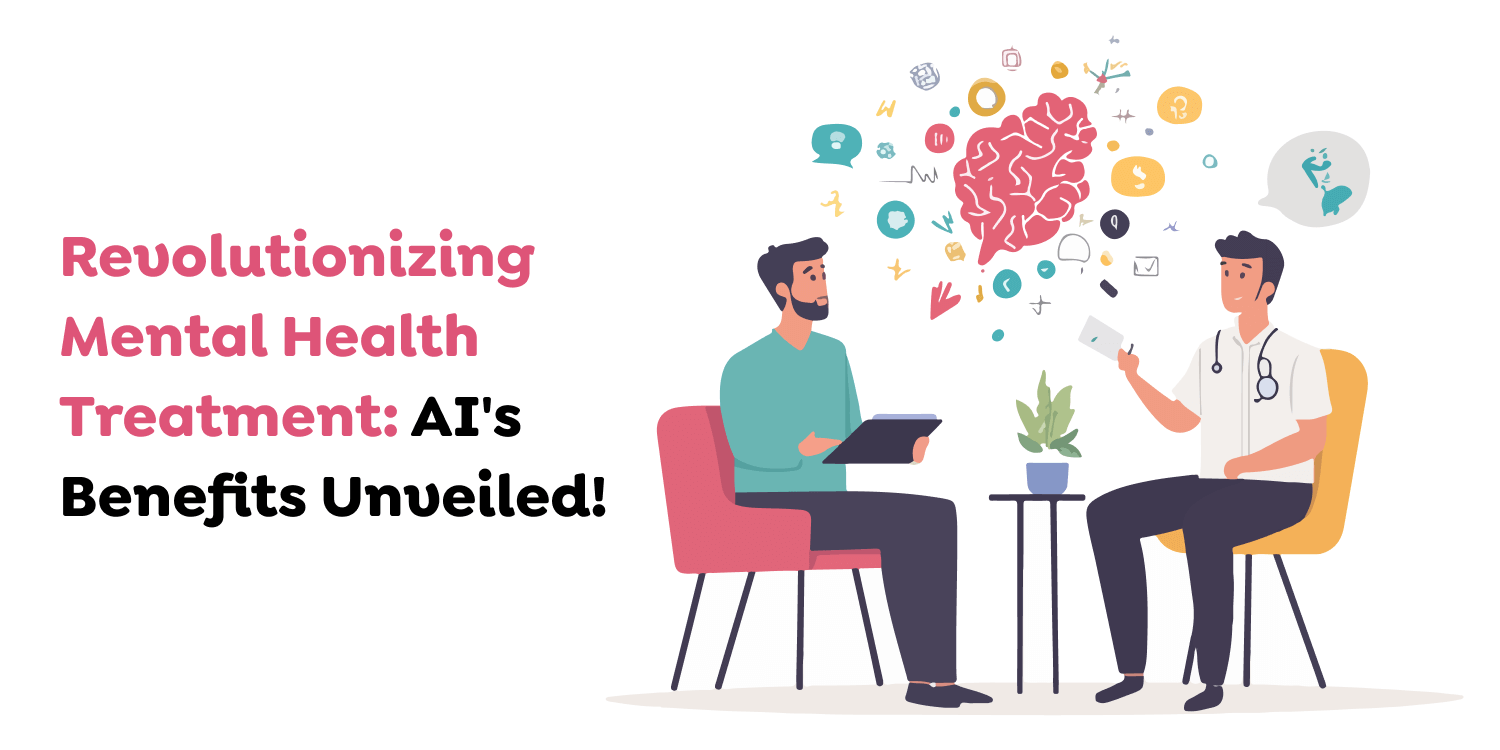
AI-powered mental health tools are increasingly becoming a game changer in healthcare, offering several compelling advantages for patients and mental health professionals. Here are the key benefits:
1. Enhanced Affordability: Mental health applications developed with artificial intelligence cost significantly less than conventional face-to-face counseling. Patients do not have to make doctor appointments or spend money on transport. People can receive therapy from an AI tool anywhere, which costs nothing or very little. This feature greatly minimizes the general costs linked to face-to-face counseling sessions.
2. Improved Accessibility: AI-based platforms break down geographic and logistical barriers to mental health care. Over 100 million people in the U.S. live in areas facing a shortage of healthcare professionals. AI mental health tools are location-agnostic, providing immediate support to individuals in rural and remote locations. These AI platforms are accessible because a patient experiencing some distress could be anywhere other than the clinic or the hospital.
3. Increased Efficiency in Diagnosing and Monitoring Conditions: Current AI technology is also very useful in revealing great efficiency in diagnosing and managing mental health disorders. Several works showed that it is possible to distinguish depressive, PTSD, and anxiety symptoms using only AI. For instance, one AI integration model can diagnose anxiety-related behavioral indicators with rates of accuracy of over 90% and can also screen psychosis in risky adolescent populations with 100% precision. Similarly, everyday usage of AI systems like Woebot, which is a widespread mental health chatbot, is effective in reducing both depression and anxiety by at least half after two weeks, consistent with randomized controlled trials.
4. Enhanced Privacy and Comfort for Users: For many individuals, discussing sensitive topics such as personal habits or mental health struggles can be uncomfortable due to stigma or fear of judgment. Applications of Artificial Intelligence in mental health allow the user to be comfortable and as honest as possible. Studies have found that almost 25% of people withhold essential information from healthcare providers, especially about topics like smoking or drinking. This is because when people are interacting with a service using AI, they do not get the feeling that their information will be used to judge them.
5. Valuable Support for Mental Health Professionals: AI doesn’t just benefit patients—it also enhances the efficiency and effectiveness of mental health professionals. AI tools can quickly process large amounts of data and discover patterns and signs a human would not spot. For example, AI can monitor changes in feelings and actions, giving clinicians timely information and allowing for faster response. This data can be paramount for patients with tendencies toward suicide or relapse, enabling clinicians to alter treatment plans and include necessary support. The use of a mobile AI app is instrumental in providing real-time insights that improve patient care and clinician decision-making.
Now that we’ve analyzed the key benefits of AI in mental health treatment, let’s take a closer look at how these innovations are being enforced in real-world scenarios. Are you ready to find some fascinating real-world use cases of AI being used in mental health care?
Also Read : How Much Does it Cost to Develop a Healthcare Mobile App
AI in mental health care depends on deeply personal information, such as emotional patterns, sleep habits, voice signals, and daily thoughts. This data is sensitive. Very sensitive. And once it is collected, it has to be stored and processed somewhere. But if the system is not secure, or if the data is shared in ways users do not expect, then trust is broken. You may open up to an AI in therapy because it feels private, but the system is still digital. And digital systems can fail, or be accessed. Because of this, privacy becomes more than a technical issue, it becomes an ethical one too…
Many people use AI in mental health tools without fully understanding how their information is being used; they just click “agree” and move on because the terms are long and confusing. But mental health data is not just another dataset. It carries fear, trauma, and emotional history, and therefore, users should know what the AI is learning from them and where that data goes and how long it stays there. If they do not understand this then the consent they give is only partial, and partial consent creates ethical problems, even if it looks legal.
AI in healthcare apps is designed to sound supportive, calm, and understanding. Generative AI integration can make responses more human-like, creating stronger emotional attachment, and sometimes users may trust it more than real people. This is not always intentional, but it can happen. When a person is vulnerable, even small suggestions can influence their thoughts or behavior. Because AI responds again and again, and always in a certain way, it can shape emotional patterns. Support should guide. Not control. But sometimes, the line between the two is not clear.
AI in diagnosis works only as well as the data it was trained on. If that data represents mostly one group of people, then the results may not be fair for everyone else. Different cultures express sadness, stress, and fear in different ways. Some speak openly. Others hide it. If the AI does not recognize these differences, it may misread emotions. This leads to unequal mental health care. And ethically, support should not depend on language, background, or geography. But in practice, it sometimes does.
Also Read: Healthcare Chatbot Like Google’s AMIE: Features, Benefits, and Development Cost Explained
Many AI systems give results without explaining how they reached them. They say someone is at risk. Or that someone needs help. But they do not explain why. In AI in mental health care, this becomes a serious concern. If a system flags depression, but cannot show its reasoning, then both the user and the clinician are left guessing. People deserve to know how decisions about their mental state are made. Without clarity, trust becomes weak. And without trust, ethical use becomes harder and harder.
When a human therapist makes a mistake, there is a clear line of responsibility. But when AI in mental health gives harmful advice, the responsibility becomes unclear. Is it the developer. The company. The hospital. Or the system itself. This confusion creates an ethical gap. Mental health decisions affect lives. They cannot exist in a space where no one is accountable. Technology can assist care, yes. But responsibility must remain human. Otherwise, harm has no owner.
AI in mental health is moving fast. Very fast. New tools appear before long-term effects are fully understood. This helps innovation, but it also increases risk. People may use systems that have not been tested deeply for emotional impact. Because progress is exciting, safety is sometimes pushed aside. But mental healthcare is not a testing ground. It involves real people and real pain. Therefore, innovation must move with caution. Not just speed… because patient safety should always come first.
AI in mental health can analyze language and behavior, but it still does not truly understand emotions the way humans do. Mental health conditions are shaped by personal history and culture, and sometimes by things people do not even say out loud. Because of this, artificial intelligence often misses deeper meaning. You may type that you are “okay”, but that does not always mean you are okay and the system may still believe it. AI in therapy can reply with kind words, but it was built on patterns, not feelings. Therefore, the emotional depth that therapy needs is still missing… and this gap matters.
AI in diagnosis works by studying data and matching patterns, but if the data it learned from was biased or incomplete, then the outcome can also be biased or incomplete. Some people express pain through silence. Others use humor. And some hide it completely. AI systems may not always catch these signals correctly, and because of that, mistakes can happen. It may label stress as illness, or it may ignore serious symptoms. This creates confusion. And sometimes, it creates delay too
AI in mental health care depends on the data that users provide such as sleep records, activity levels, and mood entries, but people are not always consistent and they are not always honest, especially when they feel tired or overwhelmed. Because the system only knows what you enter, the output depends heavily on the input. Emotional states can change suddenly but the algorithm may still rely on old data. So while the numbers may look accurate, the meaning behind them may not be… and therefore, the advice can feel off.
Many AI models have been trained on data that does not fully represent all communities, that means, people from different cultures, age groups, or economic backgrounds may not receive accurate mental health support. AI tools do not always adapt well to Language, behavior, and emotional expression, and as a result, AI in mental health care may work well for some users but poorly for others. The intention was fairness but the outcome is not always equal.
Mental health treatment involves judgment, empathy, and responsibility. AI does not have moral awareness, and it cannot understand the long-term effects of its suggestions. If a system gives harmful advice, there is no emotional accountability behind it. Therapists pause, observe, and adjust their approach based on reaction and silence. AI does not pause. It follows instructions. And because of that, it should not be trusted with decisions that affect safety or long-term well-being…
AI in mental health should assist professionals, not replace them. Conditions such as schizophrenia, bipolar disorder, and severe depression require medical diagnosis and long-term care. AI in therapy can help with daily support or early intervention, but it cannot replace clinical expertise. If people rely only on AI tools, they may delay seeing a real doctor. And that delay can be dangerous. Technology can help, but treatment still belongs to trained humans. This balance is important, even if it sounds simple.
Some AI-based healthcare apps and systems can detect warning signs of distress and suggest calming steps. But crisis situations are unpredictable. When someone is in danger, they need immediate human response, not just automated messages. AI in mental health care can monitor behavior and send alerts, but it cannot provide real emotional presence. It cannot listen in silence. It cannot make ethical decisions in real time. It can notify. It can track. But it cannot replace human action when it matters most.
AI is rapidly transforming mental health care, driven by significant investment and increasing public interest. Google Trends study shows rising awareness of AI’s potential in mental healthcare. Key trends include:
These trends highlight the growing role of AI in making mental healthcare more accessible, accurate, and personalized.
AI in mental health is transforming care by analyzing cues like facial expressions and tone of voice to assess emotional states precisely. A mobile app development company like Techugo is leveraging this technology to create innovative, user-friendly apps that aid diagnosis and treatment, empowering patients and therapists alike.
As AI evolves, it enhances patient interactions by offering personalized care and reducing stigma around mental health. These advancements improve accessibility, diagnostic accuracy, and overall support. Connect with our AI app development company to explore AI-driven solutions that elevate mental healthcare.
Get in touch with us today to learn how we can help develop AI-driven solutions for better mental health care.

A healthcare team decides to build an AI app; the goal is to detect a rare disease early because patient data already exists inside the Electronic Hea..


The idea of pharmacy app development in the UAE can feel overwhelming at first. From planning the features to understanding regulations and prepar..



Write Us
sales@techugo.comOr fill this form