


 SA
 KW
 IE
 AU
 UAE
 UK
 USA
 CA
 DE
 QA
 ZA
 BH
 NL
 MU
 FR


















Have you ever thought about how hospitals manage their inventory amidst the hustle and bustle of daily operations?
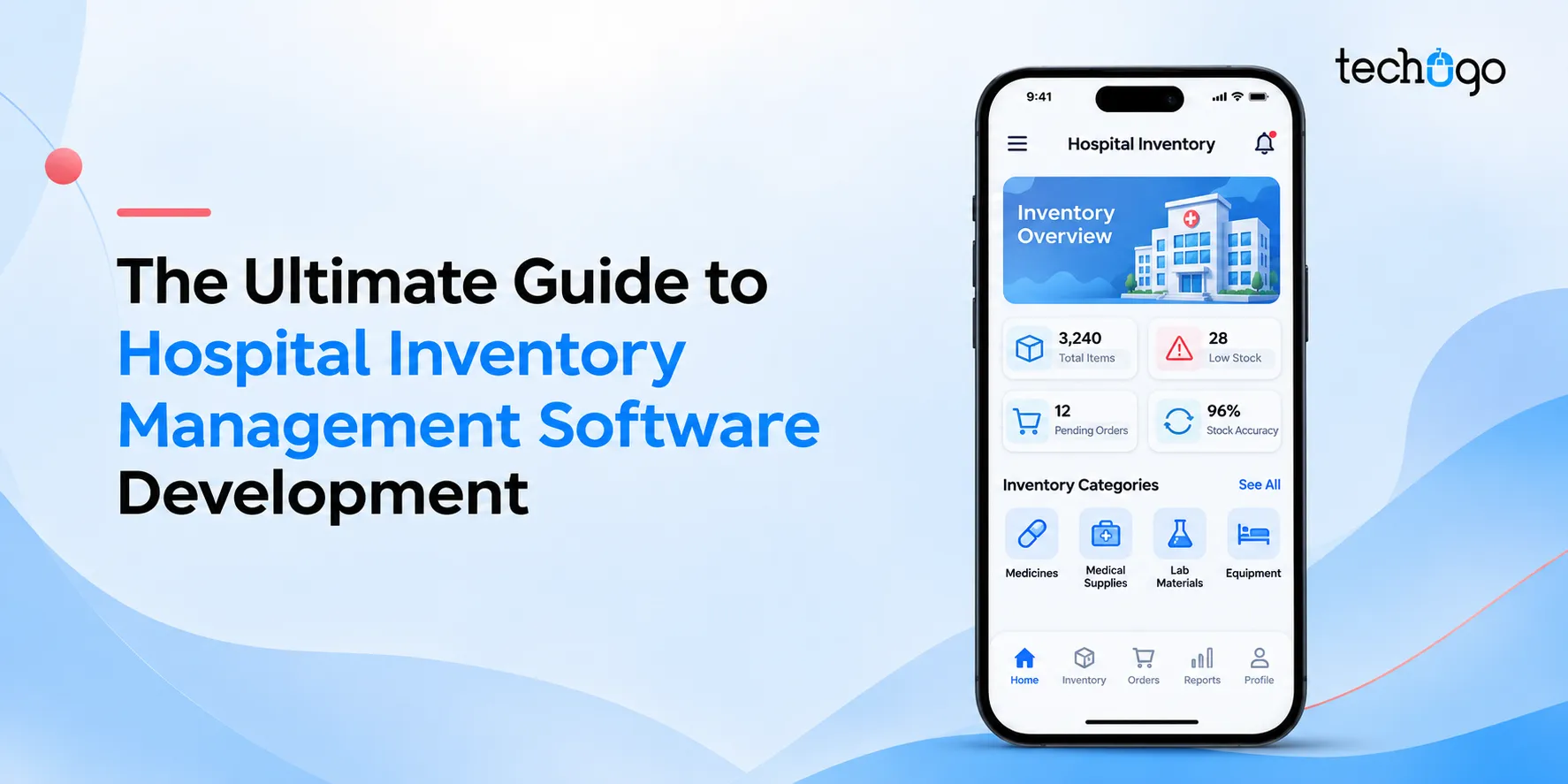
Keeping track of medicines, surgical supplies and medical tools across multiple departments has always been a headache for healthcare organizations. And this is where hospital inventory management software plays a vital role.
Hospitals with a centralized inventory management software system can monitor their stocks in real-time and reduce the risk of inventory shortages. Besides, the software can help prevent wastage from expired supplies and automate reordering processes. This helps healthcare organizations control inventory costs while ensuring that essential medical supplies are available when needed.
Seeing such benefits, companies have already started using inventory management software for healthcare in order to facilitate the process of procurement, stock control and replenishment.
OMR Global report states that the healthcare inventory management systems’ market was valued at $8.4 billion in 2025 and is expected to reach $20.2 billion in 2035 as a result of rising demand for automated software, tracking of inventory in real time and effective supply chain optimization.
So, today, we’ll explore everything you need to know about hospital inventory management software development in 2027, including key features, integrations, cost and future trends affecting the healthcare industry.
Looking to Build Hospital Inventory Management Software?
Connect with Techugo to discuss your software development requirements to build custom hospital inventory management software.
What is hospital inventory management software?
Hospital inventory management software refers to a digital system that helps healthcare organizations track, manage, and control medical inventory, surgical supplies, etc., from a single source. It records stock levels, monitors the movement of items and manages purchase orders. It keeps a track of the availability of medicines, surgical supplies and other essential products.
Hospital staff can get a clear view of available inventory across departments, pharmacies, laboratories, and storage facilities using this software. Besides this, the software can also automate routine tasks such as stock updates and expiry alerts.
According to McKinsey and Company, making the healthcare supply chain visible plays an important role in making it more resilient and eliminating the risk of shortages in supplies. This is where a centralized hospital inventory management software is of great importance when it comes to achieving visibility.
Benefits of inventory management software for hospitals
Suppose you take care of hospital inventory. You’ll have to do much more than just keeping a record of available products. You’ll need to monitor stock movement, prevent shortages, control purchasing costs, and make sure that essential medical supplies are available in different departments. That’s where hospital inventory management software comes and addresses these things in several ways.
1. Accurate Inventory Tracking
Hospital staff can monitor stock levels, item movement and product consumption in different departments through a centralized inventory system. They can learn whether the particular medicine or any medical equipment is available, without relying on spreadsheets or manual records on paper. This reduces errors caused by manual data entry.
2. Reduced inventory waste and inventory costs
Operating costs are increased due to expired medicines, unused items and excess purchase. By using inventory management software, you can track product quantities, as well as batch specifics and expiry dates. All this information lets hospitals avoid unnecessary purchases and identify supplies that need to be used before they expire.
3. Faster replenishment and procurement
When there is a shortage of medicines or medical supplies in hospitals, this hampers the entire operation. However, an inventory management software lets staff set minimum stock levels, so they receive alerts when supplies come to a reorder point. In addition to this, the system automates buying requests to help procurement departments eliminate shortages in advance.
4. Better compliance and traceability
Hospitals must keep a record of medicines, medical devices, and consumables. An inventory management software for hospitals can track batch numbers, expiry dates, user activity logs, etc. Such records help hospitals to trace inventory transactions, analyze stock usage and much more.
5. Improved inventory visibility and coordination
A centralized system provides all authorized people with access to the shared inventory data. Pharmacy teams, procurement departments, laboratory workers, and hospitals’ admins have one set of stock data. This reduces communication gaps and makes it easier to coordinate supply requirements in different locations and departments.
What features should hospital inventory management software include?
The success of healthcare inventory management software highly relies on its features. The perfect software not only enables healthcare organizations to maintain inventory accuracy and improve operational efficiency, but also facilitates ongoing digital transformation in healthcare.
Here are the essential features to consider when developing a hospital inventory management system.
1. Real-Time Inventory Tracking
The real-time inventory tracking provides authorized users with the most up-to-date information on stock levels, item movement, and supply consumption. Staff can use a centralized dashboard to monitor available products in departments, pharmacies, and storage facilities. This feature allows teams to find low-stock items and check product availability.
2. FEFO and FIFO Management
It is very important for hospitals to keep track of the medical supplies according to their expiry dates and storage requirements.
- First-Expiry, First-Out (FEFO): This means that the medical products with an earliest expiry date will be prioritized for the use or distribution.
- First-In, First-Out (FIFO): This means that the medical products that entered inventory first, will be prioritized first.
FEFO and FIFO management help hospitals manage stock rotation as well as reduce expiry-related waste.
3. Automated Reordering
Automated reordering supports hospitals in keeping stock at suitable levels without relying on manual checks. Admins can set up minimum stock level thresholds and reorder points per product. Once an item’s quantity reaches the specified threshold, the system will generate an alert or trigger requests for purchases for approval.
4. Expiry Date and Batch Management
Many medicines and medical supplies are subject to expiry dates and batch details that need to be monitored at hospitals. This feature allows staff to record batch numbers, manufacture and expiry dates, and the product quantity. The system will send alerts about products that are close to their expiry and help teams in identifying affected batches when needed.
5. Barcode and RFID Tracking
Thanks to barcode scanning and Radio Frequency Identification (RFID) technology, it is easier to identify and track medical supplies. Staff can scan items when receiving, issuing or transferring stock. RFID systems can track tagged items automatically within a facility. This feature reduces manual data entry and helps in improving inventory accuracy.
6. Role-Based Access Control
Different hospital employees need access to different inventory functions. For example, procurement staff may manage purchase orders, while pharmacy employees may handle medicine stock and expiry records. Role-based access control allows administrators to assign permissions according to each user’s responsibilities. It also helps hospitals maintain accountability and restrict access to sensitive system functions.
7. EHR and EMR Integration
Integration with Electronic Health Records (EHR) and Electronic Medical Records (EMR) systems can help connect inventory information with clinical workflows. For example, when a procedure requires specific medical supplies, connected systems can support better visibility into the items used and their availability. The exact integration depends on the hospital’s existing systems and the information that needs to be exchanged.
8. Reporting and Analytics
Reporting and analytics features help hospital administrators understand inventory performance through organized data and visual reports. The system can generate reports on stock levels, product consumption, purchase history, expiry records, and procurement trends. These insights help teams review inventory usage and make informed purchasing decisions.
9. Multi-Location Inventory Management
Hospitals with multiple branches, pharmacies, laboratories, or storage facilities need a clear view of inventory across locations. A multi-location inventory module allows authorized users to monitor stock at different facilities through one system. It can also support stock transfers, location-based reporting, and centralized inventory planning.
10. Demand Forecasting and Inventory Planning
Demand forecasting uses historical consumption records, purchasing patterns, and other relevant data to estimate future inventory requirements. With forecasting capabilities, hospitals can plan stock levels, identify products that may need replenishment, and reduce the risk of overstocking or shortages. Advanced systems can use AI and machine learning models to support these predictions.
11. Mobile and Web Access
Mobile and web accessibility enables authorized staff to check on stock availability, scan products, and manage other inventory processes from different places in a hospital. The mobile interface is especially beneficial for employees who operate in different areas of the facility such as pharmacies, storages, laboratories, etc., where desktop access is not convenient.
Are you thinking of developing a custom hospital inventory management system? Partner with Techugo, a healthcare software development company to come up with a list of required modules, integrations, and security measures.
Practical examples of hospital inventory management software
Hospital inventory management software facilitates several daily tasks in healthcare facilities. Below are various ways hospitals can utilize this software:
- Tracking medicine expiry:– A pharmacy can apply a FEFO-based inventory management approach to find medicines approaching their expiry dates and ensure their use or distribution.
- Surgical supply management:– Hospital staff can check the availability of surgical consumables such as surgical kits, gloves, syringes, etc., before the surgery is conducted.
- Tracking medical equipment:- Hospitals can use barcode and RFID technology to locate where tagged equipment is at the moment and keep records of its movements from one department to another.
- Automated stock replenishment:- The system will trigger an alert or generate a procurement request if the stock of essential medicine goes down to a set point.
- Demand forecasting:- AI-based analytics can evaluate past consumption patterns to make projections about future hospital needs and purchase plans.
Types of hospital inventory management systems
Hospitals use different methods for inventory management based on their size, stock needs, and working processes. Two common methods are perpetual inventory and periodic inventory systems, however, depending on the infrastructure and budget, healthcare institutions can choose cloud-based or on-premise deployment models.
1) Periodic Inventory
Under periodic inventory, hospital staff update the stock records regularly at fixed intervals, such as weekly or monthly. The staff counts the inventory items manually and updates the numbers in the system. This method may be effective for small healthcare facilities with little inventory. However, it may become unmanageable in larger hospitals where the inventory moves between many departments.
2) Perpetual Inventory
A perpetual inventory system updates stock records whenever an item is received, issued, transferred, or used. This gives hospital staff a more current view of inventory levels without waiting for scheduled stock counts. Although implementing this system may involve higher initial costs, it can improve stock accuracy, simplify audits, and help hospitals identify replenishment needs more quickly.
3) Cloud-Based vs. On-Premise Inventory Management Software
Healthcare organizations can select among cloud-based deployment models or on-premise deployment models with respect to their specific business needs. Cloud models provide better scalability and remote access and offer low infrastructure costs compared to on-premise models. And this makes it a preferred choice for modern inventory management software for healthcare. On-premise solutions give more control to organizations over data and infrastructure but involve higher initial costs and maintenance as well. The selection of a suitable model depends on factors like budget, security needs and growth objectives.
How to develop hospital inventory management software
To develop inventory management software for hospitals, the development process should consider inventory workflows, user needs, integrations and security, in order to create a solution that fits your operational needs.
1. Do market research
First, you should learn what inventory management challenges are faced by hospitals and healthcare facilities. Look into how each department manages inventory, handles procurement, keeps an eye on the expiry dates, and coordinates with suppliers. You should also check out the existing solutions in the market to identify what you can apply as a feature and enhance flexibility.
2. Prioritize the features
Once you understand the requirements, identify the features your hospital inventory management software needs. Prioritize essential functions such as stock tracking, automated reordering, expiry management, reporting, and user access controls. You can then plan advanced features based on your budget, operational needs, and future growth plans.
3. Design and development
After finalizing the requirements, the development team can design the software architecture, database, user interface, and inventory workflows. This stage should also cover integrations with EHR/EMR systems, pharmacy platforms, procurement software, and other hospital applications. Working with experts in medical software development helps you build a solution that is secure, scalable, and easy for hospital staff to use.
4. Testing and deployment
Before deployment, the software must undergo functional, integration, performance, and security testing. The testing process should cover stock updates, purchase orders, expiry alerts, user permissions, and data exchange with connected systems. You can also involve hospital staff in user acceptance testing to check whether the software supports their daily workflows.
5. Launch and maintenance
Once testing is complete, the software can be deployed across the selected hospital departments or facilities. The implementation process should include staff training, data migration, and system configuration. After launch, regular maintenance, performance monitoring, security updates, and feature improvements will help keep the software reliable as operational requirements change.
Essential integrations for hospital inventory management software
The success of a hospital inventory management software relies on how well it works with existing healthcare systems. Integrations help create and maintain a connected ecosystem in the field of healthcare. Hospitals today can expect their inventory management software to be integrated with the most important healthcare apps and platforms in order to facilitate real-time exchange of information.
1. Electronic Health Records (EHR)
Integration with EHR and EMR systems can help connect inventory information with relevant clinical workflows. For example, hospitals can use this connection to improve visibility into the medical supplies required for different procedures and departments. The integration should follow the data access and security requirements of the connected systems.
2. Enterprise Resource Planning (ERP)
ERP integration connects inventory data with financial management, procurement, and accounting processes. This helps hospitals monitor purchasing expenses, manage supplier payments, and maintain consistent resource records. Such integration facilitates financial planning and purchase, as well as reporting.
3. Supply Chain Management Systems
Integration with supply chain management systems helps hospitals track supplier availability, purchase orders, and shipment status. This improves coordination between procurement teams, distributors, and suppliers.
4. Point-of-Sale (POS) Systems
POS integration is useful for hospital pharmacies, medical stores, and healthcare facilities that sell medical products directly. It can automatically update stock records when products are sold, helping staff maintain accurate inventory levels and identify items that need replenishment.
5. Barcode Scanning and RFID Technology
Barcode scanners and RFID readers help automate item identification and inventory updates. Staff can use them to record stock receipts, transfers, usage, and audits with fewer manual entries. This improves tracking accuracy and makes inventory checks faster.
6. Laboratory Information Management Systems (LIMS)
Integration with Laboratory Information Management Systems (LIMS) helps hospitals coordinate laboratory supplies, reagents, and consumables. It also improves visibility into the materials required for laboratory operations.
7. Pharmacy Management Systems
The software can connect smoothly with pharmacy management software to facilitate better tracking medication inventory, prescription trails and stock replenishment. This gives rise to improved visibility of inventories and improves the coordination of pharmacy and hospital activities.
Hospital Inventory Management Software Compliance and Data Security Requirements
Compliance and security are must to keep in mind when developing inventory management software for the healthcare industry. Since these types of software frequently exchange data with EHRs, pharmacies and other platforms, they have to comply with numerous regulations and standards to guarantee the safety of sensitive information.
1. HIPAA compliance
For hospitals and healthcare organizations in the United States, HIPAA requirements may apply when the inventory management software creates, receives, maintains, or transmits electronic protected health information (ePHI) on behalf of a covered entity or business associate. Relevant safeguards include access controls, audit logs, risk management, and appropriate protection of sensitive information. However, not every inventory record automatically falls under HIPAA. The requirements depend on the data being handled and the role of the organization.
2. RBAC (Role-Based Access Control)
Role-based access control allows hospitals to assign system permissions according to each employee’s responsibilities. For example, pharmacy staff may manage medicine stock, while procurement teams handle purchase orders. Restricting access to relevant functions helps reduce unauthorized activity and improves accountability.
3. Data encryption
Sensitive information is required to be encrypted both in transit and at rest, to avoid unauthorized access and to enable the safe exchange of data within the healthcare systems.
4. Audit logs and activity tracking
Having detailed audit logs enables the organization to know what inventory activities have taken place, who did it, and what changes were made in the system.
5. Secure system integrations
Hospital inventory management software may need to connect with hospital information systems, procurement platforms, and hospital management software. Secure APIs, authentication protocols, and appropriate access permissions help protect information exchanged between these systems.
Security and compliance requirements should be considered from the beginning of the development process. Healthcare organizations should review applicable regulations, define data access policies, and include suitable security controls before deploying the software.
What key technologies are used in hospital inventory management systems?
Modern hospital inventory management systems use technologies such as barcode scanning, RFID and artificial intelligence in order to improve stock visibility and automate routine tasks. The right technology stack depends on the inventory workflows of the hospital, integration needs and infrastructure.
1. RFID and Barcode Technology
Barcode and RFID technologies help hospitals identify and track medicines, equipment, and other inventory items. Barcode scanners record item details during stock movement, while RFID systems can identify tagged items without requiring direct line-of-sight scanning. Both technologies can improve inventory accuracy and simplify stock audits.
2. Cloud Computing in Healthcare
The increasing use of cloud computing in healthcare has resulted in making inventory management systems more efficient, accessible and secure. Organizations can easily monitor their inventory data from any place and improve communication between various facilities by using cloud-based systems. Besides, they save on infrastructure costs while ensuring that inventory data is visible in real time.
3. IoT
This is about IoT-integrated systems such as sensors and smart tags that can help introduce automatic data and inventory tracking capability. This ensures that inventories are replenished at the right time and that the firm does not run out of stock or have excess.
4. Artificial Intelligence
Artificial Intelligence development technology enhances the activity of predicting inventory and demand and making decisions. When you create hospital inventory management software, the healthcare facility enhances its inventory management systems and thus reduces wastage.
Cost to develop hospital inventory management software
The bottom line is cost. The goal is to develop hospital inventory management solutions while maintaining high quality cheaply. The estimated cost to develop hospital inventory management software depends on the feature set and integrations, along with the level of automation required, and the cost increases as the software becomes more complex. Projects typically fall into the following ranges:
- Basic inventory management software can cost between $30,000 – $60,000
- Mid-level solution with integrations & analytics can cost between $60,000 – $120,000
- The cost of advanced platform with AI, automation & predictive analytics can exceed $120,000
The final budget will depend on your hospital’s workflows, integration requirements, security needs, and expected user base.
Consider consulting Techugo, a trusted tech partner offering healthcare software development services since 2015, and get a precise cost estimate. Request a custom quote.
Key factors affecting hospital inventory management software development costs
There are several factors that influence the hospital inventory management software development costs. Understanding these variables can help healthcare businesses budget properly before reaching out to a healthcare software development company.
1. Feature set
The number as well as complexity of features directly affect the cost of software development. Advanced features like hospital inventory automation, predictive analytics and multi-location inventory management require extra effort in development.
2. System integrations
Connecting inventory systems with procurement platforms, laboratory systems, and other healthcare applications increases both development time and project scope.
3. Customization requirements
Custom dashboards, workflows, reporting modules, and user roles often require additional design and development resources.
4. Security requirements
Enhancing security features with RBAC (role-based access controls), audit logs and data protection mechanisms would mean extra costs of development.
5. Scalability and infrastructure
Software designed to support multiple hospital locations, large inventory databases, and a growing number of users requires a scalable architecture. Infrastructure, hosting, storage, and ongoing maintenance requirements can also affect the overall development budget.
6. Technology stack
The choice of technologies affects development effort, integration capabilities, and long-term maintenance. Advanced features such as AI-based forecasting, IoT connectivity, and RFID tracking may also require additional tools and development resources.
Get a FREE Cost Breakdown of Hospital Inventory Management Software
Share your requirements with Techugo to discuss the development cost of custom hospital inventory management software. No hidden charges.
How long does it take to develop hospital inventory management software?
The development timeline depends on the complexity of the software, the number of features, required integrations, and customization requirements. A basic inventory management platform generally takes less time to develop than an advanced system with AI, RFID tracking, and multi-location support.
Here is an estimated development timeline:
| Software Complexity | Estimated Development Time |
| Basic inventory management software | 3–4 months |
| Mid-level software with integrations and analytics | 4–7 months |
| Advanced platform with AI and automation | 7–12+ months |
These estimates are indicative. The actual timeline may vary depending on project scope, integration complexity, data migration, testing, and compliance requirements.
Future trends in hospital inventory management software
New technologies are changing how hospitals track, manage, and replenish inventory. AI-based forecasting, IoT-enabled tracking, cloud platforms, and automation are helping healthcare organizations improve stock visibility and make better procurement decisions. The following trends are likely to influence the development of hospital inventory management software.
1. Adoption of AI and ML:
Artificial intelligence in healthcare software can help hospitals analyze historical inventory data, identify consumption patterns, and estimate future demand. These insights can support procurement planning, reduce overstocking, and help healthcare organizations prepare for changes in supply requirements. AI-based forecasting can also help staff identify products that may need replenishment sooner.
2. Integration with HL7 and FHIR Standards:
Healthcare interoperability standards such as HL7 and FHIR help different healthcare applications exchange information in a consistent format. Hospital inventory management software can use these standards to connect with EHR/EMR platforms and other hospital systems, supporting better coordination between inventory operations and clinical workflows.
3. Internet of Things (IoT) Integration:
RFID tags and monitors are now used in systems that account for inventory in various hospitals. After that, they provide immediate updates on how much stock you have in the shop or your store. Regarding IOT Development, you can monitor items that require specific temperatures and track medical products in the hospital.
4. Blockchain for Supply Chain Transparency:
Blockchain technology has potential applications in healthcare supply chain management. It can help maintain traceable records of product movement, supplier transactions, and inventory transfers. Hospitals may explore blockchain-based solutions to improve product traceability and supply chain transparency, particularly when working with multiple suppliers and distribution partners.
5. Mobile Apps and Cloud-Based Solutions:
You need to contract a programmer to create mobile applications and software that operate in the cloud to afford hospital personnel more flexibility. These applications remind mobile users that they can monitor stock regardless of place and time. Solutions for hospital inventory management provide opportunities for people to collaborate, complete necessary tasks with greater velocities, and enhance their productivity.
Build scalable hospital inventory management solutions with Techugo
Techugo is a custom software development company established in 2015, helping businesses build mobile, web, AI-powered, and enterprise software solutions. With a team of 200+ technology professionals, 1400+ digital products delivered, and 50+ AI solutions developed, we bring experience across different industries and business requirements.
For healthcare organizations planning to develop hospital inventory management software, we focus on building solutions that improve stock visibility, simplify procurement, automate routine operations, and support better inventory planning.
Why healthcare organizations choose Techugo
Custom-built solutions
We create customized inventory management software for hospitals that is based on the functioning of the company, its stock needs, user roles and the business objectives.
AI-powered inventory management
We can incorporate AI and machine learning capabilities to support demand forecasting, inventory planning, consumption analysis, and automated replenishment.
Healthcare system integrations
Our development approach supports integrations with EHR/EMR platforms, ERP systems, pharmacy management software, laboratory systems, and supply chain applications.
Secure and scalable architecture
We consider data protection, role-based access controls, audit logs, and secure APIs while planning software architecture. Solutions can be designed to support growing inventory volumes, multiple locations, and additional users.
The goal of hospital inventory management software is to maintain accurate stock levels, reduce manual work and improve coordination across departments. Techugo can help you define the project scope, select suitable technologies, and plan a solution around your inventory management requirements. Connect with Techugo for software development consulting services and discuss the features, integrations, and technology requirements for your project.
FAQs
1. What are the essential features of hospital inventory management software?
Essential features include real-time inventory tracking, expiry date management, automated reordering, barcode or RFID scanning, user access controls, reporting, and integration with EHR/EMR and pharmacy systems.
2. How much does it cost to develop hospital inventory management software?
The cost depends on the features, integrations, customization, and complexity of the project. A basic solution may cost between $30,000 and $60,000, a mid-level system may cost between $60,000 and $120,000, and an advanced platform may cost $120,000 or more.
3. Should hospitals choose cloud-based or on-premise inventory management software?
The choice depends on the hospital’s infrastructure, security requirements, budget, and operational needs. Cloud-based systems offer remote access and easier scalability, while on-premise systems provide greater control over the local software environment and infrastructure.
4. How does AI improve hospital inventory management?
AI can analyze historical stock usage and demand patterns to help hospitals estimate future inventory requirements. It can support replenishment planning, identify potential shortages, and reduce the risk of overstocking.

Get in touch
We'd love to hear from you.