

 SA
SA  KW
KW  IE
IE AU
AU UAE
UAE UK
UK USA
USA  CA
CA DE
DE  QA
QA ZA
ZA  BH
BH NL
NL  MU
MU FR
FR [ LET’S TALK AI ]
X
Discover AI-
Powered Solutions
Get ready to explore cutting-edge AI technologies that can transform your workflow!



Get ready to explore cutting-edge AI technologies that can transform your workflow!






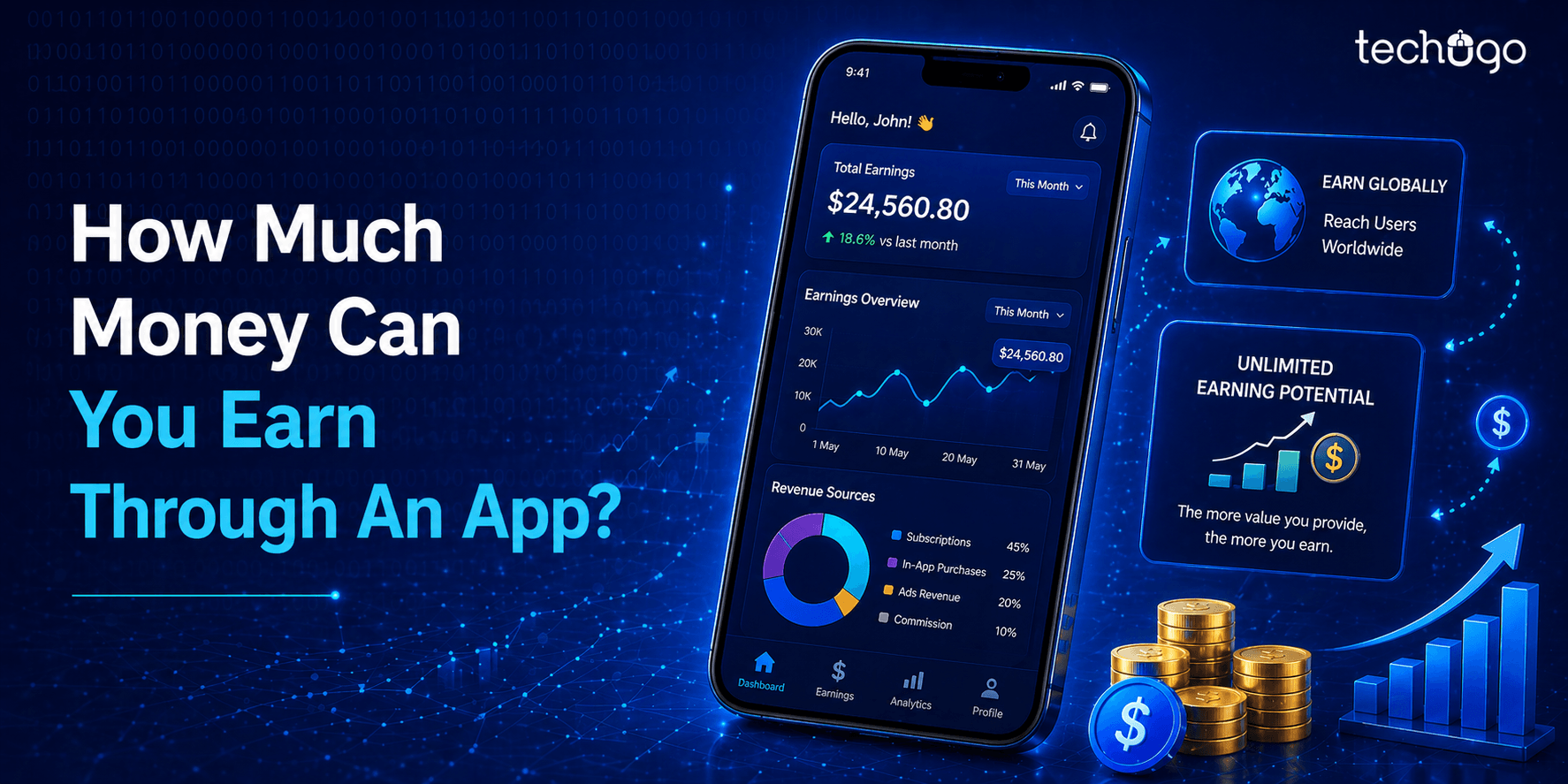
From earning a few thousand rupees on the side to building multi-crore digital businesses, mobile apps have completely changed the way money is made today. Though one question keeps coming up:
How much money can an app make in 2026?
The answer isn’t as simple as a fixed number. Some apps barely cross $16,000 a month, while others generate $100,000 or more consistently. The gap between these outcomes isn’t luck; it’s strategy, execution, and the right app revenue model.
Understanding how much money apps make today requires looking beyond downloads and focusing on what truly drives revenue. This blog breaks down real earning potential, the models behind successful apps, and whether the investment actually pays off.
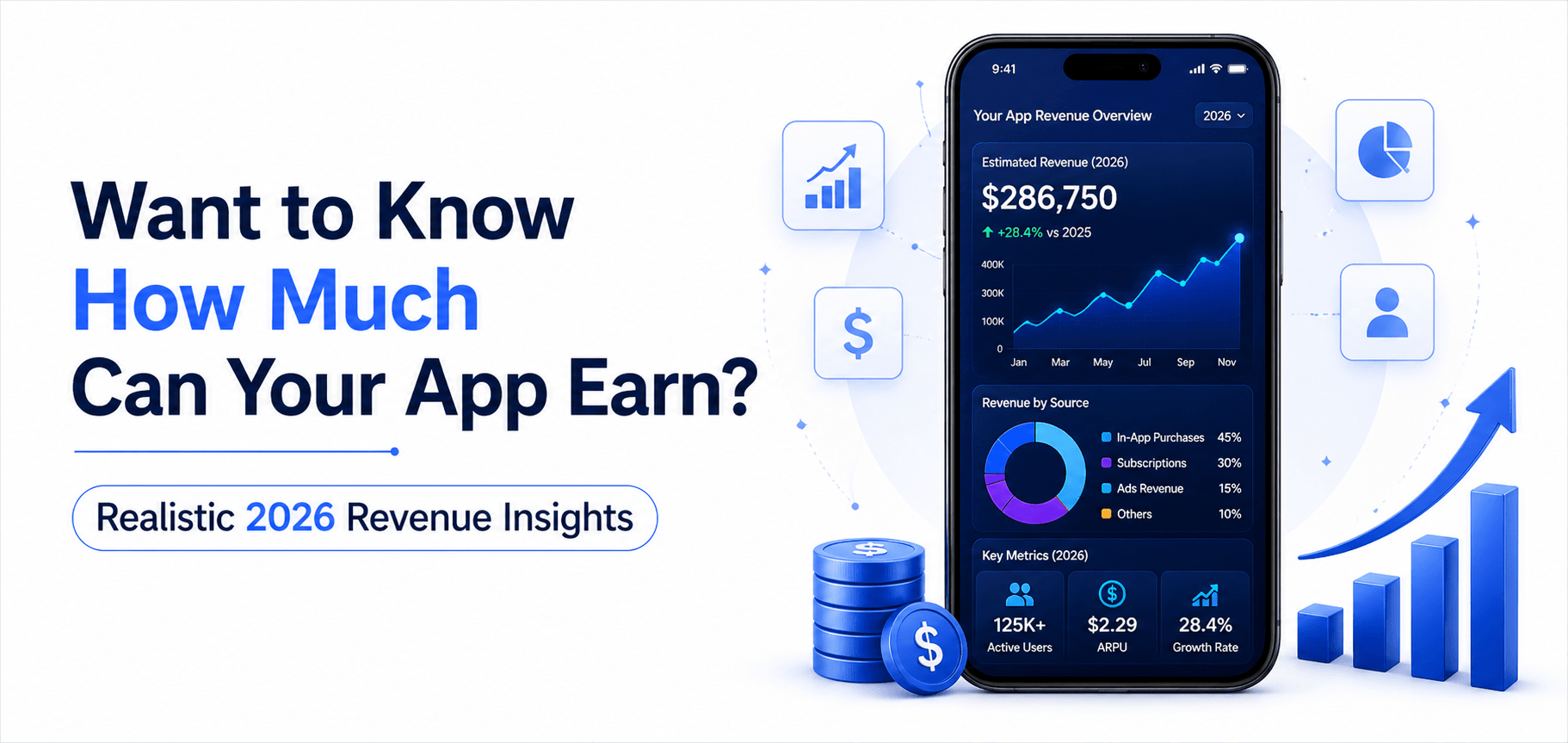
What if your app could generate $16,000 a month… or scale all the way beyond $100,000 without going viral? Well, that’s the reality of today’s app market.
And it’s more common than you think.
So, let’s make this simple. How much money an app can make isn’t about luck or overnight success. It’s about how well your app keeps people coming back and how smartly it earns from them.
Here’s a clearer picture of the average income from apps based on where they stand:
| App Level | Monthly Earnings | What It Looks Like |
| Small Apps | $16,000 – $30,000 | New apps or niche ideas with a small but loyal audience |
| Mid-Level Apps | $30,000 – $100,000 | Growing apps with steady users and better monetization |
| Top Apps | $100,000+ | High-engagement apps earn at scale, often crossing this easily |
It’s not just downloads. In fact, downloads alone mean very little.
An app with 1 lakh downloads but no active users might earn less than an app with 10,000 users who actually open it daily. What really drives income is how often people use your app and how long they stick around.
Retention plays a huge role. If users keep coming back, they’re more likely to spend. If they leave after one use, even the best idea won’t make money.
And then comes the biggest factor: the earning setup itself. A strong app revenue model quietly works in the background, turning user activity into steady income without forcing it.
Most apps don’t go viral, and honestly, they don’t need to. The real winners are the ones that grow slowly, learn what users want, and keep improving how they earn over time.
Apps aren’t making money the way they used to. And that’s exactly why some are earning more than ever. In 2026, it’s no longer about pushing ads or charging upfront. The real shift is in how seamlessly apps turn user activity into income.
If you look closely, the most successful apps don’t rely on just one method. They combine multiple ways apps generate revenue, depending on how users interact with the app.
Here are the core ways this actually works:
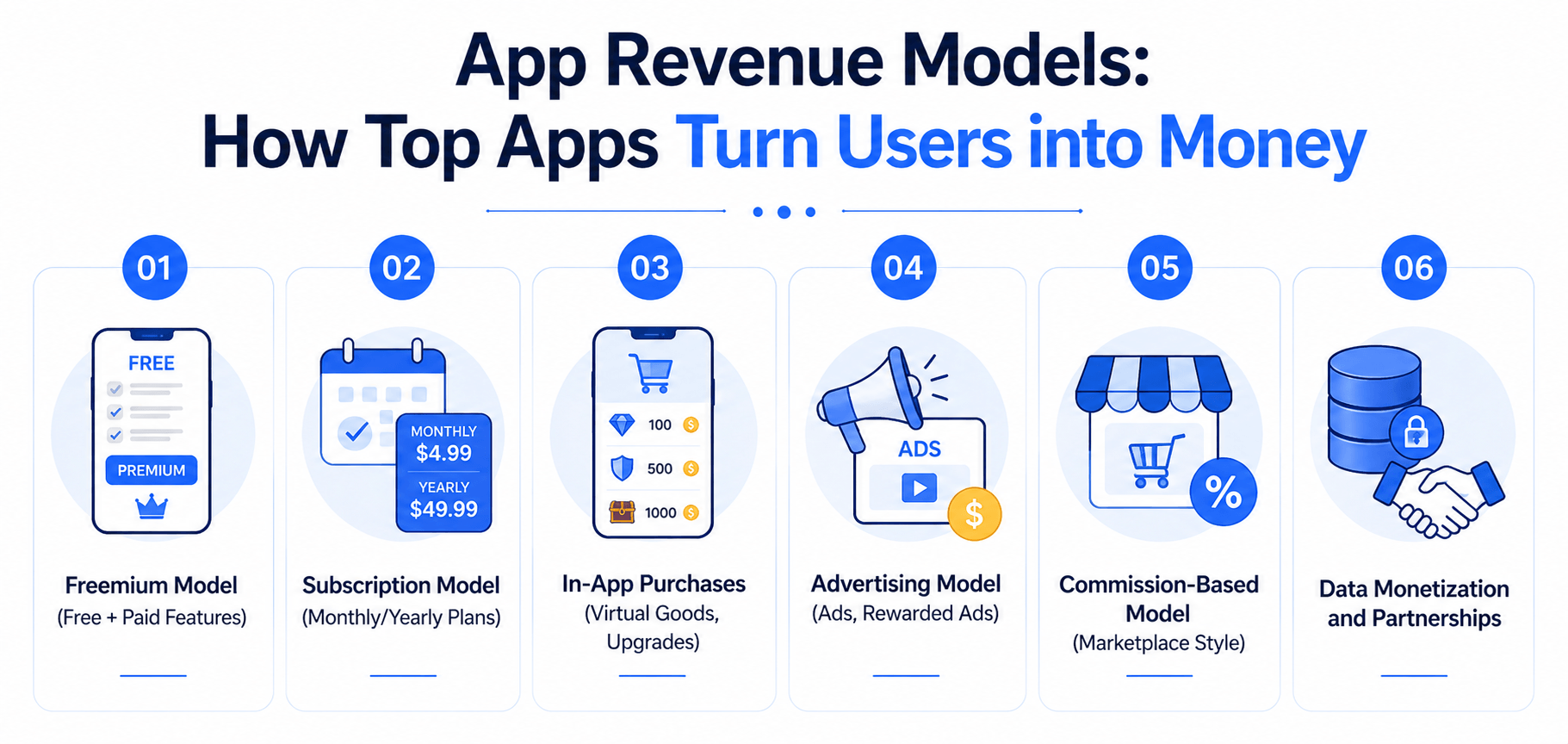
Many apps earn by charging users monthly or yearly, but only after becoming part of their routine. Whether it’s content, tools, or services, users continue paying because the app delivers ongoing value. This creates a steady and predictable income instead of one-time spikes.
Apps often start free and introduce paid features later. Once users experience the value, upgrading feels like a logical step rather than a forced decision. This approach lowers entry barriers while still driving revenue over time.
Instead of asking for a big payment upfront, apps allow users to make smaller purchases whenever they want. These could be features, add-ons, or virtual items. Individually, they may seem small, but at scale, they contribute significantly.
Ads are still a major part of how apps earn, but the approach has changed. Instead of being disruptive, they are now placed more thoughtfully or even tied to rewards, so users engage with them willingly.
Apps that connect users, like marketplaces, earn a percentage from each transaction. The more activity on the platform, the higher the revenue, making this one of the most scalable models.
Some apps generate income by collaborating with other businesses or using insights to create better offers. This happens quietly in the background and adds an extra revenue layer without affecting the user experience.
This is just the starting point. To really understand how apps earn, you need to look at the structure behind it: the app revenue model that makes it all work.
Create an image like this, but add the highlighted h2 as the title on top, and 5 sections instead of 4 (with the highlighted pointers mentioned below)
Once you understand how much money apps can make, the next question becomes obvious: where does that money actually come from? The answer lies in choosing the right app revenue model. This is what turns user activity into actual income, and often, it’s the difference between an app that survives and one that scales.
Let’s break down the models that are working right now, in a way that actually makes sense.
Using the freemium model is probably one of the most widely used revenue models. The app is free to download and use, but certain features are locked behind a paywall. Users get a taste of the value first, and once they’re comfortable, they’re more likely to upgrade.
The power of the freemium app division is that it alleviates friction for the user at the initial point of contact (when they begin using that app). If the application is free to try, there is no hesitation to try out that particular application. Once a user is in the application, they are much more likely to upgrade to the premium versions, as it seems like a natural progression rather than a forced decision.
Many apps now use AI to decide which features to lock and when to show upgrade prompts, making conversions feel natural instead of forced.
The subscription revenue model depends on creating a monthly or annual income from the user for their continued accessibility to the application or to the premium features of the application.
The subscription revenue model works very well, as long as the application continues to provide ongoing value to the user (content, tools, or services they need on a regular basis). In time, as the user pays their monthly or annual subscription fee, they begin to build a steady and predictable source of income for the application creator; this is why many of the newer applications are developing towards the subscription revenue model.
Here, users can purchase specific features, items, or upgrades through in-app purchases. This revenue model has become very popular in gaming but is now also used in many other categories of applications.
And, instead of having to pay for an application up front, users of the application can make their own choice regarding when they want to spend money. This helps reduce restrictions that may discourage users from trying out the application at all, and when this works, it helps create a more seamless experience for the user throughout the life of the application.
The revenue model of app advertising has changed dramatically and evolved from interrupting and displaying random advertisements to having the ability to earn revenue without charging a user directly, by utilizing smarter ads and the ability to reward users for viewing ads, as well as many other ways in which ads are displayed in apps.
An app with a large customer base and primarily non-paying/customers would be able to utilize this method of revenue and achieve success without having a direct charge for the service provided (as long as the user does not have negative experiences due to advertisements within the app).
AI also plays a role here by showing highly targeted ads based on user behavior, increasing engagement without disrupting the experience.
The commission-based or marketplace-type app revenue model is typically used in an app that connects buyers and sellers. A small commission is charged for each sale that occurs through the app. This model is commonly found in e-commerce apps, ride-sharing, and food delivery; therefore, the more transactions that occur through the app, the higher the income.
The App Revenue Model for Marketplace and Commission models are viable app revenue models that provide an easy way to create revenue and grow.
Another way that an app earns revenue is through data monetization and partnerships. Some apps can generate revenue based on the data they collect and/or from the synergy created through data/regulating and/or providing valuable products and services using the former data.
It’s important to note that this method is not considered unethical or illegal; however, it is typically accomplished by collecting and storing data from users and using this stored data to provide greater value to users by creating superior products, partnerships, and developing new products that can be introduced to the mass market.
The most successful apps don’t rely on just one approach. They combine multiple models in a way that feels natural to the user. A well-balanced app revenue model doesn’t just focus on making money; it focuses on making money without pushing users away.
That’s where apps win in 2026.
Apps aren’t just earning through traditional models anymore. AI is quietly becoming the layer that makes those models work better, faster, and more profitably. In 2026, AI isn’t a feature. It’s a revenue engine. Here’s how it’s actually impacting app earnings:
AI tracks user behavior like what they click, skip, or spend time on, and adjusts the experience in real time. This means users see offers, features, or upgrades that actually matter to them. And when something feels relevant, people are far more likely to pay.
Instead of showing paywalls randomly, AI helps apps identify the right moment.
For example, when a user reaches a certain engagement level, AI can trigger a premium offer. This timing alone can significantly increase revenue.
Not every user is the same. AI allows apps to adjust pricing, discounts, or bundles based on user behavior, region, or usage patterns. This helps maximize revenue without pushing users away.
AI-powered recommendations, notifications, and content keep users engaged for longer.
And the longer users stay, the more likely they are to spend.
AI continuously tests what works (pricing, placements, offers) and improves it over time.
So instead of guessing, apps evolve based on real data.
The result?
Two apps with the same features can earn completely different revenue, just because one uses AI and the other doesn’t.
Most apps don’t struggle because of the idea. They struggle because they don’t know how to turn usage into revenue.
What really matters is how you apply it. In 2026, apps aren’t just monetizing randomly. They are doing it at the right moment, in the right way, without breaking the user experience.
The gap between apps that earn and apps that don’t usually comes down to execution. Same idea, same features. But completely different results (just because one gets monetization right).
Have a look at these strategies to make a difference.
Most apps try to make money too early. And that’s exactly where they lose users. People don’t open an app ready to pay. They stay for value first. The smarter move is to let users explore, get comfortable, and then introduce paid features. When the timing feels right, conversions don’t feel forced; they feel obvious.
Relying on a single app revenue model is like leaving money on the table. The apps that scale combine approaches in a way that feels seamless. A user might start for free, upgrade later, and still interact with optional purchases along the way. This layered approach increases earning potential without overwhelming the user.
Blanket offers don’t work anymore. Users expect relevance. Apps today use AI to analyze behavior in real-time, like what users click, how often they return, what they ignore, and then adjust what they show. When an offer feels like it’s made for them, the chances of conversion go up instantly.
The longer users stay, the more likely they are to spend. It’s that simple. Features that keep users engaged don’t just improve experience; they quietly increase revenue. Engagement isn’t just a product metric anymore; it’s a monetization strategy.
The apps that earn the most are never static. They keep testing, tweaking, and improving how they monetize. Pricing changes, features evolve, and offers get refined based on what actually works. Monetization isn’t something you set once; it’s something you keep optimizing.
Before thinking about profits, there’s one thing you can’t ignore: the cost of building the app in the first place. And this is where most people hesitate. Is it really worth spending thousands of dollars up front?
Here’s a simple breakdown of what you’re typically investing:
At first glance, it feels like a big investment. But the real question isn’t just about cost, it’s about what that cost can turn into.
When developing an app that costs between $30,000 and $50,000, it could quickly earn back this investment if it is built and monetized appropriately. Apps that have steady growth patterns often will recover their original investments sooner than anticipated, as long as they place emphasis on user retention and establishing a sustainable app monetization model from day one.
This is where the real gap shows.
The difference isn’t the cost, it’s how that cost is used.
When development is planned with clear intent: right features, smooth user experience, and monetization built into the flow, the chances of earning increase significantly. On the other hand, apps built without a revenue mindset often take much longer to break even.
So instead of asking how much an app costs, the better question is what that investment is designed to return. Don’t think of it as an expense. It is just the starting point of a scalable revenue stream.
Building an app is easy. Building one that actually earns is where most businesses fall short.
That’s where Techugo stands out as a mobile app development company.
With over 10+ years of experience and a portfolio of 475+ apps, Techugo has worked with startups, enterprises, and global brands like Airtel, Byju’s, and more. Apps developed by our team haven’t just launched; we’ve helped businesses raise over $869M in funding and scale across industries.
Techugo’s strength lies in execution. From startups to large enterprises, our work reflects a deep understanding of what makes an app successful in the real world.
We don’t just build apps, we design them to earn. From the very first wireframe, our team focuses on how users will interact, where paid features make sense, and which app revenue models will deliver results. By integrating monetization strategies early, apps don’t just function; we convert engagement into income naturally.
If you’re planning to build an app, don’t just launch… partner with Techugo and build something that’s designed to grow and generate real returns.
Depending on the app’s category, the volume of users, user retention, and how the mobile app is monetized, they can make anywhere from a few thousand dollars per month to very successful applications in the range of $16,000-100,000 + dollars on a monthly basis.
An app revenue model refers to the way an app is structured for revenue generation. App revenue model options include: subscription based payments; in-app purchases; in-app advertising; freemium upgrades; and app earnings through producer-commissioned transactions.
Today’s mobile apps use a combination of revenue-generating methods (e.g., subscription plans, in-app purchases, advertisements, partnerships, or through user monetization in a manner that feels natural and non-intrusive to the end user).
Basic mobile applications range from $16,000 to $30,000; mid-range mobile applications cost between $30,000 and $100,000; while advanced mobile applications (more complex features) can be over $100,000 to create, depending on complexity and function.

Crypto never sleeps. Prices move at 2 AM, trends flip in seconds, and opportunities don’t wait. Humans? We blink, we hesitate, we miss. Bots don’t. ..
In the age of digital healthcare, apps like Vezeeta are changing the way patients book doctor appointments and access medical services, and it’s not j..


Write Us
sales@techugo.comOr fill this form