

 SA
SA  KW
KW  IE
IE AU
AU UAE
UAE UK
UK USA
USA  CA
CA DE
DE  QA
QA ZA
ZA  BH
BH NL
NL  MU
MU FR
FR [ LET’S TALK AI ]
X
Discover AI-
Powered Solutions
Get ready to explore cutting-edge AI technologies that can transform your workflow!



Get ready to explore cutting-edge AI technologies that can transform your workflow!






Remember that time when we were all stuck in our homes during quarantine? Going outside seemed like a risky mission, especially when we didn’t know who among us was infected and who was not.
Well, time flies, but the situation today is still uncertain. Let’s say it’s in the middle of the night, and you suddenly remember you’re running out of your essential medicines.
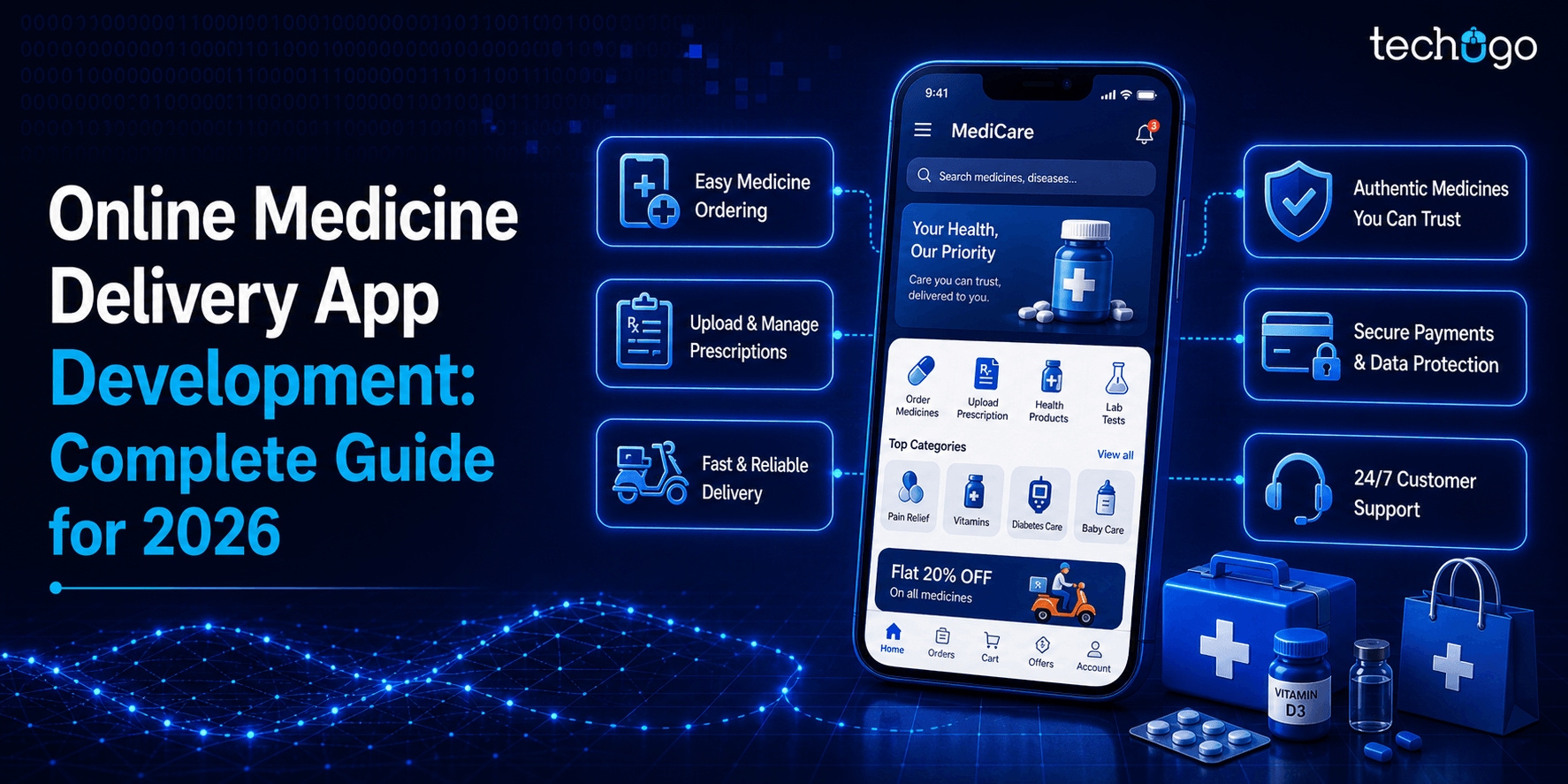
Online medicine delivery apps are the lifeline in these critical moments. Whether you’re dealing with a sudden illness, running low on essential medications, or just need to order for your elderly loved ones who can’t leave home, these apps ensure you’re covered.
The need for such applications is not only due to the convenience they offer users. This is because not everyone can go out to procure medicine in a critical time. This is exactly where the concept of online medicine delivery app development comes into the picture.
But where to begin? What technologies do I need? And, perhaps most significantly, how much will it cost? Relax, we’ve got your back. From choosing the right platform (iOS/Android) to deciding on the tech stack (React Native, Flutter, Node.js, Firebase), this guide includes everything.
Let’s dive into the complete guide to why this app is growing, how it works, and what makes it a win-win for both users and businesses.
Before diving into the online medicine delivery app development let’s understand why it is important in 2026 –
Online medicine platforms enable you to buy medicines, take health consultations, and connect with doctors 24×7 from your home. These days, customers don’t want to spend hours standing in lines at pharmacies or hospitals. These healthcare apps give complete flexibility to users with its one click features.
With prescriptions uploaded and stored, users can order medications with a few taps on their phones, no paper prescription needed. No more hassle of waiting in queues with doctors or in pharmacies, it saves you precious time.
An online medicine application comes with affordable prices, offers discounts or subscription plans for delivery of medicines at home which helps in making healthcare economical. Users can even compare prices and get cheaper alternatives to the medicines they need.
Applications based on AI can offer personalized medicine recommendations, health tips, and notifications based on an analysis of users’ medical records, preferences, and current health conditions, and this not only enhances the user experience but also makes the users more likely to comply with treatment.
Online medicine apps often offer services such as medication reminders, symptom tracking, and health monitoring. This enables the users to stay updated with their health and take medicines on time, which is important in case of chronic diseases.
Below Are the Essential Core Features of Pharmacy Delivery App Development That Ensure Smooth Medicine Ordering, Fast Delivery, and a Better User Experience:
These features are for people who want to order medicine from this app. The main focus of these features is to make the overall process seamless for users. For instance, the easy medicine search, prescription upload, order tracking, reminders for medicine, and safe payment options enable users to finish their work in less time. This type of feature mainly appears for people who sign up as customers in the online pharmacy apps.
The Vendor Focused Features are designed for businesses that provide direct services to users. Vendors require features such as a dashboard or panel for their products, orders, and their business to work effectively. Vendors can effortlessly list their products, keep track of orders, manage inventory, and connect with customers all in one place. Vendor-focused pharmacy delivery app development includes the following features:
The first step that any business follows is understanding why. It means to find the purpose of the pharmacy delivery app development.
Start by asking yourself some fundamental questions:
When you understand why, another important thing is important is to understand your audience. Understanding the target audience will be useful in other steps as well, such as designing, selecting core features, and so on. It will result in a more User-centered experience.
Pro Tip: Focus on solving one key problem your target audience faces and build your app around that.
Imagine: You have invested 4 – 5 months to build and launch your app and got to know that other online pharmacy apps that are in the market are giving the same or better services. The market is crowded with these pharmacy apps.
Wondering why this is important
How to start market research –
This comes after careful consideration of market and understanding the audience. With the help of developers, designers, and stakeholders, this blueprint comes into action. It gives your clear vision, development guidance and an estimate of budget, timeline, etc.
Pro tip
The technical process for building a medicine delivery app starts from here. The intention is for the user-app interface to feel natural and smooth so that users can easily accomplish what they want — such as looking for medicine, managing prescriptions or setting up reminders.
While building online pharmacy apps, the following things need to be remembered –
Pro tip – Start by designing low-fidelity wireframes (basic sketches) to plan layout before jumping into high-fidelity designs.
For performance and scalability, technology choice is important. If your stack is not strong enough, even the best idea can fail because of slow speed, crashes, or security-related problems. For online pharmacy apps, you can have the following technology options-
| Aspect | Options | Why Important |
| Platform | Native (Swift/Kotlin) | Best performance and device integration |
| Cross-Platform (React Native/Flutter) | Cost-effective, one codebase for iOS & Android | |
| Backend | Node.js / Django / Firebase | Handles orders, prescriptions, chat, and notifications |
| Database | MongoDB / PostgreSQL | Store user data, orders, and medicine info securely |
| Cloud Hosting | AWS / Google Cloud / Azure | Scalable, secure, high uptime |
| Payments | Stripe / Razorpay / PayPal | Secure and easy order processing |
| Notifications | FCM / OneSignal | Reminders and alerts for users |
| Security | SSL / HIPAA compliance | Protect sensitive medical information |
The most important step is to create a prototype of your app that is a Minimum Viable Product. It analyzes and tests your idea faster. Another advantage of this is that it gives real user feedback. It’s the bare-bones version of your app that includes only the core features necessary to solve your users’ main problem.
How to build an MVP?
List Core Features Only → Choose Simple Technology → Create a Basic UI/UX→ Test Early and Often → Iterate Gradually
After building your app completely based on feedback, now comes the important part: security. Your application will be dealing with a sensitive user data – everything from personal details, to prescriptions and payment information. So making it secure and locking it down is non-negotiable.
Security Practices for Your Pharma App
Pro Tip: Build security into your app from day one—don’t wait until after launch to protect user data.
Testing your app is basically just one last safety check before it’s in users’ hands. It makes and checks everything works (whether ordering medicine or setting reminders), and the idea is to find problems before they went to angering real users.
Testing Methods
After completing development, QA testing, and security checks, it’s now time to roll out your medicine app to production. Going live is not just about putting the app on an app store – it’s also about app store optimization (ASO), acquiring first users, and keeping an eye on certain metrics to measure performance, usability, and adoption since day one.
Pro Tip: Consider the initial months as a live beta test – observe, make quick changes and use data to inform modifications.
Treat your app as a living product; it requires ongoing care to flourish. Regularly patch bugs, update features, and listen to your users. Regular updates keep the app safe, smooth running and fresh, which has the effect of converting one-off users into regular users.
1. IT Act 2000 and IT Rules 2011: It is a legal framework to protect sensitive data of users such as names, addresses, financial information, or health records.
2. Telemedicine Practice Guidelines (2020): It is issued by the Board of Governors, Medical Council of India, to standardize remote health conditions. It provide ethical online consultation to ensure patient privacy.
3. Drug and Cosmetics Act: They should comply with prescription norms and have a valid pharmacy licence. It is a must that all medicines listed, sold, or advertised on the app comply with these regulations.
HIPAA (Health Insurance Portability and Accountability Act): This is a legal act in US that establishes national standards for the protection of health information. It is mandatory if app handles patient data or provides online medicine.
FDA Regulations: If your application offers medical advice, diagnosis, or drug use, it could be a medical device and subject to FDA regulations.
Data Privacy (State Laws): In addition, you have state laws (e.g., CCPA) that impose obligations in relation to personal data. Obtain user consent and rights of access to data.
Before investing in this online medicine delivery app industry, businesses should give complete research by spending on industry reports, surveys, and consultations with healthcare or technology experts.
Cost (USA): $1,000 – $3,000 | Cost (India): ₹40,000 – ₹1,00,000
This is also an important investment that needs a significant amount of budget when building a medicine delivery app. Businesses should invest in good UI/UX designers, product designers, or a professional mobile app development company.
Cost (USA): $2,000 – $5,000 | Cost (India): ₹80,000 – ₹2,00,000
This cost depends on the team you hire and the features you want. The more experienced the developers you hire, and the more advanced features you include, the higher the development cost will be. While some charges, such as front end, back end, vendor panel etc is non negotiable.
Cost (USA): $10,000 – $25,000 | Cost (India): ₹5,00,000 – ₹12,00,000
Adding AI features to your app is a high cost that depends on the hiring cost of developers.
Cost (USA): $7,000 – $15,000 | Cost (India): ₹3,50,000 – ₹8,00,000
After launching your medical app, maintenance includes regular updates, bug fixes, and updates to terms and security of online pharmacy apps.
Cost (USA): $2,000 – $5,000 | Cost (India): ₹80,000 – ₹2,00,000
| Plan | What Will User Get | Price (Monthly) |
| Care Free | Browse medicines, one-time orders, basic order tracking | Free |
| Health Plus | Unlimited orders, order tracking, discounts, refill reminders | $5–$10 |
| Family Care | Priority delivery, subscription refills, personalized health tips, loyalty rewards | $15–$25 |
Think about the last app you opened on your Android or iOS. Just after clicking on app icon, an ad pops up on your screen for one or two seconds. Sometimes it’s a pharmacy ad, or about e-commerce or instant delivery apps. You sometimes ignore or tap on the cancel button, but do you know that for every ad, a pharmacy delivery app development company earns millions?
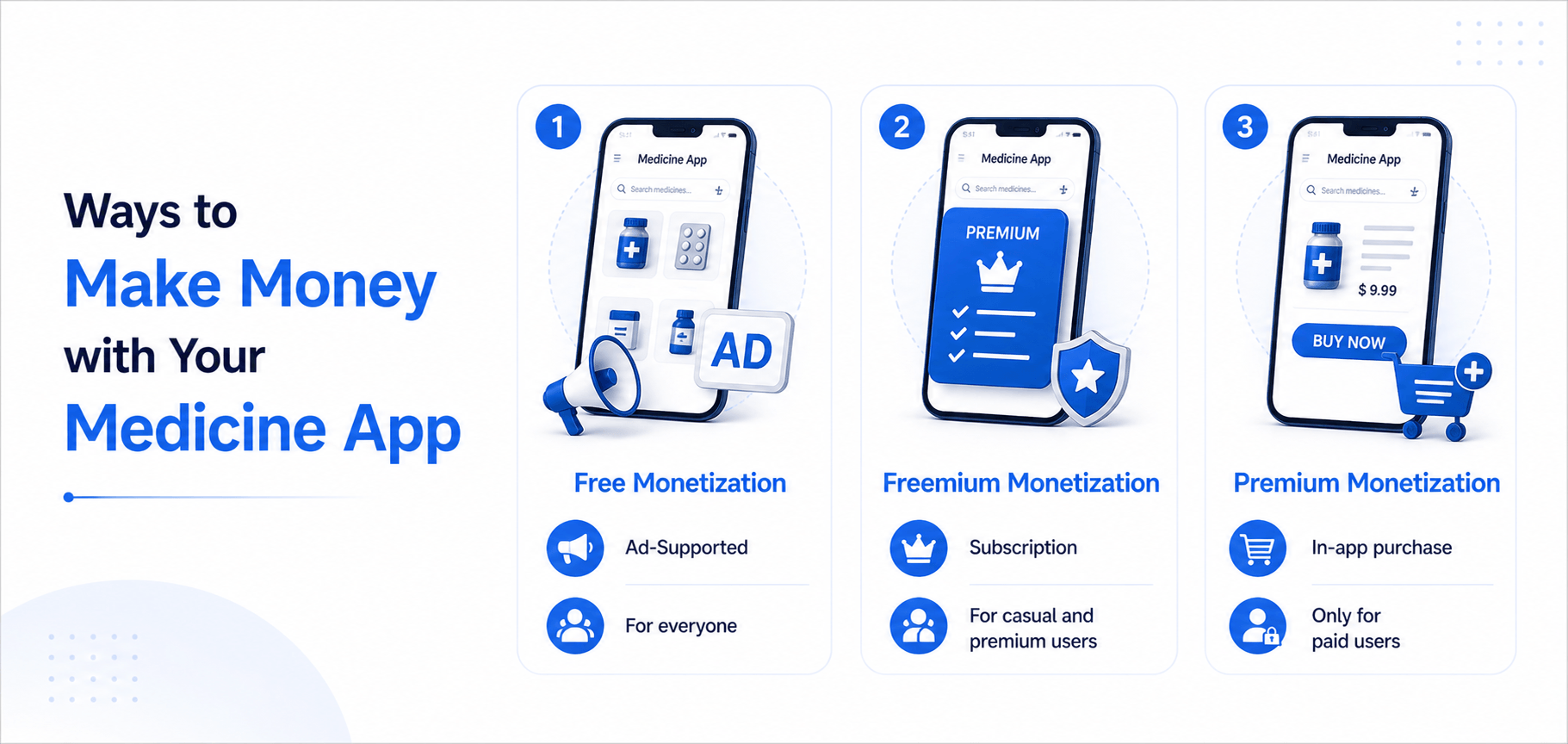
Yes, you heard it right, this is called Free (Ad-Supported) Monetization Model. Not all mobile apps are paid. In fact, most online pharmacy apps today prefer offering their services for free to attract more users and build a larger audience.
According to stats-
| Platform | Free Apps | Paid Apps |
| iOS | 94.9% | 5.1% |
| Android | 96.9% | 3.1% |
Although this is not only for medicine apps but it clearly shows how free apps dominate the market.
Ways to earn money from online pharmacy apps
Have you ever opened an app where some features are completely free but some features like instant delivery, etc comes with “Upgrade to Premium” or “Unlock Pro Features”?
If yes, then you’ve already experienced the Freemium Monetization Model.
These types of models are best way to connect with basic users and premium users. Because it includes both features so user from each category can be benefit.
In simple terms:
Freemium = Free Features + Premium Features
The freemium model works because it follows a simple strategy:
Have you ever downloaded an app that required an in-app purchase or was completely paid upfront? Those apps are called Premium apps. Unlike the above two, these are for paid users only. No ads, no other free access. Each feature requires money.
1. Unlimited Doctor Consultations – Speak with certified doctors anytime, without limits.
2. Advanced AI Health Insights – Personalized recommendations for diet, medications, and lifestyle.
3. Priority Medicine Delivery – Fast-track shipping for urgent medicines.
4. Comprehensive Health Analytics – Detailed reports on vitals, habits, and progress.
5. Ad-Free Experience – No interruptions from banners or pop-ups.
Why premium apps – because that is all about quality over quantity.
| What to Do | What to Avoid |
| Integrate secure payment gateways for safe transactions. | Don’t make a feature like a continuous ad pop- up |
| Offer a subscription model for recurring services. | Don’t pressurize user to buy any feature. |
| Give more features and value through advanced premium features | Avoid selling or listing unverified products, as this could harm your market reputation |
| Use clear and transparent pricing to avoid confusion. | Never hide any charges while making payments |
| Test different monetization models to find what works best for your audience. | Don’t avoid user feedback, read comments and work accordingly |
This app is primarily used in the USA, which allows users to manage their prescription, request refills, and have medicines delivered directly to their homes, with options for same-day delivery in many areas.
Download – More than 50 million
Premium Feature – CarePass subscription
NetMeds is a well-known Indian medicine delivery app that delivers medicines, healthcare products, and consultation at home. It aims at the Indian market, including urban and semi-urban areas, where access to pharmacies is limited.
Download – over 5 million
Premium features – Free delivery over INR 99, off on lab tests etc.
The Amazon Pharmacy, an innovative service delivery of Amazon, launched in the U.S., is naturally integrated into the existing e-commerce platform of Amazon in the U.S. market. Amazon Pharmacy also supports Prime members with discounted prices, speedy delivery options, and exclusive offerings on prescription medications.
Premium Features – RxPass-eligible meds for $5/month
Today’s generation wants to manage everything on their mobile phones, even medicine and health charts. The old traditional method of standing in a queue is being replaced by a simple one-click medicine order through mobile apps. Even the government authority is taking the initiative to create a unified digital health infrastructure for a more connected healthcare ecosystem.
Platforms like Tata 1mg and PharmEasy in India, along with global platforms like Capsule and CVS Pharmacy shows a clear difference in how digital healthcare adaptation is shaping the future of this industry.
Millions of users are using these apps and the market remains wide open for new apps that bring unique, innovative features.
Techugo, an on-demand medicine delivery app development partner, is there to guide you with its expertise that attracts and retains users. Step into the future of pharmacy delivery – Partner with Techugo for expert pharmacy delivery app development!
1. What is an online medicine delivery app?
An online medicine delivery app enables people to buy medicines and healthcare products online. Apps like this provide doorstep delivery in a few minutes
2. How does an online pharmacy app work?
An online pharmacy app allows users to search for medicine names, submit prescriptions, and buy with mobile payment methods. After receiving the order, the vendor sends products through a delivery partner, who delivers those medicines to your home.
3. Why should I consider developing a pharmacy delivery app?
Developing a pharmacy delivery app helps businesses reach a wider audience by offering convenience, faster deliveries, and a smoother shopping experience for customers.
4. What are the benefits of using an online medicine delivery app?
Online medicine delivery apps save time, offer a wide variety of medicines, and allow for easy reordering. They’re particularly helpful for people who can’t go to a pharmacy due to illness, age, or time constraints.
5. How can I start developing my own pharmacy delivery app?
The development of a pharmacy delivery app requires your attention toward a friendly UI, secure payment method, trusted delivery partner, and compliance with health regulations. Choosing an online medicine delivery app development, like Techugo, turns your vision into reality.
Managing an eCommerce business today means managing content, not just selling products because that is what really drives how your store looks and fee..
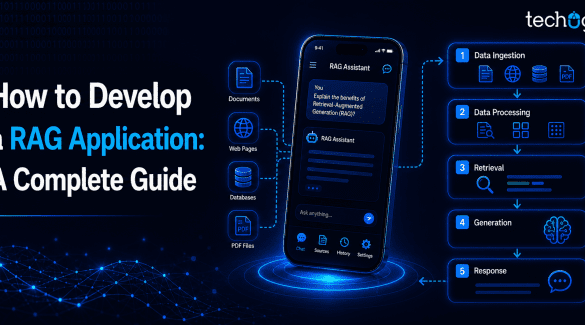
AI can do a lot, but even the smartest systems need a little context to work properly. If you are trying to figure out how to develop a RAG applic..



Write Us
sales@techugo.comOr fill this form