


 SA
SA
 KW
KW
 IE
IE AU
AU UAE
UAE UK
UK USA
USA
 CA
CA DE
DE
 QA
QA ZA
ZA
 BH
BH NL
NL
 MU
MU FR
FR


















React Native is a JavaScript framework designed for building truly native apps for platforms like iOS and Android. Backed by a powerful JavaScript library, it enables businesses to create scalable and efficient digital solutions across platforms.
However, when it comes to building a React Native app, several questions begin to surface about the process, required features, cost, and overall feasibility. There you need to get the right approach and professional’s advice in shaping a solution that aligns with your business goals.
Let’s explore what it really takes to build a successful React Native app and answer the key questions along the way.
USPs of React Native apps
- React Native apps are known for delivering strong performance, regardless of the operations you want to perform;
- Provide an efficient cross-platform development approach, allowing apps to run seamlessly on both iOS and Android;
- Improve app performance through native control and reusable modules;
- Enable code reusability with pre-developed components;
- Have a large and active developer community;
- Offer support for live and hot reloading, speeding up development cycles;
- Serve as a cost-effective solution for businesses looking to build scalable mobile apps.
Indeed, since its inception, the React Native framework has evolved significantly, and even today, it continues to strengthen its position in the mobile app ecosystem with continuous updates and community support.
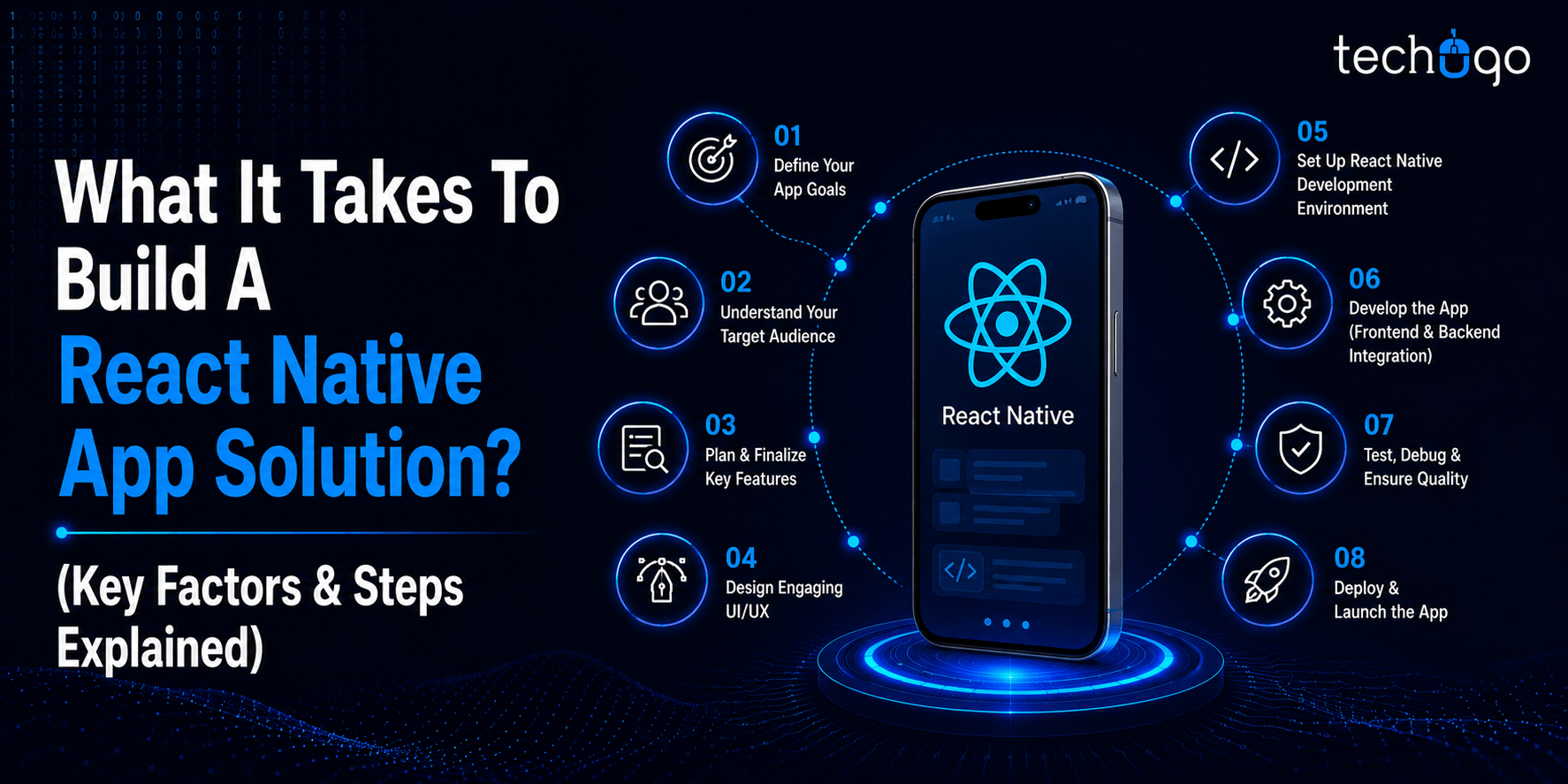
Now, the million-dollar question is: what does it really take to build a successful React Native app solution? Let’s explore the key factors and steps involved.
Elements that are necessary to build a React Native app
Hmm, as we all know, building a mobile app today is more a necessity than just a trend. That’s why brands are actively looking for smarter ways to leverage technologies like React Native to build their solutions efficiently. However, building an app is not just about coding—there are multiple factors involved that need close attention from the very beginning.
Developers are constantly exploring ways to simplify app presence across platforms and devices without creating two separate applications. Since that approach increases both time and cost, it often becomes impractical—especially for startups. This is where React Native provides a practical solution. It allows developers to use JavaScript to build apps that run smoothly on both iOS and Android from a single codebase.
To understand how to build a React Native app effectively, certain key steps and considerations need to be followed. Below, we’ve outlined the essential elements involved in the process. Let’s take a closer look.
Step 1. App complexity
Every app available on the stores reflects complexity from low to high, and the segmentation is based on multiple factors. Such as:
- Admin panel development
- Deployment architecture model
- In-app purchase
- Third-party integration
- Integration with legacy systems
Step 2. User authorization
An app that comes up with the user authorization, has to deal with different steps such as login, authentication, and data security layers. This can trigger the cost as well, hence as a developer, you need to pay attention to the different steps required in the authorization process while building a React Native app.
Step 3. Add-ons
The integration of different user-centric approaches within the mobile app cannot be given a miss. You must ensure that the app has social media buttons and other required add-ons to help the app.
Step 4. Select app category
You need to ensure to have a specific category for your app, which can be decided further by its functionality, security considerations, and more. A clear category also helps in aligning your app with market expectations.
Step 5. App design
Do you know what engages your users with the app? The app design; consisting of smooth transitions that enable users to move from one screen to another in a seamless manner. You need to take care of the UI/UX and must ensure to bring the best out of your app.
Step 6. Developer experience
Here, your chosen mobile app development company experience counts. They need to be extremely comfortable around the React Native technology, and the different other technological trends.
Step 7. App deployment
The distribution channel to deploy your app comes with certain pricing. For example, Android app publishing requires a one-time fee of $25, while Apple App Store publishing costs $99 per year.
Further, apps must meet platform-specific guidelines, including compliance with security standards and policies before approval.
Step 8. App maintenance
A React Native app comes up with different advantages, and its maintenance is also easy compared to other frameworks. Different plans and strategies are being offered by the app developers, you need to find the most suitable option and select the one for your app, that consists of app updates, app bug fixes, and design changes.
Common mistakes to avoid when building a React Native app
While building a React Native app, there are certain mistakes that can impact the overall performance and success of your solution. Hence, it becomes important to understand and avoid these common pitfalls at an early stage.
1. Ignoring app scalability
Many businesses focus only on the current requirements and forget to plan for future growth. This can create challenges later when the app needs to handle more users or features.
2. Overloading the app with features
Adding too many features at once can make the app complex and difficult to manage. It is always better to start with the essential features and scale gradually.
3. Choosing the wrong third-party integrations
Integrations play a crucial role in app functionality, but selecting unreliable or unnecessary tools can affect performance and user experience.
4. Neglecting performance optimization
Even though React Native offers strong performance, not optimizing the app properly can lead to slow loading times and lag in certain functionalities.
5. Skipping proper testing
Testing is one of the most important steps in building a React Native app. Ignoring it can result in bugs, crashes, and poor user experience after deployment.
6. Not focusing on user experience
An app with poor navigation or confusing design can fail to engage users, no matter how strong the backend is. UI/UX should always be a priority.
7. Hiring inexperienced developers
Working with a team that lacks expertise in React Native can lead to inefficient development and long-term issues. This is why choosing the right React Native app development company becomes important for building a reliable and scalable solution.
React Native app development indeed is the best choice to craft an app solution that fits your budget and meets the users’ expectations. It definitely gives your business a platform to get an edge over the competitors and brings a myriad of benefits to your business.
Why choose Techugo for your React Native app solution?
By now, it is clear that building a React Native app is not just about writing code. It requires the right strategy, planning, and execution. This is where you feel the real need of the right technology partner.
At Techugo, the focus is not limited to just development. The team works closely with businesses to understand their idea, define the right feature set, and build solutions that are scalable from day one. With hands-on experience across industries, the approach is always aligned with real business goals rather than just technical delivery.
From initial consultation to final deployment, every stage is handled with a structured process. This includes UI/UX design, development, testing, and post-launch support—ensuring that the app performs smoothly across platforms.
What also sets Techugo apart is its strong understanding of modern technologies and evolving user expectations. Whether it’s integrating advanced features, improving performance, or planning long-term scalability, the focus remains on building solutions that are ready for growth.
So, if you are planning to build a React Native app, working with an experienced React Native app development company like Techugo can help you avoid common challenges and move ahead with clarity and confidence.
Are you ready to turn your ideas into a DIGITAL reality?
If you have an awesome app idea, just give us a call. We are the industry-leaders with vast experience in building affordable React Native apps.
Get in touch with us today to receive a no-obligation quote for your app concept.

Get in touch
We'd love to hear from you.