

 SA
SA  KW
KW  IE
IE AU
AU UAE
UAE UK
UK USA
USA  CA
CA DE
DE  QA
QA ZA
ZA  BH
BH NL
NL  MU
MU FR
FR [ LET’S TALK AI ]
X
Discover AI-
Powered Solutions
Get ready to explore cutting-edge AI technologies that can transform your workflow!



Get ready to explore cutting-edge AI technologies that can transform your workflow!






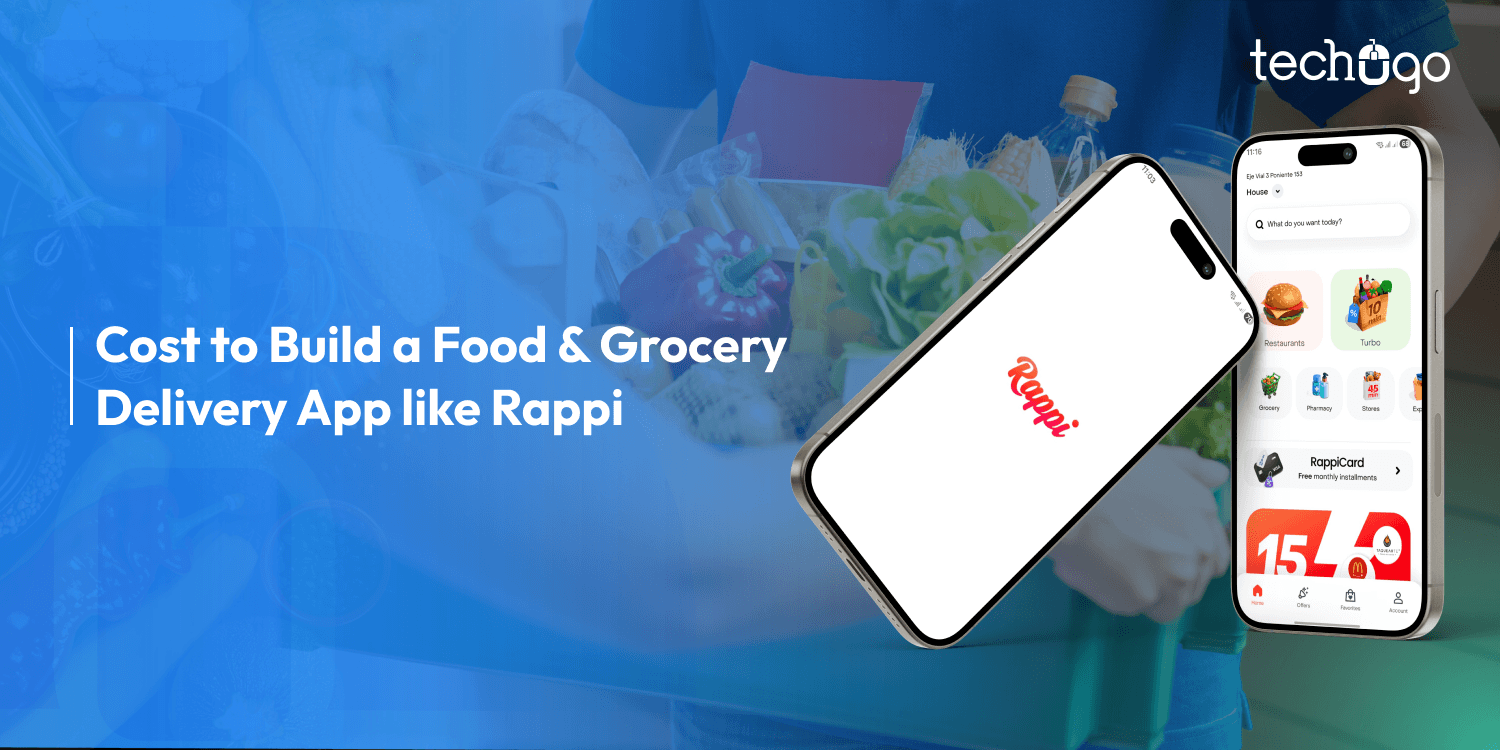
In the growing food and grocery delivery market, taking your first step is only feasible when you have an application or have given the task to someone to do. This is led by the growth in consumption as well as the ease of online delivery. However, it is critical to understand the economics and know the cost to build a food delivery app like Rappi, which has taken over the quick commerce. As there are multiple benefits attached to it, take this as your guide for illustrative costs, detailed insights, cost breakdown, and timelines.

Rappi is an ecosystem of online groceries and food delivery that allows people to order groceries and food over a mobile-based application. In simple words, it is a mobile application under which you can order groceries and food items on the go. However, in the recent past, the platform has shifted into something new and is considered a part of super app development. And this is why it is crucial to understand, “How much does it cost to make an app like Rappi?”
Living in a technological world, there cannot be a single factor affecting the reasons to even know the food and grocery delivery app cost, let alone invest in them. Hence, some of the reasons include:
Over the past few decades, the food delivery and grocery segment has grown rapidly. With the adoption of smartphone trends, extensive internet penetration, and digital payments, the narrative has changed. As everything is available at the palm of your hand, it has made it easier for people to meet their daily food demands.
Food deliveries and grocery delivery apps have become increasingly popular due to today’s fast-paced lifestyles. Many people have hectic work schedules, so they are looking for ways to order meals or buy essential groceries directly from their homes. With the provision of quick commerce services, which can deliver to your door in a matter of minutes, customers are more reliant on these apps than ever before.
The question, “How much is the cost to develop an app like Rappi in 2026?” is also motivated by the factor of earning extra revenue. Therefore, the intention to earn extra income or develop multiple streams of revenue is one of the major reasons. Moreover, businesses can generate income through in-app advertisements, which also leaves room for promotional development for restaurants.
When users depend on their food and grocery requirements from a mobile application, the insights generated from such interactions are invaluable. Data points such as consumer behavior, peak time buying of consumables, and others can be leveraged. By evaluating this information, companies and founders can get to the very core of business building. Moreover, data-driven decision-making is relevant in the current dynamic scenario.
After the COVID-19 pandemic, the very core of human DNA has changed. Large parts of the population are going towards feasibility and ease of doing business. And during this time, people depended on delivery applications for both food and groceries. Thus, this alteration in the behavior of customers is driving changes in the quick commerce industry.

If you want to explore the food and grocery delivery market, some of the insights suggest:
Rappi clone app development cost and features are important and should be considered without any delays. All of the functions mentioned under this section define the total cost of making and thus include the following:

With a clear understanding and structure, Rappi-inspired food delivery app development must provide all customers, new and repeat, with dishes on the menu. For better details, you can include a name, description, and image as well.
Looking at the menu, if there is scope for modification, you can customize it according to the demand. Through the assistance of check boxes for specific ingredients and creating room for instructions, user adoption will only be enhanced.
Being able to track where the order is currently reduces anxiety among users. This immensely affects the grocery app like Rappi development price.
1) Order Progress Timeline
2) Live Map Tracking
3) Estimated Time Updates
If the ETAs are delayed, update them automatically.
4) Contact Delivery Driver
Users can call or text the delivery driver if they need to.
Every user must be able to access each item on an on-demand grocery delivery app. Going through the software and looking for what to order can be a hefty task. Therefore, search and filter allow you to go in-depth but quickly through categories. Thus, this only saves time and enables the user to search for more items rapidly.
The cart and checkout process is where conversions are fulfilled. Simply put, a longer, more complex checkout process will lead to more abandoned carts.
Take a look at some of the essentials:
1) Adding/removing items
Customers should be allowed to:
2) Price Breakdown
Customers need to have visibility into the price breakdown of the following:
Increased transparency leads to increased trust from your customer base.
3) Discounts & promo codes
Customers should have the ability to apply.
Many times, customers will complete the order process simply because they received a discount.
Payments need to be secure, convenient, and adaptable so that the user can trust and come again for interaction.
1) Various Payment Methods
Payment options include, but may not be limited to:
Adding alternative payment methods can help increase the number of successful transactions.
2) Secure Payment Gateway
Payment systems must use:
3) Refund Management
Refunds should occur automatically for:
4) Retry Payment
If a payment fails on the customer’s end, then they should have the ability to reattempt that payment without having to recreate their original order.
The average cost to build a delivery app like Rappi depends on multiple factors. However, from basic to advanced elements, below is the cost breakdown for building a delivery app like Rappi:
Hence, above is the cost to hire developers for a Rappi-like app. But the budget estimate for food delivery app development fluctuates due to the features demanded, which include
In the process of developing a food delivery and grocery software, the cost to create an app like Rappi for startups will include some overhead costs. Thus, take a look at some of the estimated costs and timelines for Rappi-style app development cost and timeline:
Starting a grocery delivery app development company has some costs that you can reduce. Therefore, some of the ways include:

Rather than developing an app that has every feature, launch with only the essential features first. This approach will give you an idea of how the market operates with clear and effective insights.
Here are the essential MVP features:
Developing programs for iOS and Android can cost you. Instead, you can take the help of cross-platforms like Flutter & React Native. Thus, frameworks allow for a single codebase for both platforms, which inherently reduces cost significantly.
To save time and build on the back of successful applications, it is viable to use ready-made APIs. So, avoid creating everything from scratch and use resources like the following:
Pre-made delivery application kits are provided by numerous businesses. Because of their lower cost, it is more affordable to customize one of these than to design your own.
Some of the benefits attached to it consist of the following:
Outsource your development to lower-cost labor markets such as:
Utilize cloud offerings instead of constructing your own data centers.
Cloud services offer flexible, pay-per-use pricing, reducing the initial capital expenditure on information technology infrastructure.
In the digital marketplace, different developers will charge multiple fees and provide you with different project time estimates. Hence, it is in the best interest of businesses, especially startups, to get the best deal. This really affects the Rappi alternative app development cost.
As a part of the greater app development industry, Techugo has been helping businesses to develop grocery and food delivery applications for 10+ years. Since 2015, we have helped businesses to create a name for themselves in the brick-and-mortar world. For our clients, our professional software developers and expert UX/UI designers have contributed to:
After reading all this, and still you haven’t taken action? Then take the first step with us!
Building and knowing the food delivery app development pricing are two of the major elements in the development of the whole application. From an entrepreneurial point of view, it is vital to not only know about pricing but also the factors that affect it. From a wide list of reasons, some of them include details of the order; capabilities like search and filter; order tracking; bugs and glitches; IT support; hosting; and many others. However, the opportunity at hand is immense and does offer advantages other than monetary ones. But the cost to build a food delivery app like Rappi can cost somewhere from $10,000 to $100,000, depending on the capabilities that you would like to have. Therefore, from the point of view of businesses, you can always take the help of experts who hold experience not only in software development but also in UI/UX design of mobile applications.
The on-demand food delivery app development cost will usually fall between $10,000 and $100,000+ based on the complexity, number of features desired, iOS v/s Android, and the team you choose to build your app. Creating an MVP will generally cost less than developing a complete platform with many advanced integrations.
Development costs are affected by a plethora of aspects that include:
Understanding the grocery and food delivery app development pricing is fundamental to the functioning and budgeting strategies of an established business or startup. Knowing the estimated costs of an application allows one to be able to add and subtract features that are critical to attracting users in the first place. Thus, money saved can later be applied in various aspects of the business, making it frugal.
Typically, creating a delivery app similar to Rappi takes about 3 to 9 months. An MVP can take approximately 3 to 4 months to create. However, the development timeline for a feature-rich delivery platform with extensive functionalities could be 6 to 9 months or longer.
Yes! Most delivery services will utilize three distinct interfaces: an application for the customer, an application for the delivery partner, and an application for the merchant/vendor with an admin panel to control the entire operation.
Understanding how much it costs to build a dating app matters a lot more today, especially as online dating keeps turning into a massive multi-billion..

Real estate has been a rising source of income and wealth since the dawn of time. However, the piece of land is shrinking, thanks to the onset of real..



Write Us
sales@techugo.comOr fill this form