

 SA
SA
 KW
KW
 IE
IE AU
AU UAE
UAE UK
UK USA
USA
 CA
CA DE
DE
 QA
QA ZA
ZA
 BH
BH NL
NL
 MU
MU FR
FR


















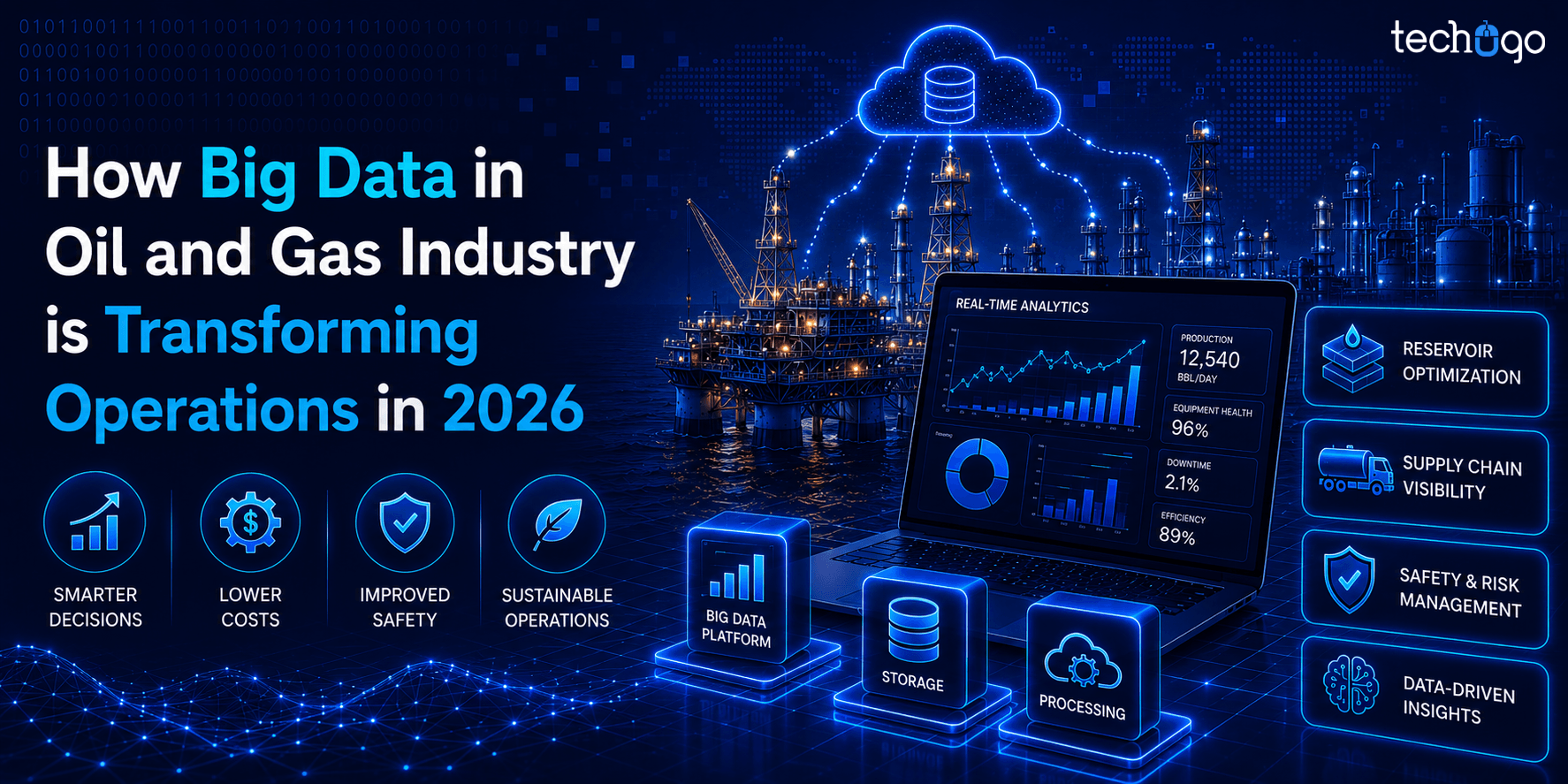


Oil and gas sector has always been at the heart of the global economy. Every minute, every day, companies are making decisions that rely on huge amounts of data. But today things are not as simple as before because margins are tighter, supply chains are more complex than before, and as we all know, geopolitical risks are rising, so companies cannot afford to ignore insights from their data. That’s why big data in oil and gas is becoming a lifeline, a tool that can really make a change.
The ongoing conflict between Iran and Israel has added even more uncertainty; oil and gas markets across multiple countries have been affected. Because shipping routes like the Strait of Hormuz were disrupted and regional energy infrastructure has faced pressure. Prices are fluctuating and simultaneously companies are realizing that relying on old approaches is not enough now. They need smarter strategies, monitoring that happens in real-time, and predictive insights so that they can stay ahead.
For you, in the oil and gas industry, this means there is a huge opportunity to use data in ways that were not possible before. You can predict equipment failures, you can optimize production, you can even minimize risks. Big data has been helping companies adapt and operate more efficiently even when challenges are bigger than ever.
We’re going to talk about the benefits, challenges, as well as the real-world use cases of using big data in oil and gas so that you can understand why a strong data strategy is not optional but essential in 2026.
What is Big Data in Oil and Gas Industry?
Big data in oil and gas industry is basically the huge amount of information that companies collect from all parts of their operations. And it’s not just numbers, it’s data from sensors, drilling equipment, production systems, supply chains, and even the market. Everything generates data and it can be used if analyzed the right way.
It has long been hard because the data were scattered and stored in different systems and often too big or complex to handle but now with advanced analytics tools, cloud platforms, and AI, companies can gather this information easily, process it quickly, and even make decisions based on real insights. So when you talk about big data in oil and gas, it’s not just about collecting tons of data; it is about providing a company with actionable and usable knowledge so that it can operate more efficiently and reduce its costs, as well as have fewer workplace accidents.
In simple terms, since companies using big data in the oil and gas are working their way through this transition without too much difficulty, while other companies that are not currently using big data tools may have trouble getting through these recent disruptions – geopolitical shifts, volatility of crude oil pricing, and supply chain disruptions and shocks.
In addition, big data gives companies the ability to predict equipment failure, optimize drilling patterns/locations, track inventory and predict future demand for goods and services, making for smarter, safer and more profitable operations.
Key Components of Big Data Analytics in the Oil and Gas Industry
There are a variety of different technologies and components that work together to help organizations maximize their data into useful business insight. Therefore, when speaking about big data in oil and gas industry, it is important to understand which technologies and components help companies to make better decisions, reduce risk and reward efficiency to establish appropriate business strategy(s) to achieve business objectives.
1. Data Collection
This is the first step, and it includes gathering information from sensors on drilling rigs, production equipment, pipelines, and even satellites. It also comes from supply chains, market trends, and historical records. Without proper data collection, analytics cannot happen, so this part is critical.
2. Data Storage and Management
After collecting the data, data has to be stored safely and organized. Companies that use cloud systems and on-premise servers can handle huge volume of information. Good storage and management ensure that data can be accessed quickly when needed and it prevents bottlenecks or losses.
3. Data Processing and Cleaning
Raw data is messy, there are errors, duplicates, and gaps. It has to be cleaned and processed before it can be useful so that analytics give accurate results whether it’s about predicting equipment failure, analyzing production efficiency, or monitoring supply chains.
4. Advanced Analytics and AI
Here comes machine learning, AI, and predictive modeling that help companies find patterns in the data, anticipate issues before they occur, and make smarter decisions. It is this component that turns big data solutions for oil and gas companies into real value.
5. Visualization and Reporting
Lastly insights need to be presented in a way that decision-makers can easily understand and take action. It should include dashboards, reports, and real-time alerts so that it becomes easy to track performance, identify risks, and plan operations as well.
These components together form the backbone of big data in oil and gas and allow companies to be proactive rather than reactive. So that operations are safer, more efficient, and even more profitable in unpredictable times like the current energy market crisis.
Why Should Oil and Gas Companies Invest in Big Data Analytics?
When you ask why oil and gas companies should invest in big data analytics, the answer is very practical, and it goes beyond just “data is useful.” Today the global energy world is more unpredictable than ever… prices are fluctuating due to geopolitical tensions (like the recent Iran–Israel conflict). Supply chain pressures are increasing. Demand dynamics are changing. In such environment, relying only on instinct or outdated methods isn’t just enough.
First, let’s talk about tangible business impact. Research by Bain & Company shows that companies with strong analytics capabilities are twice as likely to be in the top quarter of financial performance in their industry, and they make decisions faster and execute them more reliably.
That’s not a small thing in a capital‑intensive industry like oil and gas. The same research suggests that analytics can help improve oilfield and plant performance by around 6% to 8% which, in high‑volume operations, translates directly to revenue and reduced costs.
So, why does this matter now more than before? Because the industry is generating more data than ever, from sensors on rigs, pipelines, and refineries to geological, operational, and market data but most companies aren’t yet using more than a fraction of it.
According to industry insight reports, many operators have data but use less than 1% of it for advanced analytics. This means that there is a huge latent value sitting unused if you don’t act.
Here’s how big data analytics creates value in a complex, volatile market by –
- Smarter Decisions: Automated models help adjust production and logistics faster during price swings or supply disruptions.
- Operational Efficiency: Predictive insights reduce unplanned downtime and optimize resource use.
- Competitive Advantage: Companies anticipate demand, optimize drilling, and avoid costly mistakes.
- Risk Management: Real-time monitoring enhances safety and environmental compliance.
Investing in big data in oil and gas transforms how decisions are made, risks are managed, and operations stay resilient. Without it, companies risk falling behind competitors already using data as a strategic asset.
Also Read – Drilling into the Future With Artificial Intelligence in Oil and Gas Industry
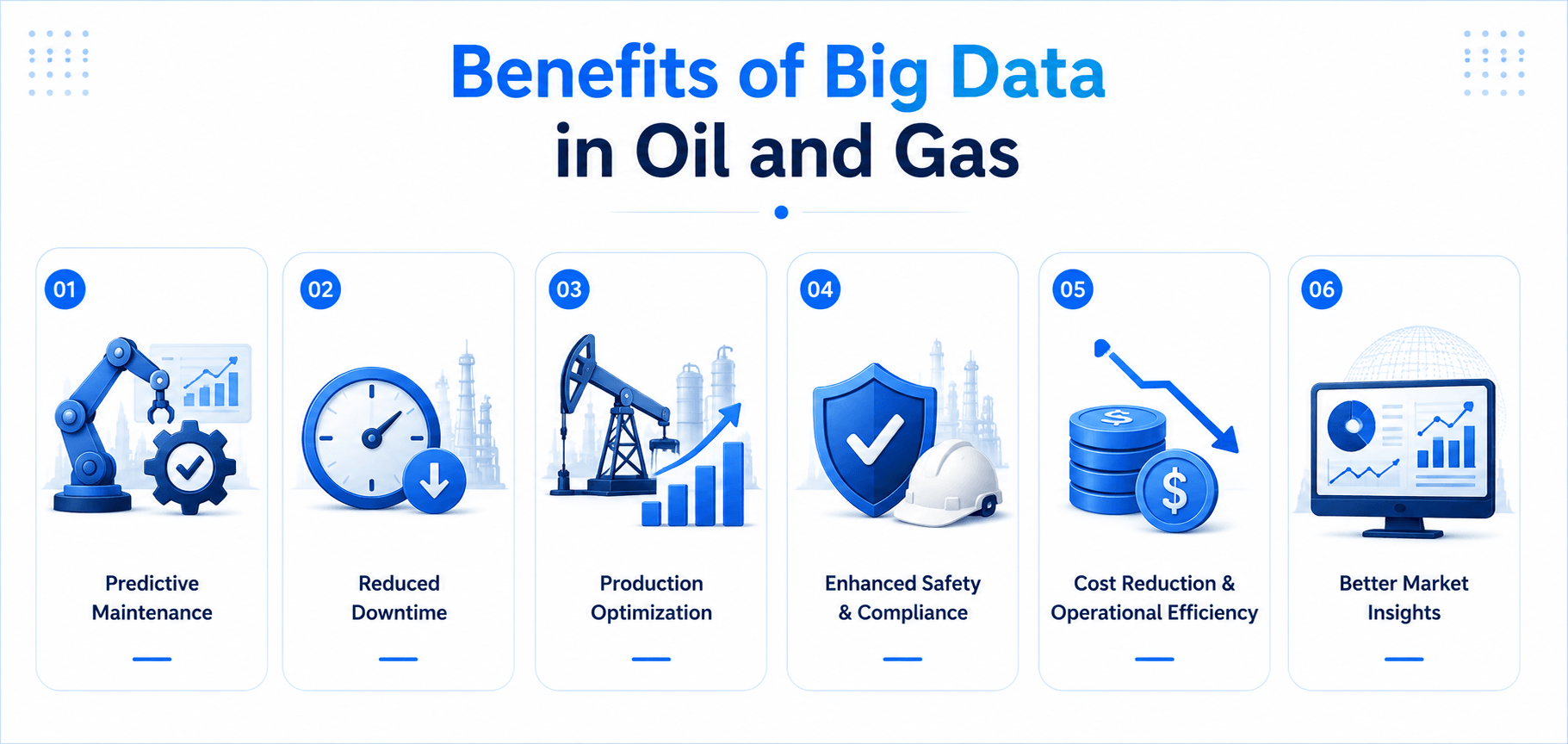
What are the Benefits of Big Data in Oil and Gas?
Using big data in oil and gas comes with many advantages, and it’s not just about technology, it’s about how operations are transformed, money is saved, and safety is improved. Even small gains can make a huge difference in this industry because the stakes are high and costs are massive.
1. Predictive Maintenance and Reduced Downtime
Equipment failures are a huge problem and have always been. But now with big data, companies can predict issues before they happen because sensors, IoT devices, and analytics – they all continuously monitor performance so that maintenance can be scheduled proactively, and when downtime is reduced, operations run smoother, costs are lower, and teams can focus on other tasks.
2. Production Optimization
Big data lets you analyze drilling, reservoir, and production data so you can spot bottlenecks or missed opportunities. Companies can make decisions based on data, and can increase output and reduce waste. They can even manage resources better than before.
3. Enhanced Safety and Compliance
Safety is always critical in oil and gas because accidents are costly and sometimes catastrophic but now analytics helps detect anomalies in pipelines, in rigs, or in refineries so that you get alerts before anything serious happens. It even helps track environmental compliance so that you can prevent fines and reputational damage.
4. Cost Reduction and Operational Efficiency
Companies can analyze supply chains, fuel use, and inventory to cut unnecessary costs. Big data makes procurement smarter, logistics more efficient, and assets better utilized which ultimately improves the bottom line.
5. Better Market Insights and Strategic Planning
Analytics helps forecast demand, track price trends, and adjust production strategies and in times of volatility like the recent Middle East tensions, big data gives you insights that allow quick, confident decisions so that you are not caught off guard.
So in short, big data solutions for oil and gas companies are not just nice to have, they are essential. They have been helping companies operate smarter and more profitably even when challenges are bigger than ever, and will continue to do so.
Top Use Cases of Big Data in Oil and Gas
Big data in the oil and gas industry is not just about collecting numbers, it’s about turning that data into action and the results can be really game-changing. So what are the main use cases and how are companies actually using it? Let’s see.
1. Predictive Maintenance
Equipment failures were always a huge problem and downtime can stop production for days. But big data helps predict issues before they happen because sensors and historical data show patterns you might miss. For example, Shell uses predictive models on offshore rigs so that maintenance happens before breakdowns which saves money and keeps operations safer.
2. Reservoir and Exploration Optimization
Companies analyze geological and seismic data to figure out the best drilling spots like ExxonMobil, which uses advanced analytics to predict where oil reserves are most likely to be which means less wasted drilling and less unnecessary cost.
3. Production Efficiency
Analytics tracks well output, plant performance, and equipment conditions in real time so you know what’s underperforming. BP for example monitors its North Sea fields, schedules maintenance before problems occur, and keeps production steady because downtime is expensive.
4. Supply Chain and Logistics
With big data, companies can track shipments, inventories, as well as delivery schedules so that resources are in the right place at the right time. Here a perfect example is Royal Dutch Shell which analyses regional fuel demand trends and optimizes routes so that it can reduce storage costs and prevent shortages that could disrupt operations.
5. Risk Management and Safety
Safety is critical because accidents are costly and sometimes catastrophic but thankfully analytics lets companies detect hazards early and monitor equipment, and also maintain compliance. Chevron for instance uses big data to predict risks and prevent accidents as well, so that operations stay safe and environmental issues are avoided.
6. Energy Trading and Market Insights
Oil and gas prices fluctuate constantly and companies need to act fast. Analytics helps forecast demand, track prices, and optimize trading. Companies can make better decisions in real time by combining production, logistics, and market data which is critical when markets are volatile.
7. Environmental Monitoring
Sustainability matters more than ever, and big data tracks emissions, energy use, and environmental impact. By analyzing this data, companies can reduce their carbon footprint, stay compliant, and improve corporate responsibility because regulators and investors increasingly demand it.
In simple words, big data in oil and gas industry is being used at every stage from exploration to distribution and each use case, not only improves efficiency but also builds resilience in a market that is unpredictable and constantly changing.
Challenges of Implementing Big Data in Oil and Gas Industry
While big data in oil and gas industry brings enormous benefits, it’s not all smooth sailing. Companies face several challenges, and it’s important to understand them before investing heavily.
1. Data Volume and Variety
The oil and gas industry generates massive amounts of data every day, from sensors on rigs, drilling equipment, pipelines, refineries, and even market and weather data. But the sheer volume, variety, and complexity of this data can be overwhelming. If it’s not structured or managed well, it’s almost impossible to extract useful insights.
2. Integration with Legacy Systems
Many oil and gas companies have older systems that weren’t designed to handle big data. Integrating new analytics platforms with legacy software is challenging, time-consuming, and sometimes expensive. And without proper integration, data remains siloed, reducing the effectiveness of analytics.
3. High Implementation Costs
Setting up a big data infrastructure, buying analytics tools, hiring skilled data engineers, and training staff can be expensive. For smaller companies, this can be a major barrier, especially when ROI might take time to appear.
4. Shortage of Skilled Professionals
You need experts who can handle complex analytics, data modeling, and machine learning. But hiring qualified big data developers for the energy sector has been a challenge globally. Many companies struggle to find the right talent to implement and maintain analytics solutions effectively.
5. Data Security and Compliance
Oil and gas data is sensitive, including operational secrets and market insights. Ensuring security and compliance with regulations, especially when using cloud platforms, is critical. Breaches or leaks can be costly, both financially and reputationally.
6. Change Management and Adoption
Even if technology is ready, people need to adopt it. Some employees may resist new processes, or fail to trust analytics in decision-making. Companies need a culture shift to make data-driven decisions the norm, and this can take time and effort.
Despite these challenges, companies that adopt big data solutions for oil and gas companies carefully, plan properly, and invest in the right infrastructure and talent, can reap the benefits because the competitive advantage is huge, and the market is increasingly unpredictable.
How Can Companies Overcome Big Data Challenges?
Yes, implementing big data in oil and gas industry is challenging, but there are proven ways to tackle these issues so that companies can fully benefit.
-
Invest in Scalable Infrastructure
Because the volume of data is enormous, companies should adopt scalable cloud or hybrid solutions. This allows storage and processing power to grow with operations, so you aren’t limited by legacy systems or on-premise constraints.
-
Integrate Systems Thoughtfully
Instead of overhauling everything at once, companies can focus on incremental integration. Combining new analytics tools with existing systems in stages ensures smoother workflows and reduces the risk of data silos.
-
Hire and Train the Right Talent
The shortage of skilled professionals can be addressed by hiring specialized big data developers for the energy sector and investing in training programs. Partnering with big data consulting services for oil and gas can also help bridge knowledge gaps quickly.
-
Focus on Data Governance and Security
Companies should define clear policies for data quality, access, and compliance. Encrypt sensitive information, monitor usage, and regularly audit systems to prevent breaches. This ensures that analytics can be trusted, and regulatory requirements are met.
-
Encourage a Data-Driven Culture
Technology alone isn’t enough. Leaders must encourage teams to use analytics in daily decisions. Workshops, pilot projects, and success stories help employees trust data insights and adopt new processes more naturally.
-
Partner with Experienced Providers
Working with a leading oil and gas software development company or specialized analytics vendors can accelerate implementation. These partners bring industry expertise, ready-to-use solutions, and guidance to navigate challenges effectively.
By taking these steps, companies can overcome hurdles, maximize the value of big data solutions for oil and gas companies, and gain a competitive edge even in a volatile and complex market.
Future of Big Data in Oil and Gas
The future of big data in oil and gas industry is exciting, and it’s clear that it will only become more central to operations, strategy, and decision-making. Companies are increasingly using advanced analytics, AI, and IoT to predict trends, optimize production, and even anticipate market changes before they happen. And as technology evolves, these tools are becoming faster, smarter, and more accessible, so even smaller operators can benefit.
We’re already seeing a shift toward real-time data-driven operations where companies don’t just react but they proactively adjust drilling schedules, supply chains, and maintenance plans. The combination of predictive analytics and AI will allow better energy trading, smarter resource allocation, and safer operations, because risks can be anticipated rather than discovered after the fact.
Moreover, with sustainability becoming more critical, big data will play a key role in reducing carbon emissions, monitoring environmental impact, and ensuring compliance with global standards. Companies that adopt these technologies early will not only save costs but also gain a competitive edge in a market that is increasingly volatile, as we’ve seen with recent geopolitical tensions in the Middle East and global oil price fluctuations.
And the good news is, partnering with a leading oil and gas software development company or working with specialized analytics providers will make this transition smoother. They bring expertise, ready-to-use solutions, and the guidance companies need so that data is collected as well as turned into actionable insights that drive growth and efficiency.
In short, the future is about smarter decisions and better planning. So big data in oil and gas isn’t optional anymore but is the backbone of a modern, sustainable energy sector.
Leverage Techugo’s Expertise in Big Data Analytics Technology
When it comes to implementing big data in oil and gas, having the right partner can make all the difference. Techugo, a leading oil and gas software development company, brings years of experience helping companies harness the power of analytics, AI, and IoT.
Our team works closely with clients to understand operational challenges, design customized big data solutions, and turn complex data into actionable insights.
With the support from Techugo, companies adopt technology as well as transform operations. We ensure that data is used effectively to reduce costs, increase efficiency, and enhance safety. Our expertise also extends to mobile solutions so you can integrate insights on-the-go with help from a trusted mobile app development company.
By partnering with Techugo, oil and gas companies can take advantage of advanced analytics without the usual headaches of hiring, training, or managing in-house teams. This approach ensures faster deployment, better ROI, and a competitive edge in a volatile market.
So whether you’re looking to optimize operations, improve safety, or stay ahead of industry trends, Techugo’s big data consulting services for oil and gas provide the expertise and solutions you need to succeed.
Don’t wait anymore, contact us today. We’re ready to become your partner in your growth.
FAQs
Q. How are oil and gas companies using big data solutions?
Oil and gas companies use big data solutions for oil and gas companies to make smarter decisions across exploration, drilling, production, and distribution. Data from sensors, IoT devices, and historical records is analyzed in real time, so companies can optimize output, reduce costs, and improve safety. For example, companies like ExxonMobil and BP use analytics to identify the best drilling sites, monitor equipment, and manage logistics efficiently.
Q. How does big data improve safety and compliance in oil and gas operations?
Safety and compliance are critical in oil and gas, because accidents and regulatory violations are costly. Big data in oil and gas industry helps by monitoring equipment, environmental conditions, and operational behavior. Anomalies are detected early, alerts are sent to teams, and risks can be prevented before they escalate. This ensures regulations are met, incidents are minimized, and operations are safer overall.
Q. Which technologies are driving big data adoption in the oil and gas sector?
Several technologies are fueling the adoption of big data in oil and gas. IoT sensors collect operational data, cloud platforms store and process massive datasets, AI and machine learning provide predictive insights, and advanced analytics software helps visualize trends. Together, these technologies allow companies to monitor performance, optimize production, and forecast demand efficiently.
Q. How do predictive maintenance and analytics help reduce downtime in oil and gas?
Predictive maintenance uses real-time data from sensors and historical performance to anticipate equipment failures before they happen. By analyzing this data, companies can schedule maintenance proactively instead of waiting for breakdowns. This reduces downtime, keeps production steady, lowers repair costs, and ensures safer operations, making it one of the most valuable applications of big data solutions for oil and gas companies.
Q. Why should energy companies invest in big data analytics now?
Investing in big data in oil and gas industry is crucial because the market is volatile, competition is fierce, and operational efficiency can mean millions saved. Analytics helps companies optimize production, reduce costs, improve safety, and respond quickly to market or geopolitical shifts. With technologies evolving rapidly, companies that adopt big data now gain a significant competitive advantage and long-term resilience.

Get in touch
We'd love to hear from you.