

 SA
SA  KW
KW  IE
IE AU
AU UAE
UAE UK
UK USA
USA  CA
CA DE
DE  QA
QA ZA
ZA  BH
BH NL
NL  MU
MU FR
FR [ LET’S TALK AI ]
X
Discover AI-
Powered Solutions
Get ready to explore cutting-edge AI technologies that can transform your workflow!



Get ready to explore cutting-edge AI technologies that can transform your workflow!






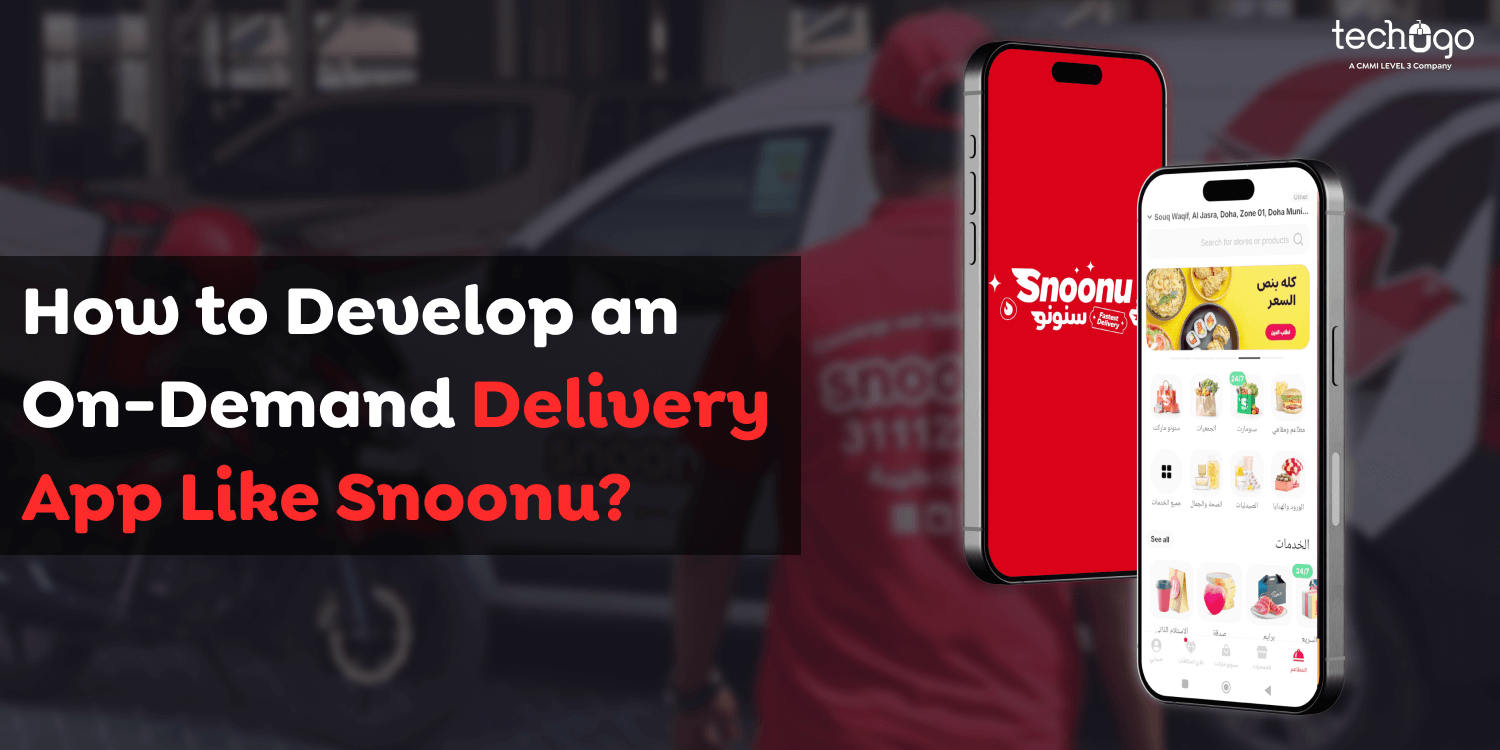
Do you know that the online food delivery market in Qatar is growing fast?
Yes, residents spent over QAR 5.2 billion on food delivery in 2024 alone, and that’s like, over QAR 14 million every day. People are just ordering on apps now, not going out.
Analysts say the Qatar online food delivery and platform services market could hit around US$1.628 billion (QAR 5.9 billion) by 2025, with growth at roughly 12.5 % CAGR till 2029, steady, but very promising.
You have the big names like Talabat, Careem Now, HungerStation, Uber Eats… and even CAFU creeping in, expanding their offerings such as food, groceries, quick commerce, etc. Basically, everyone wants a piece of this pie. And it’s not just revenue, right? Competition drives innovation, better features, and naturally, more mobile apps for people to tap and order.
Snoonu, yes, you heard of it, is one of the fastest-growing on-demand delivery apps in Qatar. They do food, groceries, retail products, and same-day delivery 24/7, making life easier. For everyone. Investors, take note, there’s opportunity here.
Seriously, if you’re thinking about building an on-demand delivery app like Snoonu, this is prime time. With consumers craving convenience, mobile penetration rising, digital payments everywhere, the market is ready. Build a multi-service app, satisfy users, grab market share, maybe even ride the tech wave with AI, smart logistics, all that jazz.
Also Read: On-Demand Delivery Apps in UAE: Trends in Food, Grocery & Logistics
Snoonu is a rapidly growing organization in Qatar. It offers customers the fastest delivery services in the country. The company’s online app enables users to access various services, including food delivery, groceries, retail stores, and more.

| Food Delivery | From local eateries to fine dining establishments, Snoonu delivers diverse culinary preferences to doorsteps. |
| Grocery Delivery (Snoomart) | A 24/7 service that delivers groceries within 30 minutes, from everyday essentials to specialty items. |
| E-commerce (SnoonuMarket) | Users can shop for electronics, baby supplies, books, sports equipment, and more, all from the convenience of their homes. |
| Pharmacy Delivery (Snoopharma) | Offers a vast selection of health and wellness products, including medications, skincare, and nutritional supplements. They also provide the option to consult a pharmacist during the purchase process. |
| Flower and Gift Delivery (Snooflower) | Flowers and gift delivery within 30 minutes, supports local businesses and offers personalized gifting options. |
| Package Delivery (Snoosend) | Provides secure, door-to-door package delivery services across Qatar, ensuring timely logistics solutions. |
The services provided under one roof have streamlined residents’ daily chores, enriching their lives. The company focuses on customer satisfaction through rapid delivery times, user-friendly interfaces, and continuous innovation. This has created a loyal customer base and given the company a strong market presence. For example, enhancements to in-app features, such as refining the search function to exclude closed merchants, improved user satisfaction and led to a revenue increase of about $100,000, exemplifying the relationship between user experience enhancements and business growth.
Developing an app like Snoonu offers several benefits that can significantly improve business operations and customer engagement:

An on-demand delivery app streamlines the purchasing process, allowing customers to order goods and services with a few taps on their smartphones. The modern consumer prefers this convenience, boosting customer satisfaction and retention.
A dedicated app is always on customers’ devices, reinforcing brand recognition. Features like personalized recommendations, exclusive promotions, and loyalty programs can be included to further bond with users and encourage repeat business and long-term loyalty.
Businesses can use a single platform to provide multiple services, such as food delivery, grocery shopping, and e-commerce. Diversification increases revenue as the customer base widens and the average transaction value increases per user.
An adaptable app infrastructure allows businesses to scale their operations efficiently based on app trends and consumer needs. This means the platform remains competitive and up-to-date, easily integrates new services, and expands to other regions where opportunities arise.
Also Read : Building an App Like Kibsons: Costs, Features, and Monetization Strategies
Developing an on-demand delivery app like Snoonu requires incorporating features tailored to the needs of users, delivery personnel, and administrators. Explore the key features of each group:

Developing an on-demand delivery app involves selecting an appropriate business model and strategies to generate revenue for profitability. Here’s an overview of standard business models and revenue streams:
| Single-Store Model | Aggregator Model | Hybrid Model |
| Designed for individual businesses aiming to offer delivery services directly to their customers. | Acts as an intermediary, connecting users with multiple stores or restaurants without managing logistics. | Combines elements of both single-store and aggregator models. Offers products from various vendors while managing deliveries. |
| Commission-Based | Charges vendors a percentage fee per transaction facilitated through the platform. |
| Subscription Model | Users or vendors pay a recurring fee to access premium features or services. |
| Advertisement and Promotion | Generates revenue by displaying targeted ads or promoting partner businesses within the app. |
| Freemium Model | Provides basic services for free while offering advanced features at a premium. |
| On-Demand Marketplace Fees | Marketplaces charge fees for services such as listing items, processing payments, or facilitating secure transactions between buyers and sellers. |
A step-by-step process is used to develop an on-demand app like Snoonu, resulting in a product that can meet market requirements and consumer expectations. The key steps in this process are explained below.
Analyze the current trends, customer preferences, and competitive landscape to identify opportunities and challenges. Identify your potential users’ demographics, behaviors, and needs to tailor the app’s features. Analyze existing apps to understand their strengths and weaknesses to differentiate your offering.
Partner with an on-demand app development company with good experience creating on-demand delivery apps. Provide clear definitions of the app features, functionalities, and goals with the developers for better collaboration. Also, regularly follow up with the developer team to ensure an issue-free process. Communicate timely to solve issues or problems encountered by the developer teams.
Ensure the app is user-friendly, with a clean layout and menus accessible to everyone. It should also be optimized for different devices to display consistently on various screen sizes. This app should also have attractive visuals and branding to engage users.
Develop a backend that can handle increasing user loads and data as the app grows. Implement strong security measures to protect user information and transactions. Ensure seamless integration with third-party services such as payment gateways and mapping services.
Thorough app testing should be conducted to identify and fix bugs, ensuring the app functions smoothly. The app should be released to a limited audience to gather initial feedback and make necessary adjustments. The app should continuously update based on user feedback and changing market trends to enhance performance and user satisfaction.
Also Read : How Much Does It Cost to Develop an App in Oman in 2025?
Developing an on-demand delivery app like Snoonu requires using advanced technologies to provide efficiency, ease of use for users, and effectiveness in business operations.
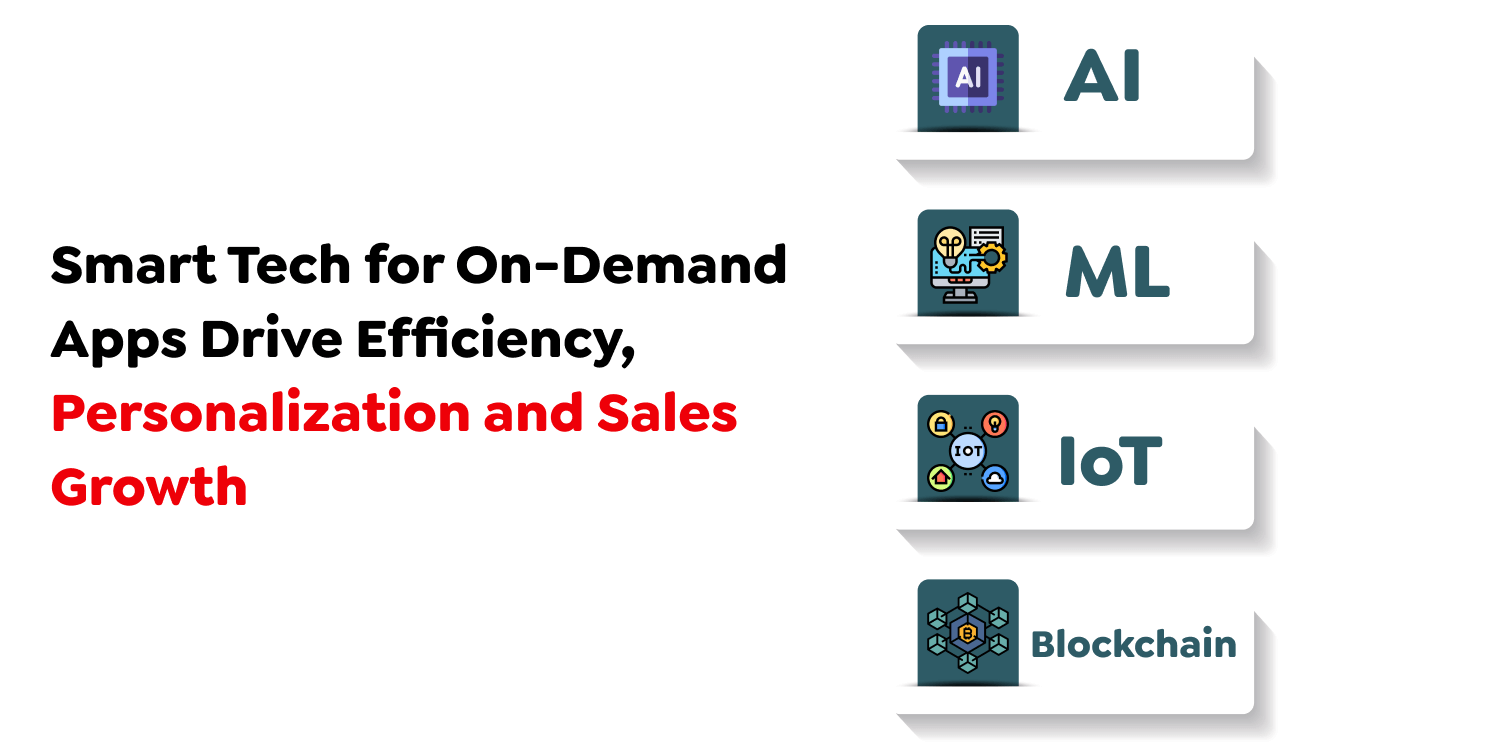
The latest technologies focus on turning the on-demand delivery landscape, helping businesses provide efficient, reliable, and user-friendly services. Artificial Intelligence and Machine Learning technologies optimize delivery routes, forecast demand, and personalize user experiences. AI algorithms can analyze vast datasets to predict peak times and adjust inventory management and real-time routes, enhancing overall efficiency.
IoT devices enable real-time tracking of deliveries, monitoring of vehicle performance, and management of inventory levels. This connectivity ensures transparency and allows for proactive issue resolution, improving customer satisfaction.
Blockchain technology can enhance transaction security and transparency, build user trust, and streamline payment processes.
Warehouse and fulfillment center robotics integrations improve efficiency, minimize costs, and speed up delivery time. For example, a grocery order at a Brooklyn warehouse is picked up by robots very efficiently. Next, innovative delivery services, like drone delivery, are reshaping the logistics industry by offering faster and more efficient delivery options. In South East Queensland, real-time deliveries have been made through drone-based services that deliver packages in record times.
Embracing these opportunities meets evolving consumer demands and positions companies at the forefront of industry innovation.
Developing an on-demand food delivery app like Snoonu poses numerous challenges that call for strategic planning and innovative solutions. Some common obstacles and ways to overcome them:
The user expects the interface to be intuitive, load quickly, and perform well. Invest in user-centric app design and extensive usability testing to identify and solve issues. Then, regularly update and optimize your app’s performance to maintain a smooth user experience.
Spikes in user activity can cause servers to slow down or even crash. To mitigate this, scalable cloud computing that can scale up or down according to demand should be implemented. In addition, load-balancing techniques should be used to distribute traffic evenly and ensure consistent performance.
Sensitive user information must be protected to prevent breaches and earn trust. To safeguard user privacy, adopt robust data storage and transmission encryption methods, update security protocols regularly, and abide by data protection regulations.
Also Read : The Rise of Software Development in the Middle East
Coordinating deliveries efficiently, especially during peak times, is complex. To enhance delivery efficiency, leverage real-time tracking and route optimization algorithms. Maintain a flexible fleet and establish contingency plans to handle unexpected situations.
In 2026, developing an on-demand delivery app like Snoonu involves several cost components, each influenced by various factors. Here’s a breakdown to help you understand the potential cost for delivery mobile app development project:

Skilled designers will have to do UI/UX design for an intuitive and non-complicated interface. Cost depends on the complexity, screens, and number of screens designed. The development stage includes coding, adding features, and checking cross-platform compatibility. The cost will vary depending on the app’s complexity, features, and the mobile app development company you partner with.
| App Complexity Level | Estimated Cost Range in 2026 |
| Simple App | $25,000 – $40,000 |
| Mid-Level App | $45,000 – $75,000 |
| Advanced App with AI Integration | $80,000 – $150,000 |
To run smoothly, the app needs regular updates, bug fixes, and performance improvements. This ongoing expense ensures your app stays current with new OS versions and meets user expectations. As your users grow, investing in scalable infrastructure is critical. This may involve upgrading servers, optimizing databases, and enhancing security measures to manage increased traffic and data.
Also Read: Complete Guide to Developing a Food Delivery App Like Jahez in Saudi Arabia
Marketing the app through social media, SEO, and paid advertising requires a specific budget. Effective marketing can attract users and ensure retention. Promotions, discounts, or referral programs may encourage new users to download and use the app, contributing to the cost of acquiring a customer.
The number and complexity of features directly affect the time and cost of development. Resource-intensive features like real-time tracking, payment integrations, and user reviews are among the most costly.
Developing for multiple platforms, such as Android app development, iOS app development, and web apps, is expensive because each platform requires separate efforts.
Design quality and a smooth user experience lead to better user satisfaction but result in higher overall costs. Backend development is equally important, comprising server setup, database management, and APIs to connect the app to the server for communication. These are heavy costs.
Lastly, your development team location also affects your hourly rate. The more remote it is, the more affordable onshore tends to be compared to nearshore or offshore.
Also Read: AI in Food Delivery: Enhancing Speed, Efficiency, and Customer Experience in Dubai
Launching an on-demand delivery app like Snoonu requires a strategic marketing approach to build anticipation, attract users, and establish a strong market presence. Here are effective strategies to consider:
Develop a landing page with a call-to-action, such as early access sign-ups or exclusive previews, to generate interest before the official launch. Use social media to share sneak peeks, behind-the-scenes footage, or countdowns to engage potential users and keep them excited about the upcoming release.
Also Read : Your Blueprint to Building a Game-Changing App Like DubaiNow
Partner with local restaurants, stores, or service providers to offer joint promotions, such as discounts or bundled deals, to encourage users to try your app. Support local events or sponsor community activities to increase brand visibility and build goodwill within the community.
Offer special discounts or free delivery for limited periods to encourage new users to download and use the app. Develop a referral program that encourages existing users to bring in new users by providing them with rewards. Introduce a rewards system to encourage repeat usage, helping retain and engage customers in the long run.
Use Instagram, Facebook, and Twitter to post updates, engage with users, and run targeted ads. Work with local influencers to review and promote your app, leveraging their reach to attract a wider audience. More than 50% of brands plan to increase their influencer marketing budgets in 2025, which says much about this strategy. Encourage end users to share their experience on social media using branded hashtags, thus raising grassroots organic buzz and social proof.
The on-demand delivery app market? Yes, it’s moving fast, faster than most businesses can keep up. If you’re thinking of building something like Snoonu, you gotta know what’s coming next…
Apps aren’t just apps anymore. Generative AI is creating menus, suggesting deals, maybe even predicting what a user wants before they open the app. And with AI personalisation, your app knows what each customer likes. So, repeat orders, upsells, custom recommendations, all automatic. Makes your mobile app development project way more powerful and yes, keeps users hooked.
Hands-free, always ready. Imagine voice assistants like Siri, Alexa, or Google Assistant letting users order without touching their phone. And chatbots for ordering? They’re doing everything from answering questions, guiding orders, upselling snacks, even taking payments. Your Android app development and iOS app development projects suddenly feel smarter, almost like the app is alive.
It’s more than AI suggestions. Apps now track location, time of day, purchase history, even diet preferences. Push notifications? Smarter. Loyalty rewards? Targeted. Reordering? Predictive. All powered by AI. Users feel like the app just gets them.
Not just Android, not just iOS, but tablets, wearables, and cars also. Apps everywhere. Seamless experience across platforms = more engagement. People hate switching apps, so keep them in yours… everywhere.
Drones, autonomous bikes, electric vehicles are coming. Faster delivery, lower costs, and hey, sustainability points. If your on-demand delivery app development strategy doesn’t include this, you’re already behind.
Real-time data = power. Inventory management, route optimisation, and demand forecasting reduce costs and improve delivery.
The future? All three together. Voice, chat, AI personalisation. Users order by voice, AI suggests, chatbot confirms, and delivery is tracked in real-time. Hyper-targeted promotions, upsells, loyalty rewards. That’s next-gen on-demand apps.

Choosing a mobile app development company in Qatar offers several advantages, particularly for businesses that develop on-demand services like Snoonu. Local mobile app developers understand cultural nuances, language, and user behavior specific to the Middle East. This insight ensures that the app’s design and functionality resonate with the target audience, enhancing user engagement and satisfaction.
A regional development company is well-acquainted with local market trends, regulations, and consumer demands, enabling them to craft solutions that are both compliant and appealing to users in the area. Companies in the region often employ agile technology, promoting flexibility, collaboration, and efficiency throughout the development process.
Techugo offers a full spectrum of services, including consultation, prototyping, design, development, updates, ongoing support and mobile app maintenance. Their experience with similar projects means they can anticipate challenges and implement best practices effectively. With expertise across various industries, such as healthcare, food delivery, and social networking, Techugo is equipped to handle a wide range of project requirements. While Techugo has a global footprint, its strong presence in the UAE ensures a deep understanding of the Middle Eastern market, combining international standards with regional insights.
Techugo has collaborated with prominent clients, including Fortune 500 and Global 2000 companies and innovative startups, demonstrating its capability to deliver high-quality solutions.
The on-demand delivery industry has experienced significant growth, with services like food and grocery delivery becoming commonplace. However, several untapped niches present lucrative opportunities for businesses looking to enter or expand within this market.

Developing an app like Snoonu represents a tremendous opportunity for businesses to capitalize on the growing demand for on-demand delivery services in Qatar and the Middle East. With the right strategy, advanced technology, and user-focused design, your app can become a vital tool for connecting businesses and customers, driving revenue, and enhancing convenience.
Partnering with an experienced food delivery app development company like Techugo ensures your app is built precisely, leveraging industry expertise and regional insights. Techugo’s commitment to quality, innovation, and customer success makes it ideal for bringing your app vision to life.
Don’t wait to turn your idea into a thriving business. Collaborate with Techugo, your trusted mobile app development partner, and launch a standout market-leading app. Get in touch today to start building the future of on-demand delivery services!
Fashion is already one of the biggest drivers of online shopping in Australia. Mobile-first buyers. Gen Z habits. Scroll, tap, buy… repeat. Globally, ..


Today, managing investments is not only a matter of choosing the correct stocks or funds; you also have to deal with data as well. This includes marke..


Write Us
sales@techugo.comOr fill this form