

 SA
SA  KW
KW  IE
IE AU
AU UAE
UAE UK
UK USA
USA  CA
CA DE
DE  QA
QA ZA
ZA  BH
BH NL
NL  MU
MU FR
FR [ LET’S TALK AI ]
X
Discover AI-
Powered Solutions
Get ready to explore cutting-edge AI technologies that can transform your workflow!



Get ready to explore cutting-edge AI technologies that can transform your workflow!






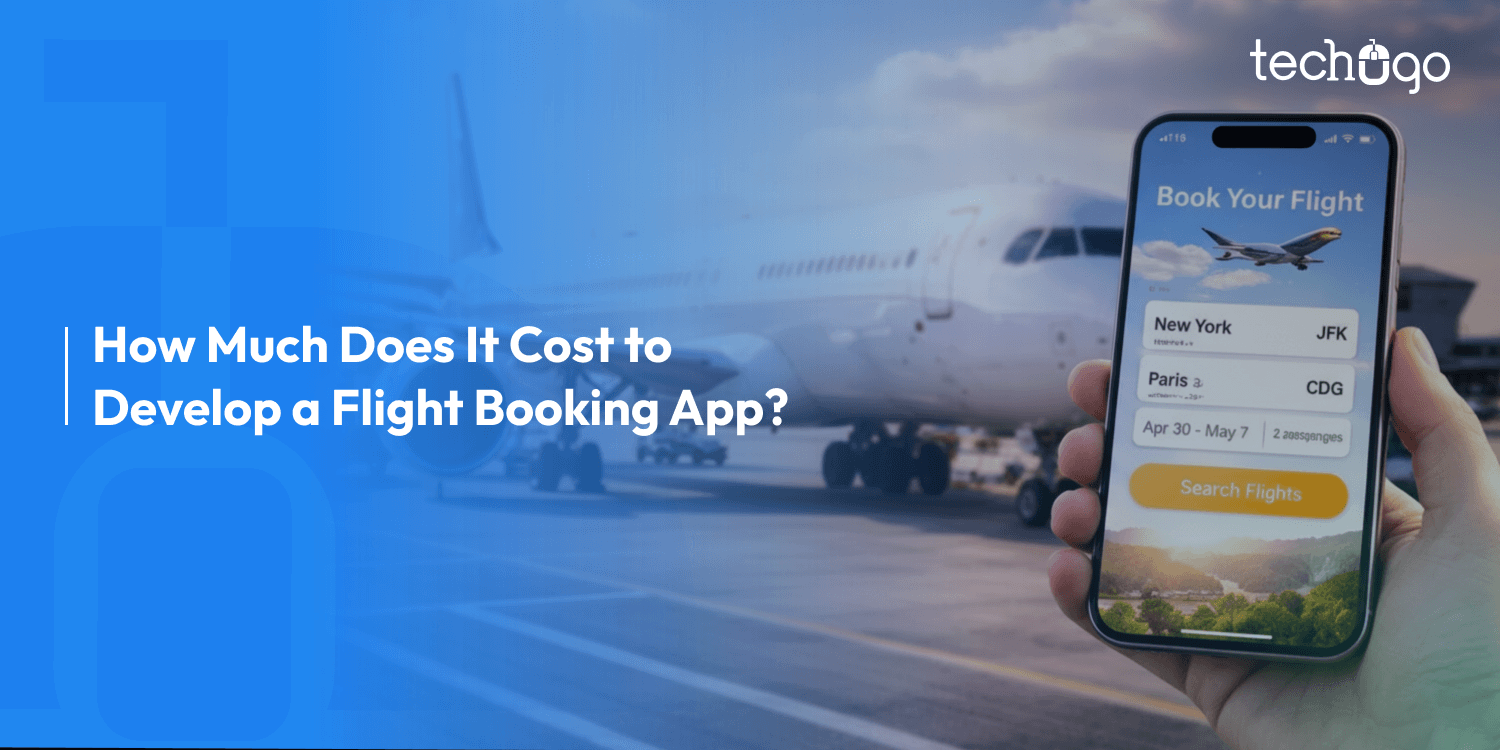
Let’s be real. Most travel businesses today don’t have a demand problem. They have a control problem.
If you’re planning to build a flight booking app, it’s usually for this reason – you don’t want to depend on third-party platforms, save on high commissions, and own your customer data.
But building this kind of app is not simple.
It’s not just a search bar and booking button. Behind it, there’s real-time flight data, airline APIs, pricing changes, secure payments, and booking systems that need to work without errors. Users already expect the same smooth experience they get from apps like Skyscanner, Kayak, and Google Flights.
And the global online travel market is already growing and is likely to cross $1 trillion by 2030, with mobile bookings making up a major share.
So the real question is simple.
How much does it cost to build something that actually works?
In 2026, a basic flight booking app can cost around $40,000 to $90,000.
A more advanced platform with multiple integrations and smart features can go beyond $250,000+. But where does this money go?
This guide will help you understand where that money goes and how to spend it smartly.
The worldwide OTA industry hit roughly 71.4 billion dollars in 2025.
By 2035, it could climb to nearly 187 billion. Growth stays consistent, hovering near a 10% compound annual rate.
What’s pushing it forward? More people going digital helps. Instant booking systems play a role too. Then there are smartphone travel tools – those keep gaining ground.
Flight bookings make up a big chunk of what people do on online travel sites, taking about 38 to 46 percent worldwide.
Most people now buy plane tickets themselves using an app or online. Booking tools let users check prices, tweak days, read what airlines others say, sometimes grab discounts too.
About 73 percent of online travel sales come from these direct buyers. Digital ease pushes most of that growth forward.
On the other hand, businesses that handle group trips rely heavily on systems made for high-volume reservations and unified oversight.
Instead of selling directly to travelers, some platforms offer hidden-brand tech setups or connect through code bridges so agencies can embed services quietly into their own workflows.
These back-end deals open doors to income from professional partners rather than solo guests.
Most online travel sites make money when you book a trip – they take a cut each time. The amount changes based on which airlines they work with and what kind of tickets are sold. Sometimes it’s just five percent; other times, up to twenty.
Besides earning from ticket fees, online travel agencies collect revenue via
1. Featured airline promotions and sponsored listings
2. Service fees on bookings and cancellations
3. Travel insurance partnerships
4. Hotel, car rental, and package travel cross-selling
When more people book flights, these apps grow without big cost jumps. Different income sources make that possible.
More than six out of every ten online travel reservations now happen on phones, showing how travelers favor apps instead of desktop sites.
A shift toward handheld tools has quietly changed how trips are booked.
On top of that, mobile travel apps gain when they include tools helping people stay involved – like
1. Real-time fare alerts
2. Push notifications for price drops
3. AI-powered travel recommendations
4. Digital boarding passes and itinerary tracking
Most people browse trips on phones these days, so having an app just for flights helps companies reach more customers.
Nearly three out of four clicks arrive through handhelds, opening doors when brands build their own space there.
With more people traveling again, apps that let users book flights on their phones are getting popular.
Because of this shift, making such an app in 2026 could help new businesses grow online.
Also Read – Luxury Travel App Development: Cost & Features (2026)
Flight booking apps come in different types that serve different purposes, some of which are as follows:
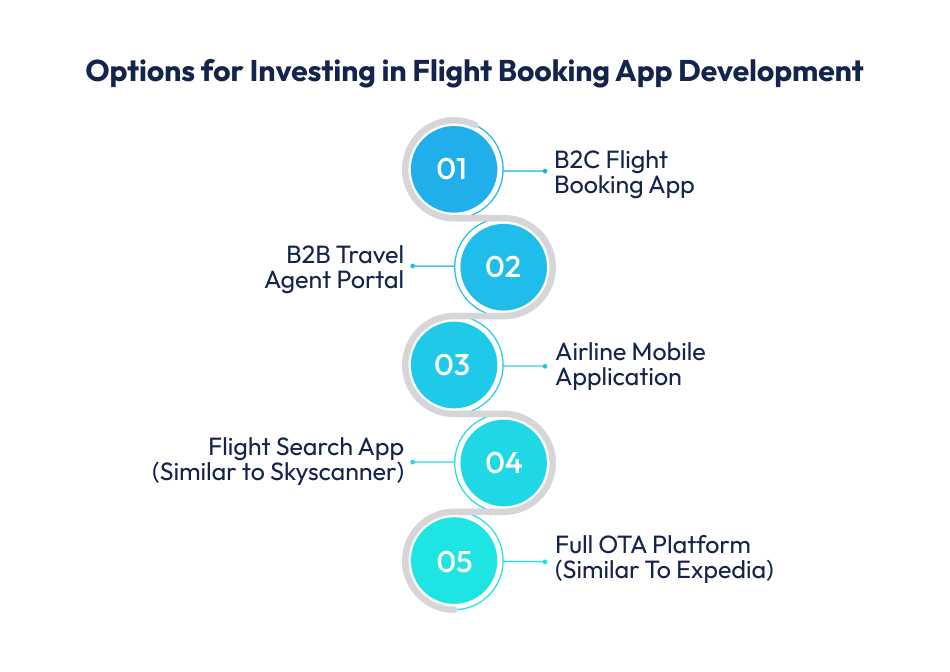
Nowadays, many travel booking apps let users check flights live, compare prices across airlines, pick their own dates, choose seats ahead of time, while using safe ways to pay.
Alerts pop up when fares go down, deals appear, or flight times change – keeping travelers informed without extra steps.
One reason some travel apps succeed? They make booking feel effortless while keeping prices sharp.
Not just tickets – many bundle stays, coverage, or rides to airports, quietly adding up gains.
Most money comes from airline payouts, user charges, fees tied to referral deals.
With so many people buying plane tickets by themselves on the web, profit stays high in travel app creation.
Profitability holds strong thanks to the sheer volume of solo buyers clicking bookings online.
A business-to-business flight system is built for agencies, companies handling trips, and organizers – not people planning vacations alone.
Rather than buying seats for themselves, firms handle many reservations at once, arranging journeys for staff or customers through these systems.
Flight booking APIs make it possible – partners sell tickets, yet pricing and commission rules stay under one roof. Instead of guessing rates, everything flows from a single control point.
Payment streams come from subscriptions, usage fees, or cuts from bookings.
Travel tech firms lean toward serving businesses since steady partnerships grow with agencies and enterprise customers.
Most airline apps let you book tickets, check your flight’s progress, plus see if delays pop up. Digital boarding passes show up right inside the app instead of paper ones.
Want a better seat? That option usually sits just a few taps away.
Frequent flyer rewards link straight into the system so points add up without hassle. Luggage updates appear in real time, which helps when waiting at the carousel.
Special deals might land on your screen based on where you fly most.
Notifications alert you about gate changes or weather issues before you head out. Features stack together quietly, making trips feel smoother over time.
One big carrier, then another, runs its own app to help travelers get around more easily instead of relying on third parties.
These digital tools handle bookings, updates, tickets – all without needing outside platforms to step in.
Besides cutting fees sent to online travel agents, a personal airline app keeps prices, deals, and passenger details firmly in-house.
Also Read – How to Develop an App Like Wizz Air, a Guide for Travel App Entrepreneurs
One reason some platforms succeed is their sharp focus on search tools that compare prices across airlines.
What sets them apart isn’t flash – it’s speed, plus how easily they pull up real options.
Travelers land better rates without wading through clutter, thanks to systems fine-tuned for one job: scanning, sorting, saving.
Airline companies might show up earlier in searches because they’ve paid for the spot – this brings income.
Commissions come in when users click through referrals, creating another stream. Partnerships around ads also feed into what gets earned, tying business deals directly to visibility.
A single app might just help travelers find options instead of handling every step, so creating it could demand less work compared to a complete online travel agency.
Beyond just booking flights, many complete OTA apps offer things like real-time price adjustments, reward systems, personalized travel ideas, along with combined deals on trips.
One app handles everything – flights, stays, even city transit – for full journey planning.
With so many moving parts, building an OTA platform means linking airline data feeds, room availability networks, secure checkout systems, along with guest tracking software through careful setup behind the scenes. Each piece must talk to the others without breaking step.
Still, this setup can bring in more money than others. Revenue comes through booking cuts, ads deals, featured spots, along with extra charges – all spread out over various trip types on OTA sites.
Also Read – How To Make Travel Application: The Next Social Media Sensation
Most companies pay anywhere from $45,000 to $450,000 or more – size matters here, also complexity shapes what you actually pay.
Each kind of application carries its own price tag, shaped by features, design choices, backend needs, team location, even time spent testing before launch.
| App Type | Cost Range | Timeline Range |
| MVP Flight Booking App | $45,000 – $90,000 | 3 – 6 months |
| Mid-Level OTA Platform | $90,000 – $200,000 | 6 – 10 months |
| Enterprise OTA Solution | $200,000 – $450,000+ | 10 – 18+ months |
One way to begin? Build only what travelers truly need – searching, picking, then reserving a flight.
Instead of waiting, new companies release early versions just to see if people will actually use it. Later comes extra stuff.
Right off, you get tools to look up flights, make reservations, handle payments, while letting users manage profiles their way.
Sometimes there is access to just a few airline systems through APIs, along with a stripped-down control panel for handling trips behind the scenes.
Speed matters most here, yet every extra piece tied in pushes the price higher.
Mid-tier travel apps often pull data from various airlines through connected systems, while handling payments in different currencies at the same time.
These tools usually manage trip details too, keeping everything in one place.
A few go further by using smart algorithms that watch prices, then nudge users when fares drop.
Suggestions pop up based on past choices, making it easier to spot cheaper options without searching endlessly.
A mid-level OTA platform often costs between ninety thousand and two hundred thousand dollars to build, since it needs extra connections along with solid backend systems.
Not every project lands at the same price point – complex features can push expenses higher. Around that range, most teams handle setup work plus ongoing support during early stages.
One step beyond basic booking sites, big travel platforms tie together flights, stays, and rides under one roof.
Built-in rewards systems link up with trip planning tools, while data tracking runs quietly behind the scenes. Sometimes you’ll find vacation bundles mixed into the usual options.
Each service connects without flashing banners or pushy prompts – just working parts fitting together. Big companies need travel tools that run on powerful networks.
These tools must handle huge amounts of searches quickly. Booking setups go beyond basics – they adapt to complex needs. Connections stretch across several worldwide reservation hubs.
Safety measures stay tight at every level. Information moves fast without slowing down. Systems grow easily when demand rises. Cloud support keeps everything running smoothly.
Building a corporate travel system might take anywhere from two hundred thousand to four fifty thousand dollars – sometimes higher.
That price tag comes down to how many systems need connecting, alongside the crew handling the build.
A web of connections spreads across continents, linking travel apps to live updates from airlines everywhere.
One query triggers multiple responses, stacking options without extra steps.
Booking happens inside the flow, routed straight through carrier systems, skipping middle layers.
Still, linking up with GDS systems means working through custom APIs, skilled coders, also legal access deals.
Cost-wise, it often runs between ten grand and forty thousand dollars extra per project – shaped by what tools you pick plus which vendor you work with.
Behind every flight app, live updates on prices and seats come through outside systems that feed current details straight into the software.
When several APIs join together, details get sharper and flight choices grow – yet building them gets trickier.
Costs for setting up and adjusting these links range from 5,000 to 25,000 dollars, shaped by how many sources are involved.
Often, flight apps accept more than just credit cards – they include digital wallets or local payment options too.
When you plug in payment systems it keeps money exchanges secure while working across countries.
Usually this kind of setup runs between $3000 and $10,000, shaped by how tight the safety rules are and what kinds of payments get accepted.
Most travelers come from various countries, so handling several currencies becomes a must.
Building in location-based tools takes extra work since the software needs to switch money types on the fly while handling local preferences.
Cost jumps between five thousand and fifteen thousand dollars due to these additions.
What makes a flight booking app tough to build? Its search engine needs heavy-duty tech just to work right.
Instead of simply listing flights, it digs into airline stock, possible routes, pricing types, and open seats – all in one go.
Even under load, with countless people searching at once, it delivers answers without delay.
Speed meets precision because the backend juggles complexity behind the scenes. Every query gets broken down, matched, then served fast – no waiting.
Heavy math hides beneath what looks like a quick tap on screen.
A powerful search system with smart filters, pricing order options, then live suggestions needs solid server work plus scalable cloud setup.
Just this piece might cost between 15 thousand and 50 thousand dollars, based on how big the site must grow.
Out in different parts of the world, where coders are based shapes how much money gets spent on a build.
Pay per hour shifts wildly depending on place – some areas pay more because skilled tech workers are harder to find there.
Out here in the U.S, seasoned dev teams often bill around $120 up to $180 each hour – top-tier pricing when you compare global spots.
Over across the UAE, prices dip quite a bit, commonly sitting from sixty right down to a hundred bucks every hour, shaped by skill level and how tangled the work gets.
On the flipside, India holds its ground as a go-to for lean budgets, where clocking in means paying just twenty-five to forty-five dollars per hour, more or less.
With such gaps in mind, plenty of new companies go overseas – or mix local and remote teams – to save money without losing talent.
Getting a flight booking app right means making it easy for people to find and book trips, yet still letting managers handle reservations, prices, and connections to airlines.
What goes into the traveler side and the control center affects how much building the app will cost.
Tools like live flight searches, systems that track booked seats, and reports showing usage patterns need strong behind-the-scenes tech and links to airline databases.
Price tags rise with complexity, yet simplicity can hide its own challenges beneath smooth screens. Function follows form more than most admit, especially where users least expect it.
A single tool powers most airline apps – it handles flight searches.
When someone types in where they are leaving from, it begins working.
That place connects to another spot they want to reach.
Dates matter just as much as the number of people traveling. Details like these shape what shows up next.
Starting with the core setup, a fast search tool needs solid server design alongside smart data storage tricks that team up with live feed hooks – each piece pushes price tags higher.
With sorting tools, travelers can line up choices by lowest price, shortest trip time, or a balanced mix.
What stands out gets easier to spot when sifting through tons of flight possibilities.
Faster responses in big data apps start with smart database design. Real-time queries must run smoothly when filters change on the fly.
Efficiency hinges not just on structure but also how quickly results appear after each tweak.
Without streamlined processing, delays creep in. Performance stays sharp only if both sides – storage and retrieval – work in sync.
When prices shift, some tools spot patterns from past data to hint at smarter booking moments.
These systems learn what flights did before so travelers get alerts just ahead of ideal purchase windows.
Timing often hides in old numbers, waiting for software that connects previous costs with likely future ones.
Alerts pop up once comparisons suggest a favorable rate is near. Past behavior guides these guesses, turning years of fares into useful clues about now.
After picking a flight, getting it booked should feel smooth, safe, quickly done.
Forms for traveler details show up next, followed by chances to pick seats. Secure payment steps come last, handled behind trusted systems.
Payment systems often link up with flight booking platforms so money moves stay secure.
Transactions rely on tight digital locks that guard every detail. Safety tools pop up everywhere to block sneaky activity before it spreads.
Encryption wraps data like a shield when payments go through. Without solid rules behind the scenes, cash details could slip into wrong hands.
From time to time, travelers check their trip plans right inside the booking system. Keeping tabs on whether a flight is late happens straight through the app or site.
Upgrading a seat?
That option often shows up during checkout or after. Changing plans or canceling can be done without calling anyone.
Fewer people need help because most tasks are handled alone. Smooth access means less waiting, less hassle.
Flying different airline data into one system brings extra hurdles when building software. While connecting reservation tools at the same time makes coding even tougher.
Travel sites often link up with loyalty clubs to keep customers coming back.
Points stack up each time someone books a trip through these platforms. Instead of discounts, travelers might grab free flights or hotel stays after enough spending.
Special offers appear only to members who stick around. Rewards unlock perks regular guests never see.
Even when loyalty features boost the platform’s worth, they still demand more work behind the scenes. Yet extra functionality often means heavier coding loads down the line.
Sometimes flight booking apps pull data through several APIs – schedules, prices, open seats. Handling those connections falls to admins, who need control without confusion.
From within the admin area, system managers set up airline API links while swapping out stock providers now and then.
When juggling many API connections, solid backend support becomes essential – tools that track performance help keep things stable.
Running these links smoothly often depends on how well the system watches for hiccups along the way.
Money comes into travel sites through built-in pricing rules.
Inside the management area, companies set extra charges or adjust profit margins depending on airline or path taken. Profit settings shift based on which carrier or journey type appears in search results.
A single price shift might depend on ten hidden rules working behind the scenes. Systems adjust numbers silently, reacting to shifts of few notice.
Rules stack without warning, shaping what users eventually pay. Decisions unfold step by step, guided by preset triggers most never see.
When it comes to boosting how travel platforms work, data analytics plays a quiet but steady role. Administrators get clarity through an analytics dashboard – watching numbers like bookings rise or dip.
Revenue patterns come into view over time, shaping what stays and what shifts.
Travel firms might notice patterns – like bookings rising after certain ads – so they adjust spending without waiting. Tools built into these views suggest likely outcomes based on current trends.
Decisions become quicker because data sits front and center. Efficiency grows when teams spot hiccups before customers do.
Some people book trips themselves. Others work behind screens making it happen. Workers inside the company need their own space too.
One place lets leaders sort who can do what. Giving someone a role shapes what they see. Permissions act like gates – only open for certain people. Access changes based on the job being done.
From inside the platform, admins watch what users do, fix login troubles, while handling connections with partner agents. Security stays strong because access fits each person’s job.
Building these features pushes timelines, mainly because protection rules tighten at every step.
When flights get canceled, getting money back happens often, so systems that handle refunds by themselves matter a lot.
Airlines connect their systems through special digital links that help track changes in reservations while money moves back when needed.
Since returning payments touches both rules checking and cash handling, solid work behind the scenes becomes essential.
A sudden shift happens when automatic cancel buttons appear alongside money-back clocks ticking behind them.
Complexity climbs inside the travel app as these pieces snap together. Still, without both moving parts doing their job, something feels missing
Depending on who builds the app and where they’re based, expenses shift noticeably. Team setup plays a role – location matters just as much.
Different types of development teams charge differently and come with their own set of advantages and disadvantages.
Hiring developers, designers, and project managers straight into your company is what building a team inside looks like.
With everyone under one roof, decisions move faster because people talk face to face.
Working day after day together helps the group stay focused on what the business truly needs. Control stays tight when every step of creation happens internally.
Much of the time, keeping a full internal crew costs way more than other choices.
Across places like the U.S. or parts of western Europe, coding paychecks eat deep into funds meant for building travel apps.
Smaller firms or new names in tourism might find that path too heavy on cash flow.
Some businesses choose to team up with niche mobile app studios when creating a flight reservation system.
These teams come packed with pros – coders, interface artists, coordinators – who’ve tackled tricky tech like airline data feeds, seat-matching software, plus secure checkout setups before.
Cutting expenses often happens when companies hire outside teams instead of expanding internally.
Because these agencies stick to clear processes, work moves faster than expected.
Travel startups especially prefer this path when speed matters more than control.
A big crew isn’t always needed if the right partners are involved.
Imagine tapping into talent far from home – places like India pack sharp tech minds without the steep price tags seen across North America or Europe.
Travel platform projects often find a leaner budget path by going offshore, where skills meet savings in ways local markets rarely match.
For example, Engineers in India often ask $25 to $45 hourly, whereas coders in the UAE tend to request $60 up to $100 each hour.
Because of these gaps, businesses can trim expenses on building a flight booking app yet still access strong skills.
Offshore teams often handle coding duties when internal staff manage planning and oversight.
Mixing methods helps firms save money without losing grip on key decisions.
With this setup, companies keep close control over their projects but still tap into cheaper international talent.
Travel startups often go this way since growing features or handling traffic spikes becomes easier down the line.
There are several factors that drive the total app development of a flight booking app up to $500,000, some of which are as follows:
Fees for connecting via API might be budgeted by firms, yet rules around permits and credentials for GDS systems frequently slip through.
Getting into airline stock usually demands clearance from the platform owner, along with hitting specific tech benchmarks first.
Getting started with a GDS provider sometimes means going through certification steps, connecting systems for testing, and also signing contracts.
Setup charges might come up during this phase, along with fees for passing certifications, plus actions to meet rules – all adding to what it costs to run a travel booking system.
Fresh details on flights, costs, open seats, and reservations flow into booking tools through links with airline systems. Yet here’s the catch – those links usually charge every time someone checks them.
Every now and then, certain companies tack on extra costs each time a reservation runs through their setup. When websites get heavy visitor flow, those repeated payments start adding up fast.
Flying through endless searches every day means companies need a smart way to control how they use the flight data tools – spending adds up fast if plans are loose. A single misstep could drain resources before anyone notices.
Fresh prices appear fast because strong servers handle heavy traffic.
When someone looks up a trip, systems jump into motion – pulling details from airlines without delay.
Speed comes from smart caches working alongside cloud setups. Information flows quickly thanks to behind-the-scenes tech staying alert.
Each search triggers a chain reaction across digital pathways.
When more people start using the app, systems need to grow along with them.
Rising numbers push costs up – especially for storing data online, organizing databases, then fine-tuning speed. What shows up next is higher spending just to keep things running smoothly.
When customers start a refund, the system checks rules through airline links plus connects to payment tools to respond right.
If someone challenges a charge, processing firms might add extra costs for that review.
When travelers change plans, someone has to handle the mess. Help desks stay busy because refunds rarely go smoothly.
Problems with money get sorted faster when machines assist. Dealing with dropped trips means constant back and forth. Systems work together, one piece at a time.
When refunds aren’t handled well, extra expenses pile up while trust in the platform erodes slowly.
Maintenance of APIs never stops, demanding constant attention from developers along with careful checks and oversight of systems.
As days pass, such recurring adjustments pile up, shaping the total expense tied to keeping a flight booking app running smoothly.
Every small update adds up over time, becoming a steady cost businesses can’t ignore when planning for growth in a travel booking system.
Here’s how companies usually build flight booking apps, one step at a time.
Looking at current apps helps firms notice what people want. One feature that differs can make the product visible among crowded options.
At this point, companies look at rivals and – checking what those others offer in tools and support. That shapes how their own product takes form.
Who travels matters just as much as how they book. Picture families on vacation, professionals chasing meetings, agencies arranging trips, or companies managing employee travel – each group shapes what comes next.
Depending on who shows up, one choice fits better than another: a site for direct customer bookings, a tool for partner access, or an entire digital marketplace for travel services.
Once the product plan takes shape, picking suitable flight data providers comes into play. Instead of working directly with carriers, travel sites often tap into Global Distribution Systems – these networks supply timetable details, open seats, and fare amounts.
Hidden behind every search lies a GDS feeding real-time updates.
Right choices in API suppliers shape airline reach along with booking stability.
Cost factors creep into view when teams review fees, setup needs, or growth room inside tech setups.
When looking up flights, people want things clear, fast, not cluttered. One tap should lead to the next without guessing. Seeing prices side by side helps choices happen faster.
Designers sketch basic layouts showing where things like menus and buttons go.
Following that, those sketches turn into clickable models giving a feel for how the real app behaves once built.
Starting off strong, a solid interface offers straightforward search boxes, smart sorting tools, yet keeps booking steps simple.
Because travel apps manage messy details like departure times, journey paths, or fare options, thoughtful layout guides people straight to suitable trips, minus the headache.
When the layout locks in, coding kicks off with the main features taking shape first. From there, the app for phones comes together alongside servers handling data flow.
Features like flight searches show up first when the system goes live.
After that comes booking control, handled through custom interfaces. User profiles appear next, tied directly to how people interact.
Payment handling follows, built piece by piece alongside security checks.
Admin panels come later, shaped around real needs. Airline connections get updated there, along with rule settings.
Pricing adjustments happen inside those same screens. Performance tracking slips in quietly, working behind everything else.
Once the main framework exists, connections form between the software and airline systems alongside outside tools.
Testing matters most since API links need to work perfectly each time someone searches for flights or tries to book. When airline details appear on screen, engineers check whether everything shows up right.
When different parts of the app connect, they need to talk correctly with outside services – this check keeps things running without hiccups.
What happens next depends on how well each piece responds under real conditions; smooth interaction means fewer surprises later.
Testing happens in different ways: one checks features, another reviews how easy it is to use, while a third measures speed under pressure.
When many people look for flights at once, the app still needs to work without slowing down or failing. That last type of test makes sure it can keep up when things get busy.
After tests finish, the app moves to launch. Released by developers onto mobile stores like the and , it becomes available globally.
Once live, companies watch what users say, check how the system runs, then roll out fixes to boost features. Staying sharp means adjusting fast when travelers want more or airlines upgrade tech.
While developing a flight booking app needs a larger budget but there are some smart practices to optimise the cost:
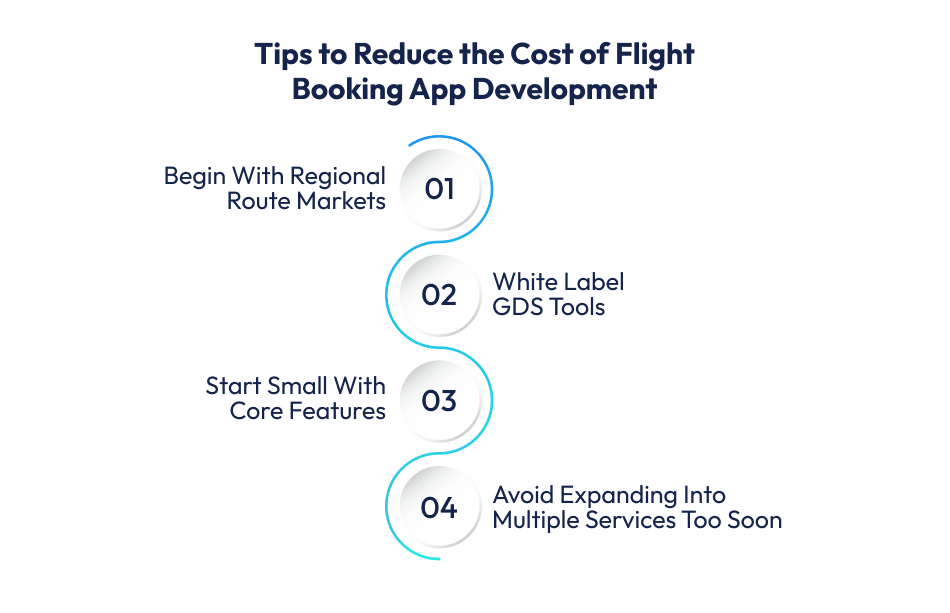
Starting small allows fewer tools to cover more ground. Working within boundaries often speeds up testing.
A single market might be the starting point – say, internal air routes or trips inside one region. That cuts down how many airlines need connecting, while also making searches and reservations easier to handle. The system stays lean when it begins small.
Off-the-shelf booking systems come ready-made, offering flight searches and airline data without needing heavy coding work. These tools plug right into existing travel sites while saving time on setup.
Ready access to flight stock means less hassle building connections piece by piece. Branding blends in smoothly, making the tech feel native over forced.
Companies tweak what they need rather than construct every detail alone. The whole process moves faster since structures exist upfront. Appearance adjusts easily so it does not look generic or copied.
Fewer hours are spent building things when this method is used. Still, it opens up many flight paths plus stock from carriers around the world. Less money goes toward setup because of how it works behind the scenes.
A fresh start often means skipping fancy tools like smart suggestions or reward points. Simple steps come first.
Complex layers wait. Core functions open the door. Everything else follows later.
When users start engaging and reservations roll in, new tools might appear bit by bit.
Spending less at first means businesses can see how things go without rushing into heavy costs.
Starting off, plenty of new travel companies build complete websites right away – offering plane tickets, places to stay, vehicle hires, even bundled trips.
Though making money later is possible, taking on so much at once makes building everything harder and far more expensive.
One extra feature means more connections, separate booking tools, plus unique control panels. When companies stick to just flights at first, the system becomes less complex. That choice trims down what needs building – cutting cost without losing ground.
Businesses often make money from flight booking apps through a handful of familiar methods.
Commissions from flight bookings form the core income source across travel platforms.
Each time someone buys an airline ticket using the app, money flows back to it – thanks to agreements with carriers.
A good number of well-known travel sites build their income around this kind of commission setup.
Ranging from 5% up to 15%, the cut they earn shifts based on what deal an airline has struck and which tickets are sold.
A single flight might show up as two hundred ten dollars even though the system bought it for just two hundred.
That gap between prices? It stays with the service running the search. Fifteen bucks here, ten there – those add up differently than most notice.
Beside boosting ease of use, this pricing method shows up often on travel sites since extra fees stay hidden until after purchase.
Sometimes big travel apps make extra money by showing ads inside them. Because so many people use these apps, companies like airlines want to be seen there.
Some platforms earn through paid spots, while others team up with affiliates to bring in revenue.
A few mix both methods, relying on visibility deals alongside partner-driven traffic.
Revenue flows in when brands pay for placement, yet commissions also add up from shared referrals.
Instead of one single path, many combine upfront fees with performance-based income streams.
Also Read – In-App Advertising; Ways To Capture Consumers’ Attention!
A few travel sites have upgraded memberships aimed at regular flyers. Because of these plans, members might get first dibs on cheap tickets.
Charging users each month or every year and letting services earn steady income aside from their usual cut on bookings.
When people move around a lot, paying bit by bit often makes life easier. Those who cross borders now then find steady access saves time later on.
Built for business users, these platforms slip quietly into existing workflows, offering rebrandable booking interfaces alongside deep system connections.
Instead of starting from scratch, agencies tap into central hubs that track trips, handle reservations – all while covering costs through service charges or split earnings.
With this setup, flight booking sites earn steady income through company collaborations instead of relying only on solo customers.
Building a reliable flight booking platform requires far more than basic app development. It involves integrating airline APIs, processing real-time flight data, ensuring secure payment systems, and building scalable backend infrastructure capable of handling large volumes of search queries and bookings. brings strong expertise in delivering complex digital products for startups, enterprises, and global brands across multiple industries.
With deep experience in mobile app development, cloud infrastructure, and API integrations, Techugo helps businesses create powerful travel platforms such as flight booking apps, OTA systems, and travel marketplaces.
Their approach begins with careful product strategy, market research, and UX/UI design to ensure the platform aligns with both user expectations and long-term business goals.
The development team focuses on building high-performance, scalable applications that support advanced flight search engines, secure payment processing, and smooth third-party integrations with airline and travel service providers. By using agile development practices, Techugo enables companies to launch a minimum viable product quickly and expand features as the platform grows.
For startups, travel companies, and enterprises entering the travel technology market, Techugo offers the technical expertise, innovation, and ongoing support required to build competitive and scalable flight booking platforms.

The use of AI-powered matchmaking apps is changing the dynamics of interactions during networking events, conferences, and social gatherings. Inst..

Now shifting fast, healthcare leans on digital tools, where mobile apps play a key role. Not just for video visits but also tracking health data from ..



Write Us
sales@techugo.comOr fill this form