

 SA
SA  KW
KW  IE
IE AU
AU UAE
UAE UK
UK USA
USA  CA
CA DE
DE  QA
QA ZA
ZA  BH
BH NL
NL  MU
MU FR
FR [ LET’S TALK AI ]
X
Discover AI-
Powered Solutions
Get ready to explore cutting-edge AI technologies that can transform your workflow!



Get ready to explore cutting-edge AI technologies that can transform your workflow!






Which business wouldn’t wish to tap into the growing mobile app industry? Any business would, right? By 2025, the mobile app market had already crossed USD 330 billion. And it’s not slowing down. With more people moving to digital services every year, this number is expected to pass USD 1 trillion in the early 2030s.
However, cost becomes an essential factor in this matter. Numerous things will have to be considered when estimating the cost to develop a mobile app in 2026, from feature complexity to the structure of your development team.
So, how do businesses hire an app developer that aligns with their budget, project goals, and quality expectations? That is the first thing you should ask if you plan to develop an app.
In 2026, companies increasingly prioritise not just technical skills but also cross-platform experience, security-aware development practices, and agile proficiency in the developers they hire.
Finding an app developer to realise your business ideas or to help digitize any company is necessary. So, read on to find the best suitable models for your project and learn what goes into the cost of building a mobile app in 2026, from budgeting and team models to ongoing maintenance and performance expectations.
Also Read: 10 Common AI App Development Mistakes (And How to Avoid Them)
For the question “How much will it cost to build a mobile app in 2026?”, there is no clear-cut one-word answer! But you can have an estimate or directly discuss a development firm you are willing to hire for your project for a cost quote.
Also Read: How to Hire Remote Mobile App Developers: 20 Proven Tips
The cost to develop a mobile app varies incredibly depending on factors like app complexity, team structure, technology stack, and platform (iOS, Android, or cross‑platform).
In 2026, basic apps might cost as little as $15,000 to $40,000 for simple functionality, while more complex, scalable mobile applications with real‑time features, AI integration, or custom backend logic typically range from $80,000 to over $200,000, and enterprise‑grade apps with advanced features can exceed $300,000 to $500,000+.
For startups and small businesses, mobile apps remain one of the best ways to establish a digital footprint. Many early‑stage projects still launch with budgets starting around $20,000 to $50,000+ for MVP‑first development that validates product‑market fit before scaling.
Larger enterprises, however, often budget well above $100,000 and up to several hundred thousand dollars when the goal is a feature‑rich, scalable mobile app designed for millions of users.
The need to balance development cost with quality has become more pronounced as user expectations rise.
According to recent mobile app usage and engagement data, 71% of users churn within 90 days of installing an app, and 25% abandon apps on the very first day.
For startups, managing budgets efficiently while delivering an engaging user experience is especially crucial. A common industry insight shows that integrating advanced features like AI, real‑time interactions, or backend scalability can push costs higher but can also drive retention and competitive advantage if executed well.
Big enterprises face additional challenges such as ongoing app maintenance, security compliance, and scaling infrastructure.
What’s important is that both startups and large businesses carefully navigate these costs to create successful apps that deliver real value. A trusted, client-centric mobile app development company will work with you and treat your goal as theirs.
Also Read: Decoding the Cost to Develop a React Native App and Its Impact on Business Growth
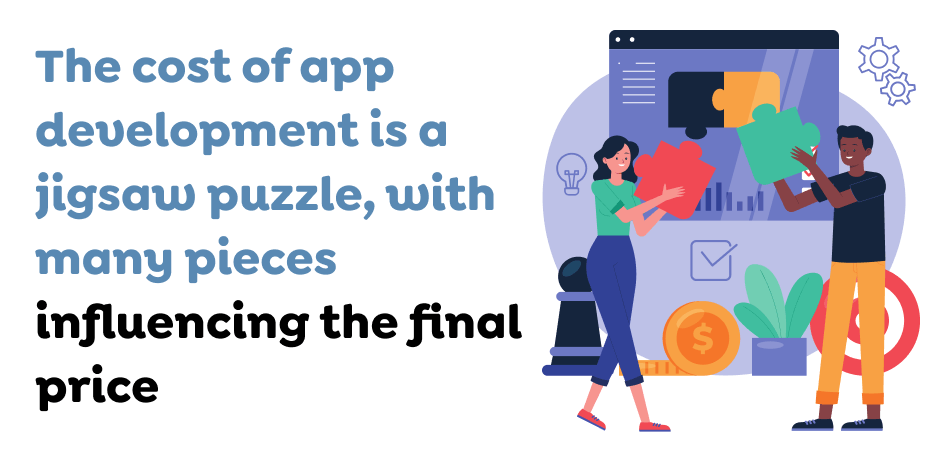
Prioritizing key features is essential to managing costs effectively, as they are pivotal in determining the cost of building a mobile app. Take a quick glimpse at the most common features so that you can ideate the features of your own app:
Content
Fitness
Media
Forms
E-commerce
Loyalty
Custom
The cost to build a mobile app varies based on its platform (Android, iOS and cross-platform):
Developing native apps for iOS and Android requires different teams, which means different development processes, thereby increasing the cost. Cross-platforming is achieved using Flutter or React Native, where one app is used on various platforms, thereby saving costs. Apple iOS is a better choice to reach a more engaged user base. However, Android app development has a broader reach, particularly in emerging markets like Asia and Africa.
The development team’s location and structure greatly influence the app’s overall cost. Costs again vary depending on the region. Mobile app developers in North America or Western Europe are usually costlier than those in Asia or Eastern Europe. It also depends on whether one will hire full-time in-house, freelance, or even outsource with a development company.
Hiring a skilled business analyst can raise development costs, but they add significant value by optimizing the app’s clear development roadmap. A business analyst must ensure your app’s features align with your business goals and target audience. They define the app’s requirements, conduct market research, and identify potential challenges.
Key responsibilities of a business analyst in app development:
App design contributes significantly to user experience. The cost of hiring skilled UX/UI designers depends on the complexity of the design and the level of customization needed. Engaging animations, intuitive navigation, and clean layouts require time and expertise, which increases the cost.
App engineers are the backbone of mobile app development. They are responsible for translating design concepts into functional code. Their expertise and experience significantly influence the development process and the project’s cost.
QA (Quality Assurance) engineers ensure your app has no bugs and runs smoothly. With a more complex app, the testing becomes intense and hectic. Testing devices, operating systems, and cases add to development expenses but ensure high-quality delivery. Proper QA helps deliver a quality application that meets user needs and saves money on costly issues arising post-release.
Types of app testing in development:
Factors affecting QA costs:
A project manager coordinates between the business side and the development team, ensuring that deadlines are met and the project stays within budget. Their experience can significantly impact the efficiency of the development process, potentially reducing unexpected costs and adding to the initial budget.
The initial development cost is just the beginning. Post-launch maintenance includes updates, bug fixes, security patches, and adapting to new OS versions. Companies should plan for ongoing maintenance costs to keep the app functioning smoothly and improve based on user feedback.
These are the core maintenance options:
The above factors imply the importance of collaboration with your tech partner and development team after the product is released. Mobile software development is an ever-evolving business. Therefore, each software company has its post-release support policies.
Also Read: How Much Does It Cost to Develop an IoT App in 2026? Pricing & Smart IoT Solutions

As you make a well-documented list of requirements, ensure these factors to select a development partner:

Choose full-service development companies, offering design, development, testing to maintenance. This way, the process runs more smoothly because all developmental activities take place under one roof, which reduces miscommunication and costs.
Interview developers for a candid assessment of their technical ability, previous work experience, and communication skills. The right developer will make a long-term difference to make your app successful.
Review the portfolio of the development company for apps they built that are similar to what you need. A proven track record shows their capability to handle your project most efficiently and cost-effectively.
Ensure the development company employs best practices in data security and regulation, such as GDPR. As the modern world enters into the age of digitalization, user data needs to be preserved at any cost, and non-conformity might trigger costly results.
Also Read : Understanding the Challenges & Costs of Hiring iOS App Developers in the Middle East
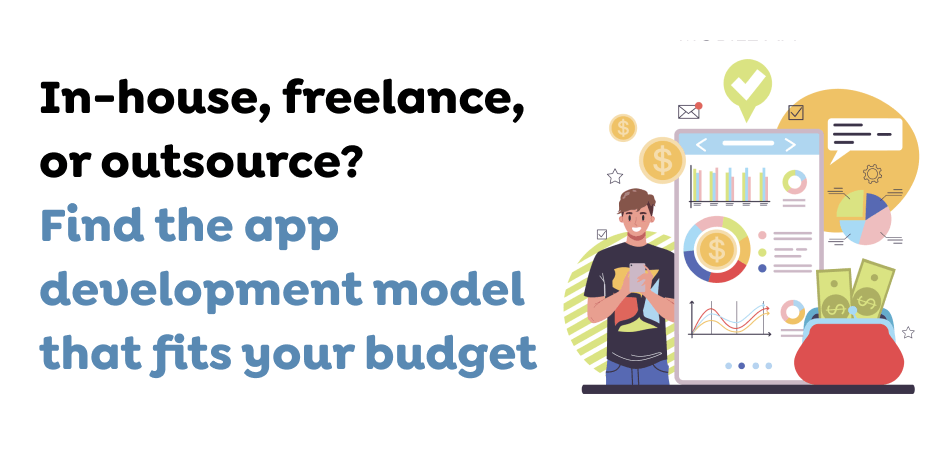
This is a team you work with to develop your app. It is very in control of your development process. It is pricey because of salaries, equipment, and benefits. This is the best choice for organizations that need long-term app development.
Freelance app developers are cheaper than an in-house team or a full-service company. Freelancers might even be able to do a better job since they specialize in different areas. However, managing multiple freelancers usually leads to communication problems and late projects.
The outsourcing option brings access to experienced developers from all parts of the world at affordable rates. Outsourcing is also a flexible option for businesses, wishing to create a high-quality app but don’t need the costs of an in-house team.
Also Read : The True Cost to Develop a Flutter App: Unlocking Growth and Success
As we move forward, being highly aware of the factors and applying cost-optimization techniques will let businesses plan appropriately and develop high-quality mobile apps with no extensive overspending.

Techugo is one of the top mobile app development companies in Dubai on which businesses can rely to develop high-performance and innovative apps.
Having executed successful projects in many industries, Techugo provides clients with technical expertise blended with great market understanding that gets them customized solutions to match your business goals.
Whether you are a newly conceptualized startup wanting to create an iPhone app or a large enterprise that requires scalable, feature-rich mobile solutions, Techugo’s team of dedicated developers, designers, and project managers will ensure that the app is made that will surpass every expectation.
Techugo’s dedication to quality, timely delivery, and post-launch support makes it the right platform for your app development needs.
Are you ready with your great app ideas? Get in touch with us now!
People in Saudi Arabia order food on apps, shop on apps, and look for discounts on apps. They make payments on apps and even look for ride hailing ser..


The whole process from conception through young children is a huge transition that can lead to a lot of stress, uncertainty, and difficulties in findi..


Write Us
sales@techugo.comOr fill this form